
12 February 2026 The Future is the Product of the Past

Trian Fountain to Be Revived After 1900 Years

The Trian fountain in the ancient city of Laodikeia in Denizli will be revived after 1900 years. CHP’s Merkezefendi Municipality will support 600 thousand Turkish lira ​for the work to be carried out for the Trian fountain. Mayor of Merkezefendi Municipality Şeniz Doğan, Culture and Tourism Provincial Director Turhan Veli Akyol, and Pamukkale University Laodikeia Excavation Committee Head Prof. Dr. Celal Şimşek signed the protocol.

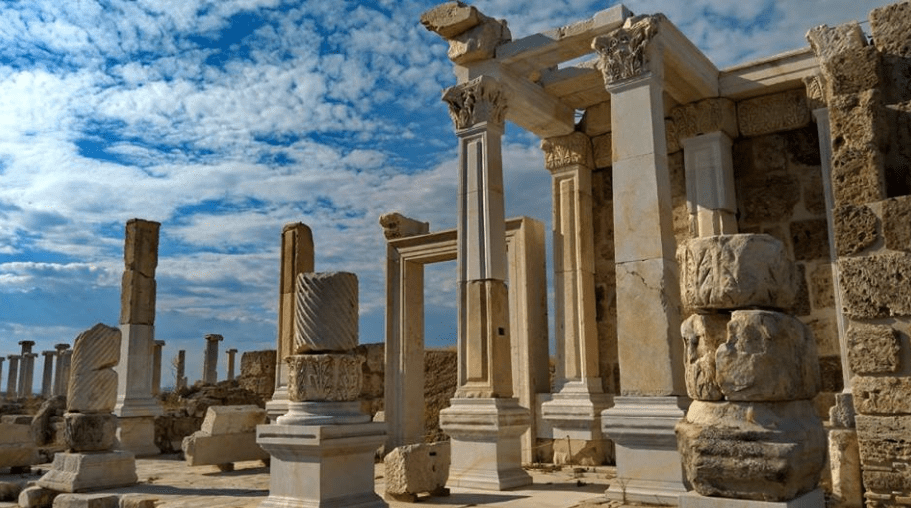
According to the news of Selami Aydın from Sözcü newspaper; Excavation and restoration work started for the Traian Fountain, built in the name of Roman Emperor Trajan, located in the ancient city of Laodikeia in Denizli. The 1900-year-old fountain will come to light again.

PROTOCOL SIGNED IN THE ANCIENT CITY LAODIKEIA

A service protocol was signed to support the Trian Fountain excavation and restoration project. At the ceremony in the ancient city, Merkezefendi Mayor Şeniz Doğan, Culture and Tourism Provincial Director Turhan Veli Akyol, and Pamukkale University Laodikeia Excavation Committee Head Prof. Dr. Celal Şimşek signed the protocol.

60 percent of the ancient city is located within the borders of Merkezefendi. The rest of the city is within the boundaries of the Pamukkale district. The Trian Fountain is located at the south end of Stadium Street West Portico. Merkezefendi Municipality wants to draw attention to water scarcity and water use by supporting the project.
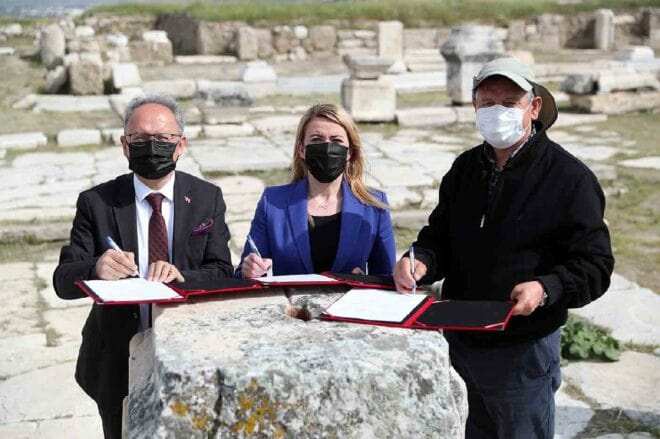
Merkezefendi Mayor Şeniz Doğan, Culture and Tourism Provincial Director Turhan Veli Akyol and Pamukkale University Laodikeia Excavation Committee Head Prof. Dr. Celal Şimşek signed the protocol. Photo: Sözcü

Speaking at the ceremony, Mayor of Merkezefendi Şeniz Doğan said, “Let this be a beginning. Laodikeia is an important value for us. Let the Covid 19 end, let this place be filled with tourists again”


📣 Our WhatsApp channel is now LIVE! Stay up-to-date with the latest news and updates, just click here to follow us on WhatsApp and never miss a thing!!


Turhan Veli Akyol, the Provincial Director of Culture and Tourism, reminded that the fountain to be restored is one of the most important water laws in the world and said, “Here, there will be a very important restoration in terms of showing the power of both the Roman emperor and Laodikeia.”
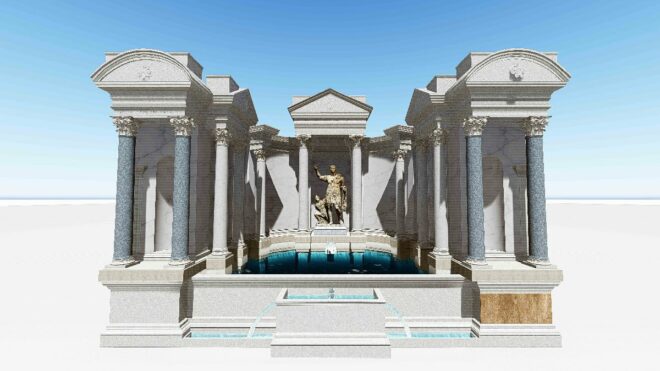
The Trian fountain
This is how the Trian Fountain will look after it has been restored.

Prof. Dr. Celal Şimşek said, “This is one of the main reasons for Denizli’s textile to go so far forward. We will raise the Trian Fountain together. We will open this place together, ”he said.

FEATURES OF THE 1900-YEAR-OLD FOUNTAIN

The single-story monumental fountain has a moving façade arrangement. Designed with a large square in front of it, the building has an apsidal pool and a colonnaded gallery facade. In the east wing of the facade facing the square, there are water laws, water use, and rules and duties regarding the protection of the line. The Trian Fountain is thought to have been built during the period of Marcus Ulpius Nerva Trajan, also known as Trajan. The Roman Empire had the widest borders during the Trajan period. The emperor, who lived between the years 53 and 117, made Mesopotamia a Roman province in his expeditions reaching Iran.

The ancient city of Laodikeia, where the fountain is located, is located 6 kilometers north of Denizli. City It was founded in the 3rd century BC by the Seleucid King Antiochus the 2nd in the name of his wife Laodike. In 129 BC, it was included in the Roman Empire.

The city, which has one of the 7 important churches of Christianity, became a religious center in the early Byzantine period. The ancient city, which was determined to be inhabited from 5 thousand 500 BC to the 7th century, is spread over an area of 5 square kilometers.

Source: Sözcü

Related Articles

Anatolia’s largest olive oil factory unearthed

14 January 2022

14 January 2022

A Roman-era olive oil factory has been unearthed during excavations in the İskenderun district of Hatay. It has been reported...

Remains of 2 houses belonging to the founding period of the city were unearthed in the ancient city of Hierapolis

5 November 2021

5 November 2021

During this year’s excavations in the ancient city of Hierapolis-Pamukkale in Turkey’s Aegean province Denizli, the remains of two houses...

Sicilian Seas Yield Rare Roman Helmet from 241 BC Naval Clash

5 September 2025

5 September 2025

In a remarkable underwater archaeological recovery that highlights Sicily’s rich cultural heritage, a bronze Montefortino‐type helmet was retrieved from the...

Before Rome, Before Greece: Anatolia’s Oldest Glass Revealed in Hittite Büklükale

28 July 2025

28 July 2025

Nestled along the western bank of the Kızılırmak River in central Turkey, the archaeological site of Büklükale continues to astonish...

700-Year-Old Church Becomes a Museum

31 January 2021

31 January 2021

It was learned that the 7-century-old church in Akçaabat, Trabzon will serve as a museum from now on. St. The...

One of its kind, 1,500-year-old Roman ‘Lorica Squamata’ legion armor restored

19 June 2024

19 June 2024

The 1,500-year-old Roman ‘Lorica Squamata’ legion armor, the only known example in the world, found in the ancient city of...

Two Archaic Sculptures was Unearthed in Milas Euromos 2021 Excavations

2 July 2021

2 July 2021

Milas Euromos 2021 archaeological excavations continue. During the excavations of Milas Euromos 2021, archaeologists unearthed two archaic period statues (kuros)...

World’s Oldest Settlement Plan Found in “Çatalhöyük”

15 February 2021

15 February 2021

With the beginning of the Holocene period, many lakes have dried up and have become suitable for settlement. It is...

Aspendos Excavation Reveals Rare 1,700-Year-Old Roman Emperor’s Statue Head

9 August 2025

9 August 2025

Archaeologists have uncovered a remarkable marble head believed to depict a Roman emperor during excavations in the ancient city of...

New evidence for the use of lions during executions in Roman Britain

9 August 2021

9 August 2021

Archaeologists have discovered an elaborate key as proof that wild animals were employed as execution vehicles in public arena events...

2-Meter-Long Stone Block Found at 12,000-Year-Old Boncuklu Tarla Site in Southeastern Türkiye

18 December 2024

18 December 2024

A remarkable 2-meter by 20-centimeter processed stone block was discovered during the archaeological excavations at Boncuklu Tarla (Beaded Field), which...

Excavations of Aççana Mound, the Capital of the Mukish Kingdom, Continue

16 July 2021

16 July 2021

2021 excavations have started at Aççana Höyük, the old city of Alalah, in Hatay’s Reyhanlı district. The ancient city of...

Archaeologists Discover Hidden Roman Hoard in Romania’s Oldest City

18 September 2025

18 September 2025

The National Museum of Romanian History (MNIR) has announced groundbreaking archaeological findings at the ancient site of Histria, one of...

Leptis Magna was once one of the most important African cities of the Roman Empire

28 September 2021

28 September 2021

The ancient city of Leptis Magna, as was its name in antiquity, was once one of the most prominent and...

8000-year-old unique “fish-figure” small home tool found in Turkey

20 October 2021

20 October 2021

During this year’s excavations in the Yeşilova and Yassıtepe mounds in İzmir, a unique “fish-figure” small home tool was found....