
14 December 2025 The Future is the Product of the Past

Urartian graves in eastern Turkey pointing out novel burial traditions

The excavations in Cavuştepe castle continue with the excavations in the necropolis this year. Two new tombs from the Urartian period were unearthed in the necropolis. The tombs reveal a different burial type used by the Urartians.

The palace was built during the reign of King Sarduri II in 764-735 BC, the lower section was built around the 7th century and included a temple, kings tower, workshops, storehouses, cisterns, and even a harem.

Under the chair of professor Rafet Çavuşoğlu of the Van Yüzüncü Yıl University’s (YYÜ) Faculty of Letters Archaeology Department, archaeological investigations at Çavuştepe Castle and the necropolis around the castle continue.

The two newly unearthed graves in these areas provide information about the burial traditions and lifestyles of Urartians. While one of them belongs to an adult, the other is a grave of a child.
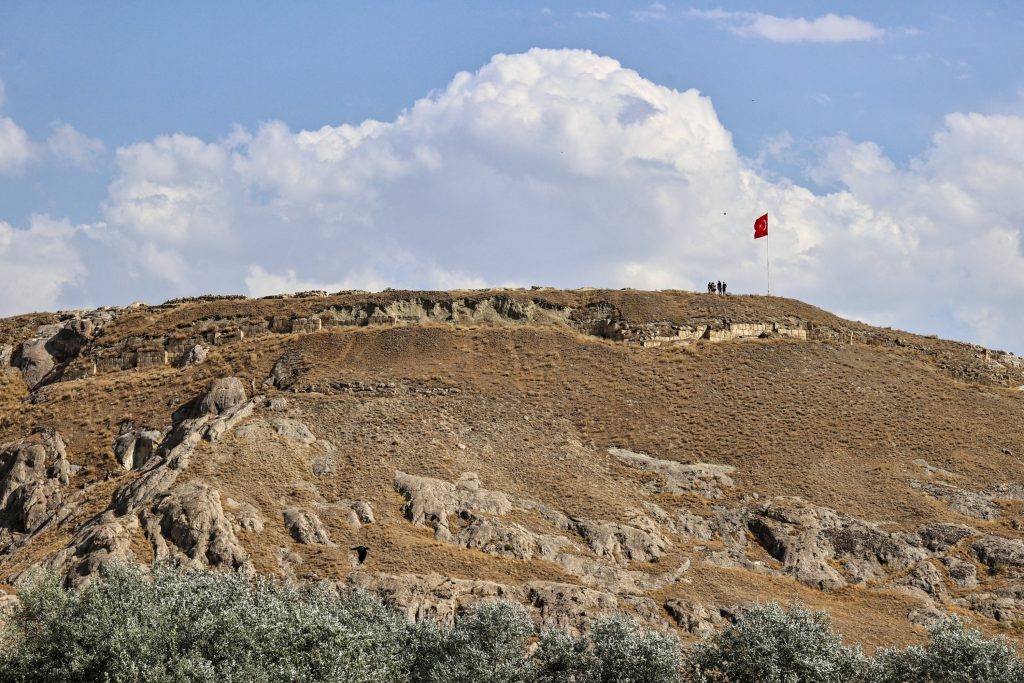
A general view from the Çavuştepe Castle, Van, eastern Turkey. (AA Photo)

In the tombs examined by archaeologists, it was determined that the valuable grave goods of the deceased were not in place and their bones were in a different area.


📣 Our WhatsApp channel is now LIVE! Stay up-to-date with the latest news and updates, just click here to follow us on WhatsApp and never miss a thing!!


Excavation head professor Rafet Çavuşoğlu told Anadolu Agency (AA) that they are mostly working on conservation and protection in the area.

Noting that they have been excavating in the necropolis area of the castle since 2017, the professor stated that they have reached very important archaeological data in terms of Urartian archeology and burial traditions here.
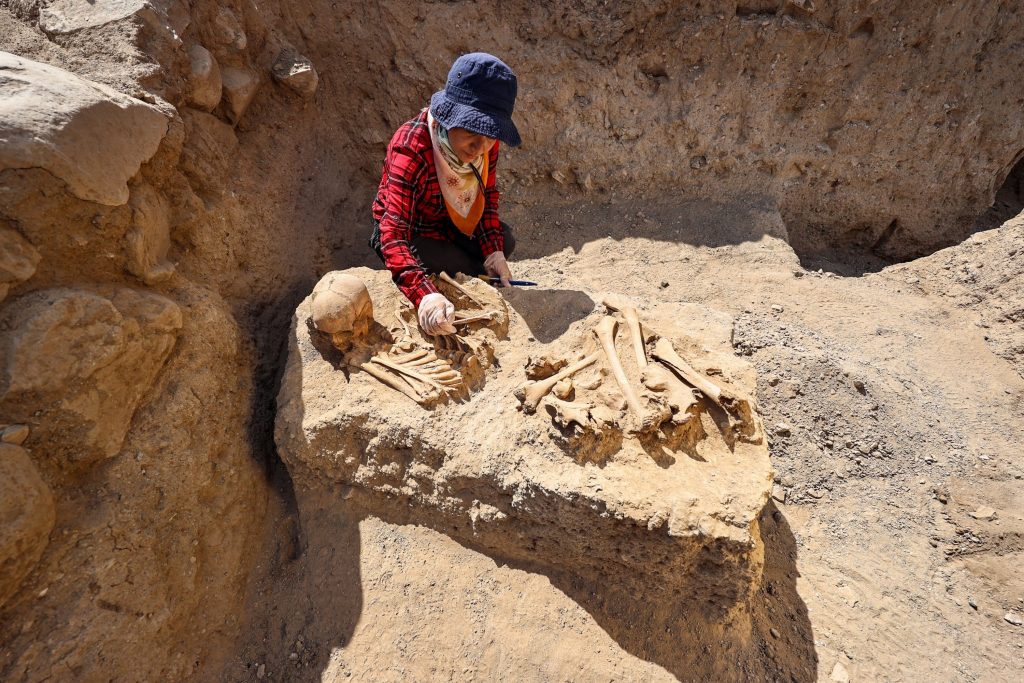
In this type, the dead bodies are buried near a platform. Photo: AA

Emphasizing that the latest graves gave them new information about the burial customs of the Urartians, Çavuşoğlu said, “Previously, there were cist graves, chamber tombs, normal graves that are buried in the ground, and urn tombs in the necropolis area. We have encountered a new type of tomb now. In this type, the dead bodies are buried near a platform.”
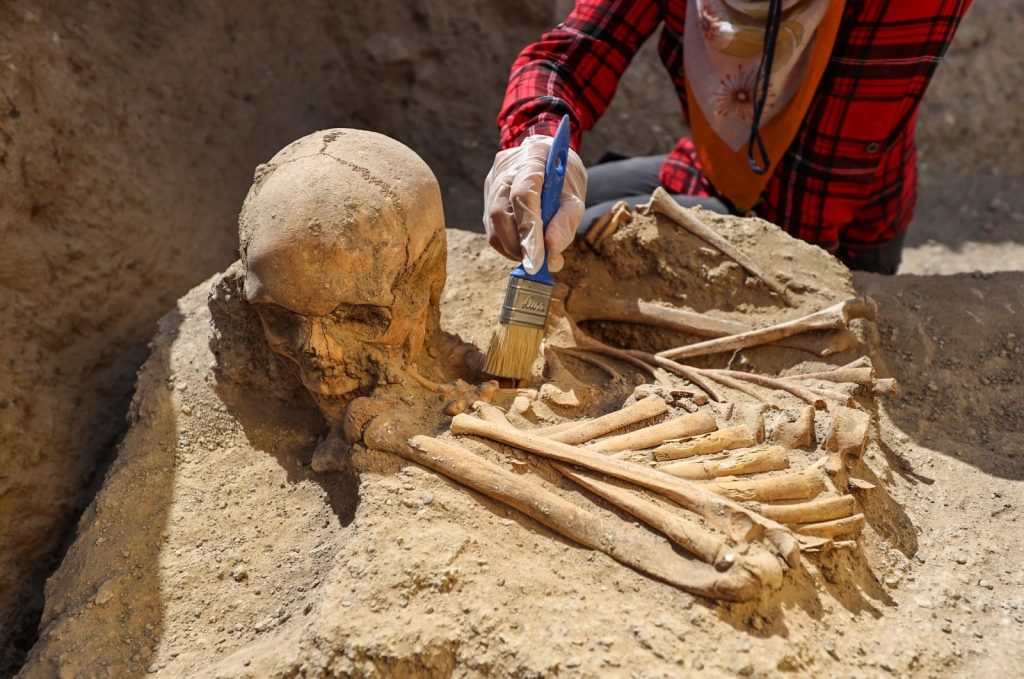
Çavuştepe castle work
Photo: AA

“We usually found the belongings of individuals in the graves in this site. However, the latest adult grave did not have anything with it and his/her corpse was found in a mixed state. For example, we found the head of the corpse next to the feet. This indicates that it was destroyed. We think that the tomb was opened by someone to take the jewelry.”

Çavuşoğlu said that the next work on the site will provide much clear information.

Related Articles

Manuscript Portal Brings Medieval Manuscripts from Greifswald Online

24 April 2024

24 April 2024

Greifswald’s oldest books can be accessed digitally via another new portal. The Manuscript Portal (HSP) is the central online portal...

Smoke archeology finds evidence Humans visited Nerja Cave for 40,000 Years

26 April 2023

26 April 2023

A new study by a team from the University of Córdoba reveals that Nerja is the European cave with the...

2000-year-old Genuine Pompeii marble relief installed in a wall lining the staircase leading down to the basement in a Belgium home

22 December 2023

22 December 2023

An important marble relief depicting the earthquake of 62 AD, stolen from the ruins of ancient Pompeii in Italy in...

2,000-year-old bamboo slips discovered in Yunnan

31 March 2023

31 March 2023

Thousands of bamboo slips (rectangles tied together to form books) have been discovered at the Hebosuo archaeological site in southwestern...

4 Aztec child burials unearthed in Mexico and dated to the Early Colonial period may be indicators of Aztec resistance

6 July 2022

6 July 2022

During an archaeological rescue effort in Mexico City’s historic central district of La Lagunilla, the remains of an Aztec house...

Rare Prehistoric Animal Carvings Discovered For The First Time In Scotland

31 May 2021

31 May 2021

Animal carvings thousands of years old have been found for the first time in Scotland. The carvings, estimated to be...

3,000-Year-Old Cave Paintings Discovered in Itatiaia National Park in Rio de Janeiro, Brazil

13 April 2025

13 April 2025

In a stunning revelation, a dedicated team of researchers from the National Museum, in collaboration with the Federal University of...

Archaeologists find a 5,000-year-old piece of wood in Orkney, which they describe as “astonishing”

10 August 2021

10 August 2021

Archaeologists continue to make surprising discoveries in Orkney. Although organic materials are quite difficult to find, archaeologists have found a...

Ancient Greek Marble Workshop Unearthed on Paros Island

20 May 2025

20 May 2025

The world of ancient Greek art continues to amaze modern scholars, with recent excavations on Paros Island unveiling a long-lost...

Ancient Waiting Bench Discovered Outside Pompeii’s Villa of the Mysteries

12 September 2025

12 September 2025

Archaeologists have uncovered an extraordinary find during the latest excavations at the Villa of the Mysteries: an ancient waiting bench...

A 2,000-year-old ancient “mirror” throws light on aristocratic life in China

17 May 2022

17 May 2022

Archeologists in Beijing have successfully reconstructed a 2,000-year-ago dressing mirror once cherished by the high nobility during the Han Dynasty....

The Basilica cistern, which is said to have the sarcophagus of Medusa or the Mysterious Snake Woman, was restored

21 July 2022

21 July 2022

The Basilica Cistern, one of the magnificent ancient structures of Istanbul, was restored. Besides being the greatest work of the...

Habib-i Neccar Mosque, one of the first mosques in Anatolia, was destroyed in the earthquake

12 February 2023

12 February 2023

Antakya Habib-i Neccar Mosque, one of the first mosques built in Anatolia, was destroyed in the earthquake that killed tens...

2,000-year-old altar found in Alexandria Troas

9 October 2021

9 October 2021

A 2,000-year-old altar was unearthed during the ongoing excavations in the ancient city of Alexandria Troas, in a region close...

Excavation of Carlisle Roman bathhouse uncovers a connection between the site and a third-century Roman emperor

27 September 2021

27 September 2021

Excavation of a Roman bath at the Carlisle Cricket Club in Stanwix, part of the Uncovering Roman Carlisle project, has...