
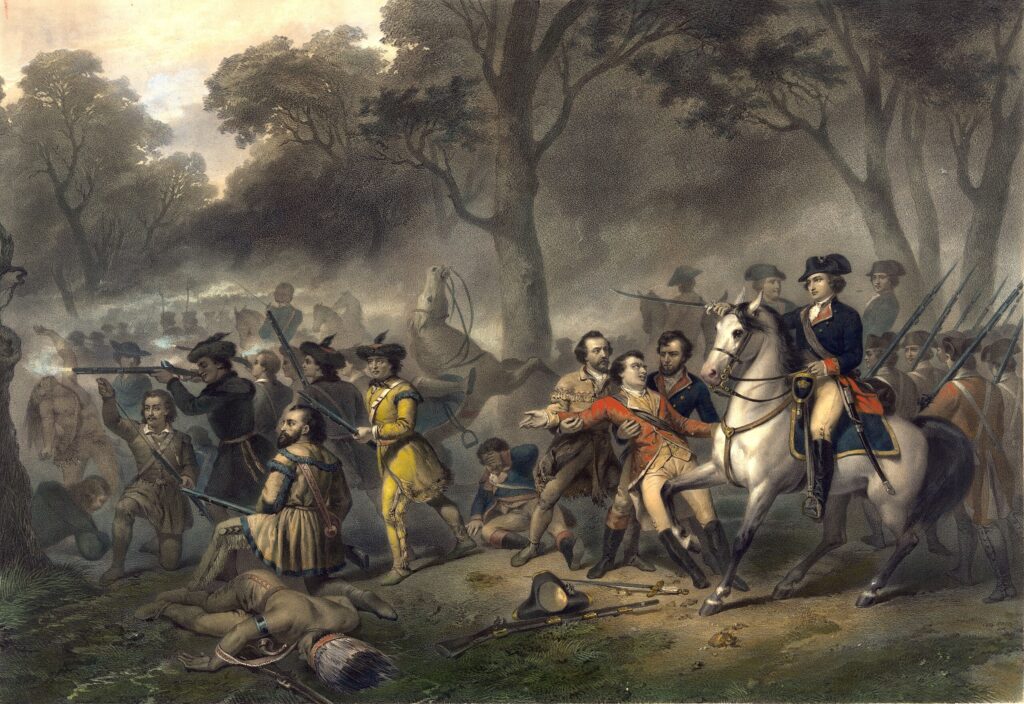
A foggy evening in November 1758 nearly cost George Washington his life in a friendly fire skirmish between two groups of his own men. Now, more than 250 years later, that forgotten battlefield has been rediscovered by archaeologists in western Pennsylvania—reshaping our understanding of one of America’s Founding Father’s most formative experiences.
The site, located roughly two miles from historic Fort Ligonier, marks the exact location of a tragic mistake in which two Virginia Regiment battalions, led separately by Col. George Washington and Col. George Mercer, mistakenly fired upon each other. This pivotal but often-overlooked Friendly Fire incident altered the course of British military action during the French and Indian War and nearly ended Washington’s military career before it began.
Friendly Fire in the Fog
On November 12, 1758, Washington was just 26 years old and serving under British General John Forbes. As French and Native American forces attempted to raid the fort at Loyalhanna (modern-day Fort Ligonier), Mercer was sent ahead with a contingent of Virginians. When musket fire erupted in the distance, Washington rushed to support Mercer with 500 more men.
What followed was chaos in the fog and dusk. The two forces, both comprised of British colonial troops, mistook one another for the enemy. Gunfire erupted. Washington, realizing the error, risked his life by galloping through the line, knocking muskets aside with his sword, and shouting for a ceasefire. In his later words, the event put his life “in as much jeopardy as it had ever been before or since.”
The deadly skirmish left 40 men killed, wounded, or missing—including 38 privates and two officers. Ironically, this misfortune gave way to strategic opportunity: captured French prisoners revealed that Fort Duquesne (in present-day Pittsburgh) was poorly defended. Acting on this intel, General Forbes ordered an immediate march, leading to the French abandoning and burning the fort—ultimately securing British control of the Ohio Valley.
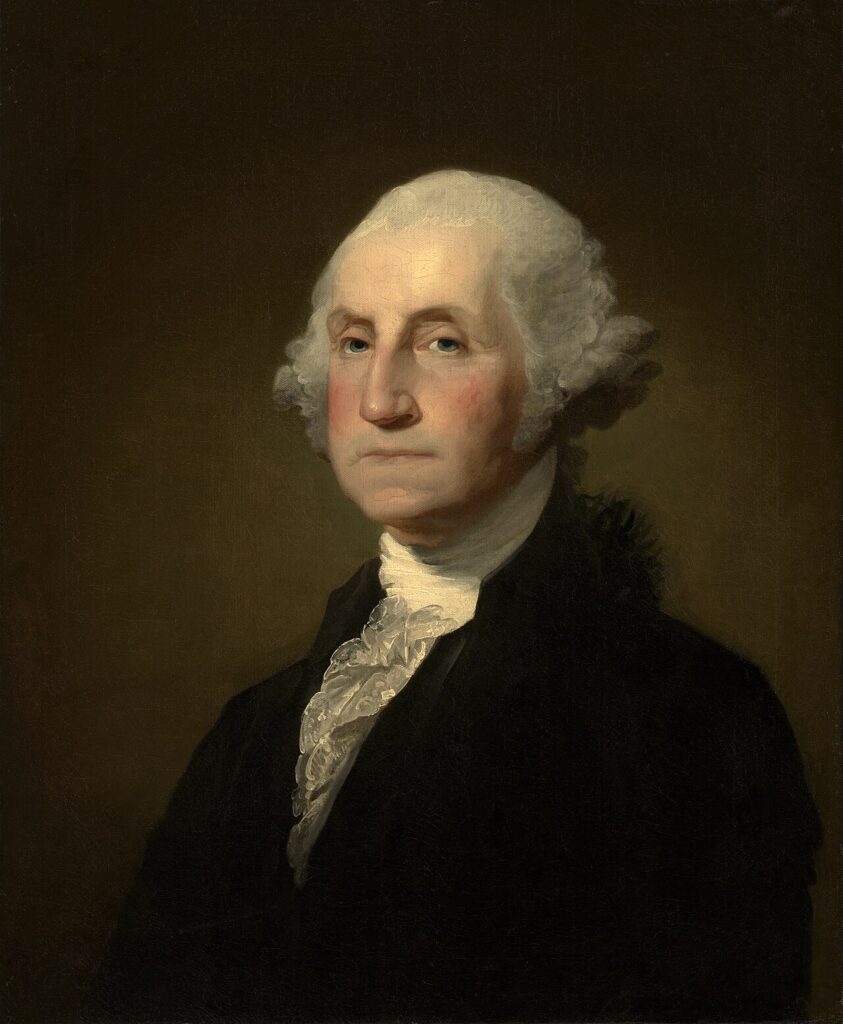
Archaeology Confirms a Long-Suspected Site
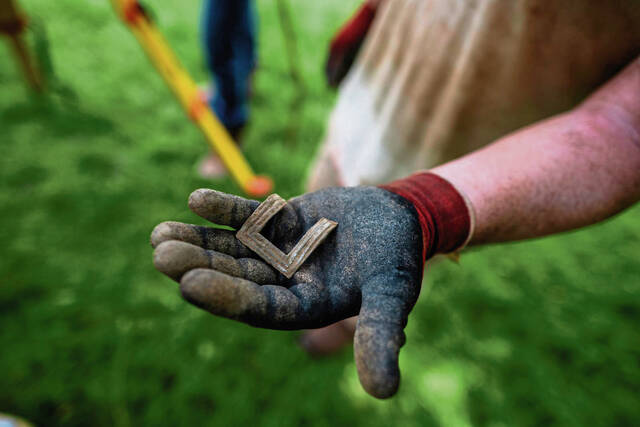
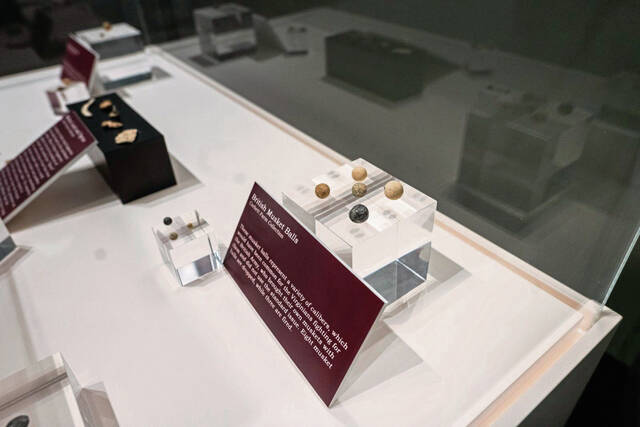
After decades of research and four years of fieldwork, archaeologists led by Dr. Jonathan Burns of Juniata College confirmed the exact site of the Friendly Fire incident in July 2024. Their efforts, aided by volunteers, students, and military veterans, revealed over 350 artifacts, including musket balls, buckles, buttons, and even a French officer’s pocket watch key adorned with a fleur-de-lis.
Advanced tools like ground-penetrating radar and isotope testing on bullets have verified both British and French presence on the battlefield. “This is not just an archaeological discovery,” Burns noted. “This is an emotional, human story about leadership, confusion, loss—and a moment that changed history.”
Perhaps most compelling were two ornate sock garter buckles found far from the main road—evidence suggesting Washington’s men sought higher ground during the clash. These intimate details help reconstruct the moment-to-moment decisions made in the foggy battlefield.
A Story Revived by a Family’s Determination
The rediscovery also fulfills a decades-long quest by the late Charles “Charlie” Fagan III, a Fort Ligonier board member and veteran who made it his mission to find the lost battlefield. His son, artist Chas Fagan, spoke emotionally at a press event unveiling the site. “My father believed we owed it to the men who died here—not just to locate where they fell, but to remember them properly.”
Fagan’s painting, Flash Point, now hangs in Fort Ligonier’s George Washington Gallery, capturing the chaotic moment of realization and Washington’s desperate efforts to stop the shooting.
Teaching Leadership Through Fallibility
The newly opened “Friendly Fire Incident” exhibit at Fort Ligonier displays many of the discovered artifacts, as well as Washington’s handwritten remarks reflecting on the incident. Education officials see this as a powerful moment to humanize the nation’s first president.
“This isn’t about tearing down George Washington,” said archaeologist Burns. “It’s about showing him as a young leader, still learning, still vulnerable. And that’s exactly what makes the story timeless.”
Visitors to Fort Ligonier can explore the exhibit, but the battlefield site itself remains on private land and undisclosed for preservation. Nonetheless, plans for continued research are ongoing, funded by local donors and historical foundations.
A Pivotal Moment Remembered
The rediscovery of the Friendly Fire site illuminates how small, chaotic moments can ripple into major historical change. Without this incident, Fort Duquesne might have remained in French hands, and Washington’s path to national leadership may have taken a very different turn.
“This was more than a battlefield,” said Susanne Haney of PennDOT’s PHAST archaeology program. “It was a turning point in the war—and in Washington’s life.”
In many ways, the site reminds us that leadership is forged not just through victory, but through crisis, error, and reflection. And sometimes, the path to greatness begins with a mistake made in the fog.
Fort Ligonier’s George Washington Gallery
Cover Image Credit: Washington the Soldier, an 1834 portrait of Washington on horseback during the Battle of the Monongahela. Public Domain
