
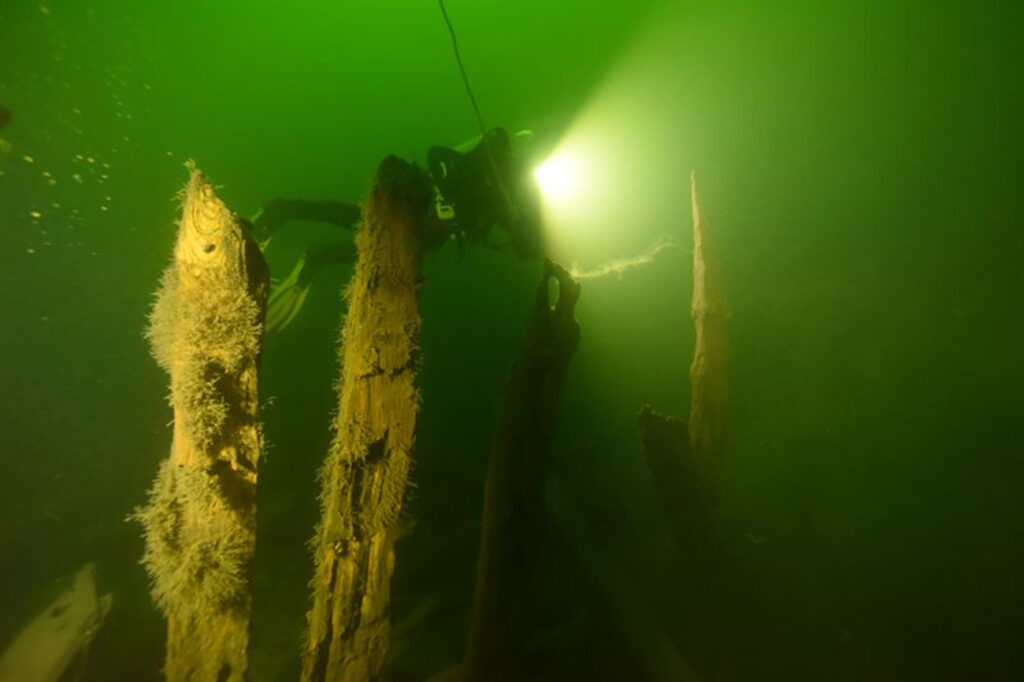
A wooden barrel from a merchant ship that sank off the coast of Sweden approximately 450 years ago is providing unexpected insights into the iron trade of the 16th century. The barrel, recovered from the Baltic Sea by archaeologists, contained roughly 380 pieces of iron. However, it was the barrel’s unusual design, rather than its 127-kilogram cargo, that particularly caught the researchers’ attention.
A joint study by Sweden’s Vrak Museum of Wrecks and the iron and steel industry organization Jernkontoret suggests that merchants may have designed these barrels to facilitate customs inspections. These new findings were presented to the public in Stockholm on November 9, 2026, alongside the launch of a book examining the history of Baltic metal trade.
The Iron-Laden Ship at the Bottom of the Baltic
In 2017, marine archaeologists discovered a shipwreck at a depth of approximately 28 meters near Dalarö in the Stockholm archipelago. Due to its cargo of iron, researchers named the ship the Osmundvraket.
The vessel, roughly 20 meters long, contains at least 20 barrels, though researchers believe the total number could be between 40 and 50. Most of these barrels carried small pieces of iron known as “osmund.”
From the Middle Ages until the early 17th century, osmund iron was one of Sweden’s primary exports. These semi-processed pieces were used to create tools and other metal products, as they could be converted into higher-quality iron through forging.
Dendrochronological analysis of wood samples from the ship revealed materials dating back to the 1540s and timber felled in Finland around 1553. Based on this, researchers estimate the ship sank in the 1560s.
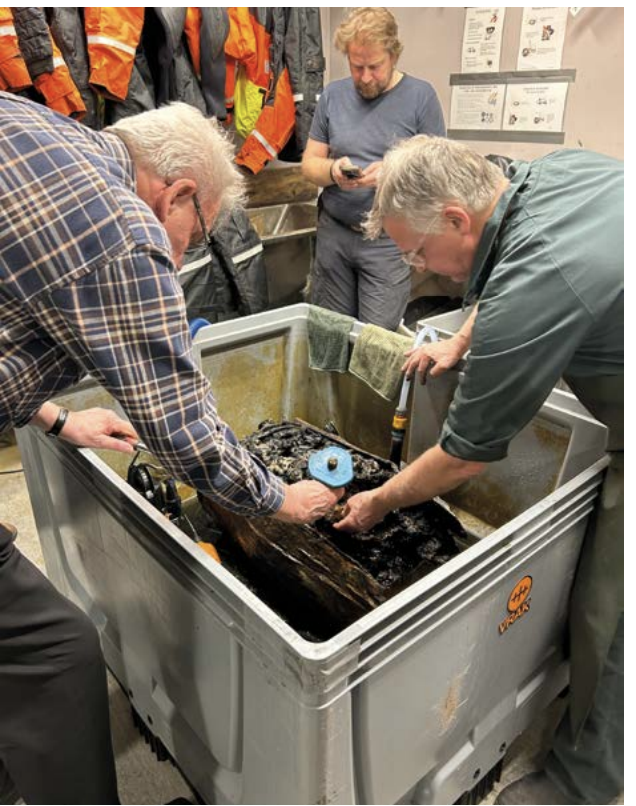
Archaeologist Gert Magnusson and conservator Max Jahrehorn carefully remove iron pieces, known as osmunds, one by one from a 16th-century barrel recovered from the Osmundvraket shipwreck in Sweden. Photo: Catarina Karlsson / Jernkontoret.
380 Pieces of Iron from a Single Barrel
In May 2024, marine archaeologists from the Vrak Museum brought one of the ship’s barrels to the surface. Throughout 2025, the research team conducted a detailed examination of the wooden container and its contents.
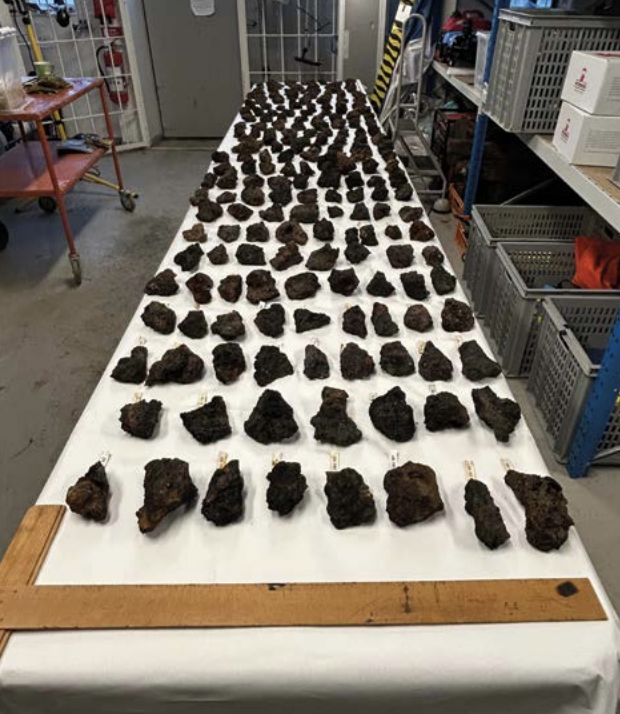
Archaeologist Gert Magnusson and conservator Max Jahrehorn carefully disassembled the wooden slats of the barrel in the laboratory to extract the iron load. The team counted approximately 380 osmund pieces, with a total weight of 127 kilograms.
Every piece was weighed, measured, and documented. The team now aims to analyze the quality of the iron and use trace elements to determine the regions where it was produced.
The construction of the barrel has become a subject of research as significant as its contents.
Designed Specifically for Customs Control?
According to a study published in Jernkontoret’s 2026 research annual, the barrel had an unusual construction made from relatively thin pine staves. By comparing similar finds from around the Baltic Sea, researchers identified three other barrels of the same type.
This similarity suggests the development of a specialized packaging type for transporting osmund iron. Researchers propose that merchants may have designed these barrels so that customs officials could easily open them to inspect the contents.
The Vrak Museum further noted that this arrangement may have made it harder to cheat regarding the cargo’s contents. However, researchers have not yet determined the exact method of use. The thin wooden structure also supports the theory that these barrels were likely produced for single-use transport.
This detail indicates that the iron trade involved more than just production and shipping; how the product was packaged and inspected likely played a key role in the functioning of the commercial system.
Re-examining Early Swedish Iron Trade
The project, led by Jernkontoret Research Director Catarina Karlsson and Vrak marine archaeologist Jim Hansson, compares the finds from the Osmundvraket with other merchant ships in the Baltic Sea.
Toward the 17th century, Sweden shifted its focus from exporting osmund iron to more processed bar iron. This transition increased trade revenue and made it easier to monitor the quantity and quality of the products.
The researchers have compiled their new findings in a book titled Shipwrecks and the Baltic Metal Trade: Metal Production and Trading Nodes 13th–17th Century.
The barrel recovered from the Osmundvraket provides concrete evidence of how the Swedish iron trade operated before this transformation. Once the analysis of the iron pieces’ origins is complete, it will be clearer which production regions supplied the ship’s cargo.
