
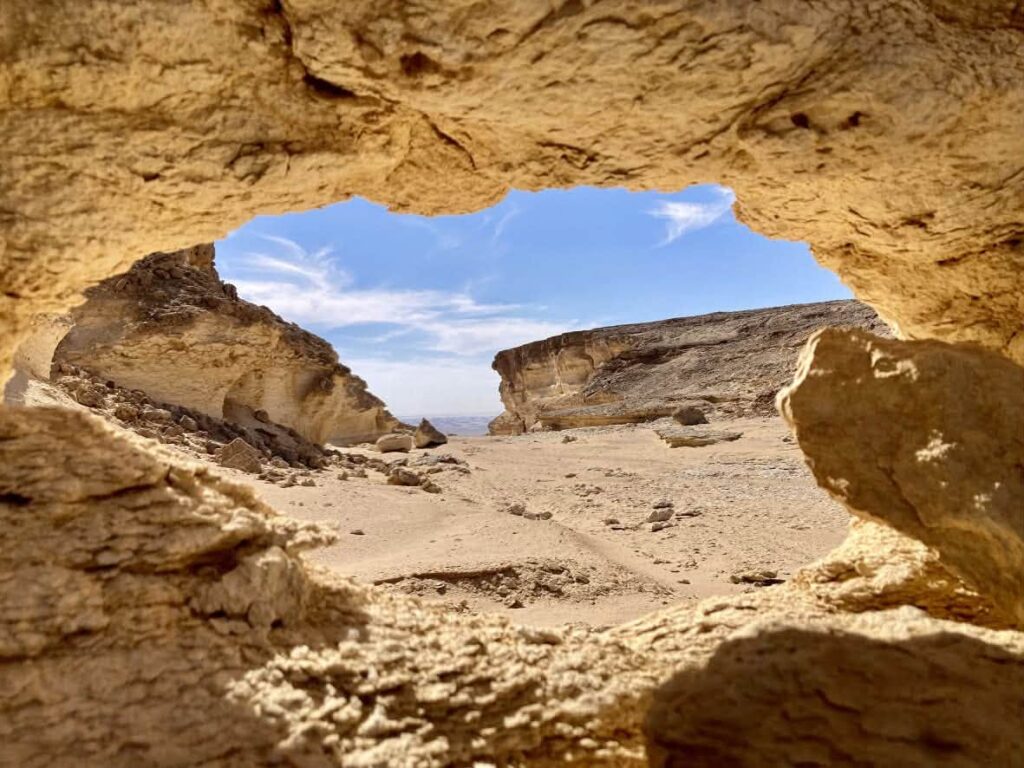
Egyptian and Italian archaeologists conducting research in the Farafra Oasis in Egypt’s Western Desert have discovered a vast prehistoric settlement believed to date back approximately 8,500 years. Featuring around 200 archaeological elements, including stone structures, hearths, and dense clusters of stone tools, the site is one of the largest prehistoric settlements ever identified in the Western Desert.
Preliminary findings suggest that the area was an organized living space where people carried out their daily activities, rather than a temporary camp. The discovery provides significant insights into how human communities lived during a period when the Sahara was more humid than it is today.
According to a statement from the Ministry of Tourism and Antiquities, the discovery was made by a joint Egyptian-Italian archaeological mission working under the Farafra Oasis Prehistoric Project (FOPP), in cooperation with the Supreme Council of Antiquities.
The settlement is located on the Rajeh Plateau on the eastern edge of the Farafra depression. The size and spatial organization of the site, which researchers have designated as “Area 1,” allow for a more comprehensive evaluation of prehistoric human activity in the region.
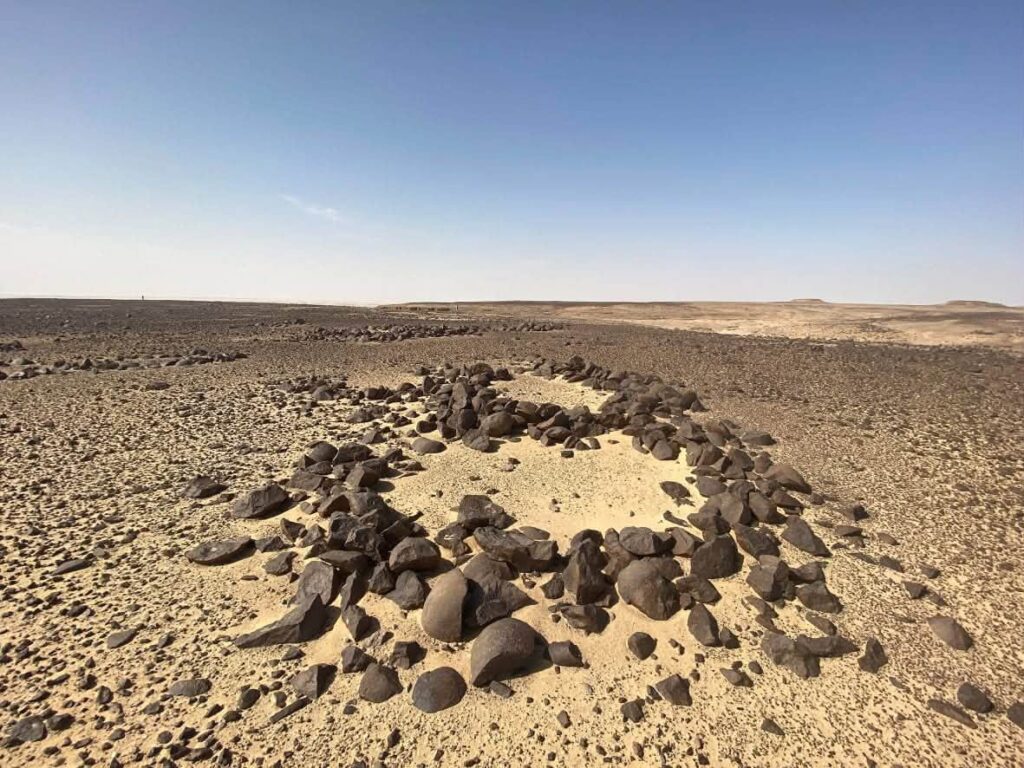
An organized living space in the middle of the desert
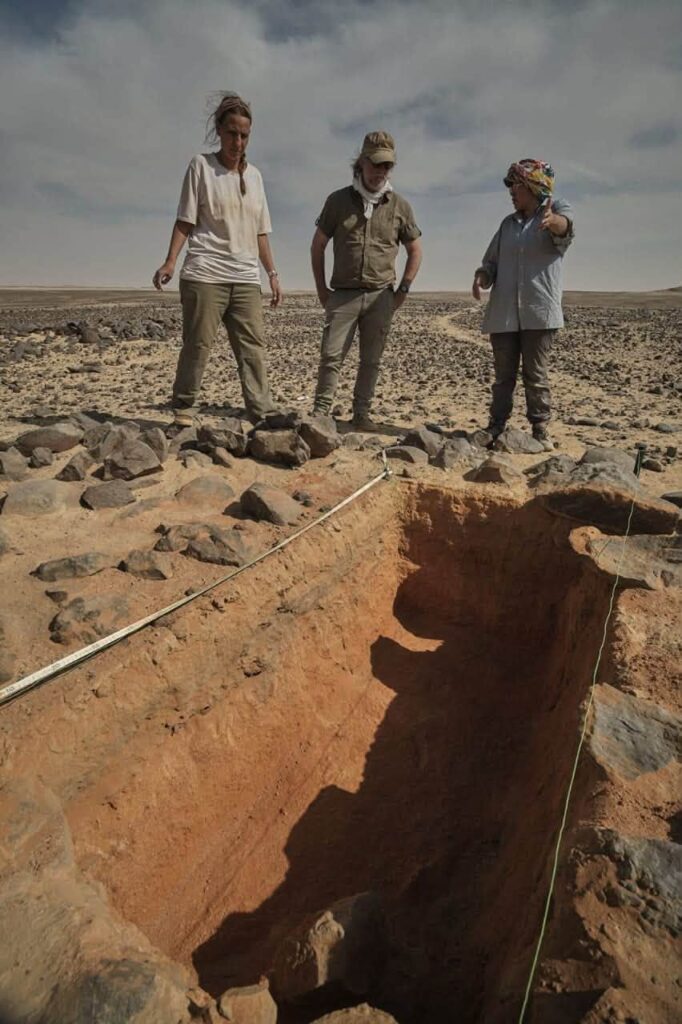
Archaeologists began fieldwork on the Rajeh Plateau, an area previously unexplored by archaeological research, in 2023. After initial surveys identified clusters of prehistoric stone structures in different parts of the plateau, the team expanded their research during the 2025 excavation season.
Archaeological surface surveys, excavations, topographic documentation, photography, and artifact analysis have enabled an understanding of the settlement’s spatial organization. Researchers also conducted geological and geo-archaeological studies to investigate the environmental conditions that made this region attractive to early humans.
The presence of quarries around the stone structures and the distribution of stone tools suggest that these areas were used for daily life and domestic activities. The extent of the settlement and the layout of the structures indicate that people utilized the region repeatedly and developed a specific residential order.
Hisham el-Leithy, Secretary-General of the Supreme Council of Antiquities, stated that the discovery is crucial for understanding the development of prehistoric settlement patterns in the Western Desert and the transition of human communities toward more sedentary lifestyles.
An era when the Sahara was surrounded by lakes
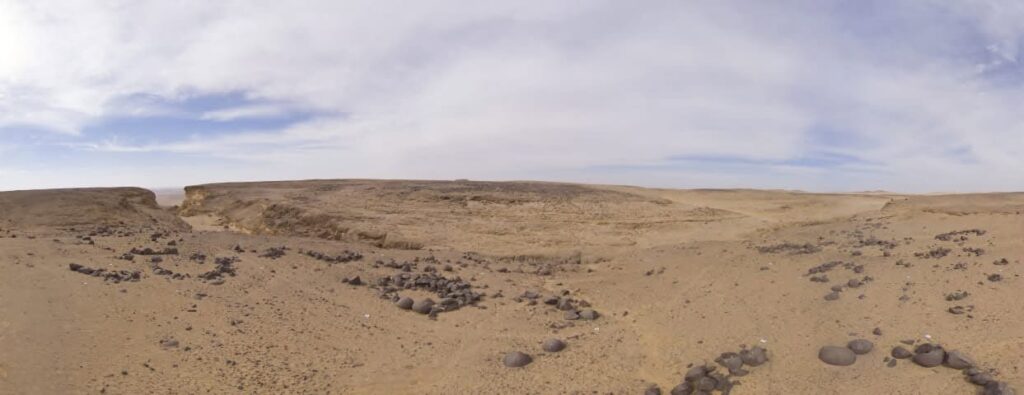
While the Farafra Oasis is now dominated by an arid desert landscape, it had very different environmental conditions during the early and middle Holocene. Increased rainfall across vast areas of North Africa allowed for the development of lakes and vegetation, which human communities utilized.
Geological research on the Rajeh Plateau revealed the existence of shallow natural depressions and sedimentary deposits from ancient lakes. These findings support the theory that the prehistoric settlement developed under more humid environmental conditions.
Natural resources in the region were not limited to water. Local stone sources provided the inhabitants with the necessary raw materials to build structures and produce the stone tools used in their daily activities.
The combined evaluation of archaeological and environmental data is vital for understanding how prehistoric communities utilized natural resources, organized their living spaces, and adapted to changing climatic conditions.
The history of the 8,500-year-old settlement
Giulio Lucarini, head of the excavation mission and director of the Farafra Oasis Prehistoric Project, explained that the preliminary dating of the settlement is based on comparisons with findings from other archaeological sites in the region.
Researchers compared the finds on the Rajeh Plateau with examples from Wadi el-Abyad in the Farafra Oasis, as well as previously studied archaeological sites in the Dakhla and Kharga oases. These studies suggest that the settlement could date back approximately 8,500 years; however, this dating remains a preliminary assessment.
The new discovery is a continuation of previous work conducted by the research team in the Rajeh plains and the Bir Murr region at the foot of the limestone plateau. In those areas, archaeologists had previously identified various prehistoric settlement sites associated with ancient lake environments.
Barbara Barich, from the Farafra Oasis Prehistoric Project, stated that the team will continue the research on prehistoric settlements and environmental change that they began several decades ago.
