
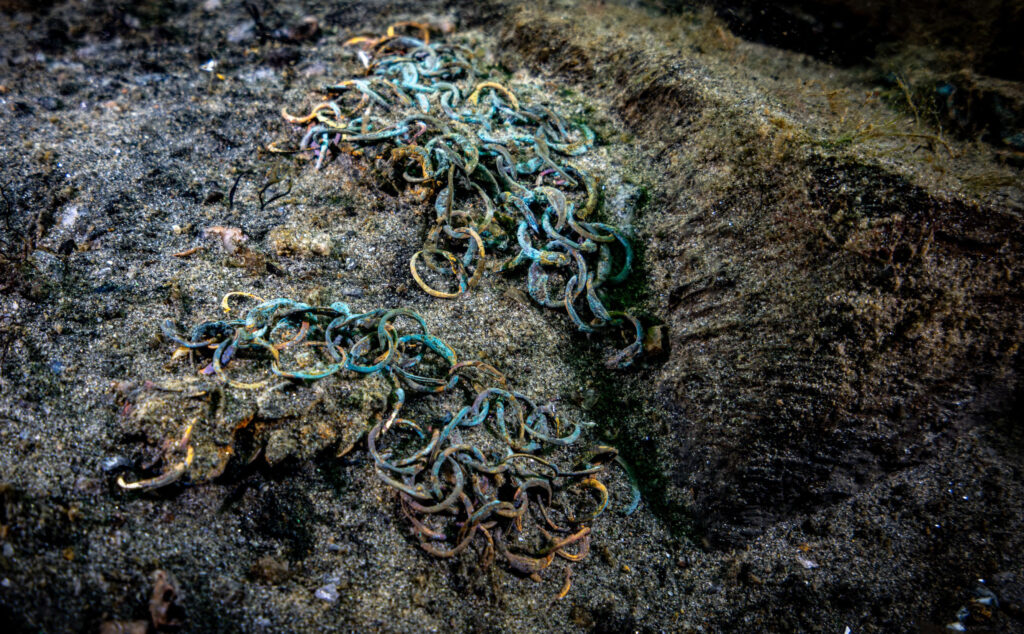
Maritime archaeologists investigating the wreck of Gribshunden, a Danish royal warship that sank off the coast of Sweden in 1495, have discovered fragments of finely crafted medieval chainmail armor. The find may have a connection to German mercenaries who served King Hans of Denmark, offering new evidence of the military equipment carried aboard royal warships during the final decades of the Middle Ages.
Researchers from the universities of Southampton, Södertörn and Stockholm are investigating the armor as part of a wider project examining the ship’s military organization, armaments and life aboard a royal vessel more than five centuries ago.
Military Equipment Beneath the Forecastle
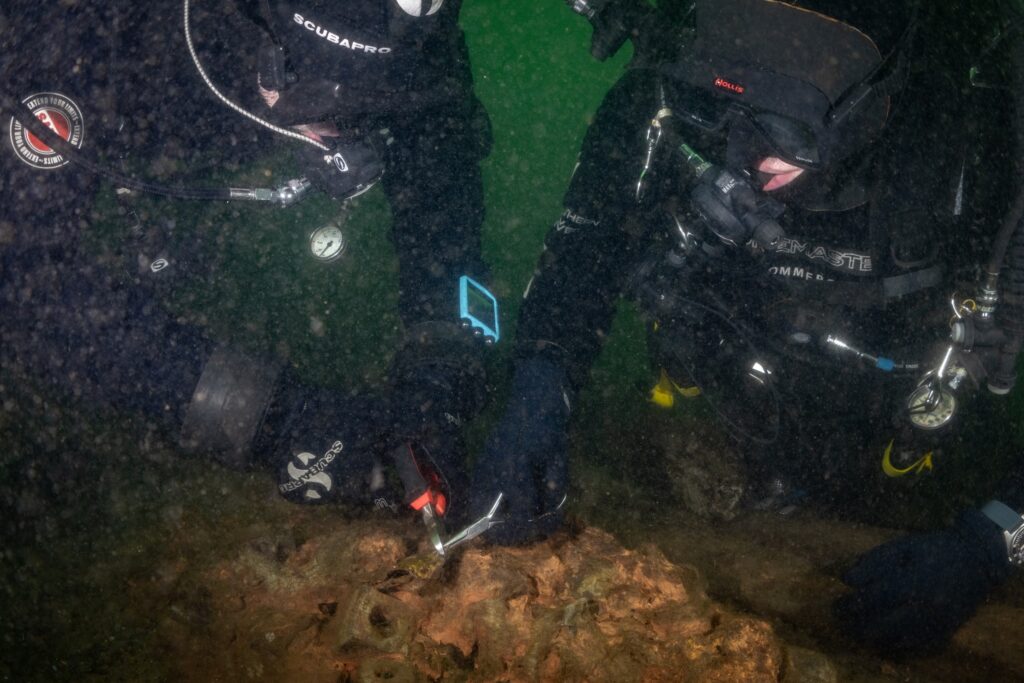
The discovery came during an investigation of the ship’s forecastle, an elevated structure at the bow that served as a fighting platform. Archaeologists encountered the armor fragments while documenting a chest associated with ammunition and military tools.
According to the University of Southampton, the fragments consist of copper-alloy rings. Their fine workmanship and remarkable state of preservation make them particularly valuable for studying late medieval military equipment.
Rodrigo Pacheco-Ruiz, a visiting fellow at Southampton’s Centre for Maritime Archaeology and co-investigator on the Griffin project, suggests that the area beneath the forecastle may have accommodated military supplies. The discovery supports this interpretation, although archaeologists have yet to establish the compartment’s precise function.
Armor That May Have Belonged to German Mercenaries
Historical records indicate that German mercenaries known as Landsknechts accompanied King Hans aboard Gribshunden when the vessel sank. These professional soldiers became prominent figures in European warfare during the late 15th and early 16th centuries, serving rulers and military commanders across the continent.
The presence of chainmail near other military equipment raises the possibility that the compartment housed supplies belonging to these soldiers. However, the quality of the armor alone cannot establish the identity or social standing of its owner.
Rolf Fabricius Warming, a researcher at Stockholm University who leads the project alongside Professor Johan Rönnby of Södertörn University, cautions against automatically associating fine armor with wealthy individuals. Medieval soldiers could maintain, repair, and pass down military equipment over extended periods.
Specialist analysis of the metal and manufacturing techniques may help determine where craftspeople produced the armor and whether it had already seen years of service before the ship sank.
A Royal Warship Built for War and Diplomacy
Gribshunden belonged to King Hans of Denmark and Norway at a time of intense political competition in northern Europe. Although the vessel served military purposes, it also carried royal representatives on diplomatic missions, including an expedition to England in 1493.
Two years later, King Hans embarked on a journey to Kalmar, Sweden, where he hoped to strengthen his political position within the Kalmar Union. The alliance had brought Denmark, Norway and Sweden together under a common monarchy, although tensions between the kingdoms frequently threatened its stability.
The voyage ended in disaster when an explosion and subsequent fire engulfed Gribshunden while it lay at anchor near Stora Ekö Island. The king survived, but his flagship sank with much of its cargo and equipment.
The wreck remained beneath the Baltic Sea until its rediscovery in the 1970s. Since then, archaeological investigations have gradually documented its remarkably preserved timbers and material remains, offering insights into shipbuilding, royal diplomacy, and naval warfare at the close of the Middle Ages.
Reconstructing Military Life Aboard the Ship
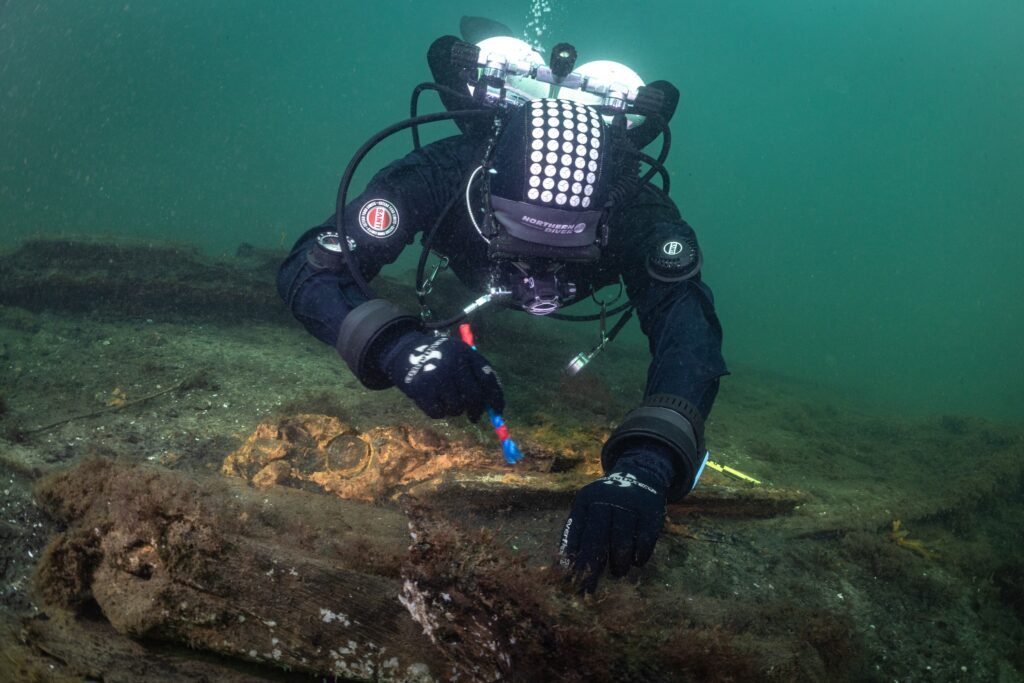
The latest expedition combines archaeological diving with robotic seabed surveys and high-resolution underwater photography. An uncrewed surface vessel maps the surrounding seabed, while divers document individual objects and structural remains in their archaeological context.
Researchers also collected lead samples from the chest during the recent investigation. Earlier discoveries of lead objects suggest that the ship may have carried equipment associated with ammunition production, although their precise purpose remains uncertain.
The chainmail fragments add another dimension to the study of Gribshunden. Beyond reconstructing the ship itself, archaeologists can now investigate how soldiers stored their personal equipment, how military supplies occupied different compartments, and how the crew organized the vessel for combat.
