
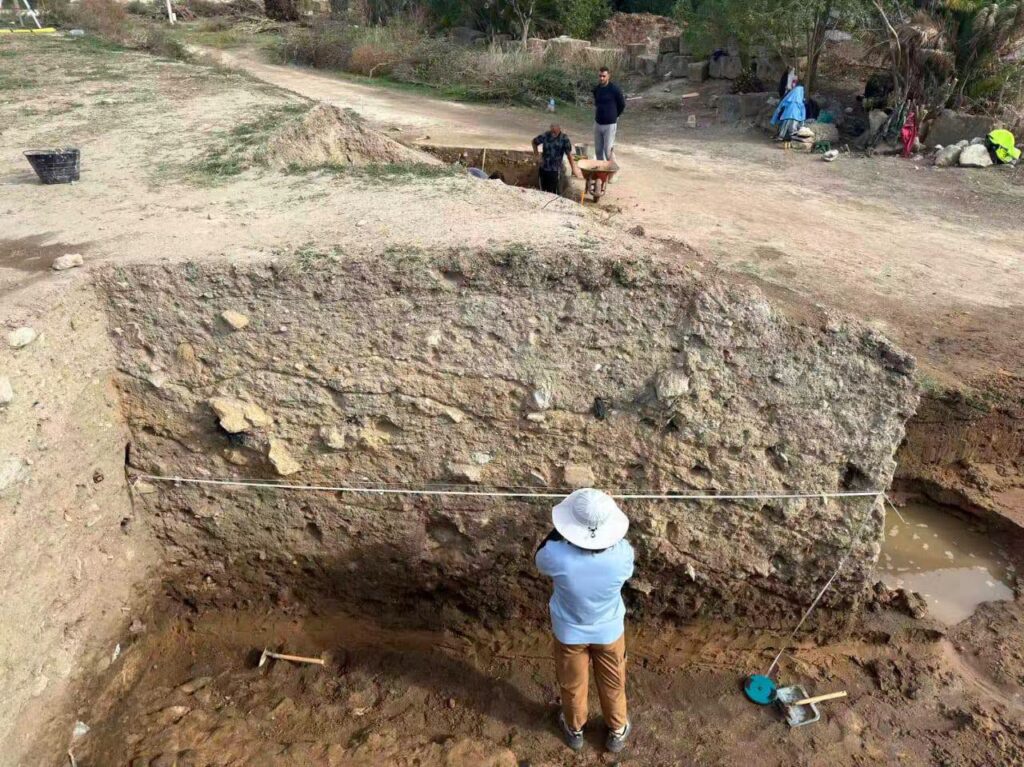
Archaeologists excavating the ancient Punic ports of Carthage in Tunisia have discovered a Roman-era fortification wall and stone blocks that may have formed part of a breakwater. The wall could belong to the outer enclosure of the central island within Carthage’s famous circular military harbor, once the heart of one of the most powerful naval forces in the ancient Mediterranean.
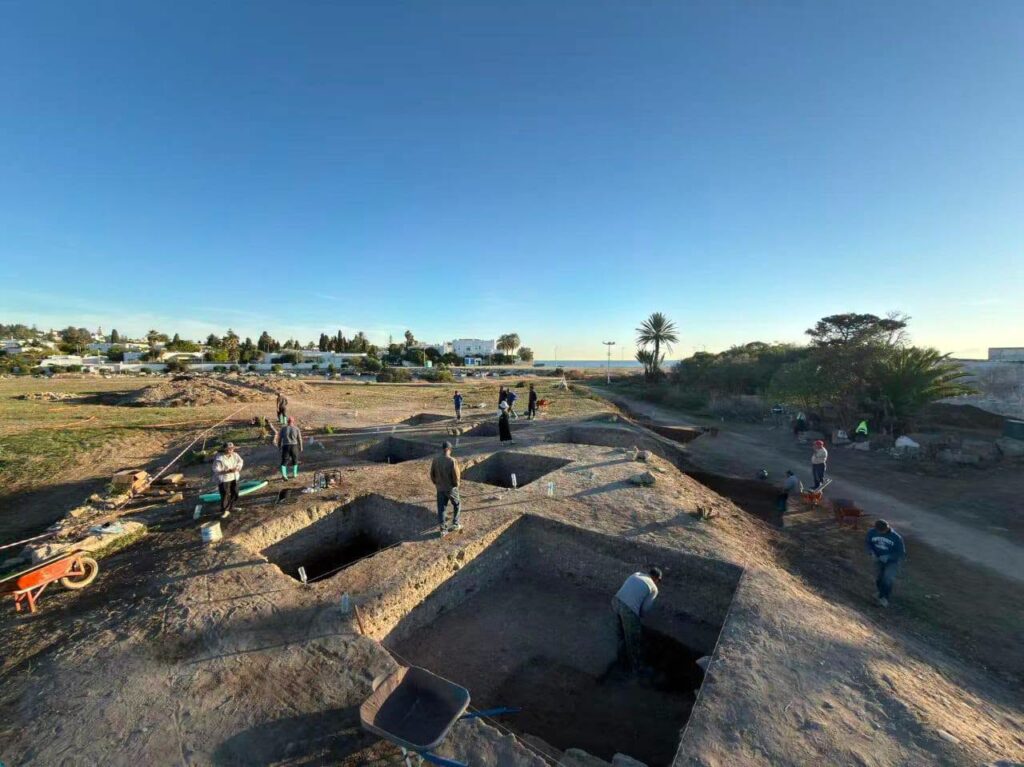
The excavations also yielded amphorae, oil lamps, pottery and bronze coins, documenting occupation of the harbor area from the Punic period through the Byzantine era. Together, the discoveries offer an opportunity to investigate how successive civilizations used and transformed this maritime complex.
Tunisia’s National Heritage Institute (INP) announced the findings on November 26. The excavation campaign began on October 19, 2026, as part of a scientific partnership between the institute and China’s National Centre for Archaeology (NACA), under the supervision of the Tunisian Ministry of Cultural Affairs.
Inside Carthage’s Legendary Naval Harbor
Before its destruction by Rome, Carthage dominated maritime trade across much of the western Mediterranean. Its naval power rested partly on a sophisticated harbor system that accommodated merchant vessels and warships in separate but interconnected basins.
The outer, roughly rectangular harbor served commercial shipping, while the inner circular basin housed the Carthaginian fleet. According to the ancient historian Appian, the naval harbor contained facilities for 220 ships, with storage areas for naval equipment above the shipsheds.
At the center stood an island that housed the naval command headquarters. From this position, the commander could monitor activity within the harbor and observe approaching vessels. Earlier archaeological investigations suggest that the circular harbor and its stone shipsheds took shape in the late third or early second century BCE.
The newly discovered Roman wall could help explain how later inhabitants reorganized this strategically important island after the fall of Punic Carthage.
From Rome’s Greatest Rival to an Imperial Capital
In 146 BCE, Roman forces under Scipio Aemilianus captured and destroyed Carthage, bringing the Third Punic War to an end. The destruction marked the collapse of Carthaginian political power, but it did not end the city’s history.
Julius Caesar initiated plans to establish a Roman colony at Carthage, and Augustus completed its refoundation in 29 BCE. The city subsequently became the capital of Rome’s African province and a major commercial center supplying the empire with agricultural products, including grain and olive oil.
Roman Carthage developed an extensive urban infrastructure that included monumental public buildings, temples, theaters, an amphitheater, and the enormous Baths of Antoninus. Its maritime facilities remained important to the city’s economic life.
Previous excavations around the circular harbor uncovered evidence of Roman construction on the central island, including two successive temples and a structure that may have served as a lighthouse.
Carthage later became the capital of the Vandal kingdom before the Byzantine general Belisarius captured the city in 533 CE. The archaeological material recovered during the current campaign reflects this long history of occupation under successive powers.
Uncovering the Harbor’s Architectural History
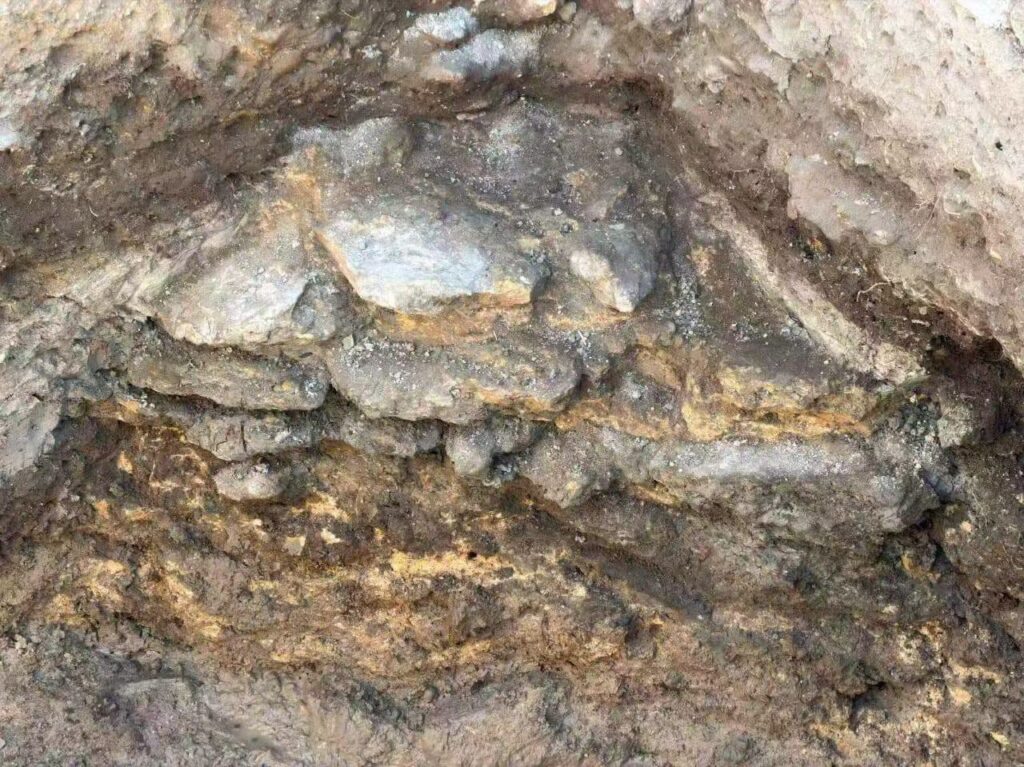
Alongside the Roman enclosure wall, archaeologists uncovered stone blocks that may once have belonged to a structure designed to reduce the impact of waves. Researchers have yet to establish their precise function or determine how they relate to the surrounding harbor installations.
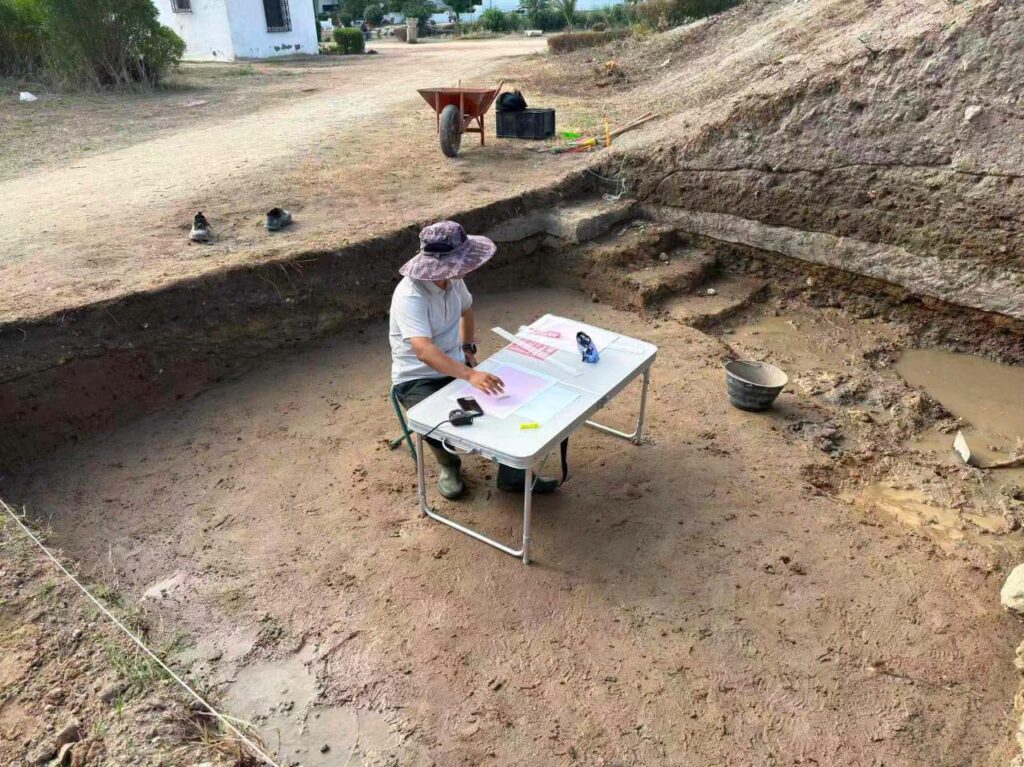
The Tunisian and Chinese teams continue to excavate and document the site, examining the relationships between ancient circulation surfaces, abandonment layers and building foundations. Their work aims to reconstruct the changing architectural layout of the harbor complex.
Today, the Punic ports form part of the Archaeological Site of Carthage, which UNESCO added to its World Heritage List in 1979. While the circular harbor remains one of the most recognizable monuments of Punic civilization, the latest discoveries could help archaeologists reconstruct a less familiar chapter of its history: the transformation of Carthage’s former naval stronghold under Roman rule.
