
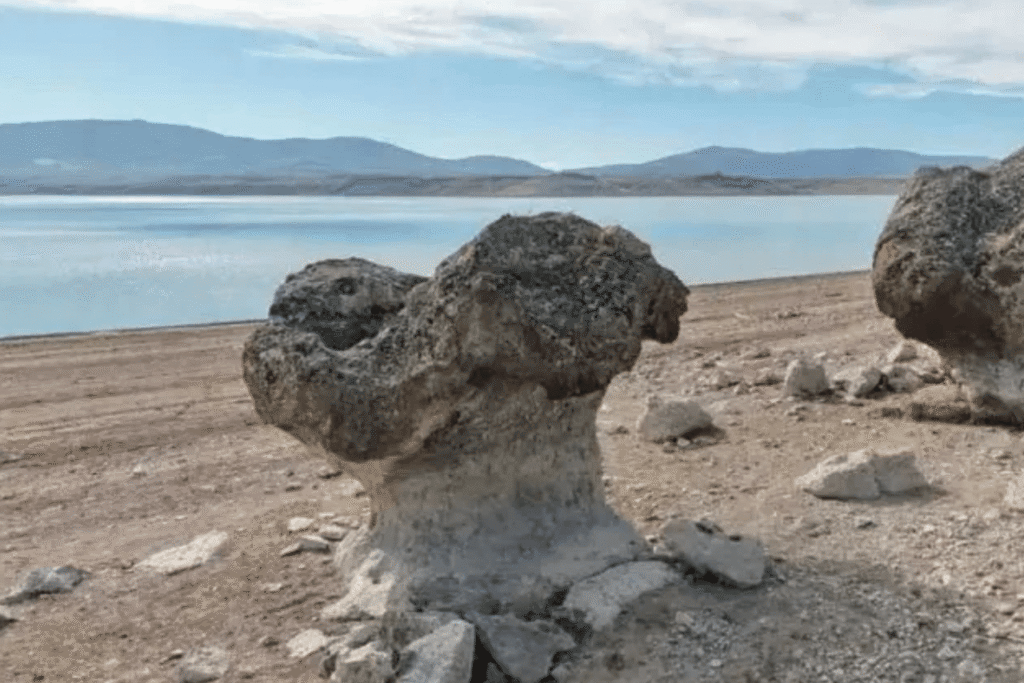
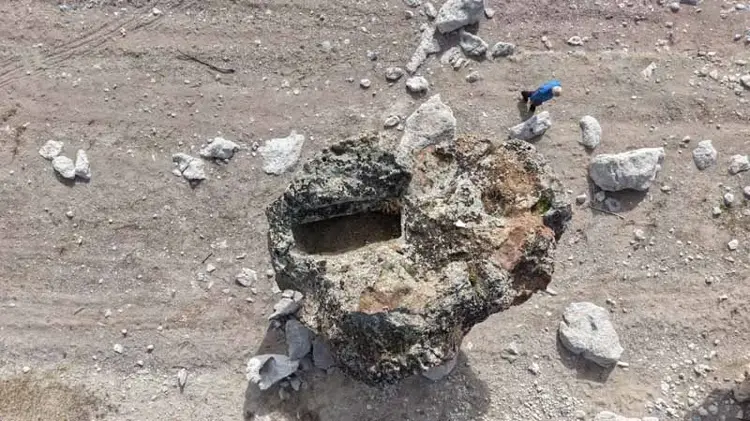
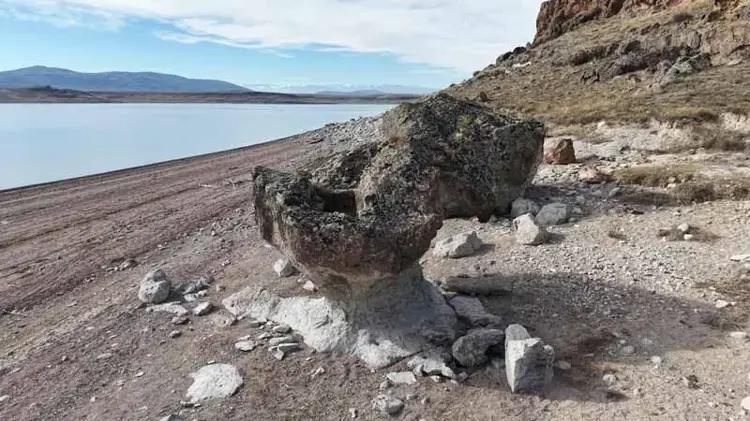
An extraordinary ancient tomb in Türkiye’s Cappadocia region may represent a previously undocumented form of rock-cut burial architecture. Located in the Develi district of Kayseri, the tomb occupies the summit of a natural mushroom-shaped rock that rises approximately five meters above the surrounding terrain. Although preliminary assessments suggest a Roman-period origin, the unusual combination of geological formation and funerary architecture raises questions that extend beyond conventional archaeology.
Local history researcher Nezir Ötegen discovered the tomb during field investigations in the Zamantı River valley. While ancient communities carved thousands of tombs into cliffs, rocky hillsides, and isolated rock formations across Anatolia and beyond, preliminary research has identified no directly comparable example of a burial carved into the summit of a natural mushroom-shaped rock.
A comparable ancient tomb in Bulgaria provides an intriguing archaeological parallel. However, the distinctive shape of the Cappadocian formation sets the Turkish discovery apart and raises the possibility that it may be the first documented example of its kind.
An Extraordinary Tomb Among Ancient Settlements
Ötegen encountered the mushroom-shaped rock near the Gümüşören Dam, between the settlements of Hüseyinli and Yenice, while investigating the historical heritage of the Zamantı River valley. At the summit, he noticed a rectangular grave with its lid displaced, resembling a type of rock-cut burial that archaeologists call a chamosorion.
Standing approximately 1,297 meters above sea level, the formation occupies a prominent position within a landscape rich in archaeological remains. Nearby sites include the Fraktin Hittite Rock Monument, the Çinçin Caves, Direkli Cave, and the Çukuryurt Rock Tombs.
In his comments following the discovery, Ötegen suggested that the rock’s visibility from surrounding ancient settlements may have influenced its selection as a burial place. He also drew attention to the Çukuryurt Rock Tombs on the opposite side of the valley, placing the discovery within a broader landscape of ancient funerary monuments.
Ötegen believes the discovery could contribute to geological heritage studies as well as archaeology. While mushroom-shaped rocks occur in many parts of the world, he emphasized that the presence of an ancient tomb at the summit gives this particular formation an unusual cultural significance. He notified the relevant authorities and called for scientific investigation and official protection of the site.
Speaking about the significance of the find, Ötegen said, “We believe we have made a new contribution to geological heritage literature.” He stressed that the tomb distinguishes the formation from other mushroom rocks around the world, giving it value as both a natural landmark and an archaeological monument.
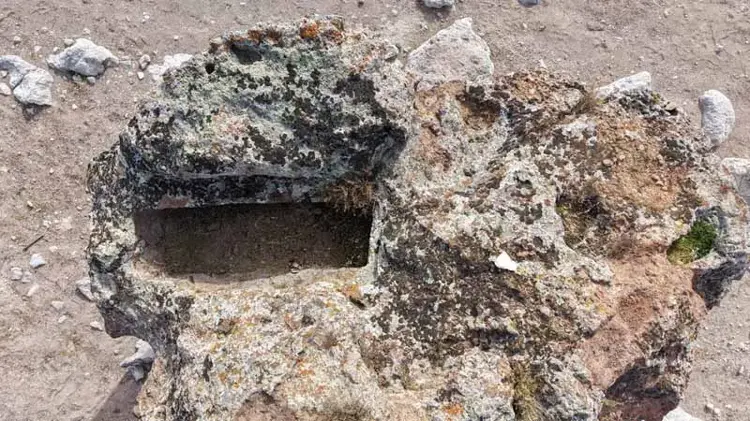
A Remarkable Archaeological Parallel in Bulgaria
One of the most interesting parallels to the Cappadocian discovery lies in the Eastern Rhodope Mountains of Bulgaria, a region renowned for its ancient Thracian rock-cut monuments and megalithic burial structures.
In his 2015 academic study, Dolmens and Rock-Cut Monuments, archaeologist Georgi Nekhrizov describes an unusual grave near the village of Bashtino, in an area known as Alla Kaya. Ancient builders carved the burial into the summit of a naturally pyramid-shaped volcanic rock, possibly taking advantage of an existing depression in its upper surface.
The builders also shaped the exterior surfaces of the grave walls, giving the monument an appearance reminiscent of a dolmen. This architectural feature illustrates how ancient Thracian communities adapted natural rock formations to their funerary traditions.
The Bulgarian example demonstrates that ancient societies sometimes selected the summits of distinctive geological formations as burial places. However, while the Bashtino monument occupies a pyramid-shaped rock, the Cappadocian tomb sits atop a formation with a broad upper section and a narrow stem, creating its characteristic mushroom-like appearance.
Although no evidence establishes a direct cultural or chronological connection between the two monuments, the comparison highlights the unusual geological setting of the discovery in Develi.
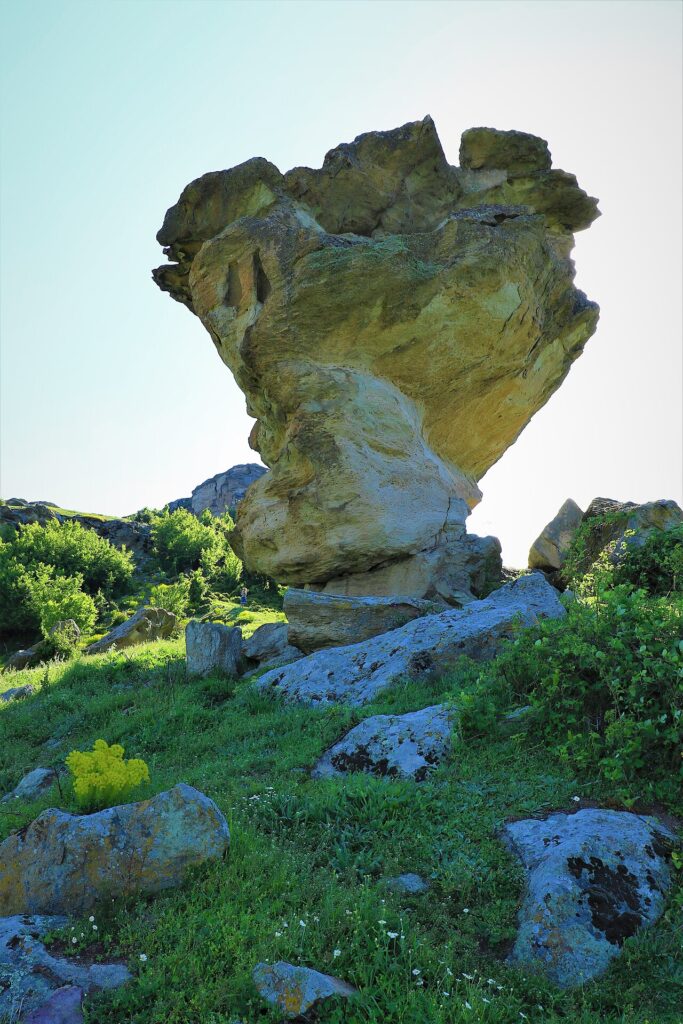
Another striking geological parallel exists between the villages of Zhenda and Sokolite in Bulgaria’s Eastern Rhodope Mountains. Here, ancient communities carved eight niches into the surfaces of a natural mushroom-shaped rock. Although some scholars associate such niches with Thracian funerary rituals, their precise function remains a subject of archaeological debate.
The Bulgarian formation demonstrates that ancient communities also modified mushroom-shaped rocks for potentially ritual purposes. Unlike the Zhenda monument, however, the Cappadocian example features a grave carved directly into the summit rather than niches along its exterior surfaces.
Where Archaeology Meets Geological Heritage
Cappadocia contains some of the world’s most recognizable examples of interaction between natural geology and human ingenuity. Over centuries, local communities transformed rocky landscapes into settlements, religious sanctuaries, underground cities, and burial grounds.
The mushroom rock tomb, however, presents a particularly interesting scientific question: did the formation already resemble a mushroom when ancient stoneworkers carved the grave?
Mushroom rocks generally develop through differential erosion. Environmental processes gradually remove material from certain sections of a rock more rapidly than others, creating a narrow base beneath a broader upper portion.
Geologists have yet to determine how much the Develi formation has changed since the construction of the tomb. The original builders may have deliberately selected an already distinctive mushroom-shaped rock, or centuries of erosion may have gradually produced its present appearance.
Understanding this process could help researchers reconstruct the ancient landscape and establish whether the unusual geological form influenced the choice of burial location.
A Valley Preserving Thousands of Years of History
The discovery adds another archaeological feature to the Zamantı River valley, where ancient monuments, burial grounds, and settlement remains preserve evidence of human activity spanning thousands of years.
Among the region’s most important landmarks is the Fraktin Rock Relief, which dates to the 13th century BCE. The monument depicts Hittite King Hattusili III and Queen Puduhepa presenting offerings to deities, illustrating the religious and political importance of the surrounding landscape during the Late Bronze Age.
The region also preserves substantial evidence of ancient funerary architecture. As the archaeological record surrounding Gümüşören indicates, a 2021 inventory from Türkiye’s Ministry of Culture and Tourism documented five rock-cut chamber tombs and four rectangular rock-cut graves at the nearby Çakmaktepe necropolis, together with road remains attributed to the Roman period.
These archaeological remains provide valuable context for the mushroom rock tomb. Future investigations could establish whether it formed part of an existing burial landscape or occupied an isolated position for reasons that archaeologists have yet to understand.
Could It Be the World’s First Documented Mushroom Rock Tomb?
Ötegen has requested official registration and protection of the site, emphasizing the importance of academic investigations into both its archaeological and geological characteristics.
Although preliminary assessments point to the Roman period, researchers have yet to establish the tomb’s precise age, the identity of its occupant, or the reasons behind its unusual location. Its potential uniqueness also requires a more comprehensive examination of archaeological records worldwide.
The Bulgarian parallel confirms that ancient communities sometimes carved graves into the summits of prominent natural rocks. Nevertheless, a limited review of comparable monuments has found no exact equivalent to the mushroom rock tomb in Cappadocia.
Future collaboration between archaeologists and geologists could determine whether the discovery represents an exceptionally unusual example of ancient funerary architecture or the world’s first documented tomb of its particular kind. Either outcome would enrich our understanding of the relationship between natural landscapes and ancient burial traditions.
