
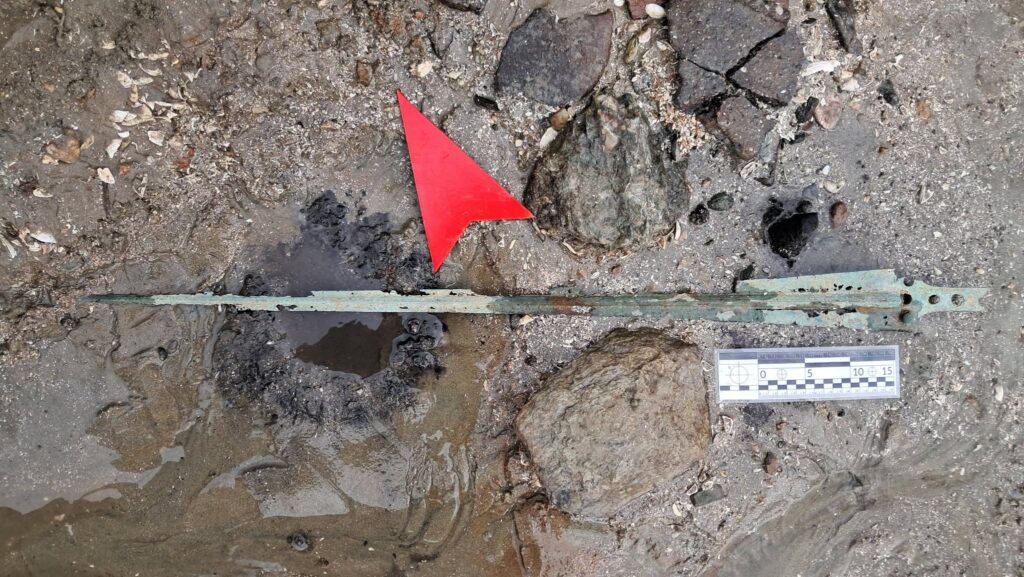
Archaeological excavations on the shores of Lake Dojran in North Macedonia have uncovered a Mycenaean-type bronze sword approximately 3,500 years old, along with battle axes and significant findings related to metal production. Archaeologists working at the prehistoric settlement of Mrdaja revealed the remains of houses built on wooden platforms, one of which contained casting molds indicating the production of bronze tools. The distribution of weapons within the settlement has raised new questions regarding a potential conflict that may have occurred here during the Bronze Age.
According to the head of the excavation, archaeologist Zoran Rujak, the findings demonstrate that the inhabitants of Mrdaja were not only engaged in fishing and daily production but also employed advanced metalworking techniques and maintained cultural ties stretching from the Aegean world to the Carpathians. The research provides crucial data for understanding how this lakeside community lived throughout the second millennium BCE.
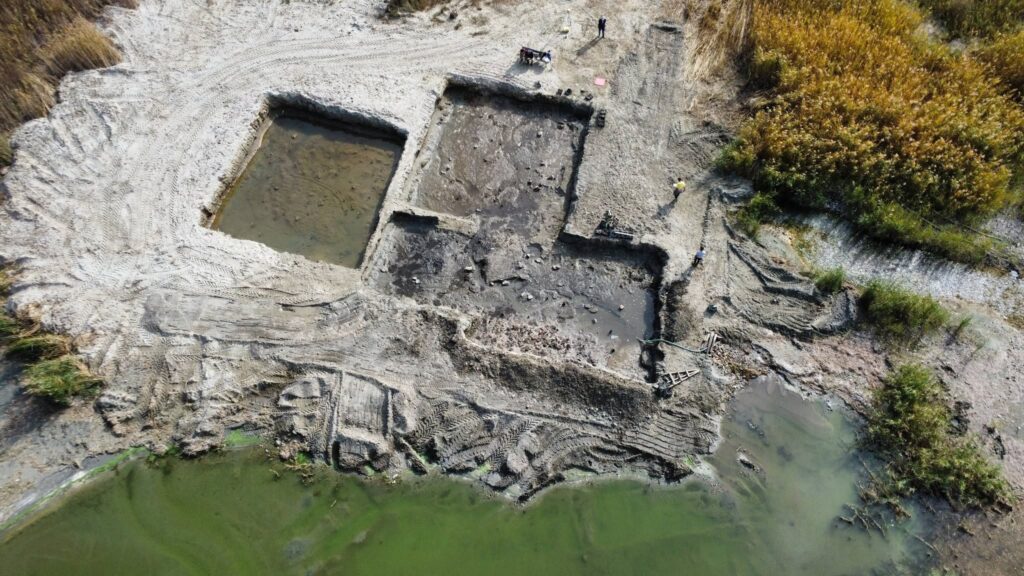
Bronze Weapons and Casting Molds in the Metalworker’s House
During the 2026 excavation season, a small archaeological team examined an area of approximately 350 square meters in less than two months. The work uncovered the remains of at least three prehistoric houses on the lakeshore. These structures, elevated on wooden platforms, were connected to one another by wooden bridges.
Archaeologists identified one of the structures as the metalworker’s house due to the nature and density of the finds. Bronze tools, objects associated with metal production, and molds used for casting double-edged bronze axes were found inside and around the house.
These molds indicate that the settlement’s inhabitants did not merely obtain metal goods from outside sources but applied complex casting techniques themselves. Rujak believes that the individual living in this house may have held a privileged position within the community thanks to these specialized skills.
The architectural decorations of the house are also noteworthy. Preserved fragments of wall plaster show that the facade was decorated with embossed circles surrounded by interlocking rings, while the upper section featured a frieze consisting of dynamic spiral motifs.
Traces of a red-colored mineral called cinnabar were also found during the excavations. Researchers evaluate that this mineral, likely brought from the Alšar mine deposit, may have been used to paint the facade of the structure. If this interpretation is confirmed, it would suggest that the house was not only a production area but also an ostentatious and symbolic building.
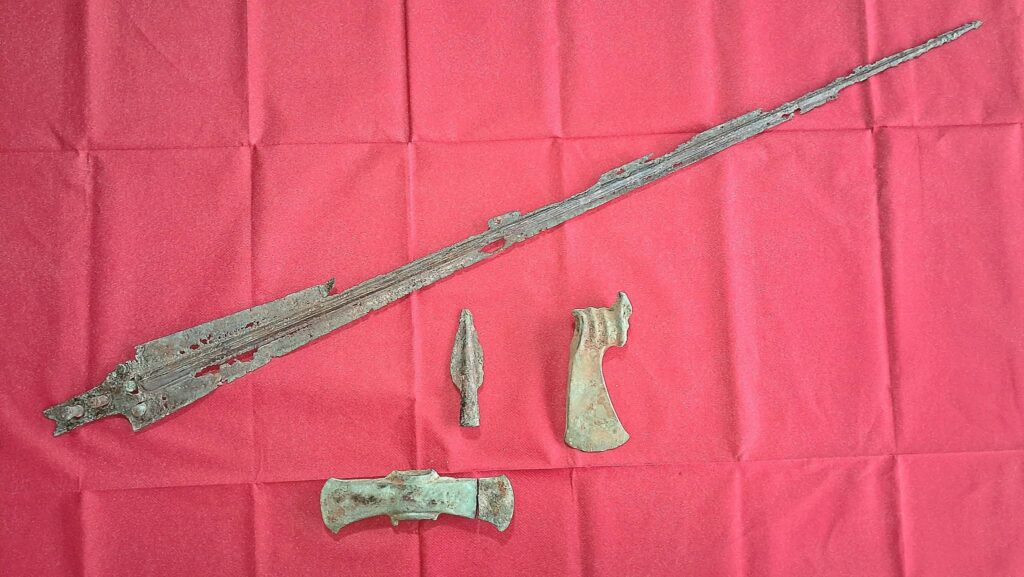
Bronze Age Weapons Reveal Connections Across the Aegean and Carpathians
Among the most striking finds of the excavations are the bronze weapons scattered around the vicinity of the metalworker’s house. Chief among these is a long, thin Mycenaean-type bronze sword designed for thrusting.
In the same area, researchers identified a battle axe with two outer ribs around the socket—similar to examples found in the Carpathian region—a Kilindir-type double-edged bronze axe, and a leaf-shaped bronze spearhead.
The weapons display similarities to examples found across the Aegean and Carpathian regions, highlighting Mrdaja’s connections to wider networks of trade, cultural exchange, and technological influence during the Bronze Age.
Rujak states that the positions and typological characteristics of the weapons point to a violent event that may have occurred in the mid-second millennium BCE. However, archaeologists have not yet confirmed whether the finds are indeed the result of a conflict.
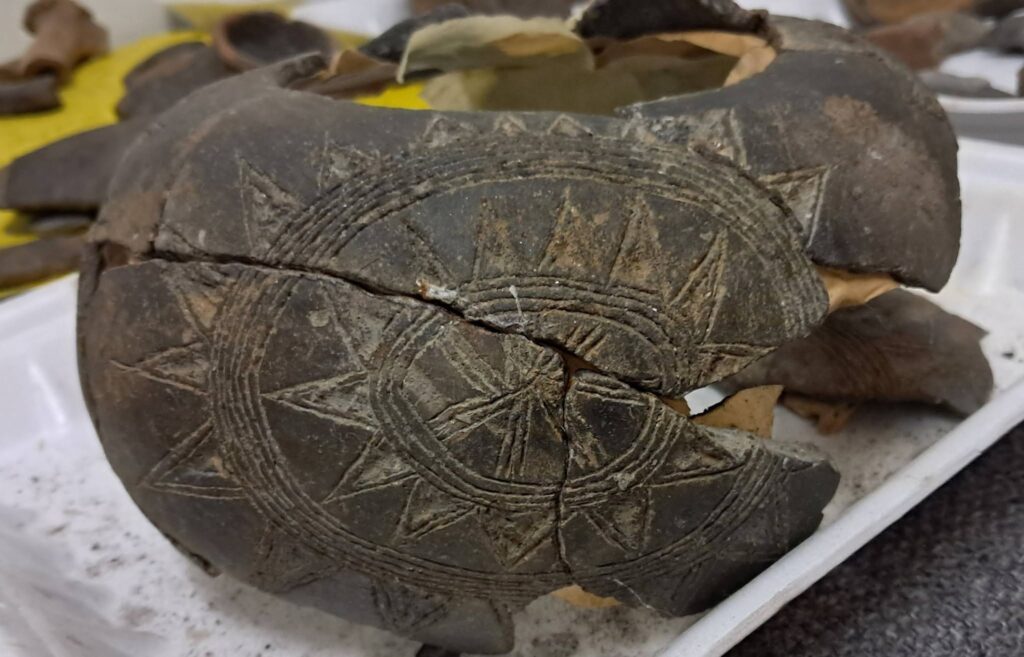
Sun Symbols and Bronze Age Beliefs
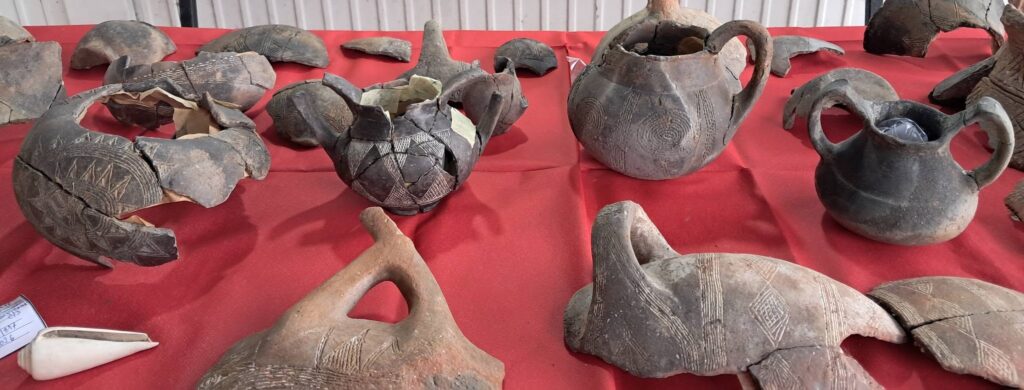
Research at Mrdaja has also revealed new details regarding the community’s religious life. Sun motifs play a significant role in the decorations of ceramic vessels, and ritual objects identified as “consecration horns” were also found.
Other finds include an amulet made from a sea snail shell, spiral bronze wire rings, ceramic net sinkers likely used for fishing, and small lead weights.
These objects provide complementary information about the production activities, adornment habits, and beliefs of the lakeside community.
The End of a Millennium-Old Settlement at Lake Dojran
It is believed that life at Mrdaja continued throughout nearly the entire second millennium BCE. The development of the settlement corresponds to a long period during which technologies, objects, and cultural traditions circulated between the Balkans and the Aegean world.
Rujak suggests that life in the settlement may have come to a violent end around the 12th century BCE, and that this process could be linked to broader regional instabilities experienced during the Late Bronze Age. However, the possible earlier conflict associated with the weapons around the metalworker’s house should not be viewed as the same event as the settlement’s final abandonment.
The excavation team is now working on an over-water open-air museum project to introduce the remains of Mrdaja to visitors. The museum, planned to be established in Stari Dojran, aims to exhibit the architecture of the lake houses and the artifacts discovered during the research.
