
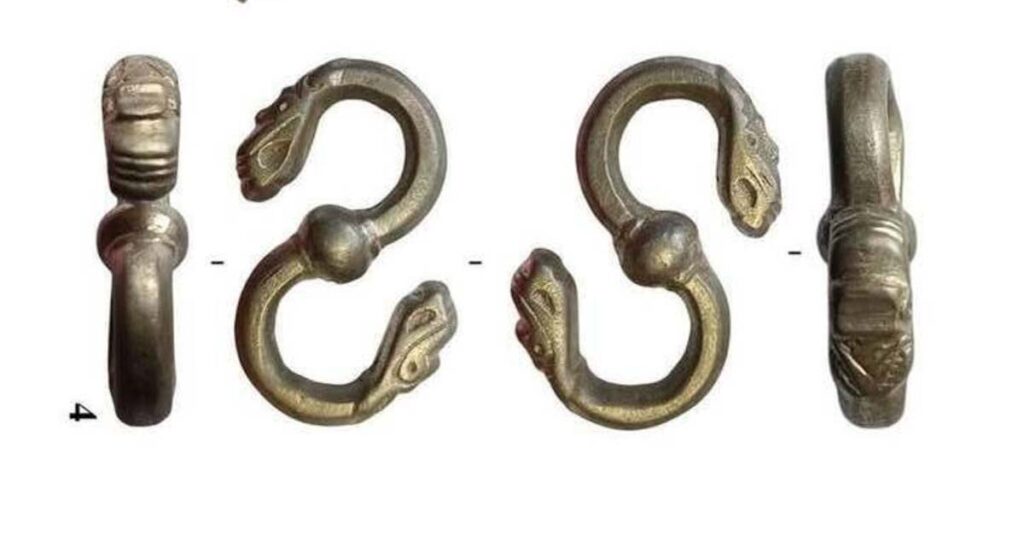
A silver treasure discovered in Moldova contains an unusual collection of medieval jewelry, including buttons that produced sounds when worn and a belt clasp decorated with two snake heads. Archaeologists believe the ornaments may have belonged to someone of high social standing, while the sound-making accessories suggest that elaborate clothing could have served ceremonial and possibly protective purposes.
The collection, comprising approximately 36 objects, was discovered near Ordășei village in Moldova’s Telenești district during archaeological investigations in autumn 2024. A study published in Revista Arheologică in 2026 dates the treasure to the late 16th or 17th century, most likely the first half of the 1600s. The findings provide new evidence of how people in the region used jewelry and clothing accessories to express wealth and social status.
Silver Buttons That Made Sounds When Worn
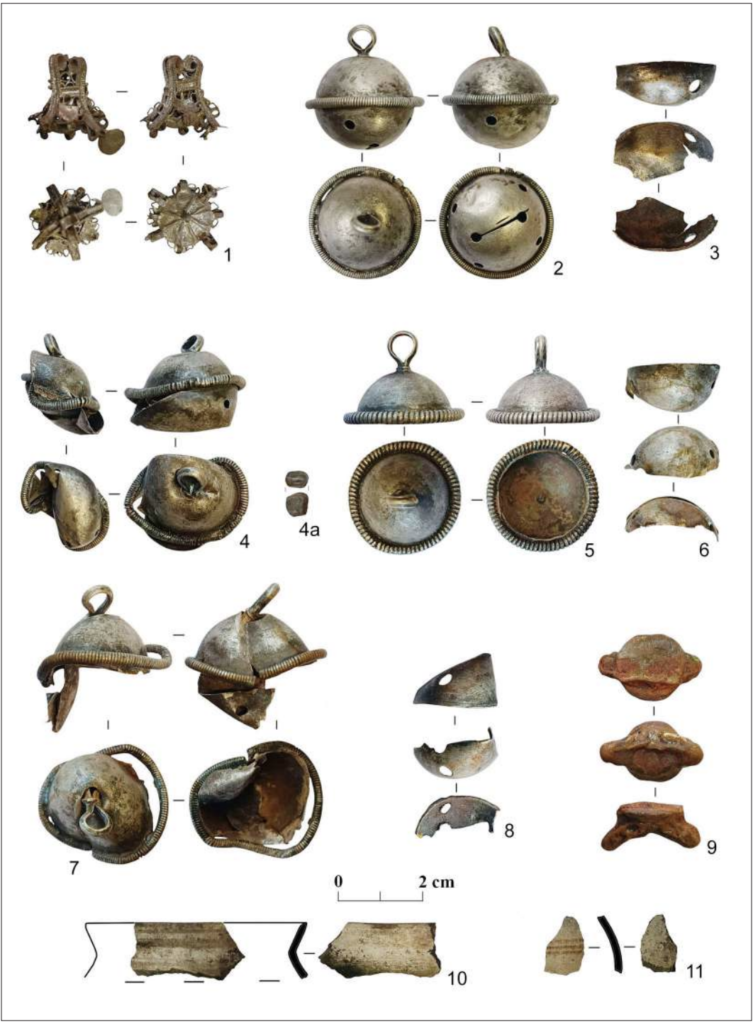
Among the most intriguing objects are seven large, spherical silver buttons, measuring approximately 2.5 centimeters in diameter. Craftsmen made them by joining two hollow hemispheres and placing small metal pieces inside. When the wearer moved, the objects produced a gentle rattling sound.
The unusual construction has led some researchers to classify similar objects as small bells or rattling pendants. However, the archaeologists who examined the Ordășei treasure believe these pieces primarily functioned as buttons, fastening and decorating clothing rather than serving as independent bells.
According to the study, the larger buttons probably belonged to ceremonial clothing rather than everyday garments. The researchers also suggest that their sound-producing elements may have carried an apotropaic meaning—a protective function traditionally associated with warding off evil or harmful influences.
This interpretation draws support from archaeological comparisons, including similar decorative accessories found in burial contexts associated with women and children. Such objects may have combined practical functions with symbolic meanings, although their precise significance remains uncertain.
Comparable large silver buttons have appeared in medieval treasures at Onești, Musaitu, and Dezghingea, also in Moldova. At Dezghingea, archaeologists previously documented an example containing internal metal elements deliberately designed to produce sound.
The Ordășei collection also includes 21 smaller spherical buttons. Together with the larger rattling examples, earrings, and belt fittings, they suggest an elaborate clothing ensemble in which decoration played an important role.
Although the ornaments may have carried protective symbolism, the study does not establish that they were used in a particular religious ceremony.
A Rare Silver Clasp with Two Snake Heads
Another remarkable object is a silver belt clasp measuring 3.9 centimeters long and weighing just over 22 grams. Its S-shaped body ends in two stylized snake heads, with carefully worked details suggesting their eyes and snouts.
The clasp combined a practical fastening mechanism with elaborate decoration. Its opposing hooks could secure parts of a belt, while a thickened central section gave the piece a distinctive appearance.
Similar S-shaped fasteners appeared in Eastern Europe during the late medieval period and remained in use for centuries. Some researchers have associated them with ceremonial sword belts worn by members of the military and aristocracy between the 16th and 18th centuries.
However, archaeological discoveries indicate that these accessories were not exclusively associated with warriors or nobles. Comparable clasps have also appeared in graves belonging to younger individuals, suggesting that they could fasten ordinary belts as well as more elaborate ceremonial equipment.
What makes the Ordășei example particularly notable is its size, craftsmanship, and snake-head decoration. The researchers found no direct equivalent among published late medieval treasures from the Carpathian–Dniester region.
Fine Silver Jewelry and Skilled Metalworking
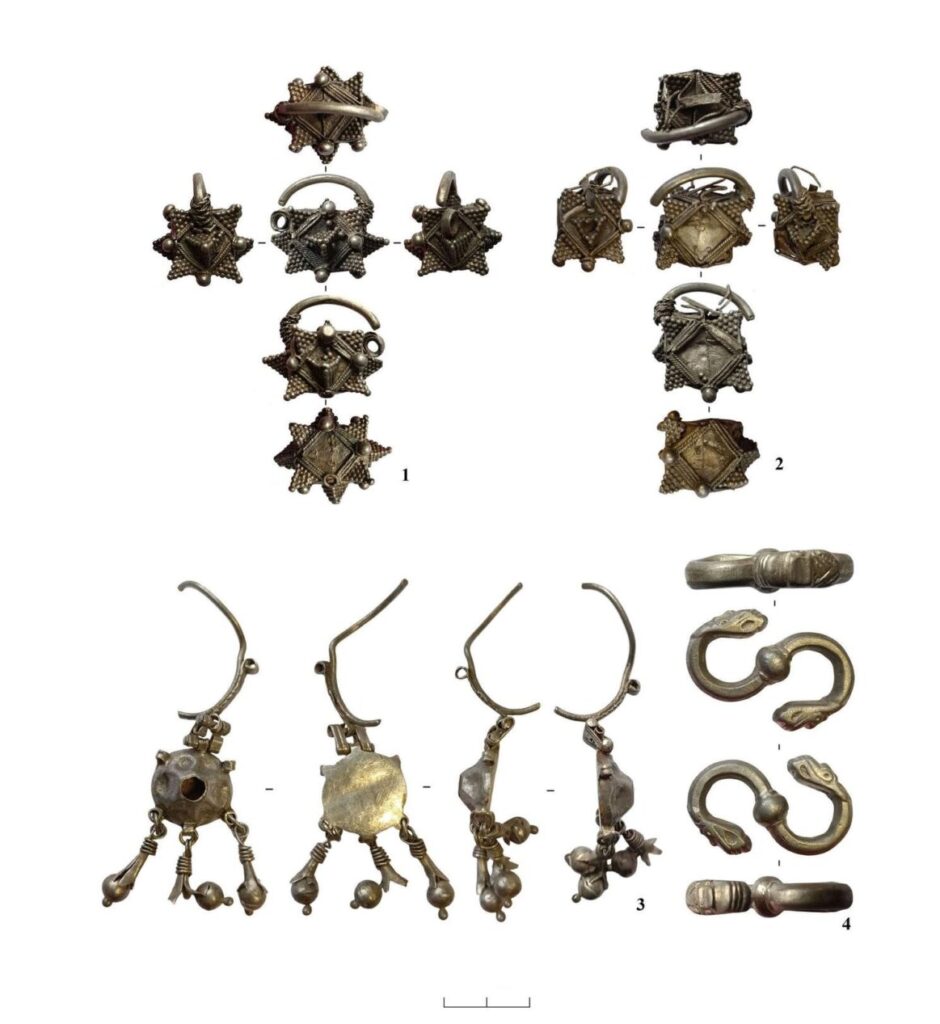
The treasure contains three silver earrings, including two decorated with intricate filigree and granulation. Their multifaceted ornaments consist of thin metal elements assembled with considerable precision, while the third earring features small suspended decorations that would have moved with the wearer.
Another ornament, probably the central pendant of a necklace, has a hollow body with delicate hanging elements. Like the earrings, it shows how craftsmen combined detailed decoration with moving parts to create striking pieces of jewelry.
Researchers examined the metals using X-ray fluorescence analysis at the Institute of Applied Physics of Moldova State University.
The results revealed differences in the composition of the objects. The three earrings contained approximately 90–92 percent silver, while some of the other accessories had considerably higher proportions of copper and tin.
According to the researchers, these variations reflect the different metal combinations craftsmen used to make durable ornaments suitable for detailed work. The high silver content of the earrings, in particular, points to advanced metalworking techniques and careful refinement of the materials.
A Treasure Discovered Among Ancient Burial Mounds
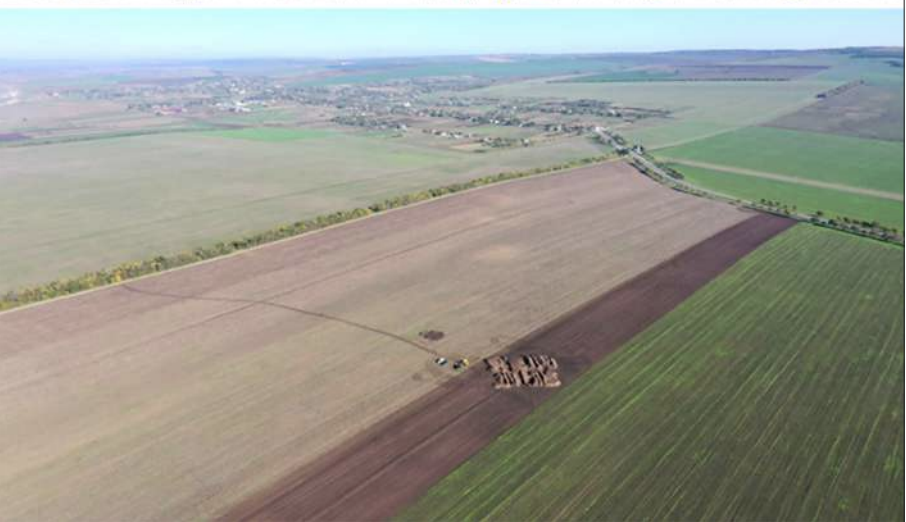
The silver collection was found on a plateau between the villages of Ordășei and Prodănești, overlooking the left bank of the Răut River. The surrounding landscape contains eight burial mounds whose origins extend back to the Early Bronze Age.
Archaeological investigations at Mound 20, approximately 100 meters southeast of the treasure’s discovery site, identified 19 burials from different periods. The earliest grave belonged to the Yamnaya culture and was covered with stone slabs, one of which resembled a stylized human figure.
Later communities continued to use the mound as a burial place. Among them were the Sarmatians, who lived in parts of the region during the early centuries AD.
Further investigations in 2025 revealed a rectangular ditch near another burial mound. Archaeologists suggested that this feature may have been associated with Sarmatian ceremonies commemorating the dead.
Together, these discoveries show that successive communities used the plateau for burials over thousands of years. However, there is no direct archaeological evidence connecting the much later silver treasure to rituals performed around the ancient mounds.
How Was the Silver Treasure Buried?
Agricultural activity had scattered the silver objects across an area measuring approximately 15 by 15 meters. After recovering the first ornaments, archaeologists searched the surrounding soil with a metal detector to locate additional pieces.
They also excavated the discovery area to a depth of 80 centimeters, hoping to identify the original pit in which someone had deposited the treasure. The investigation revealed no identifiable archaeological feature that could explain how the collection was originally buried.
Two pottery fragments recovered nearby may provide a clue. They belonged to a wheel-made vessel decorated with horizontal red lines, raising the possibility that the valuables had once been stored inside a ceramic container.
Similar medieval treasures from Moldova have been discovered in pottery vessels, although the evidence at Ordășei does not conclusively establish that this was the case.
Who Owned the Silver Treasure?
The elaborate jewelry, substantial silver belt clasp, and unusual clothing accessories suggest that the collection belonged to someone with considerable wealth or elevated social standing. However, the surviving objects provide no direct evidence of the owner’s identity.
The treasure also raises another question: why would someone conceal such valuable possessions and never return to recover them?
During the 16th and 17th centuries, Moldova experienced periods of political instability and military conflict. People sometimes buried valuables to protect them during uncertain times, but archaeologists cannot determine whether a particular conflict or personal circumstance prompted the deposit at Ordășei.
Vornic, V., Matveev, S., Popovici, S., Peška, J., Ursu, I., & Dermenji, L. (2026). Tezaur de podoabe și accesorii vestimentare din evul mediu târziu descoperit la Ordășei (r-nul Telenești) [Treasure of jewelry and clothing accessories from the Late Middle Ages discovered at Ordășei (Telenești District)]. Revista Arheologică, 22(1), 284–305. https://doi.org/10.52603/RA.XXII.1.2026_20
