
8 June 2026 The Future is the Product of the Past

2,300-Year-Old Scythian Tomb Unearthed in Moldova with Rare Incense Burner

A rescue excavation near the village of Gura Bîcului in Moldova has revealed a 2,300-year-old Scythian burial that is still giving up its secrets.

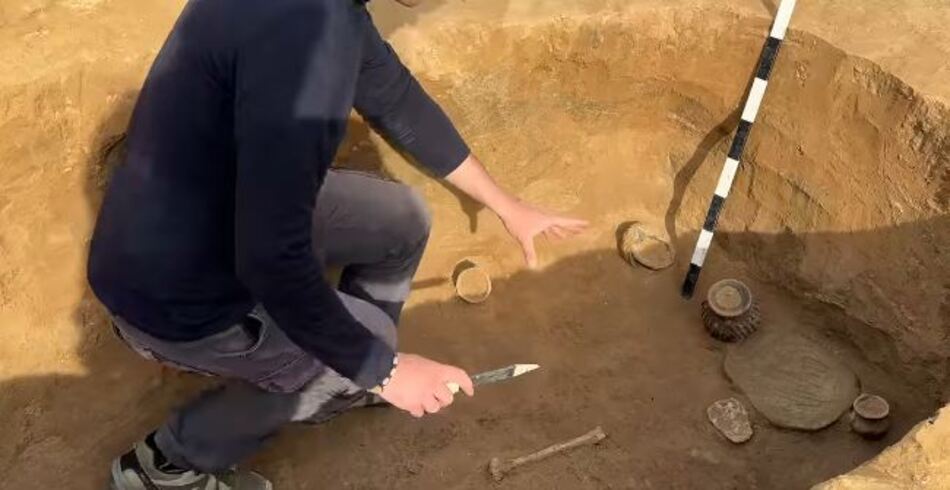
Inside the underground tomb, archaeologists found human remains, ceramic vessels, arrowheads, beads, a rare incense burner and a worked stone object that may have served a ritual purpose. The burial, dated to the 3rd century BC, belongs to a kurgan-type necropolis in the Anenii Noi district and has not yet been fully excavated.

A rare incense burner linked to Scythian burial customs

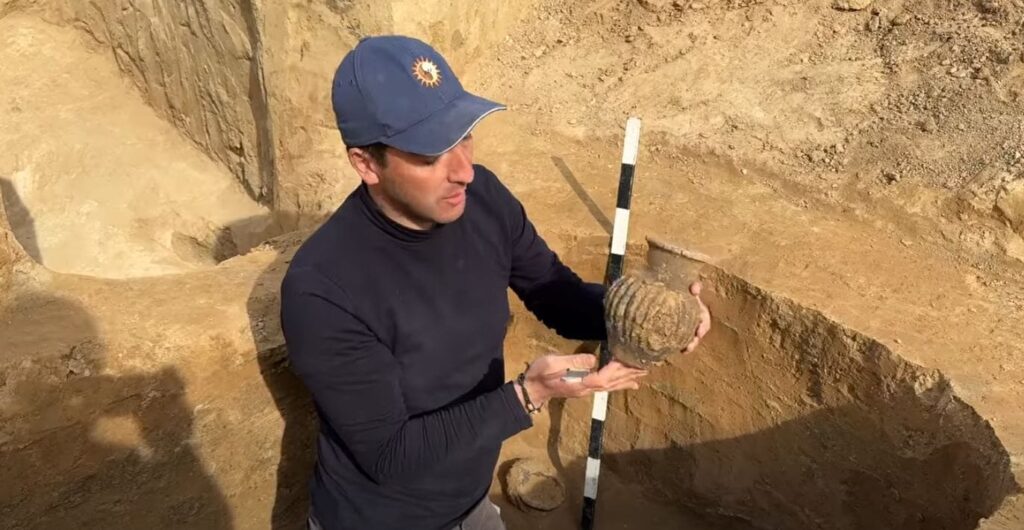
Among the most important finds is the ceramic incense burner, described by specialists as characteristic of Scythian necropolises from the 3rd to 2nd centuries BC. Such objects are considered rare in Moldova’s archaeological heritage and may become one of the key exhibits at the National Museum of History.

Incense burners are often associated with ritual practices in Scythian funerary contexts. Their presence in the Gura Bîcului tomb suggests that the burial was not simply a place of deposition, but part of a carefully structured ceremony shaped by belief, status and community tradition.

The polished stone found in the chamber is also drawing attention. Archaeologists suggest that it may have served as a small altar, although this interpretation remains cautious until the object is fully studied.


📣 Our WhatsApp channel is now LIVE! Stay up-to-date with the latest news and updates, just click here to follow us on WhatsApp and never miss a thing!!


Among the most important finds is the ceramic incense burner, described by specialists as characteristic of Scythian necropolises from the 3rd to 2nd centuries BC.  Credit: National Archaeological Agency
Among the most important finds is the ceramic incense burner, described by specialists as characteristic of Scythian necropolises from the 3rd to 2nd centuries BC. Credit: National Archaeological Agency

A tomb still not fully excavated

The burial has not yet been completely uncovered. Vlad Vornic, director of the National Archaeological Agency, said rescue excavations are still continuing at the site. Important finds have already been recorded in the southeastern part of the chamber, including a polished stone, a complete ceramic vessel and other objects typical of Scythian necropolises from the 3rd and 2nd centuries BC.

Researchers expect that further work may reveal additional artifacts and provide a clearer picture of the person buried there, the structure of the tomb and the wider cemetery to which it belonged.

A major find for Moldova’s archaeological heritage

The discovery is considered significant because it adds new evidence for the presence and burial traditions of Scythian-related communities in the territory of present-day Moldova. The Scythians, known across the Eurasian steppe world for their horse culture, weaponry and distinctive funerary customs, left archaeological traces across a vast area stretching from the Pontic steppe to the edges of Eastern Europe.

In Moldova, finds of this type are especially valuable because they help clarify how Late Iron Age communities used the Lower Dniester landscape, how they buried their dead and how local traditions interacted with broader Scythian cultural practices.

For now, the Gura Bîcului tomb stands as one of the most notable archaeological discoveries recently reported in Moldova. Its chamber has already yielded objects tied to ritual, warfare and personal adornment. As the excavation continues, archaeologists hope the burial will offer a more complete view of a Scythian community that lived more than two millennia ago.

Cover Image Credit: National Archaeological Agency

Related Articles

Legendary Lost Medieval City Discovered in Chechnya May Rewrite the History of the North Caucasus

7 April 2026

7 April 2026

A groundbreaking archaeological discovery in southern Russia is stirring excitement across the global academic community, as researchers believe they may...

Archaeologists Uncover 168 Ancient Sites in Georgia’s Highlands—Including Mysterious Bronze Sun Disc and Lost Fortresses

18 April 2026

18 April 2026

An eight-year archaeological project reveals a complex highland civilization, uncovering 168 ancient sites, ancient fortifications, and rare symbolic artifacts that...

King Scorpion’s Legacy: Violence, Divinity, and the Rise of the World’s First Territorial State

30 August 2025

30 August 2025

A barren desert today, the rocky landscape east of Aswan once served as the backdrop for one of history’s most...

4,000-year-old settlement found during Balasore town India

9 July 2021

9 July 2021

A 4,000-year-old settlement and ancient artifacts have been discovered in the Balasore district, India. The Odisha Institute for Maritime and...

4 Aztec child burials unearthed in Mexico and dated to the Early Colonial period may be indicators of Aztec resistance

6 July 2022

6 July 2022

During an archaeological rescue effort in Mexico City’s historic central district of La Lagunilla, the remains of an Aztec house...

Archaeologists Uncover Monumental Roman Building Near Waal River in Nijmegen, Netherlands

4 June 2025

4 June 2025

During a routine excavation ahead of a major urban development in the Waalfront district of Nijmegen, municipal archaeologists have uncovered...

Discovery of Ancient Ceremonial Complex with Mysterious Rock Carvings in Guerrero, Mexico

26 September 2025

26 September 2025

Archaeologists in southern Mexico have uncovered an ancient hilltop ceremonial center where enigmatic rock carvings and monumental platforms reveal centuries...

1,700-Year-Old Roman Bridge Discovered Beneath the Aare River in Solothurn, Switzerland

4 June 2026

4 June 2026

A Roman bridge in Solothurn, Switzerland, long suspected by archaeologists but never proven through physical remains, has finally been confirmed...

Roman Hunting Mosaic Reemerges in Marsala After More Than 50 Years Underground

30 May 2026

30 May 2026

A Roman hunting mosaic hidden for more than half a century has reemerged in Marsala, Sicily, offering a vivid new...

Early Iron Age cremation burial containing bronze jewelry and rare textile fragments found in Austria

9 July 2023

9 July 2023

Archeologists from the Vienna Natural History Museum (NHM), a cremation burial containing bronze jewelry and rare surviving textile fragments have...

Dragon-Adorned Gilt-Bronze Armor Found in Japan’s Kofun Tombs

6 January 2026

6 January 2026

Archaeologists in Japan have announced a remarkable discovery that could reshape scholarly understanding of elite craftsmanship and power networks in...

Dacian Treasure Discovered in Romania, Possibly Indicating a Hidden Settlement in Breaza

12 April 2025

12 April 2025

In the spring of 2025, an extraordinary archaeological discovery was made in the Breaza commune of Mureș County, Romania, when...

1,000-Year-Old Runic Ring Unearthed in Lincolnshire by Amateur Metal Detectorist

3 April 2026

3 April 2026

In a quiet field in Lincolnshire, a small object has begun to challenge long-standing assumptions about the early medieval world....

Unusual Iron Age Female Grave Found in Pryssgården, Sweden

3 November 2024

3 November 2024

In an Iron Age cemetery in Sweden, archaeologists found a woman’s grave buried with a small needle and an iron...

7,000-Year-Old Canoes Reveal Early Development of Nautical Technology in Mediterranean

21 March 2024

21 March 2024

The discovery of five “technologically sophisticated” canoes in Italy has revealed that  Neolithic people were navigating the Mediterranean more than...