
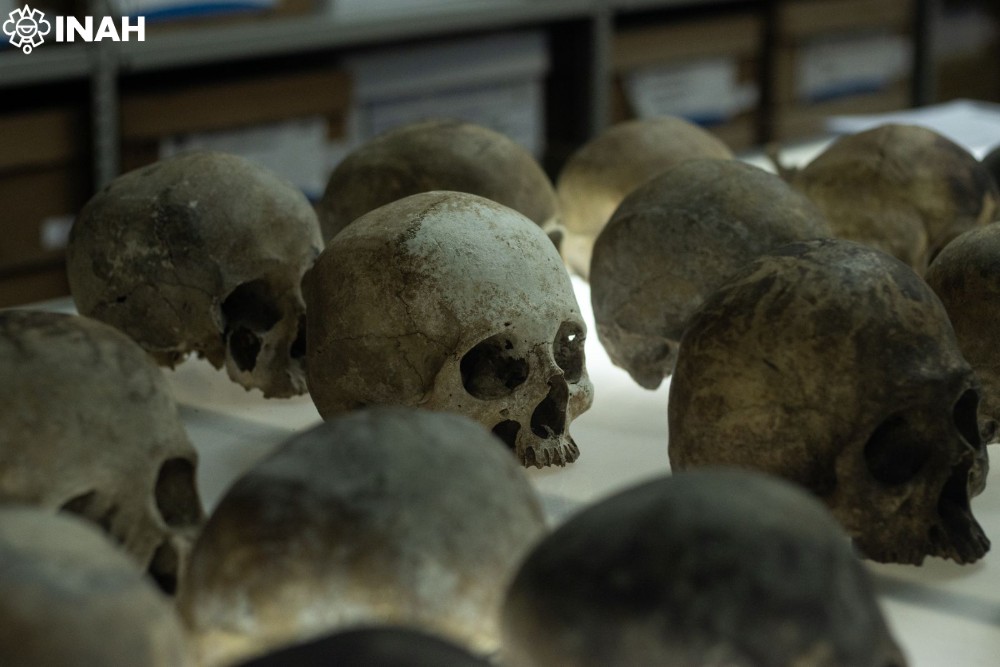
New research on 165 human skulls found in a cave in Mexico has revealed surprising details about ancient Maya rituals.
Examining remains approximately 1,000 years old, archaeologists determined that slightly more than half of the skulls belonged to women. Cut marks on the bones and signs of heat exposure suggest that the ceremonies performed in the cave may have been more complex than previously thought.
The National Institute of Anthropology and History (INAH) of Mexico announced the results of new analyses of the remains discovered in 2012 in the Frontera Comalapa region of Chiapas state, near the border with Guatemala. Researchers believe this site, dated between 900–1200 AD, may have served as a ritual center or pilgrimage site for Maya communities.
Who Did the Skulls in the Cave Belong To?
Those who entered the cave in 2012 encountered human skulls hundreds of years old. This collection, later identified by archaeologists as a tzompantli, constitutes a significant example of Mesoamerican ceremonial traditions associated with human remains.
Recent examinations by INAH experts confirmed that there are 165 skulls in the cave. Researchers identified 83 as female and 79 as male; the other three were too fragmented for gender estimation.
This result is particularly significant because the ceremonial use of skulls is often associated with male war captives. However, the nearly equal number of women and men in Comalapa requires a reconsideration of the identities of the people who participated in or were featured in these rituals.
INAH archaeologist Josuhé Lozada Toledo states that osteological examinations provide an opportunity to re-evaluate the role of women in ancient rituals. The first phase of the research was conducted by physical anthropologist Javier Montes de Paz, while gender estimations were performed by Cristell Delesma Pérez and Abigail Reyes López.
Since pelvic bones were not present, experts compared the anatomical features of the skulls. Characteristics such as the angle of the mandible and the bony protrusions above the eye sockets were the primary indicators used in the evaluation.
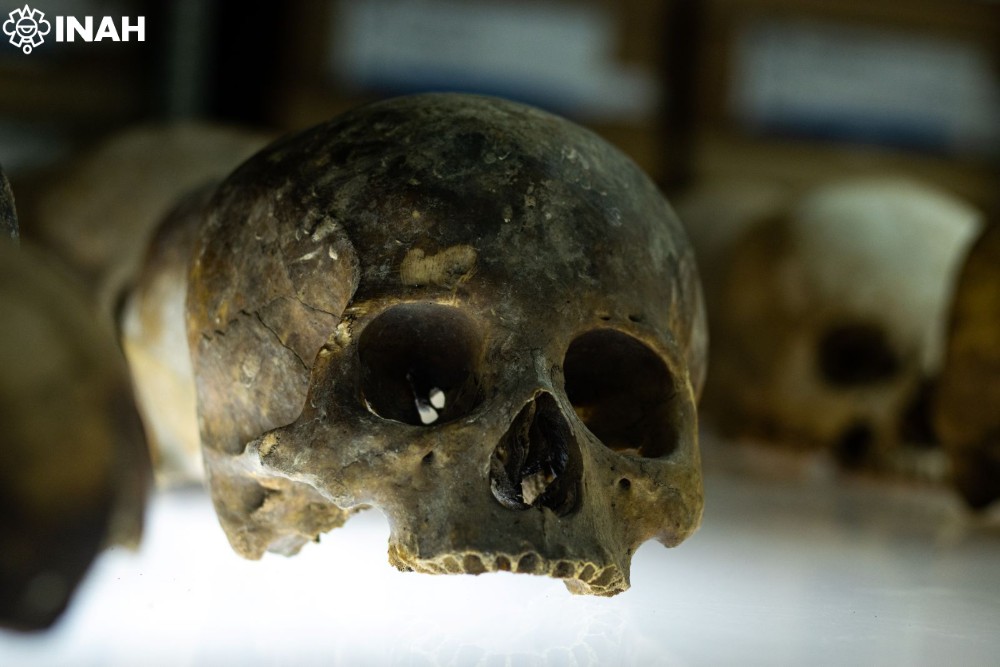
Evidence of heat exposure on human bones and soot deposits on the cave ceiling suggest that the Frontera Comalapa cave in Chiapas, Mexico, may have served as a pilgrimage site during pre-Hispanic times. Credit: Fabián González / INAH.
Cut Marks, Heat, and Child Skulls
Researchers also determined that 15 of the 165 skulls belonged to children. Among the adults, the largest group consisted of those aged 25–35, while two individuals are estimated to have been approximately 55–70 years old at the time of death.
The marks seen on the bones form another striking part of the research. Experts detected cut marks on the remains of three individuals and determined that some bones had been exposed to heat. Soot marks on the cave ceiling also suggest that fire was used here.
According to Lozada Toledo, these findings indicate that Maya communities may have entered the cave with torches and performed various ceremonies. Researchers evaluate that the cave may have been a sacred site visited for rain-petitioning ceremonies or other religious practices.
However, the cut and heat marks on the bones do not alone prove human sacrifice. A more detailed examination of the archaeological context is required to determine the processes that caused these marks and how the ceremonies were carried out.
Why Were the Skulls Gathered Together?
In Mesoamerica, structures called tzompantli are associated with the ceremonial display of human skulls. The large skull arrangements in Tenochtitlan, the capital of the Aztecs, are among the best-known examples of this tradition.
However, the find in Frontera Comalapa dates back to a period earlier than the large structures in Tenochtitlan. Furthermore, the skulls in the cave lack the holes seen in some Aztec examples. INAH experts have previously suggested that a different wooden mechanism may have been used to support the skulls.
Lozada Toledo emphasizes that the spiritual meaning Mesoamerican societies attributed to the human body must also be considered. In these belief systems, the association of a person’s vital or spiritual essence with different parts of the body may explain why skulls were viewed as particularly important.
According to the researcher, gathering skulls in a cave considered sacred may not have meant merely displaying death. This practice may have been part of a broader ritual tradition aimed at offering people’s spiritual essence to the gods.
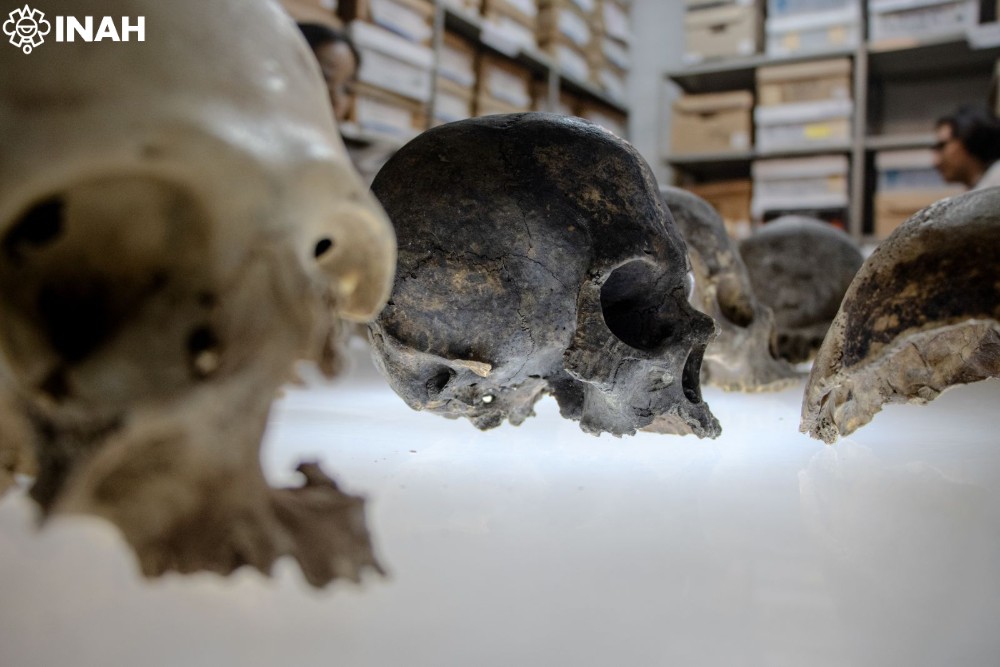
Human skulls discovered in a cave in Chiapas, Mexico, in 2012. Researchers have identified 83 female and 79 male skulls among the 165 examined, offering new insights into ancient Maya ritual practices. Credit: Fabián González / INAH.
Details Preserved in Thousand-Year-Old Bones
The collection preserved at INAH’s Physical Anthropology Laboratory in Chiapas includes 51 long bones in addition to the 165 skulls. Archaeologist Cristell Delesma notes that the general state of preservation of the remains is good. In fact, the malleus bone (hammer bone) of approximately 8–9 millimeters in one individual’s middle ear has survived to the present day.
Experts also identified traces of intentional cranial deformation performed during childhood in some of the skulls. In this process, boards were used to change the shape of the head during the growth phase. Researchers also found that most of the skulls lacked a lower jaw and that the teeth in the upper jaws had been removed.
These features suggest that the human remains may have undergone multiple processes after death. Lozada Toledo notes that complex practices, such as the re-extraction of bones and the relocation of remains for ceremonial purposes, may have occurred.
