
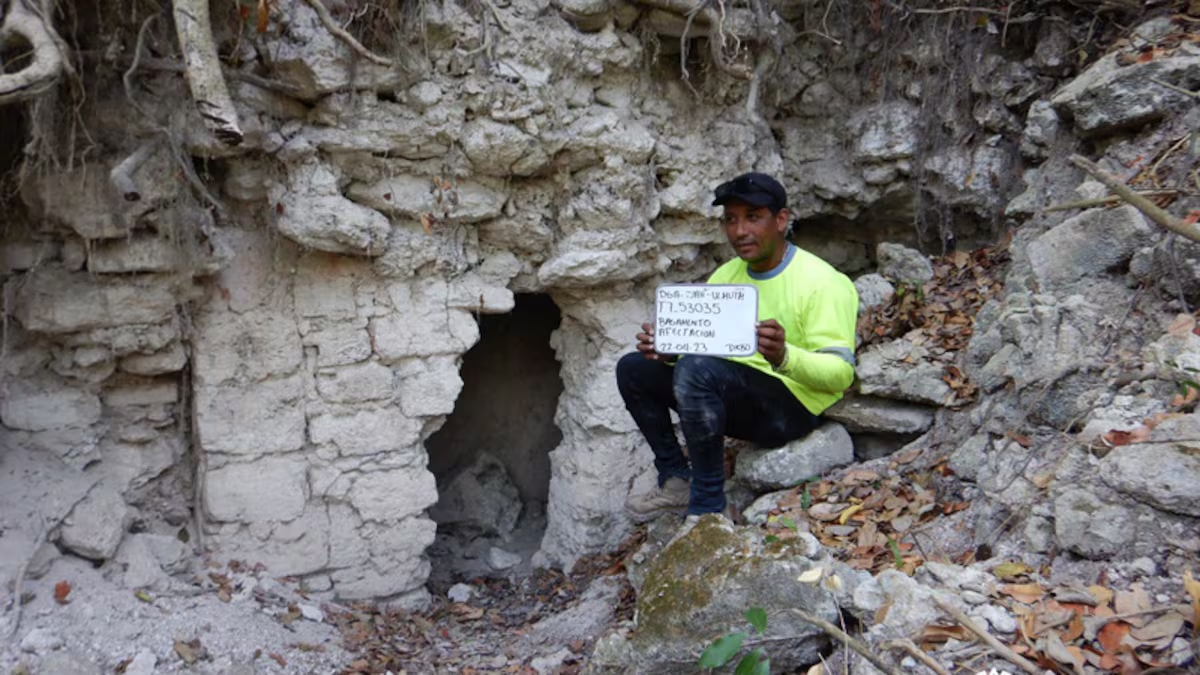
A newly registered Maya settlement expands the archaeological map of southern Quintana Roo
A newly registered Maya archaeological site in southern Quintana Roo is giving researchers a rare look at monumental architecture that may have once formed part of a wider network of Classic-period settlements in the region. The site, named El Jefeciño, contains 80 buildings spread across at least 100 hectares, according to Mexico’s National Institute of Anthropology and History, INAH. Early evidence suggests the ancient settlement was linked to the Petén architectural tradition, a style associated with large vaulted structures, rounded and recessed corners, and distinctive apron moldings.
The site was reported by local residents in the municipality of Othón P. Blanco, during work connected to the Tren Maya Archaeological Rescue Project. That detail is important. El Jefeciño was not simply “found” by technology or chance. It entered the official archaeological record through a combination of community knowledge and institutional documentation, showing how local memory can still guide the protection of ancient heritage.
A monumental core with five large buildings
Preliminary surveys indicate that El Jefeciño includes a central area formed by five major buildings arranged around a C-shaped plaza. These monuments rise between 11 and 14 meters high and extend from 16 to 40 meters in length, giving the settlement a scale that clearly separates it from a minor occupation site. The buildings appear to belong to the Early to Late Classic period, roughly 250 to 900 CE, when many Maya cities reached their architectural and political complexity.
The Petén style makes the discovery especially interesting. In Maya architecture, Petén-style buildings are not just impressive because of their mass. They often combine heavy platforms, narrow interior spaces, vaulted rooms, and façade elements that turned architecture into a visual language of authority. Scholars describe Petén-style architecture in the central lowlands as marked by massive platforms supporting substantial superstructures, a pattern that helped monumental buildings dominate ancient urban landscapes.
At El Jefeciño, one of the most revealing features is the presence of apron molding, a sloping decorative architectural band often associated with lowland Maya construction. This element was observed in a substructure at monument No. 53037, where the visible remains suggest a deep and complex building history. According to INAH’s preliminary interpretation, at least three construction phases can be seen on the surface, while the overall scale of the buildings may point to four or five phases.
Painted stucco, human remains, and a possible burial context
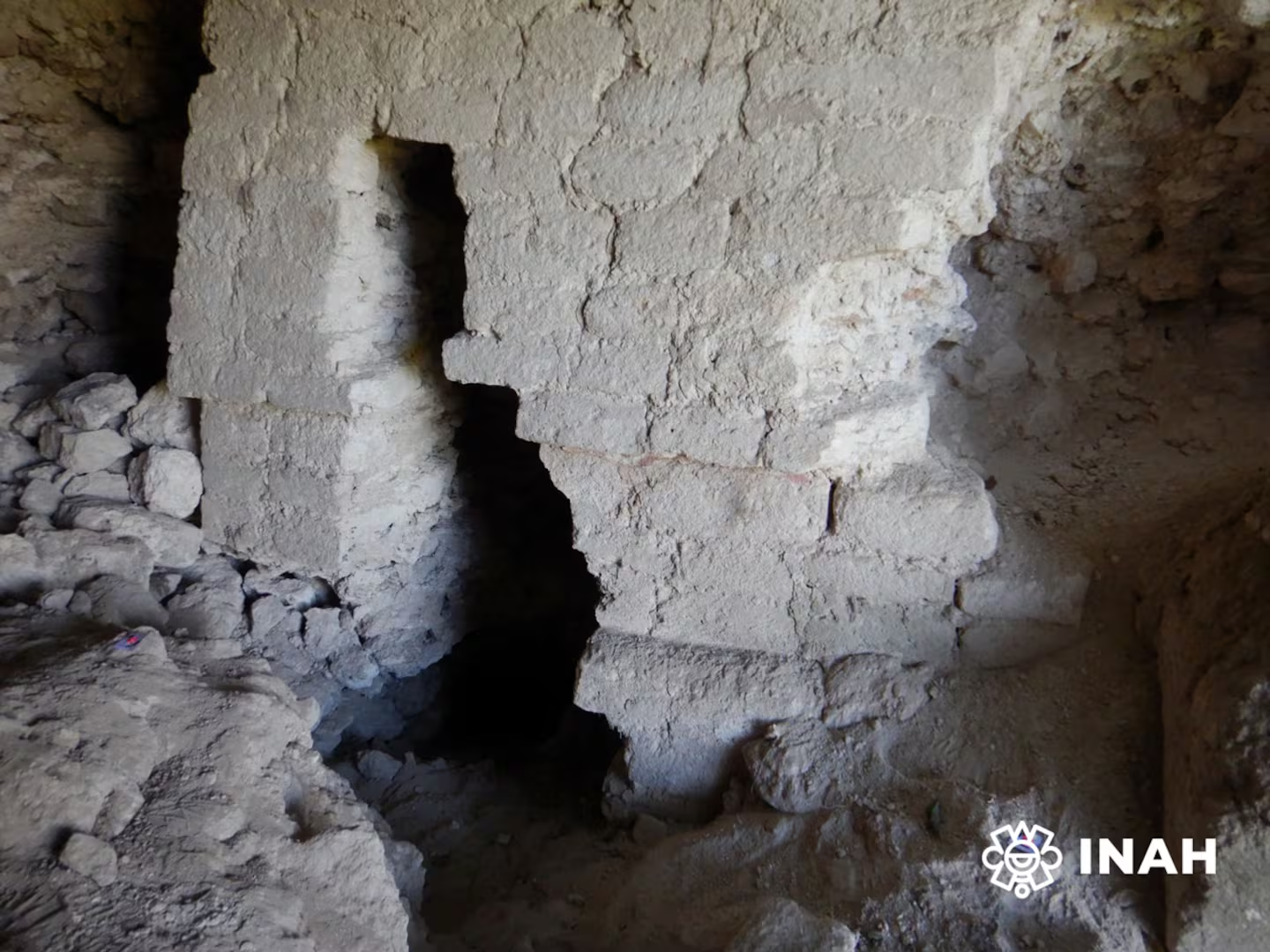
One of the most intriguing areas lies in building No. 53035, in the northeastern part of the property. Archaeologists observed traces of stucco with decorative mural painting, along with fragments of human bone that may belong to a burial context. The mural remains appear to be decorative rather than narrative, with white and orange pigments and red bands. That distinction matters: a decorative mural may not tell a story in the same way as a courtly or mythological scene, but it can still reveal aesthetic choices, ritual atmosphere, and elite architectural design.
The researchers emphasized that no full archaeological salvage excavation was carried out at the site. Because of that, the evidence has not yet been deeply analyzed or removed. The materials remain in situ, meaning the current interpretation is cautious. The bones, mural traces, and architectural fragments are promising indicators, but they require future controlled investigation before stronger conclusions can be made.
Why the Maya vaults matter
Another major clue is the discovery of three Maya vaults inside some of the buildings. These vaults were built using the corbel technique, in which stones are gradually projected inward from opposing walls until they nearly meet at the top. The result is not a true arch in the Roman sense, but it allowed Maya builders to create roofed stone rooms of high prestige and architectural durability. Studies of Maya vaulted architecture note that construction analysis is crucial for understanding both ancient building techniques and modern conservation needs.
The presence of well-preserved vaults at El Jefeciño suggests that some buildings may have served elite, administrative, ritual, or residential functions. In the Maya world, architecture was never simply a shelter. Public buildings helped organize movement, visibility, ceremony, hierarchy, and memory. Monumental platforms, stairways, plazas, and vaulted rooms shaped how people experienced power in daily and ceremonial life.
El Jefeciño could reshape the regional map
For now, El Jefeciño is best understood as a newly documented piece of a larger puzzle. Southern Quintana Roo already contains important Maya centers, including Dzibanché, Kinichná, Kohunlich, and Oxtankah. The registration of another large settlement may help researchers understand how communities in this region interacted, competed, exchanged goods, or shared architectural ideas during the Classic period.
The next major step will likely involve LiDAR mapping, a remote-sensing technology that can reveal hidden structures beneath dense vegetation. In recent years, LiDAR has transformed the study of the Maya lowlands by exposing causeways, platforms, terraces, reservoirs, and urban layouts that are difficult to detect from the ground. A 2018 Science study argued that airborne laser scanning has become indispensable for settlement research in the central Maya lowlands because of the speed and scale at which it can document ancient landscapes.
If future LiDAR work confirms that El Jefeciño extends beyond the currently recorded 100 hectares, the site could become even more significant. Its 80 known buildings may represent only the visible or accessible portion of a broader settlement. The careful mapping of its plazas, architectural groups, construction phases, and possible residential zones could help answer a central question: was El Jefeciño a secondary center linked to larger powers, or did it play a more independent role in the political geography of southern Quintana Roo?
For now, the site offers a powerful reminder that the Maya landscape is still far from fully known. Beneath the jungle canopy, monumental buildings can still hold traces of paint, vaults, burials, and construction histories layered over centuries. El Jefeciño does not overturn what is known about Maya architecture. It does something more useful: it adds a new, carefully documented case to the growing evidence that Classic-period Maya settlement in southern Mexico was dense, complex, and architecturally sophisticated.
Cover Image Credit: Karina Blancas and Sonny Ojeda.
