
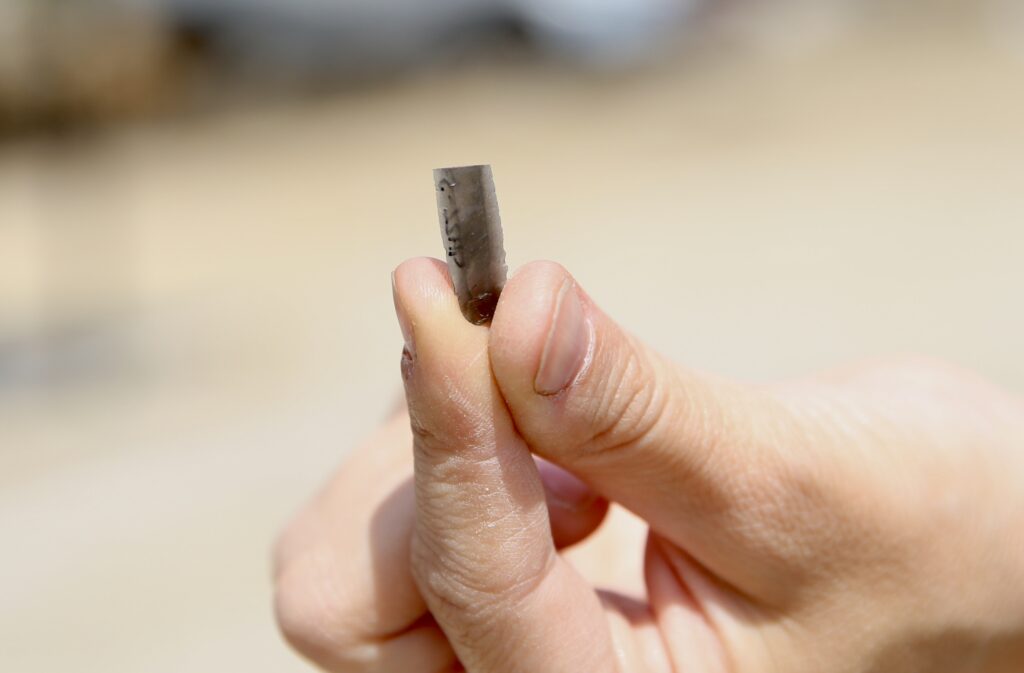
Archaeologists excavating Çaltılar Höyük in southwestern Türkiye have uncovered stone tools made from obsidian originating on the Greek island of Melos, revealing that Aegean exchange networks extended deep into the Anatolian interior during the Early Bronze Age.
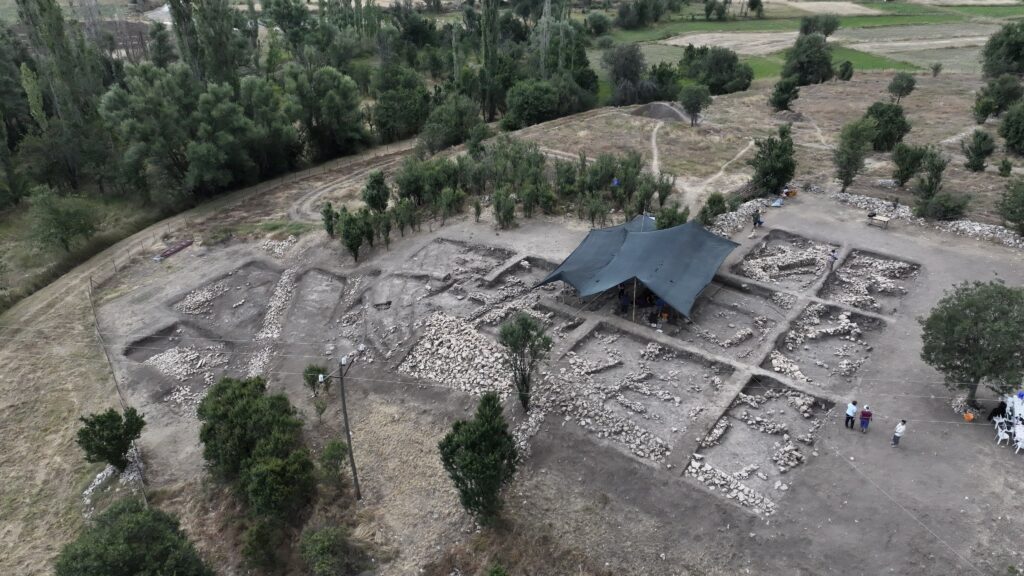
The artifacts were recovered from a settlement layer dating to around 2400 BC. Their location is striking: Çaltılar Höyük stands at an elevation of 1,287 meters in Muğla’s Seydikemer district, approximately 100 kilometers from the modern coastline.
Alongside the Melian obsidian, archaeologists discovered a fragment of a Cycladic “frying pan,” a spool-shaped weight associated with the western Aegean, and tools made from Central Anatolian obsidian. Together, the finds suggest that the highland settlement received materials and objects from both sides of Anatolia—and from across the sea.
Volcanic glass carried from the Cyclades
Obsidian is a naturally occurring volcanic glass that can be shaped into exceptionally sharp blades, scrapers, and other cutting implements. Because obsidian sources have distinctive chemical signatures, archaeologists can often determine where an artifact’s raw material originated.
Melos, located in the Cyclades, was one of the prehistoric Aegean’s most important obsidian sources. Reaching Çaltılar would have required the material to cross the Aegean or eastern Mediterranean coast before travelling through southwestern Anatolia.
“We recovered chipped stone artifacts made from Melos obsidian,” excavation director Prof. Dr. Ayşegül Aykurt told Anadolu Agency, emphasizing that the discovery demonstrated the settlement’s overseas connections.
The finds do not necessarily mean that inhabitants of Çaltılar sailed directly to Melos. The obsidian may instead have passed through several coastal and inland communities before arriving at the settlement. Even so, its presence confirms that Çaltılar participated in a long-distance exchange network.
A highland settlement connected by the Eşen River
Çaltılar Höyük lies in the upper reaches of the Eşen River system, known in antiquity as the Xanthos River. Aykurt believes that the river valley may have provided a natural corridor linking the highlands with the Mediterranean coast.
This position could have allowed Çaltılar to function as an intermediary between coastal communities, Aegean islands and inland Anatolia. The simultaneous presence of Melian and Central Anatolian obsidian is particularly significant because the two materials reached the settlement from different directions.
Earlier archaeological surveys had already suggested that Çaltılar was more than a small seasonal farming or pastoral settlement. Despite its high-altitude location, the mound was connected with several Anatolian and Aegean regions, particularly during the Early Bronze Age and Late Iron Age. Research indicates that the site was occupied from at least the fourth millennium BC until approximately the middle of the sixth century BC.
Excavations led by Aykurt began in 2021 following surveys conducted at the site. The project is supported by Hacettepe University, the Turkish Historical Society and local authorities under Türkiye’s Ministry of Culture and Tourism.
Archaeologists have identified eight settlement layers dating between approximately 3100 and 2400 BC. Evidence suggests that the earliest community lived on the surrounding plain about 5,300 years ago. Settlement later shifted onto the mound, possibly after nearby marshland began to dry.
The site’s broader sequence extends from the Late Chalcolithic through the Early, Middle and Late Bronze Ages and into the Archaic period. This unusually long stratigraphy is particularly valuable because excavated prehistoric mounds remain relatively rare in southwestern Anatolia.
Melian obsidian at other western Anatolian sites
Çaltılar Höyük was not the only settlement in western Anatolia receiving obsidian from Melos. Archaeological evidence shows that the material circulated widely along the Aegean coast and through river valleys connecting coastal settlements with the interior.
At Bakla Tepe and Liman Tepe in the İzmir region, researchers identified Early Bronze Age obsidian originating from both Melos and Central Anatolia. Studies suggest that these materials were probably redistributed through intermediaries operating within organized exchange networks.
Bakla Tepe even produced an obsidian-working deposit containing cores, flakes, and blades made entirely from Melian material. At Liman Tepe, obsidian tools were manufactured in buildings that combined domestic and workshop activities.
Melian obsidian has also been recorded at Miletus and Çukuriçi Höyük near Ephesus during the Late Chalcolithic period. At Aphrodisias, Melian obsidian was more prominent during the Late Chalcolithic, while Central Anatolian obsidian became increasingly common during the Early Bronze Age.
These sites show that western Anatolian communities were already integrated into networks connecting the Cyclades, the Aegean coast and inland Anatolia. Çaltılar stands out, however, because of its altitude and considerable distance from the sea.
An unusual structure built with burial jars
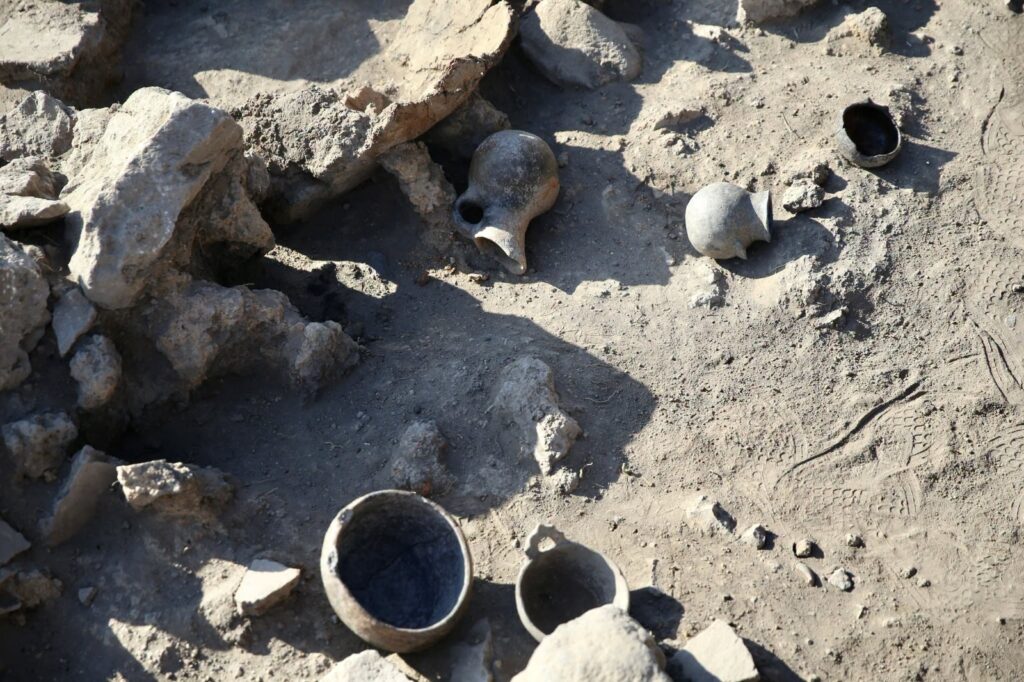
The excavation has also produced evidence from much later periods. Archaeologists uncovered an Archaic structure whose stone foundation incorporated fragments of Late Bronze Age burial pithoi—large ceramic vessels originally used for interments.
According to Aykurt, no comparable construction using broken burial jars has yet been identified elsewhere in Anatolia.
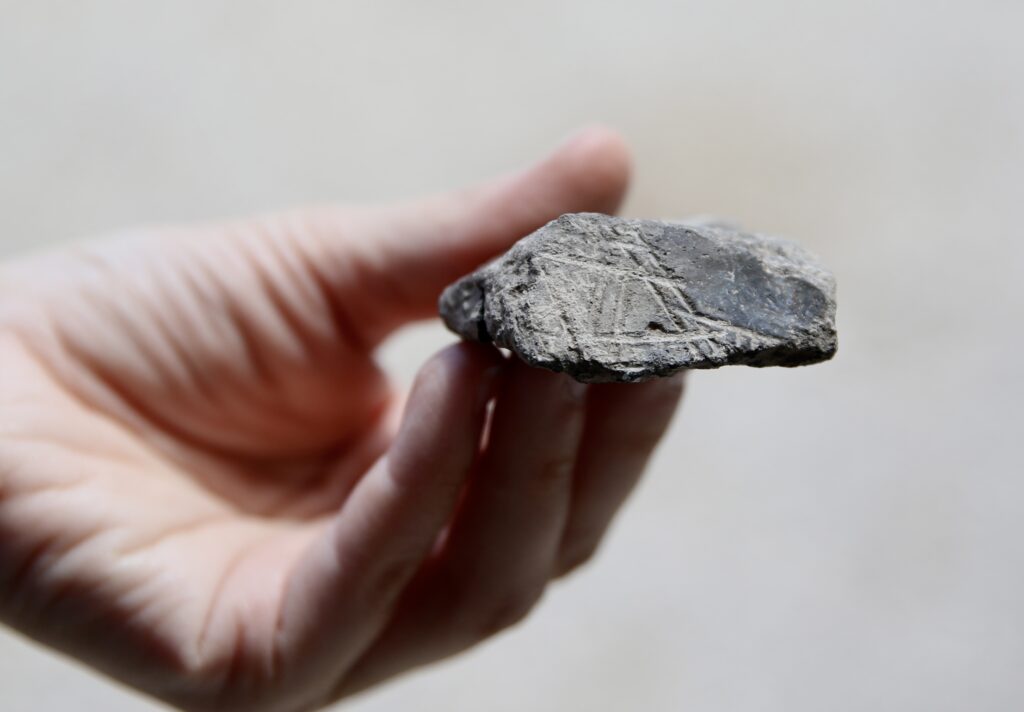
Ceramics associated with Lycia, Caria, Lydia and Ionia have also been recovered at Çaltılar. Their diversity reinforces the picture of a highland community connected to several cultural regions rather than an isolated rural settlement.
The Melian obsidian now provides some of the clearest evidence for those connections. More than four millennia ago, volcanic glass extracted on a Cycladic island travelled across the sea, entered southwestern Anatolia and eventually reached a settlement high above the Mediterranean coast—placing Çaltılar Höyük directly within the trade and communication routes of the prehistoric Aegean.
