
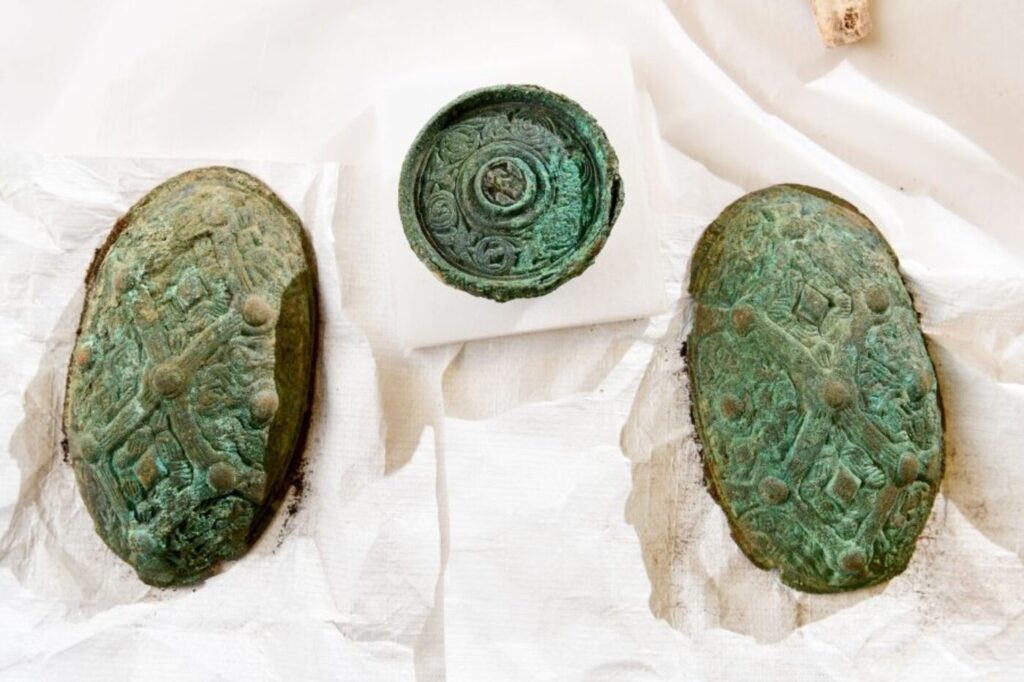
A rare 1,100-year-old Viking double burial discovered on the Isle of Man has yielded a silver-decorated sword, bronze brooches adorned with animal motifs, and unusual trading equipment. Dating to around AD 900, the discovery may include the island’s earliest known Viking-era woman’s grave. The remarkable collection provides new evidence of the lives, burial traditions, and trading connections of the island’s early Scandinavian settlers.
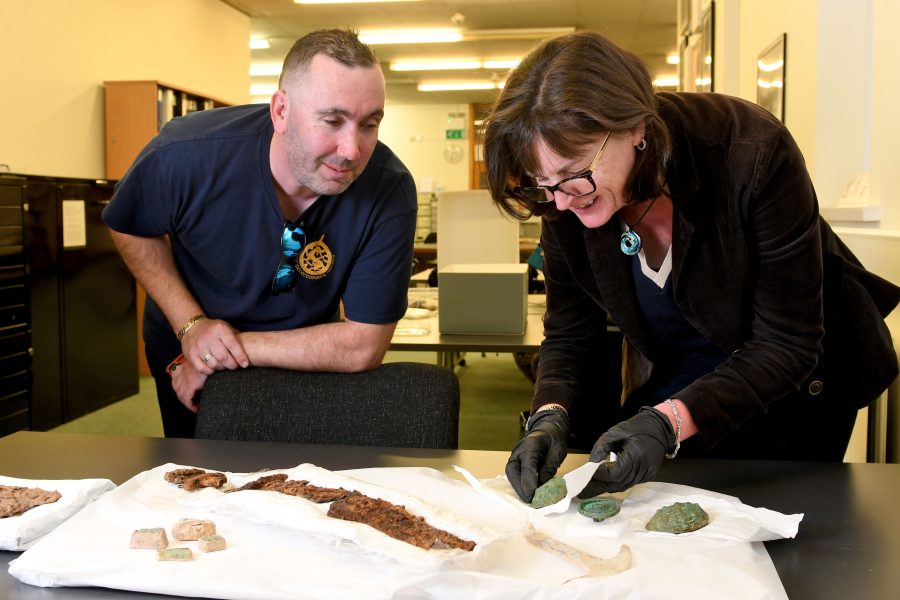
Manx National Heritage unveiled the finds on November 9, following their discovery in February 2026 by metal detectorist Daniel Crowe. The institution announced that the items have officially been granted treasure status due to their historical and archaeological significance, providing vital insights into the lives of the first Norse communities to settle on the Isle of Man in the Irish Sea.
Possibly the Oldest Viking Woman’s Grave
Among the most striking pieces in the collection are two oval bronze brooches adorned with intertwined animal figures. During the Viking Age, women used such brooches to fasten the straps of their traditional clothing; consequently, researchers believe the jewelry may belong to a woman’s grave.
Previously, only one pair of similar brooches had been found on the Isle of Man. These new examples may be approximately 50 years older than previous finds. If this dating is confirmed, the jewelry would constitute evidence of the earliest known Viking-era female burial on the island.
The discovery also carries a notable family connection: one of the individuals who discovered the previous pair of brooches was Daniel Crowe’s father, John Crowe, who found them while working with metal detectorist Craig Evans.
A third brooch is also included in the new collection. Originally gilded, this piece stands out from the others with its spiral motifs and a glass ornament at its center. No other brooch of this specific type has been found on the Isle of Man to date.
A Silver-Decorated Viking Sword
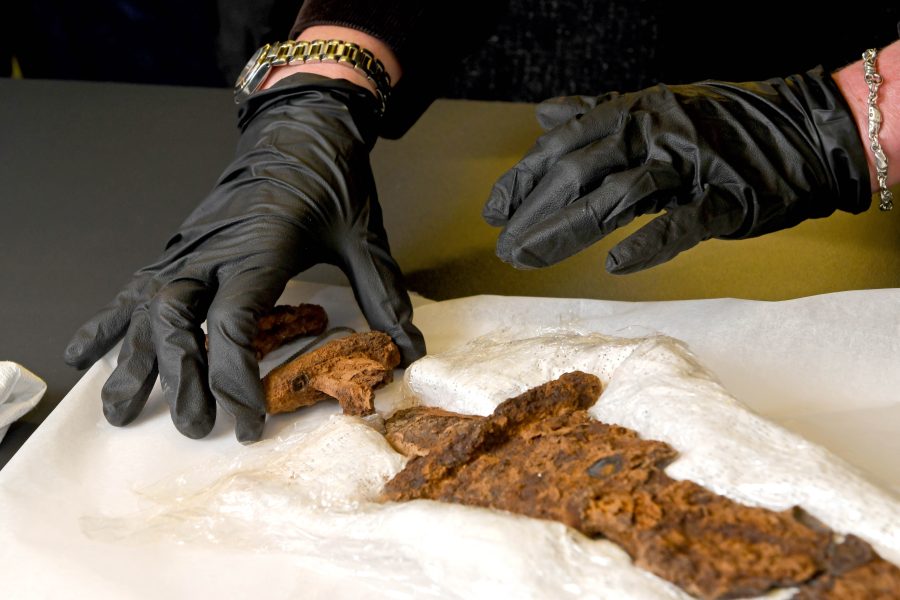
The Viking sword found alongside the jewelry is one of the most significant pieces of the collection. As the 13th Viking sword ever discovered on the Isle of Man, about two-thirds of the weapon has survived. Researchers identified fine silver inlays and twisted silver wires on the hilt.
X-ray examinations conducted by the Manx Care radiology team revealed decorations hidden beneath layers of corrosion and soil. According to Manx National Heritage, only two other Viking swords found on the island possess a similar level of ornamentation.
The fact that the sword is broken has also caught the attention of researchers, who suspect it may have been intentionally broken during the burial ceremony. However, the artifact may have also been damaged by the degradation of the grave over subsequent centuries.
The presence of brooches associated with women’s clothing alongside a sword—typically found in male graves—raises important questions about the nature of the burial. Researchers are considering the possibility that two people were buried in the same grave, though they have not ruled out the possibility of two separate, adjacent graves. Because the burial site had been disturbed in the past, determining the original positions of the items is difficult; therefore, it is not yet certain whether the finds represent a joint burial of a man and a woman.
Trade Weights Reveal Irish Sea Connections
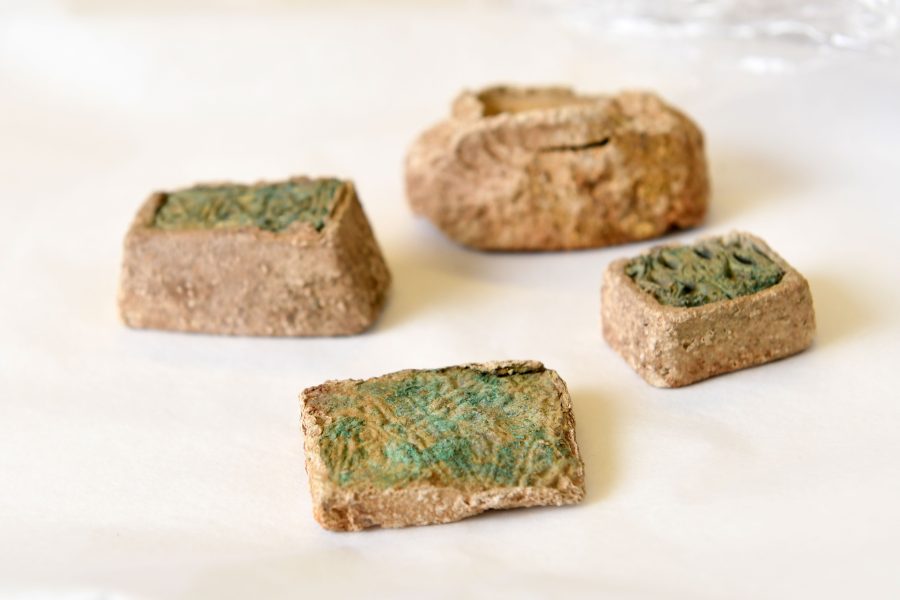
The collection consists of more than just jewelry and weapons. Researchers also identified decorative lead weights, bronze scale parts, a ladle, and an axe head. The trade weights are the first examples of their kind ever identified on the Isle of Man.
Viking merchants used these types of scales and weights to weigh precious metals and coins. These new finds are crucial for understanding the role the Isle of Man played in commercial relations between Norse communities, Britain, and Ireland.
One of the weights contains a bronze ornament that was likely repurposed from a small chest or a religious object. The artistic features of this ornament resemble the British and Irish traditions of the period, suggesting that Viking communities adopted and adapted objects from different cultures for their own use.
The bronze ladle in the collection also represents a type of artifact previously undocumented on the island. Researchers speculate that the ladle may have been used during feasts or ceremonial events.
New Evidence of Early Viking Settlements
Vikings began establishing trade relations with the Isle of Man in the 9th century and eventually settled there. Its central location in the Irish Sea made the island a vital maritime hub between Scandinavia, Britain, and Ireland.
Allison Fox, Archaeology Curator at Manx National Heritage, emphasizes that the bronze brooches may represent the oldest known Viking-era woman’s burial on the island. According to Fox, the ornate sword and trade equipment also help in understanding the economic activities and relationships of the first Norse settlers with neighboring communities.
The preservation of archaeological evidence was aided by Daniel Crowe, who delivered the artifacts to experts without cleaning them. Metal detectorist Rhett Britton also assisted the research by finding the axe head, parts of the scale, and other iron objects.
Manx National Heritage began exhibiting a portion of the finds on November 11, 2026, in the Viking Gallery of the Manx Museum in Douglas.
