
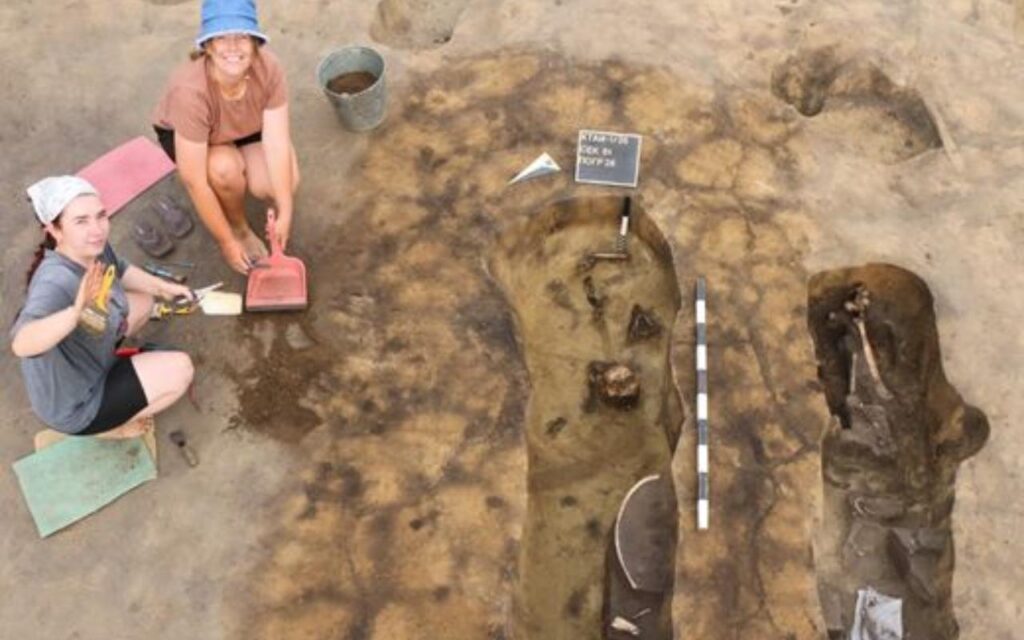
A grave discovered in Western Siberia has raised new questions about the relationship between local populations and migrating groups that entered the region thousands of years ago. Ceramic vessels and horse bones found within the burial exhibit characteristics of a culture that lived hundreds of kilometers away. Furthermore, ancient DNA results have led archaeologists to believe they may be uncovering traces of a previously unidentified Bronze Age culture.
The research, led by Vyacheslav Molodin of the Russian Academy of Sciences, is being conducted in the Baraba forest-steppe of the Novosibirsk region. Findings from the 2026 season add to existing evidence that this region served as a critical crossroads for interaction between prehistoric communities.
A Burial Ground Used for Millennia
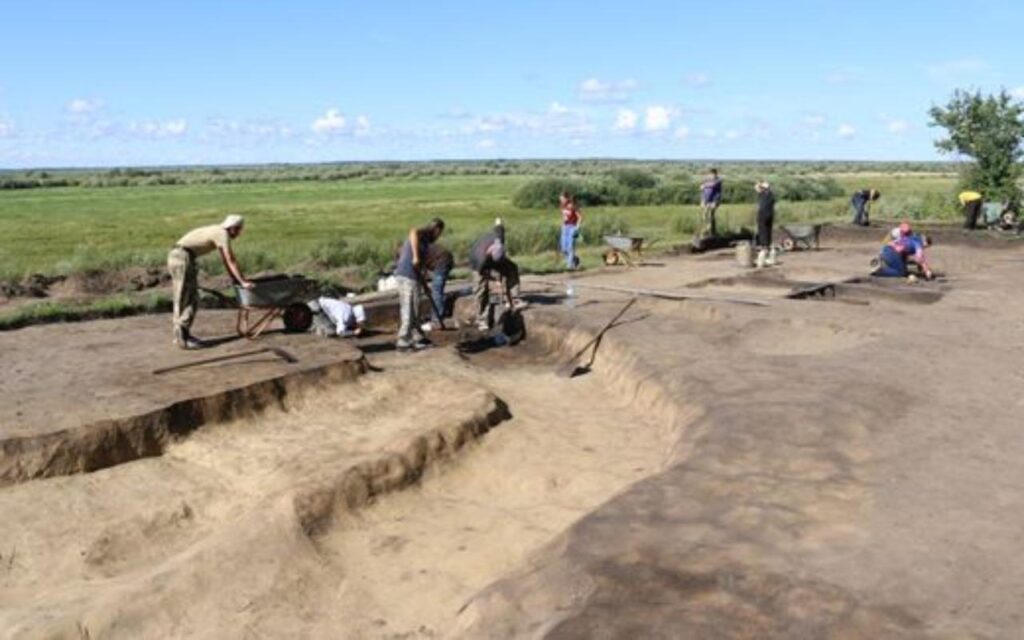
The Baraba forest-steppe in southern Western Siberia is a vast region where forests blend with open grasslands, and rivers interweave with lakes. Archaeological sites here indicate that prehistoric groups utilized the same geography for different purposes over thousands of years.
One of the region’s most significant cemeteries, Tartas-1, is situated on a slight elevation where the Om River bends. In studies involving the German Archaeological Institute, over 650 graves and more than a thousand pits associated with ritual or daily activities had been examined by 2017. The burial traditions surrounding the cemetery date back more than four thousand years.
The site contains traces from various eras, ranging from the Ust-Tartas and Odinovo cultures of the Early Bronze Age to the Andronovo communities of the Middle Bronze Age. The relationship between these burials has helped archaeologists determine the sequence of cultural shifts in Western Siberia.
A research review published by the German Archaeological Institute reveals that the site was not merely a cemetery, but a vital archaeological hub for tracking human migration and cultural exchange.
Traces of a Distant Culture
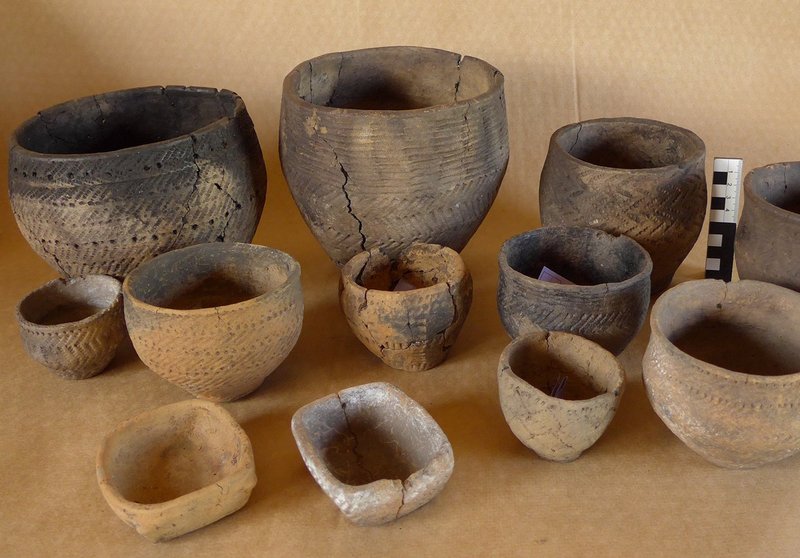
During research conducted over the last two years at the nearby Karyer Tai-1 site, Molodin’s team uncovered a remarkable grave. A ceramic vessel found in one of the burials possesses shapes and decorations characteristic of the Petrovka culture.
The Petrovka culture was influential across a wide geography linked to present-day northern Kazakhstan during the Bronze Age. However, the site where this new ceramic was found lies hundreds of kilometers northeast of the culture’s known distribution range.
Animal bones within the grave further strengthen this connection. In particular, the prevalence of horse bones mirrors practices seen in the burial traditions of the Petrovka culture.
While a single ceramic vessel may not be enough to prove long-distance ties, the combination of the vessel’s form, the layout of the grave, and the animal remains suggests a convergence of local traditions and cultural influences arriving from the southwest.
Ancient DNA Suggests New Possibilities
The excavation team sent bone samples from the graves to the Institute of Cytology and Genetics of the Siberian Branch of the Russian Academy of Sciences. Initial paleogenetic results revealed genetic links between the indigenous population of the Baraba region and communities originating from present-day Kazakhstan.
In a statement released on November 10 by Novosibirsk State Pedagogical University, Molodin noted that when burial traditions and genetic data are analyzed together, they may point toward a previously unknown culture.
This interpretation aligns with a major ongoing debate in the Bronze Age history of Siberia: archaeological cultures in the region were not always separated by rigid boundaries. Intermarriage, migration, and technological exchange between different groups likely contributed to the development of new cultural traditions over time.
Indeed, Molodin’s previous research showed that interactions between local Krotovo communities and Andronovo groups were evident in their material culture, burial rites, and genetic makeup. It remains to be determined whether these new findings represent another stage of the same process or belong to a distinct cultural formation.
Where Metallurgy Met Ritual
The findings at Karyer Tai-1 are not limited to burial traditions. Archaeologists are also investigating a Bronze Age sacred site that they believe may be related to metal production.
Traces of fire and fragments of casting molds were found in a ditch surrounding the area. Nearby pits yielded a bone pendant, a fish figurine, an arrowhead, and fragments of a harpoon, alongside sable and fox bones.
Molodin views these remains as evidence of ritual practices associated with metalworking. According to the researcher, the ability to transform metal into objects for daily use may have granted casting masters a special status in early societies.
Notably, some ceramics found at the site exhibit decorative features of both the Odinovo and Krotovo cultures. Additionally, a mold used for casting a Seima-Turbino type bronze axe was discovered in the graves.
The Seima-Turbino phenomenon is regarded as a cross-cultural occurrence recognized across a vast portion of Eurasia for its advanced bronze objects and metalworking techniques. Consequently, the casting mold is crucial for understanding the region’s technological connections during the Bronze Age.
Reevaluating the Bronze Age of Siberia
Past research in the Baraba region has long shown that the communities living there were not isolated from the outside world. However, the new ceramic and genetic results suggest that these relationships extended beyond the exchange of goods and technology to include the movement of entire human populations.
Nevertheless, the proposed identification of a new culture has not yet been finalized. The chronology of the graves, the genetic data, and the synthesis of characteristics from different cultures require more detailed analysis.
Molodin’s team plans to continue their work at Karyer Tai-1 in 2027. A primary question for future research will be how the communities from the southwest interacted with the indigenous people of Baraba, and whether this encounter gave rise to a new archaeological culture.
