
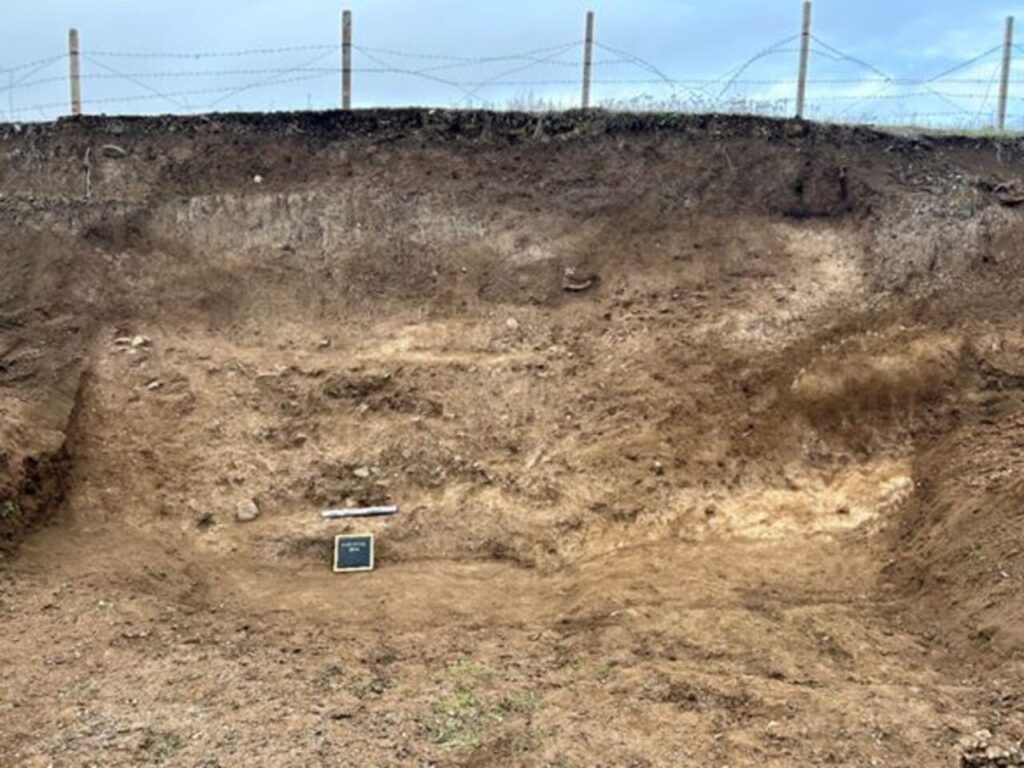
Archaeologists conducting research in the Karabakh region of Azerbaijan have examined a Neolithic camp that they believe may have specialized in the procurement of natural mineral pigments approximately 7,500 years ago.
Discovering numerous pieces of ochre, stone tools, ceramics, and animal bones in the area located near Canyataq village in the Aghdara district, researchers believe that a small community living here may have transported mineral resources obtained from mountainous regions to settlements in the plains. According to the excavation team, Canyataq is the first and only known archaeological site to date that documents the process of Neolithization in the mountainous parts of Karabakh.
The excavation report published on November 24, 2026, by the Institute of Archaeology and Anthropology of the Azerbaijan National Academy of Sciences reveals new assessments regarding prehistoric economic activities and settlement patterns in the region.
A Neolithic Camp Revealed During Mining Work
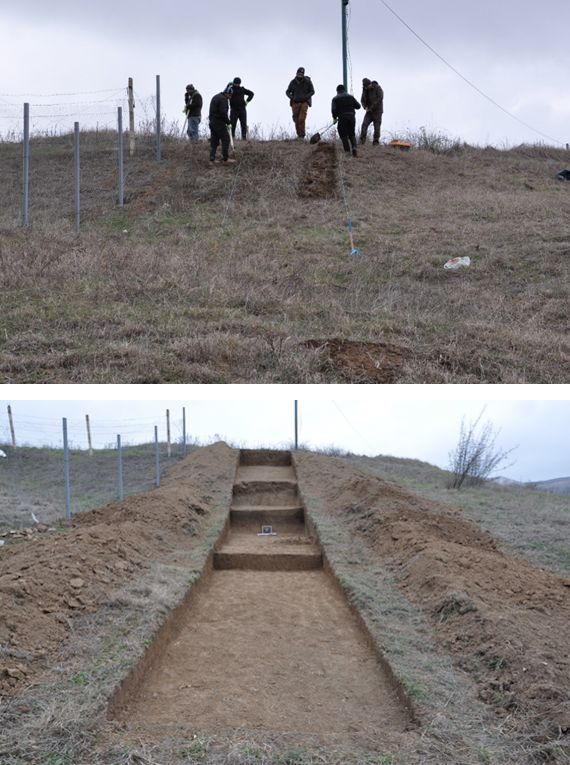
The research team, led by archaeologist Bakhtiyar Jalilov, conducted archaeological surveys around the Demirli Ore Processing Complex between January 21 and March 21, 2026.
The Canyataq settlement is located on a hill near the confluence of two rivers, northeast of the present-day village of the same name. Only a small portion of the hill, which is approximately 250 meters in diameter, hosted the Neolithic settlement.
Previous road and mining works in the area had seriously damaged the archaeological layers. However, by examining a section to the south of the hill, researchers managed to identify different phases of the Neolithic settlement.
A Community Specialized in Ochre Procurement
According to researchers, the finds at Canyataq contain important clues for understanding the economic function of the settlement. In particular, the ochre fragments and remains of large stone tools encountered in different layers suggest that a specific production activity may have taken place here.
Ochre, a natural mineral pigment in shades of yellow, orange, red, and brown, was used by prehistoric communities for various purposes.
The excavation team’s hypothesis is that the inhabitants of Canyataq brought ochre obtained from nearby mineral deposits to the camp, broke it into smaller pieces, and transported it to settlements in the plains. The grinding and preparation of the pigment for use may have occurred in those lowland settlements.
Another significant detail supporting this assessment is that stone tools used for grinding ochre have been found in all Neolithic archaeological sites researched in Karabakh to date.
Researchers believe that rather than being a permanent village based on agriculture and animal husbandry, Canyataq was a camp where a small community specialized in a specific economic activity lived and worked.
If this interpretation is confirmed, the discovery could contribute significantly to the understanding of the economic relations that developed between mountainous regions and lowland settlements during the Neolithic period.
Buried Structures and a Different Ceramic Tradition
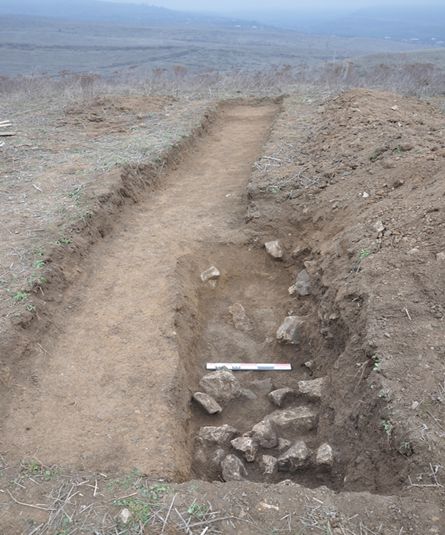
The architectural remains at Canyataq also provide information about the camp’s usage. Researchers identified the traces of a structure dug approximately one meter deep into a natural clay layer. In a later settlement phase, they detected floor remains prepared from lime-added clay.
Along with animal bones and deer antler fragments, the ceramics found in the area are particularly noteworthy. The large, spherical ceramic handles of Canyataq differ from the ceramic tradition of Neolithic settlements in the Karabakh plains.
Conversely, researchers identified distinct similarities with the ceramics of the Seyidli Neolithic settlement in Aghdam. These similarities are important for researching the cultural relations between communities in mountainous areas and those at the foothills.
A New Perspective on the Neolithic History of Karabakh
Based on a comparative analysis of the ceramics, the research team dates the Canyataq camp to the third quarter of the 6th millennium BCE, approximately 5500–5250 BCE. Radiocarbon analysis results are required to determine the exact chronology of the settlement.
Despite the excavations being carried out in a limited area, Canyataq raises important research questions regarding the Neolithic period of Karabakh. The geographical spread of the Neolithization process in the region, economic specialization, and the circulation of natural resources among different communities could be the primary topics of future research.
The scientific importance of Canyataq stems not only from providing the first evidence of a Neolithic settlement in mountainous Karabakh but also from allowing the investigation of economic relations that may have developed around the procurement of natural mineral resources approximately 7,500 years ago.
Institute of Archaeology and Anthropology of the Azerbaijan National Academy of Sciences
