
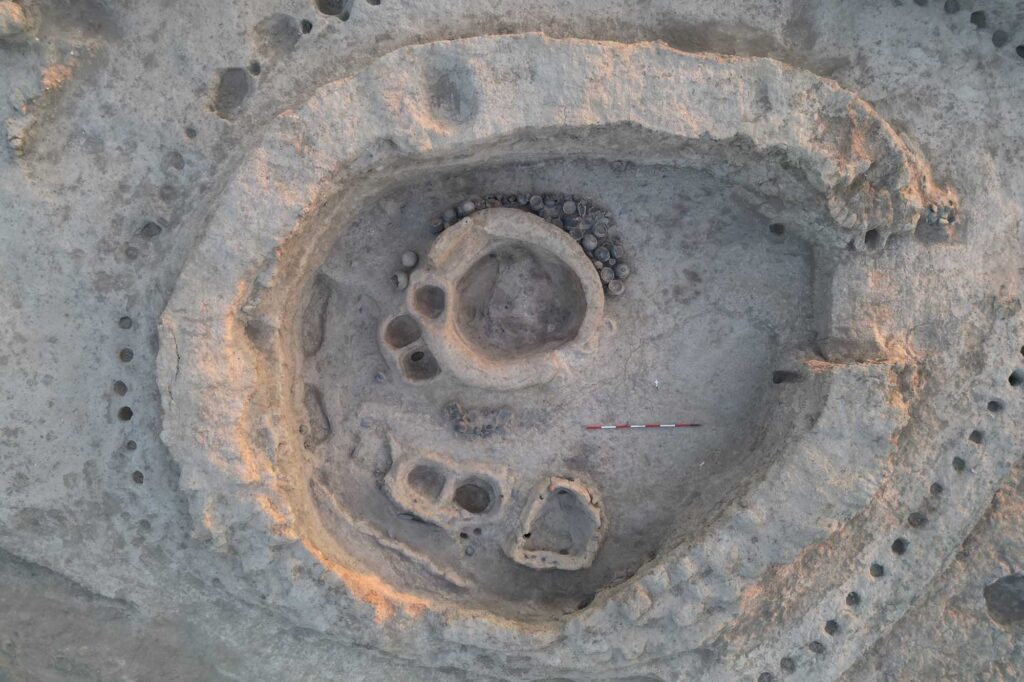
Archaeologists at Tava Tepe in western Azerbaijan have uncovered a 3,200-year-old ceremonial kitchen unlike any yet documented in the Caucasus. Excavations revealed that the Late Bronze Age structure, first identified in 2024, had been rebuilt repeatedly over generations, with earlier ovens, vessels and food remains deliberately preserved within each successive phase.
The finding suggests that communities returned to the same elevated place over an extended period to prepare and share large meals. Rather than serving as an ordinary domestic kitchen, the structure appears to have been connected to collective gatherings in which food helped maintain social relationships.
The excavation is led by Nicola Laneri of the University of Catania in collaboration with the Academy of Sciences in Baku. The project is supported by Italy’s Ministry of Foreign Affairs and International Cooperation and includes researchers and students from Catania, Baku and Sapienza University of Rome.
The kitchen discovered in 2024 was only the final phase
The ceremonial complex dates to the Late Bronze Age, approximately 1300–1000 BCE. During the latest excavation campaign, the team reached an older level beneath the installation documented in 2024.
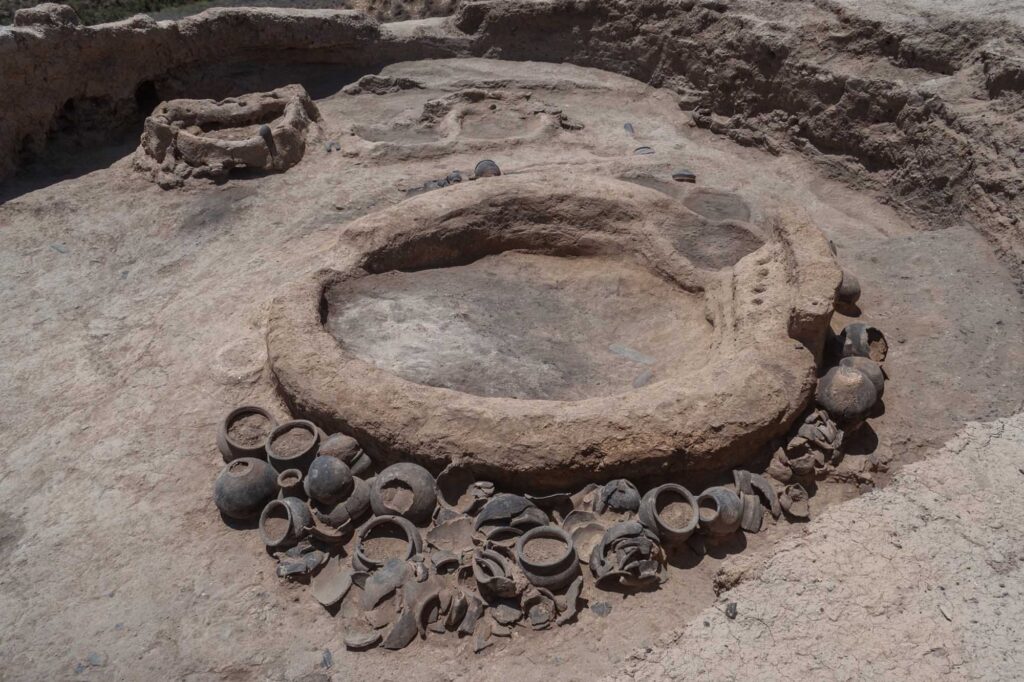
This earlier phase contained a broad circular brazier that appears to have served as the main cooking fire. Several smaller food-processing installations and ceramic vessels were arranged around it.
Cooking pots had been positioned close to the hearth, while numerous bowls were found gathered inside an oven filled with ash. The arrangement provides archaeologists with a rare snapshot of how food was prepared, served and left behind within the structure.
More importantly, the sequence of construction showed that the kitchen had been renewed several times. Earlier pottery, ovens and meal remains were not simply cleared away. They were retained as new phases were built over the same location.
According to Laneri, this pattern indicates a long-established tradition rather than an isolated event. Successive generations appear to have returned to the same ceremonial setting while preserving physical traces of earlier gatherings.
A raised structure visible across the landscape
The kitchen stood on a compacted-earth terrace that raised it above the surrounding ground. Archaeologists believe it may have been covered by a lightweight roof made from timber and branches.
Its elevated position would have made the structure conspicuous from a considerable distance. The terrace also separated the cooking space from the nearby buildings and activity areas.
Researchers currently know of no close archaeological parallel for this configuration elsewhere in the Caucasus. Its scale, visibility and repeated reconstruction distinguish it from the domestic cooking installations normally associated with Bronze Age settlements.
The physical layout therefore supports the interpretation that the site had a public or ceremonial function. However, the precise nature of the gatherings—and who was permitted to participate—remains under investigation.
Millet, honey and beef may have been served
Scientific studies of residues preserved inside the vessels are beginning to reveal what may have been prepared at Tava Tepe.
Preliminary findings indicate a dish resembling millet porridge, possibly sweetened with honey. Animal remains suggest that beef formed an important part of the meals.
Further analysis of botanical material, animal bones and residues from the pottery will be required before the menu can be reconstructed in greater detail. The researchers are working with national and international laboratories to identify ingredients and cooking practices more precisely.
Such studies may also help determine whether the food was prepared locally, brought to the site by visiting groups or connected to particular seasons of the year.
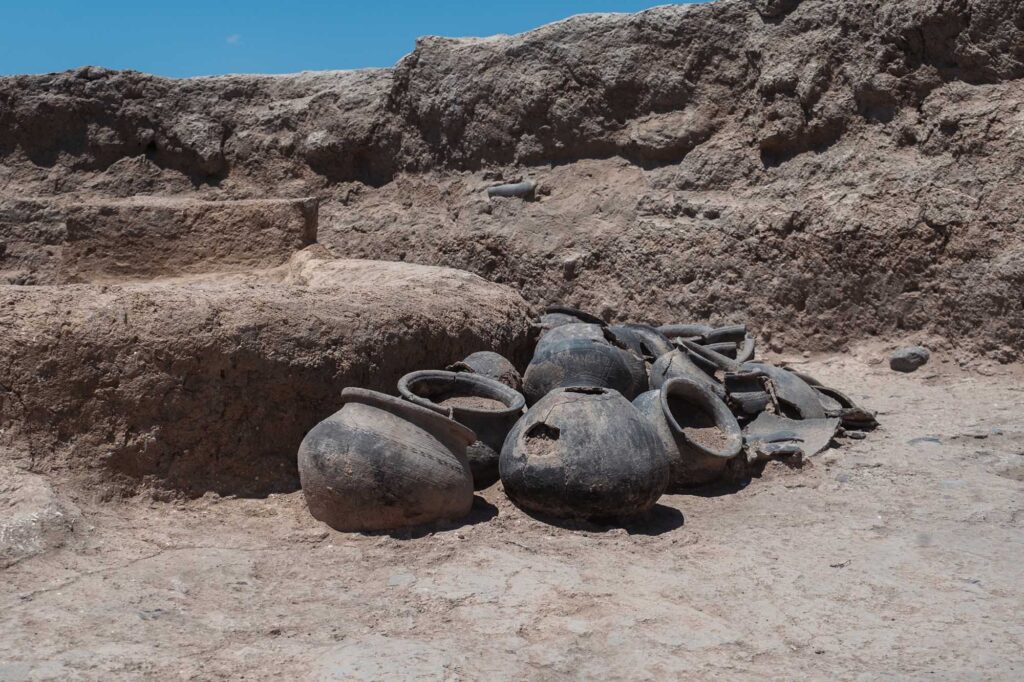
Cooking vessels found in situ within the circular structure at Tava Tepe. Credit: University of Catania
Decorated stamps may have marked bread
Archaeologists also identified huts around the ceremonial area. These buildings had beaten-limestone floors, timber elements and spaces associated with food production.
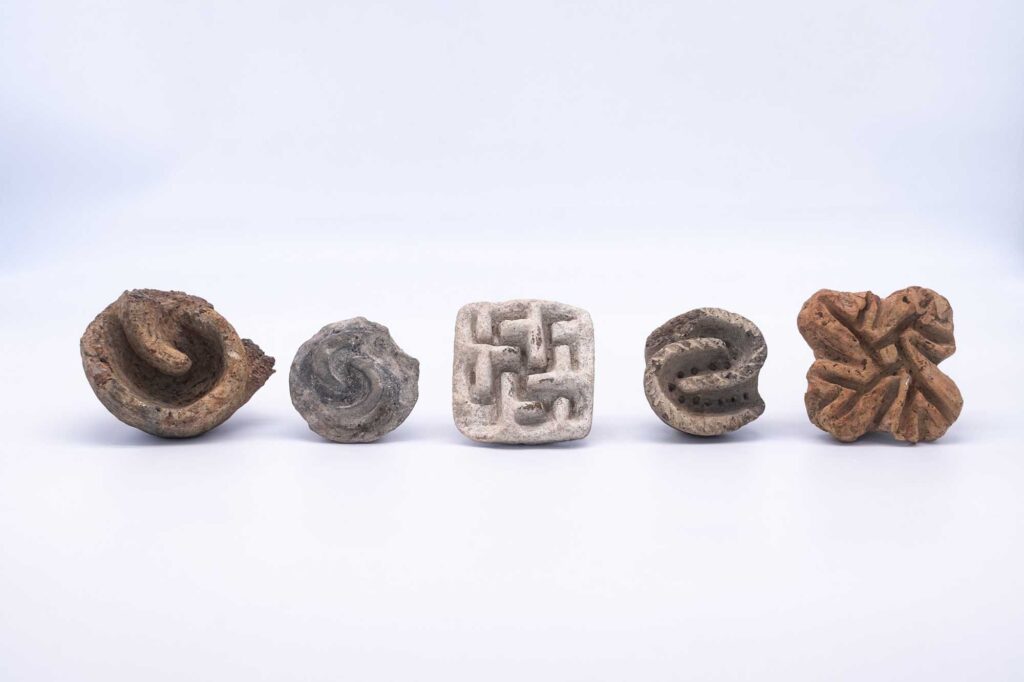
Among the more unusual discoveries were decorated terracotta stamps known as pintaderas. The objects carry geometric designs and may have been used to impress patterns onto bread or mark loaves during preparation.
Their precise purpose has not yet been demonstrated. Similar stamps can have several functions, including decorating food, textiles or the human body. Their discovery beside food-processing areas nevertheless makes a connection with bread production plausible.
If that interpretation is confirmed, the stamps could show that the appearance of food carried social or symbolic meaning in addition to its practical value.
A meeting place for communities of the Kura region
Tava Tepe lies within a landscape crossed by communities moving along the Kura River corridor. Laneri proposes that the site may have functioned as a periodic meeting place where different groups gathered to cook, eat, and renew social ties.
The repeated rebuilding of the kitchen supports the possibility that these gatherings were remembered and reproduced over generations. Preserving older vessels and food remains may also have connected later participants with earlier communal events.
The evidence does not yet establish whether the meals were associated with seasonal festivals, political alliances, religious ceremonies or another form of assembly. What is clear is that considerable effort went into maintaining the location and its distinctive architecture.
At Tava Tepe, food preparation was therefore probably more than a routine household task. The raised terrace, central hearth, accumulated vessels and repeated rebuilding point to a communal space where eating together formed part of Bronze Age social life.
Ongoing laboratory work may reveal exactly what was cooked there. The larger question of why communities continued returning to the same fire will depend on the next phases of excavation.
