
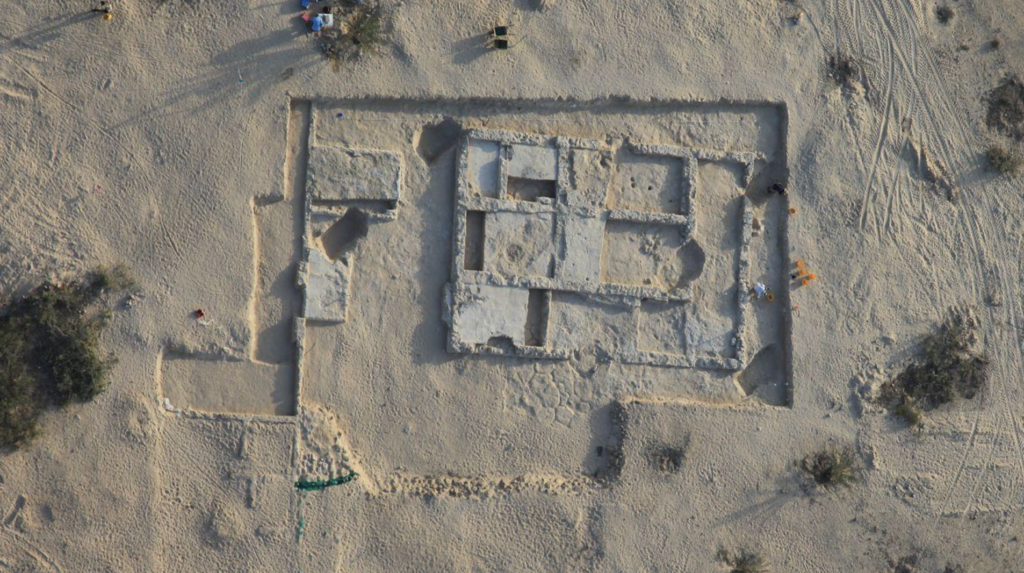
Archaeological excavations on Sir Bani Yas Island in the United Arab Emirates have revealed that the living quarters of early Christian monks were larger and more complex than previously thought. Researchers identified two independent structures within the monastic settlement consisting of nine and seven rooms, respectively. These findings necessitate a re-evaluation of earlier interpretations that suggested monks lived alone in small, simple cells.
Led by the Abu Dhabi Department of Culture and Tourism, an international research team continued excavations in the 2026 winter season, having first launched the project in 2025. The excavation report, prepared by researchers affiliated with New York University, University College London, and the University of Cambridge, provides new evidence regarding the architecture and daily use of these structures.
The Nine-Room Structure Challenges Previous Assumptions
The monastic settlement on Sir Bani Yas consists of independent structures scattered around a church and a communal living area. Researchers state that at least seven such structures exist in the area extending approximately one kilometer north of the church.
During the 2026 excavations, the plan for the structure designated as SBY0011 was largely completed. Consisting of nine rooms and at least two separate open areas enclosed by walls, this structure is significantly larger than the monk cells examined previously.
According to the excavation team, most of the rooms belong to the same construction phase. The lack of evidence that the building was expanded over time suggests that the nine-room layout was planned from the outset.
The second structure, SBY0014, consists of seven rooms. Previous research had assumed that monks typically lived in smaller structures of two to four rooms. These new findings indicate that this architectural model may be insufficient to explain the entirety of the settlement.
Did Monks Live Alone or With Assistants?
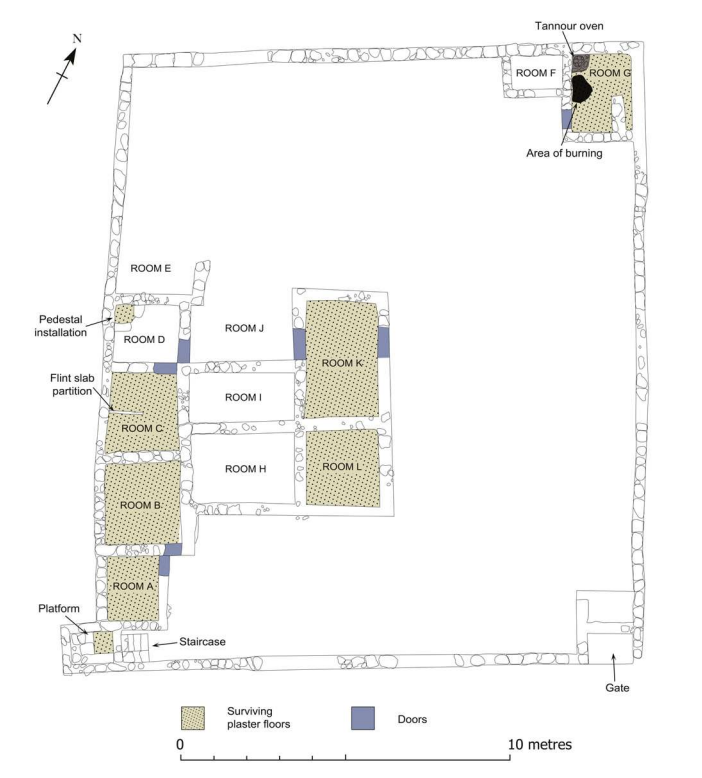
In the seven-room SBY0014 structure, researchers identified two separate groups of rooms that are not directly connected to one another. The western section consists of two rooms, while the eastern section comprises five.
This division may have social as well as architectural significance. Due to the symbolic importance of the east in Christianity and the size of the rooms, researchers believe the two sections may have been used by individuals of different statuses.
The presence of an oven near the small western section is also noteworthy. The team suggests that a monk may have lived here with an assistant or another person serving them.
However, it remains unknown how many people utilized these structures. While these large residences could have been spaces where multiple monks lived together, they may also indicate that some monks possessed larger living spaces than expected.
Function of the Structure Mistaken for a Cistern Changes
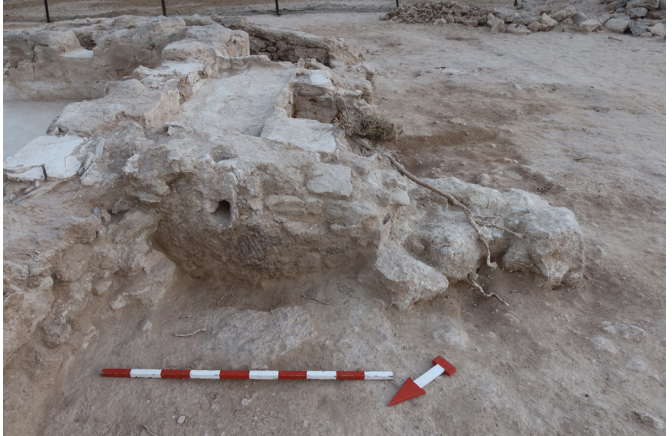
Another significant result of the excavations concerns a plastered installation in the western section of SBY0014.
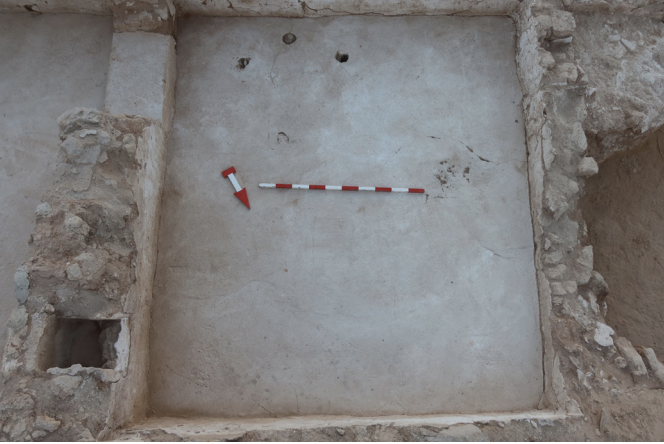
Previously identified as a water cistern, new examinations revealed different characteristics. Researchers determined that the installation lacked walls suitable for water storage; instead, it featured an entrance, a threshold, and a drainage channel.
The slightly sloping floor leading toward the drainage channel suggests that activities involving liquids may have been carried out here, although the nature of these activities has not yet been clarified.
In nearby rooms, two small, quarter-circle installations and three holes arranged in a triangle on the floor were detected. Researchers also took samples of unidentified black and red substances for analysis.
In another room, iron objects of undetermined shape and seashells containing bituminous or red residues were found. The team notes that these finds indicate activities other than worship, food preparation, and sleeping were conducted within the monastery.
New Research at the Sir Bani Yas Monastery
The remains of the Sir Bani Yas monastery were discovered in 1992, while fragments of plaster decorated with crosses, found in 1994, helped establish the site’s Christian identity. Dating to the seventh and eighth centuries CE, the church and monastery continued to function after the arrival of Islam in the region.
The monastery formed part of a wider network of early Christian communities around the Arabian Gulf. Architectural similarities with sites such as Al Qusur in Kuwait and Jubayl in Saudi Arabia suggest connections between these settlements. The latest excavations at Sir Bani Yas are providing further evidence of how these communities organized their living spaces and daily activities.
Sir Bani Yas is a critical settlement for researching Christian communities of the Late Antique and early Islamic periods around the Persian Gulf. The excavation team assesses that the monastery likely belonged to the Eastern Church tradition.
In this tradition, it is thought that monks may have first lived in communal areas and later in independent structures. However, the new architectural findings show that independent living was not always limited to small, single-person cells.
Researchers are continuing ceramic examinations, environmental sample analyses, and radiocarbon dating. These studies may help provide a more detailed understanding of the periods of use for these structures and the daily activities of the monks.
Gajewska, M., Lazarescu, R., Steen, P., Benattia, H., Almenhali, H., & D Silva, F. (2026). Continuing excavations at the dispersed Christian monastery on Sir Bani Yas Island, Abu Dhabi, UAE. The IASA Bulletin, Spring 2026, 52–55.
