
Archaeological excavations carried out in the town of Golubac, on the banks of the Danube River in Serbia, have revealed new information regarding the military history and the inhabitants of the Cuppae Fort, which once guarded the northern frontier of the Roman Empire. Archaeologists discovered defensive walls preserved up to four meters in height, towers constructed across different periods, and hundreds of archaeological artifacts. The most striking discovery was a funerary monument bearing the name of Titus Ulpius Flavius, identifying the first known resident of ancient Golubac.
The results, announced by the Serbian Archaeological Institute on November 12, 2026, indicate that the fort was constructed in the 2nd century AD and underwent significant modifications in subsequent centuries. The research, led by Dr. Milica Marjanović and Saša Živanović, focuses on understanding how the Roman Empire’s defensive system along the Danube frontier evolved.
Four-Meter Walls Emerge at the Roman Fort
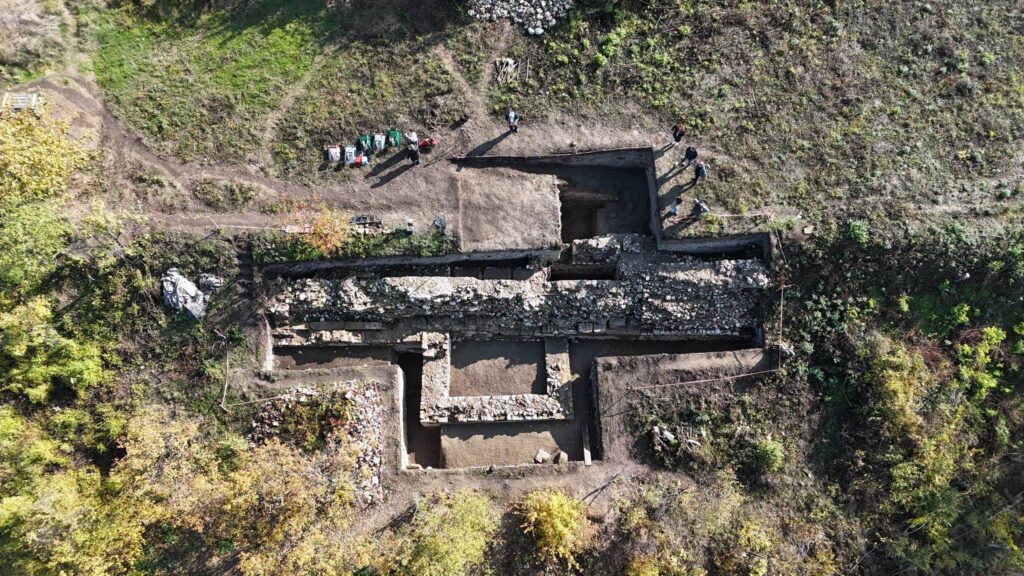
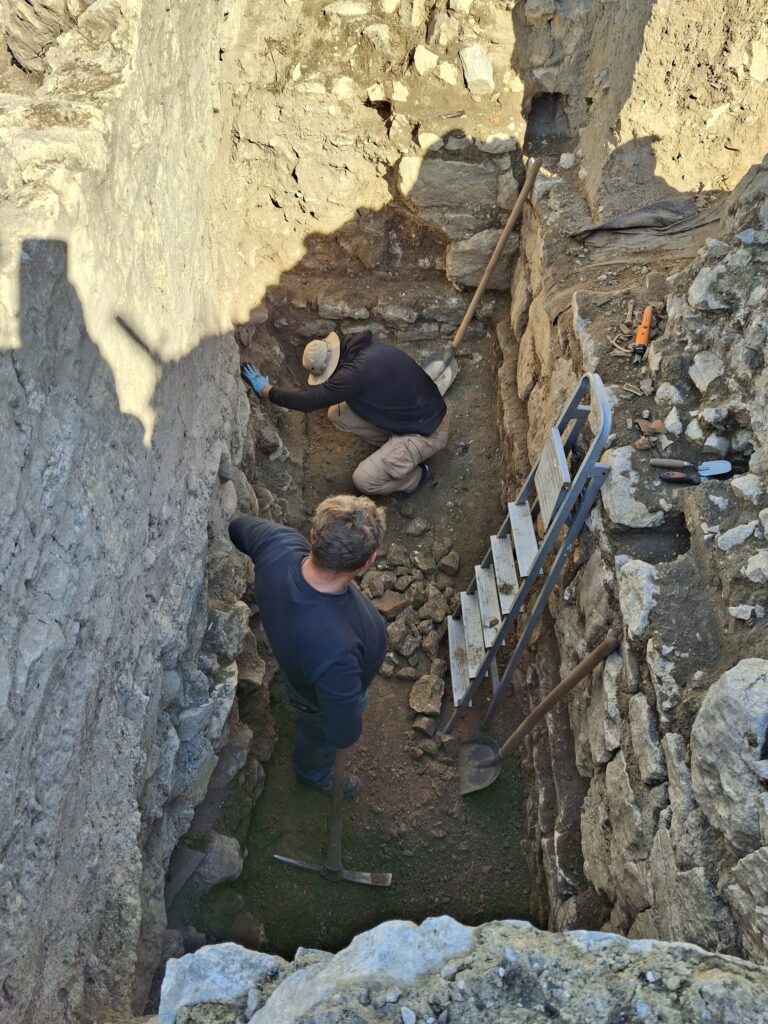
The 2026 excavations concentrated on the western section of the Cuppae Fort. Here, archaeologists investigated defensive walls built with large stone blocks and the remains of towers belonging to two distinct construction phases.
Certain sections of the western wall remain preserved up to four meters high. Walls standing at this height allow researchers to evaluate Roman military architecture not only through floor plans but also through the surviving vertical structures.
The excavation team identified the remains of an inner tower from the fort’s early period. They also fully excavated a second tower, dating to the 4th century AD, which extends outward from the wall line.
These two architectural phases demonstrate that Cuppae was reorganized after its initial construction. The later tower, protruding outward, serves as a concrete example of the architectural shifts in the defensive system.
A Tomb Inscription Introduces the First Known Resident of Ancient Golubac
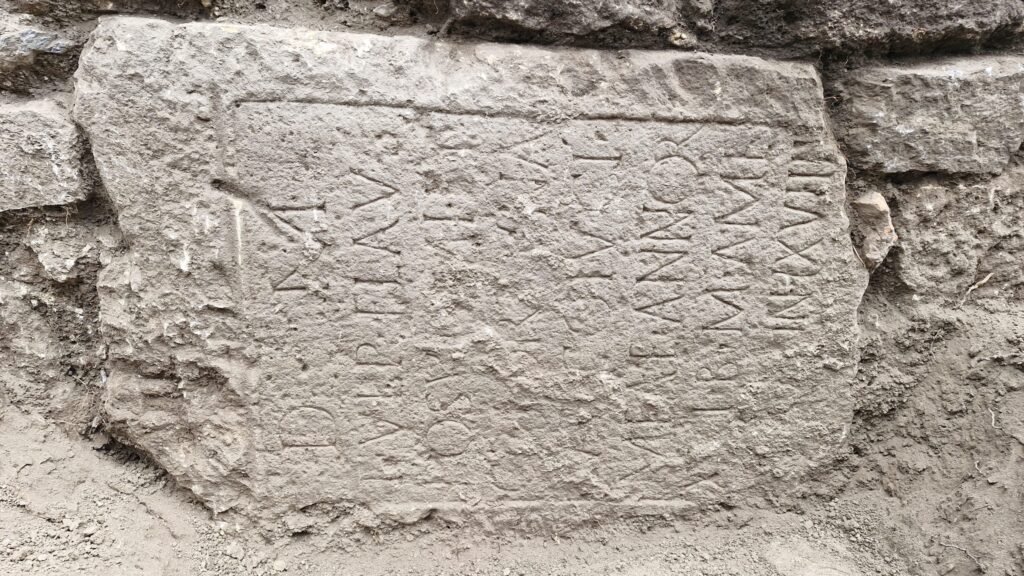
The funerary monument discovered during the excavations represents the research’s most significant finding regarding human life. The inscription on the stone carries the name of Titus Ulpius Flavius.
Archaeologists identify this individual as the first known resident of ancient Golubac. According to local excavation results, the tombstone was later reused as building material within the fort’s walls.
This indicates that the monument was moved from its original burial site. While the reuse of ancient stone artifacts in new constructions was a common practice in Roman architecture, the original location of Titus Ulpius Flavius’s grave has not yet been determined.
The research team has not yet disclosed the full text of the inscription or the individual’s profession or military status. Consequently, there is insufficient evidence to definitively state that he was a soldier stationed at the fort.
Nevertheless, the inscription fills a critical void. Cuppae is now recorded in archaeological archives not only by its walls and military structures but also by a named individual who once lived there.
Rome’s Defensive Line Along the Danube
Cuppae was located on the southern bank of the Danube River in present-day Serbia, east of Viminacium, one of the most important military centers of the Roman era. The fort was part of the Danube frontier system that protected the empire’s Balkan territories against attacks from the north.
The Roman Empire established a vast defensive network along the river consisting of forts, watchtowers, military camps, and transport routes. The Danube also served as a vital transportation artery for the movement of soldiers, trade goods, and communications.
Information regarding Cuppae’s history does not rely solely on new excavations. In ancient sources documenting Roman road routes, the settlement appears as Cuppe or Cuppis.
Late Roman military records also indicate the presence of Dalmatian cavalry units and other military formations here. Previously identified stamped bricks in the region point to connections with the VII Claudia and IV Flavia legions.
These historical data explain Cuppae’s long-term military significance on the Danube frontier. The new findings of walls and towers provide a physical understanding of the fort’s development, which was previously known largely through written records and limited surface surveys.
Roman Artillery Ammunition and Traces of Early Christianity
In addition to architectural remains, the excavation team documented hundreds of portable artifacts. These include ceramic fragments, bone objects, artillery ammunition used by the Roman army, and bricks bearing animal footprints.
The military ammunition is among the finds directly related to the fort’s defensive function. The bricks with footprints left by animals on wet clay offer different details regarding the production process of Roman building materials.
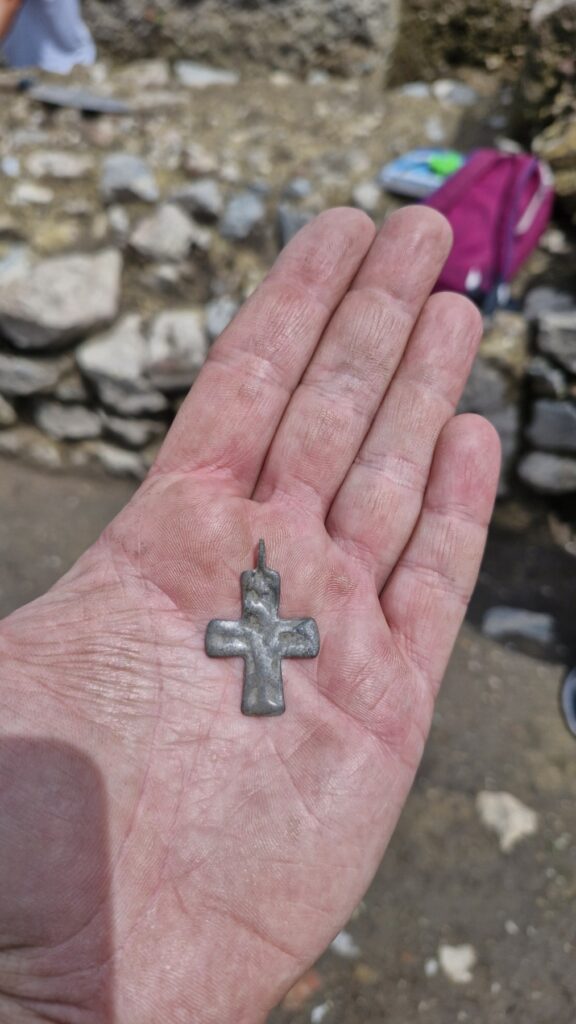
Another significant discovery was a small cross-shaped pendant. Researchers associate this artifact with the final phase of the settlement’s use; local presentations date the pendant to the 6th century.
This finding provides insight into the Late Antiquity period, where Roman military structures continued to be used under changing political and religious conditions. When evaluated with other artifacts, it supports the conclusion that life in Cuppae continued after the reconstruction activities of the 4th century AD.
Research to Continue at Cuppae
The new research at Cuppae is being conducted through the cooperation of the Serbian Archaeological Institute, the Municipality of Golubac, the National Museum of Požarevac, and the Regional Institute for the Protection of Cultural Monuments of Smederevo. These studies are vital for the documentation and preservation of Roman military settlements along the Danube.
In future studies, the excavation team plans to examine unexplored sections of the defensive walls. Local authorities believe that new remains related to the fort’s entrance gate and internal road system may be found.
Long-term goals include transforming the area into an archaeological park. The planned arrangements aim to make Golubac’s Roman-era remains more accessible to visitors.
Arheološki institut Beograd (Institute of Archaeology, Belgrade)
