Archaeological excavations in Tartu, Estonia, have unearthed a sword, a Middle Ages knife with a wooden handle, a printing type approximately 400 years old, and a ceramic tile fragment featuring a relief portrait of Queen Maria Eleonora of Sweden. These artifacts from distinct eras provide new evidence of the city’s history, ranging from daily life in the Middle Ages to the Swedish administration and the birth of university printing in the 17th century.
Archaeologists discovered the finds during excavations conducted between November 2 and 6, 2026, at the site of the upcoming Siuru Cultural Center. The work was carried out by the archaeology firm OÜ Arheox with the support of the Tartu City Museum. The excavation diary published by the city administration highlights the historical significance of the printing type and the royal portrait in particular.
Why did the portrait of a Swedish queen decorate a stove?
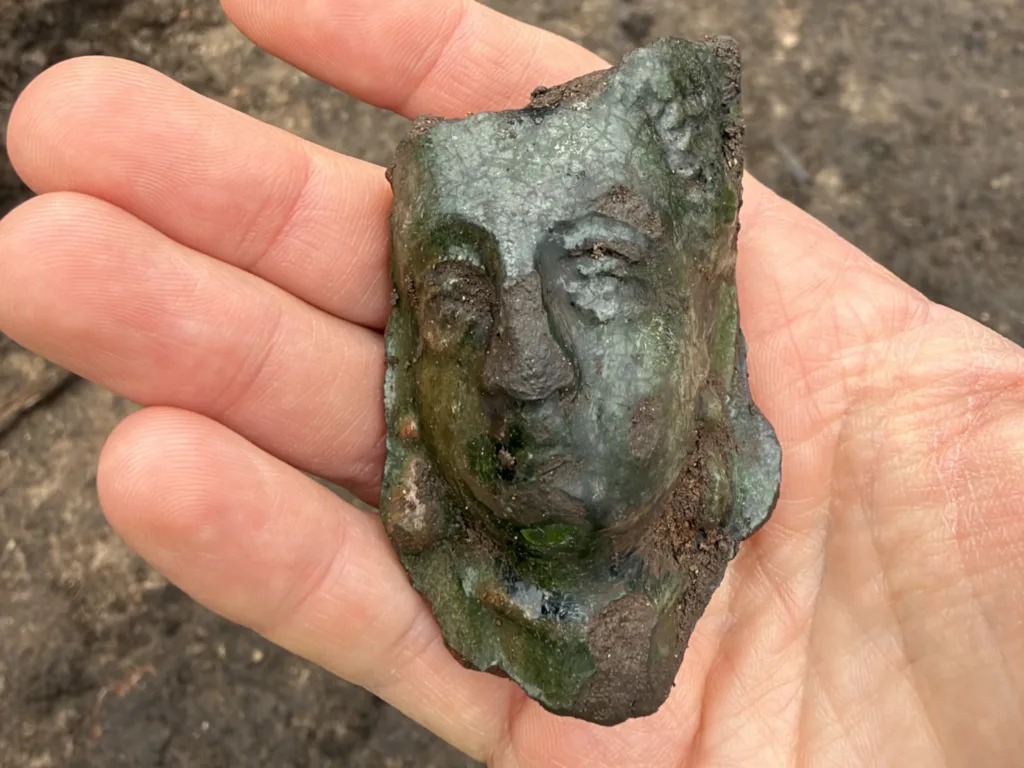
One of the most striking discoveries is a green-glazed ceramic tile fragment depicting the face of Queen Maria Eleonora in relief. Archaeologists date the piece to the first half of the 17th century. Maria Eleonora was the consort of King Gustav II Adolf of Sweden and lived during the period when Tartu was under Swedish rule.
Portrait ceramic tiles were common decorative elements of the ornate stoves used in early modern Europe. Beyond heating homes, these stoves reflected the artistic sensibilities of the era through depictions of monarchs, dynastic coats of arms, and religious scenes. Especially in wealthy residences, such decorations served as indicators of social status and political-cultural identity.
The discovery of Maria Eleonora’s portrait in Tartu is meaningful in the context of the city’s historical ties with the Kingdom of Sweden. King Gustav II Adolf transformed Tartu into a major educational hub by founding the University of Tartu in 1632. Consequently, depictions of the royal family became common in the decorative arts of the Baltic region during this period.
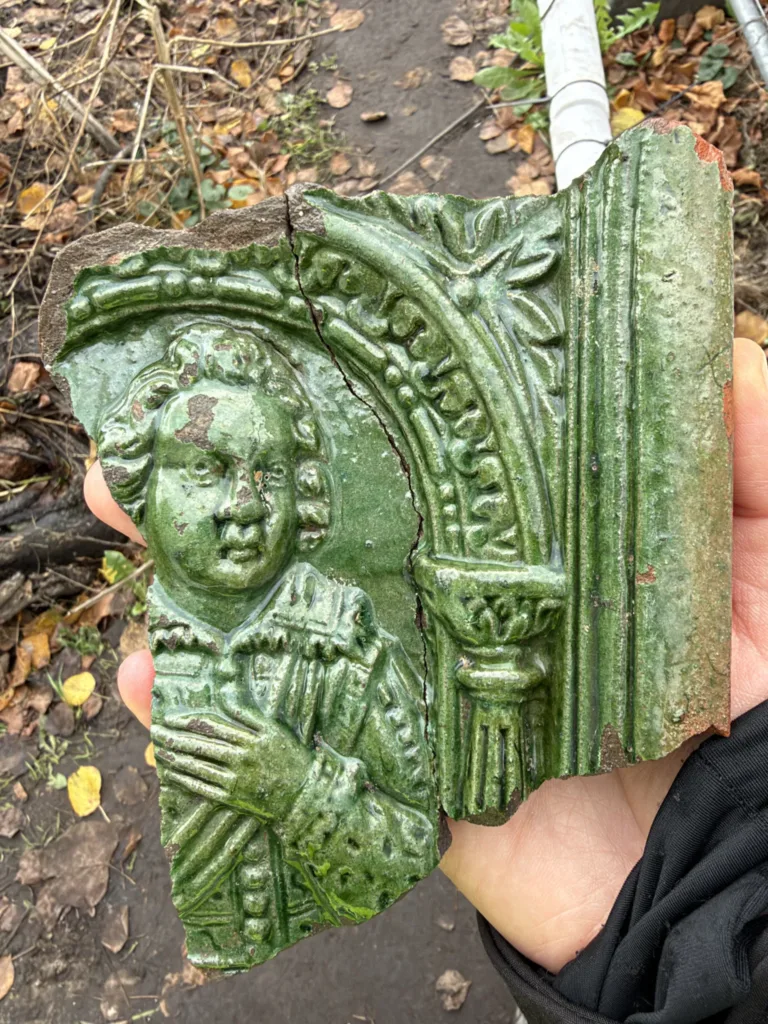
Another stove tile fragment featuring the portrait of Johann Albrecht II, Duke of Mecklenburg-Güstrow, was also uncovered. Together, these two finds provide material evidence that portraits of European dynasties were used in interior decoration in Tartu. However, researchers have not yet determined which buildings these tiles belonged to or why their owners chose these specific depictions.
A weapon under investigation, not just a medieval sword
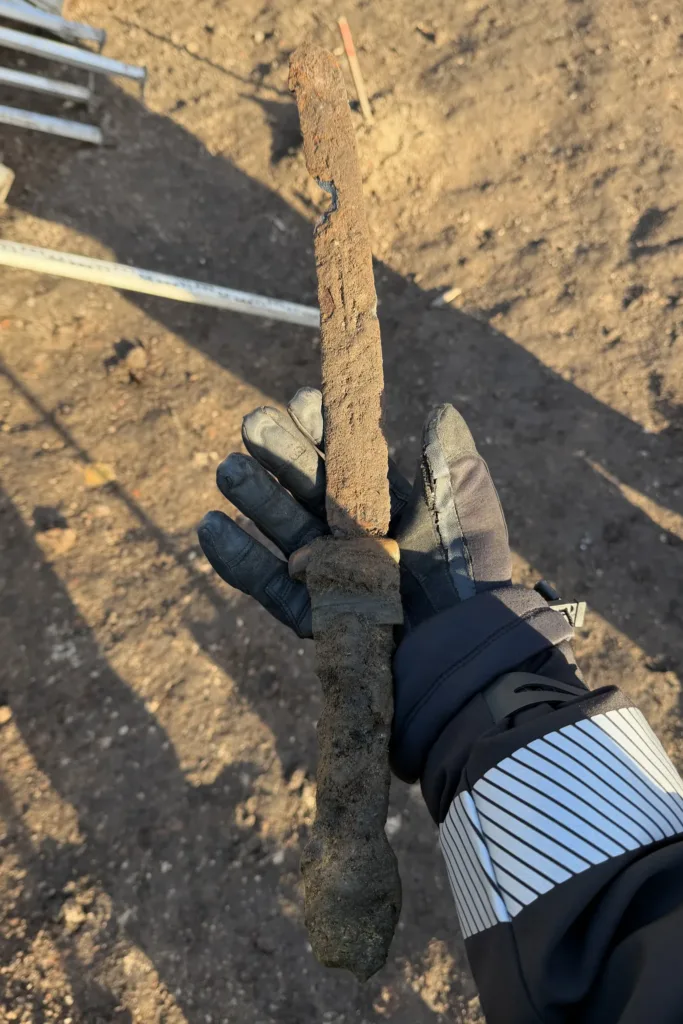
During the same week of excavation, archaeologists found a sword and a Middle Ages knife with its wooden handle preserved. While the knife provides a concrete example of the structure of everyday metal tools from the past, the exact period of the sword has not yet been finalized. Researchers are currently working on dating the weapon.
The team also identified a metal piece that could be the tip of a sword scabbard or another cutting tool. Experts describe this fragment as an object potentially belonging to the early modern or modern era, though no evidence has yet been released to directly link it to the sword.
Throughout the Middle Ages, Tartu was one of the most important trade and settlement centers of Livonia. The long history of habitation explains why objects from different periods are found within the same excavation area, requiring archaeologists to evaluate the dating and stratigraphic layers of each artifact separately.
A tiny printing type reaches back 400 years of publishing history
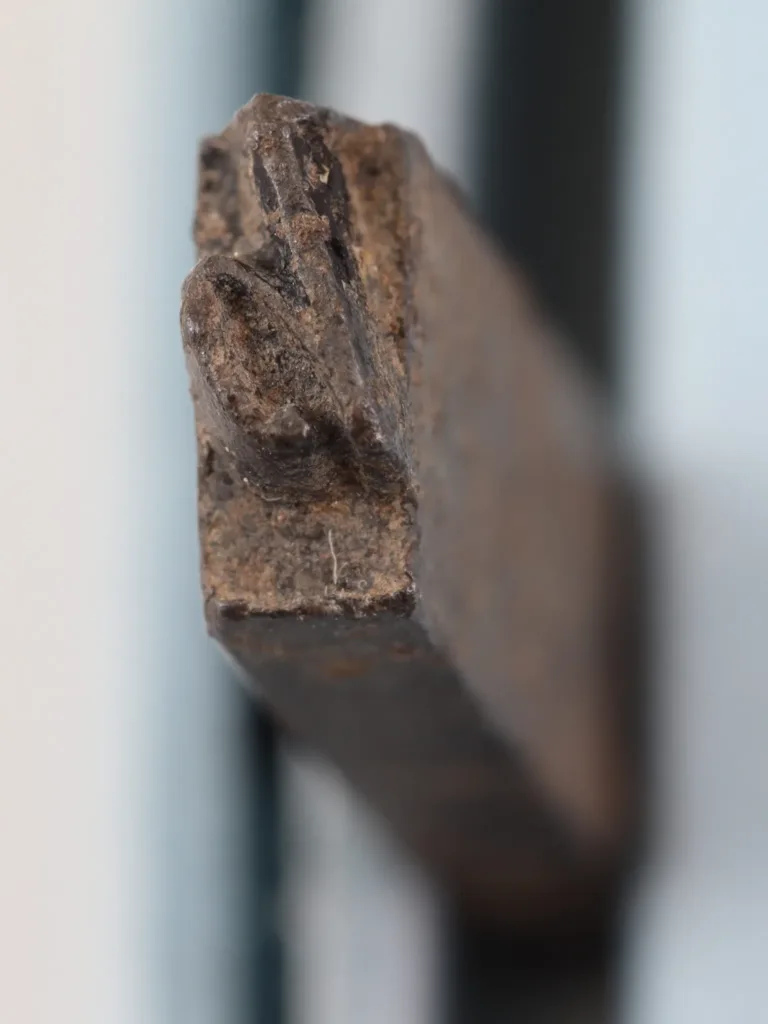
One of the most scientifically significant results of the excavation may be a metal printing type only six millimeters high. Archaeologists identified a small, italicized letter “h” cast in reverse on the piece. Measuring approximately 25 millimeters in length, the object matches the dimensions of movable metal type used in 17th-century printing presses.
According to Arvi Haak, Head of the Archaeology Department at the Tartu City Museum, such letters were used to set texts by hand in early modern printing houses. Grooves on the piece helped typesetters place the letters in the correct orientation. Haak noted that similar early modern printing types have not previously been documented in archaeological excavations in Estonia.
Meelis Friedenthal, a book historian from the University of Tartu, believes the find may belong to the university’s first printing press. The press began operating in 1632 alongside the university, publishing primarily Latin academic texts, theses, speeches, and invitations. One of the earliest known publications printed in Tartu was the German text Postordnung by Jacob Becker, dated September 28, 1632.
The history of the university press was interrupted by wars in the 17th century. When Russian forces captured Tartu in 1656, university members fled to Tallinn, but the printing equipment remained in the city. The equipment was later hidden in a church and retrieved for use once the university reopened.
According to Friedenthal, the shape of the newly discovered italic “h” resembles the typefaces used in Tartu publications during the Swedish era. This comparison supports the interpretation that the piece dates back to the 17th century and the university’s early press.