
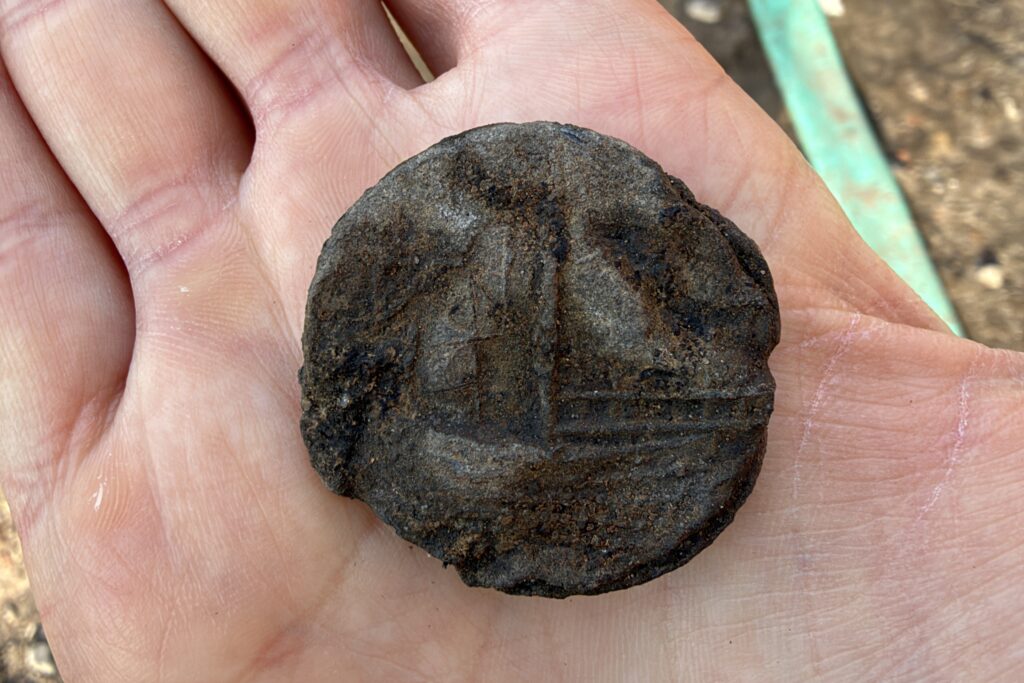
Archaeologists excavating the historic center of Tartu, Estonia, have discovered a medieval lead cloth seal bearing the symbols of Amsterdam, along with an extraordinary collection of more than 50 similar seals.
Dating to the 15th or 16th century, the Amsterdam seal features a medieval merchant ship on one side and the city’s distinctive coat of arms on the other. The discoveries at the site of the future Siuru Cultural Centre provide new archaeological evidence of the extensive textile trade that supplied Tartu during the Middle Ages.
The number of seals is particularly significant. According to Arvi Haak, head of archaeology at Tartu City Museum, the excavations have already produced several times more cloth seals than were previously known from the entire city. Their concentration makes the site an important source for understanding the movement, sale, and consumption of imported textiles in medieval Livonia.
A Medieval Amsterdam Ship Preserved in Lead
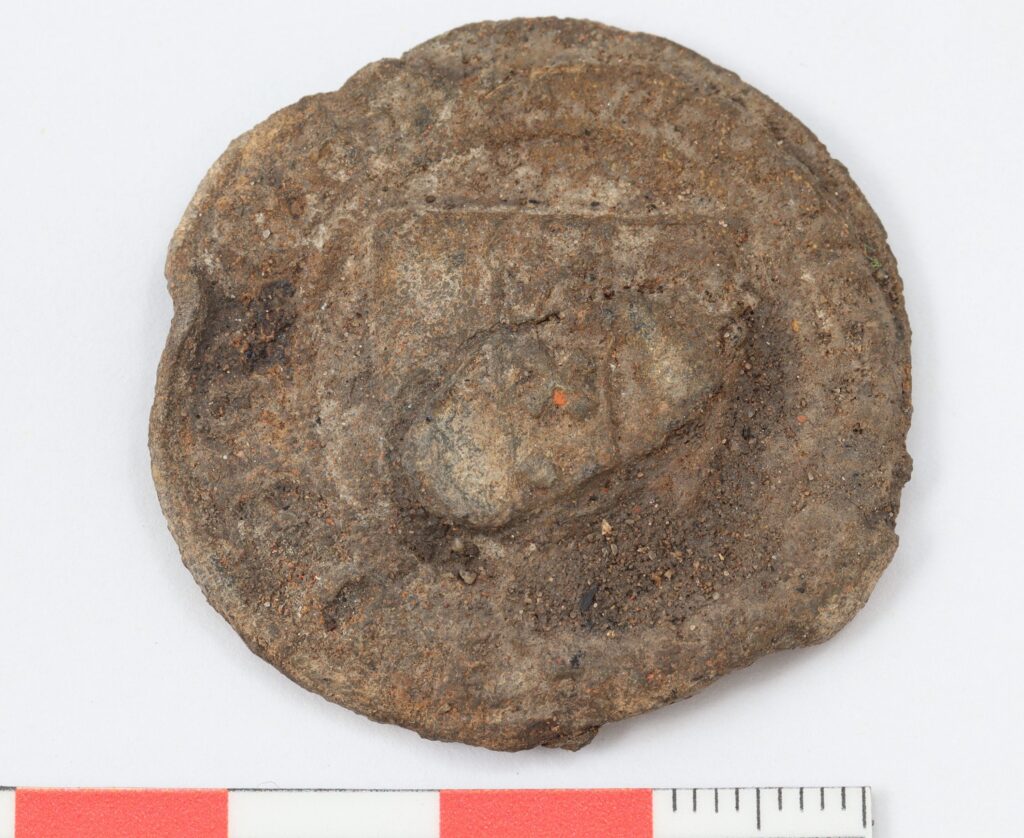
The Amsterdam seal is a circular lead object measuring 3.7 centimeters in diameter, slightly larger than a modern coin. One side depicts a cog, a type of sailing vessel widely used by medieval merchants in northern European waters. The reverse carries Amsterdam’s coat of arms, recognizable by three vertically arranged St. Andrew’s crosses.
These markings allow archaeologists to associate the seal with Amsterdam, although they do not establish the precise route traveled by the cloth to which it was once attached. Such seals were commonly used to indicate the origin and quality of textiles, functioning as recognizable commercial marks in a market where fabrics could pass through several merchants before reaching their buyers.
The practice of attaching seals to cloth developed in Flanders during the 12th century and spread to major European textile-producing regions over the following century. Unlike surviving fabric fragments, which may require technical analysis to establish their origins, seals sometimes identify a city directly through heraldic symbols or inscriptions.
More Than 50 Seals at a Single Excavation Site
The Siuru excavations have produced more than 50 cloth seals, a remarkable quantity compared with earlier discoveries in Tartu. Haak noted that excavations at the city’s Town Hall Square in 1981 yielded just three examples. The latest finds therefore considerably expand the archaeological material available for studying textile commerce in the city.
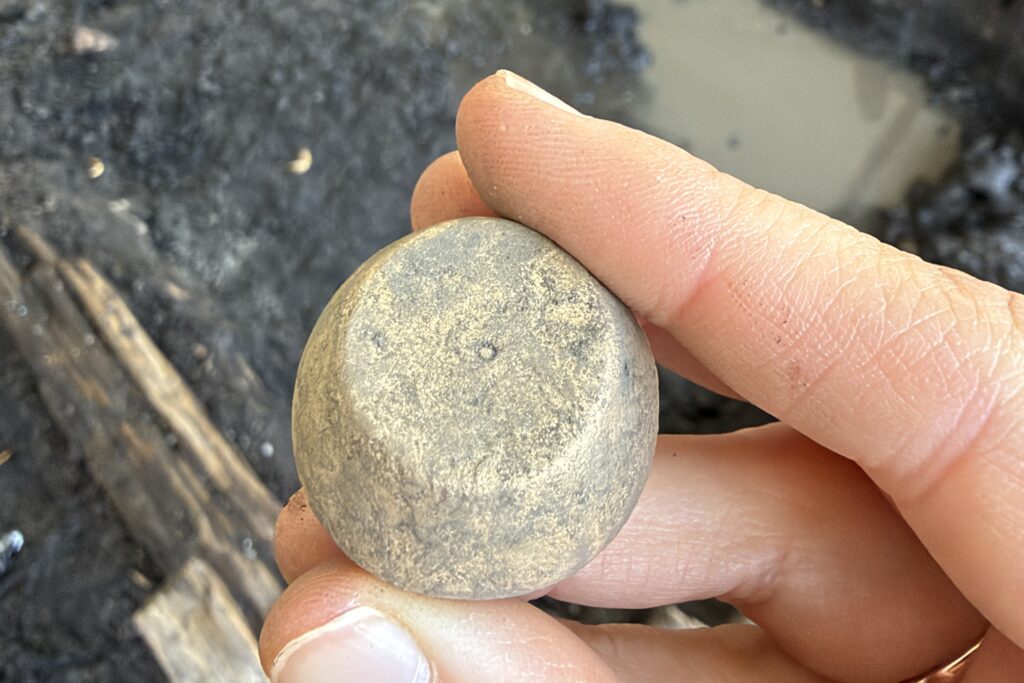
Cloth seals were generally removed when fabric rolls or bundles reached their destination and were divided into smaller quantities for sale or use. Since lead could be melted down and reused, many discarded seals never entered the archaeological record. Others ended up in urban rubbish deposits or were carried into garden soils with waste used as fertilizer.
For now, the reason so many seals accumulated at the Siuru site remains uncertain. Further examination of their distribution may help establish whether their presence reflects commercial activity, waste disposal practices, or a combination of different processes.
Medieval Tartu’s Appetite for Imported Textiles
The new discoveries fit into a broader picture of Tartu as a participant in northern Europe’s medieval textile market. The city belonged to the Hanseatic trading world, through which merchants distributed woolen fabrics from production centers in Flanders, the Netherlands, England, and Germany. Archaeological evidence suggests that imported textiles were not merely goods passing through Livonia but were also purchased and used by its urban population.
A 2015 doctoral study by University of Tartu researcher Riina Rammo examined 3,257 textile fragments recovered from medieval cesspits across the city. Of the 1,815 woolen fragments selected for detailed analysis, approximately 87 percent may have originated from imported fabrics. The findings suggest that foreign-produced cloth played a substantial role in Tartu’s everyday consumption, complementing the evidence now provided by the newly discovered seals.
The excavations have also revealed other traces of medieval life, including the remains of a 14th-century building with a stone heating stove, a small cross possibly worn on a prayer necklace, and a brooch decorated with Christian Trinity symbolism. Together, these objects offer a wider view of the buildings, possessions, and religious practices associated with the historic urban area.
Excavations Reveal Centuries of Tartu’s History
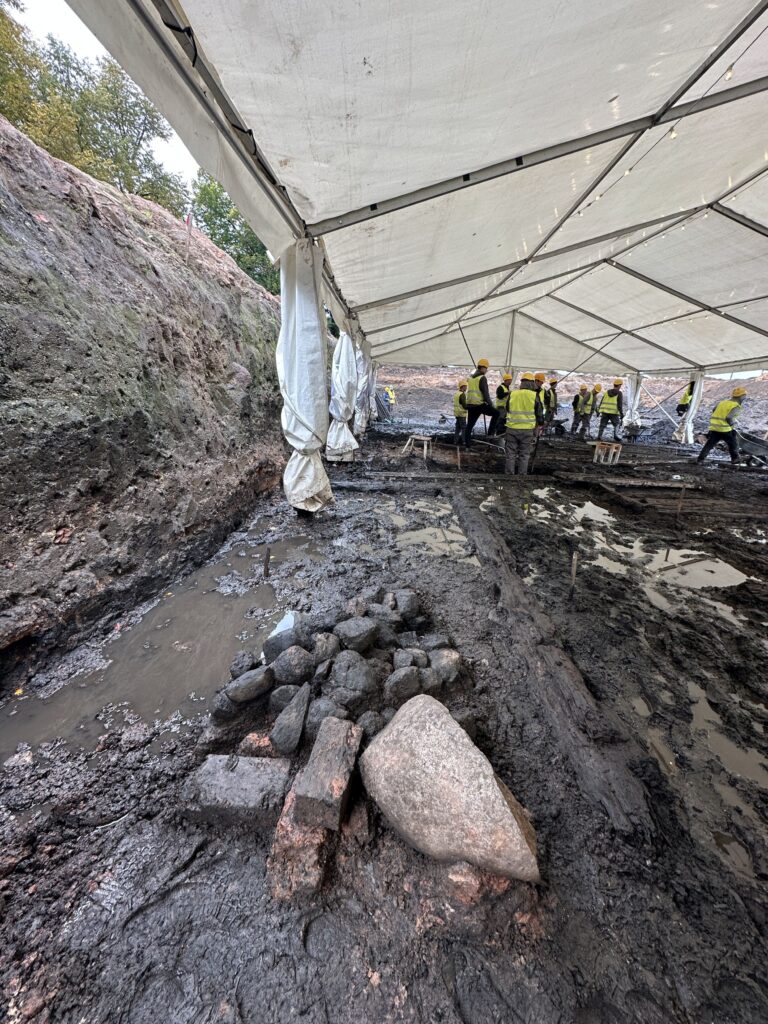
The cloth seals form part of a much larger archaeological investigation at the future Siuru Cultural Centre in central Tartu. During the medieval and early modern periods, the area was occupied by a suburban settlement. In the 17th and 18th centuries, the city’s earthwork fortifications extended into the site, which later became part of an urban neighborhood destroyed during the Second World War.
Preliminary investigations in 2024 confirmed the presence of extensive archaeological deposits beneath the former buildings. Full-scale excavations began in April 2026, covering a planned area of approximately 10,500 square meters. Some deposits extend as deep as five meters below the modern ground surface, preserving evidence of successive phases of the city’s development.
The excavations, described by Tartu authorities as the largest archaeological investigation ever undertaken in Estonia, are scheduled to continue until the end of 2027. With substantial areas still under investigation, further discoveries may provide additional evidence of the merchants, craftspeople, and residents who shaped Tartu over the centuries.
