
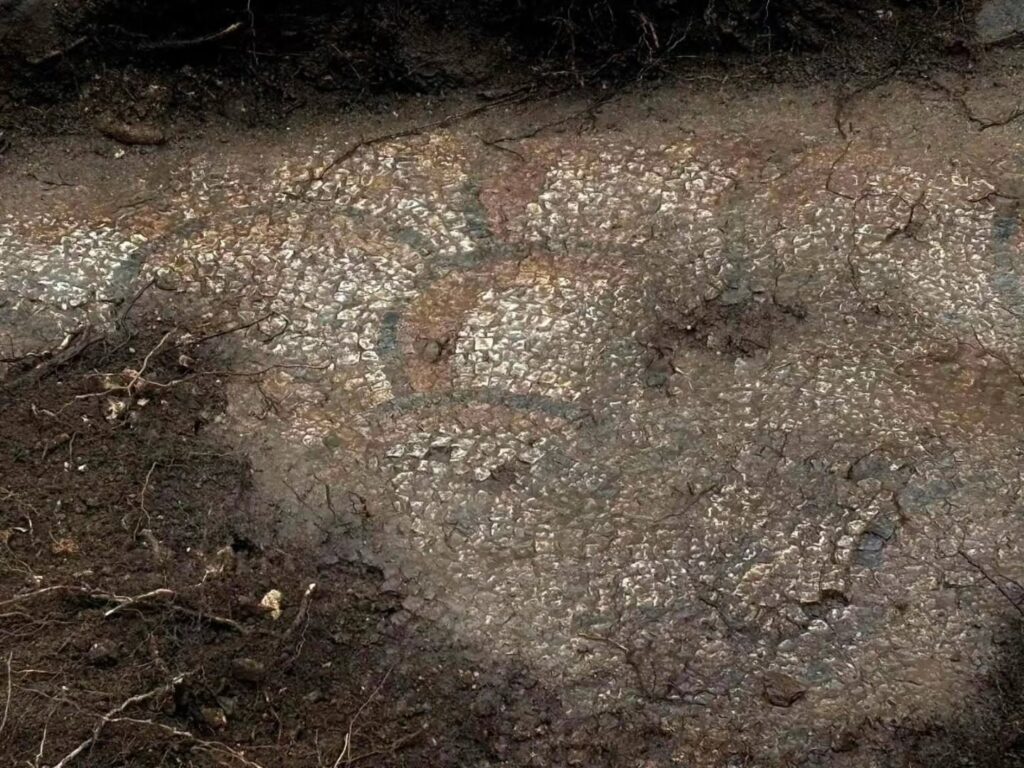
Excavations conducted near Skopje, the capital of North Macedonia, have confirmed the existence of a mosaic floor documented approximately 90 years ago. Researchers working at the Pelenica archaeological site uncovered a polychrome mosaic dating back to Late Antiquity, along with ceramic fragments and a coin. The discovery enables a re-examination of the long-debated architectural history of the area, which contains structures from the Roman period.
The excavations, launched on October 28, 2026, by the National Archaeological Museum, are led by Radomir Ivanović, one of the museum’s senior curators. The research team aims to verify archaeological records dating back to the 1930s in Pelenica, located near Dračevo south of Skopje.
Polychrome Mosaic from Late Antiquity
Archaeologists identified a polychrome mosaic floor created using the opus tessellatum technique. Common across the Roman world, this technique involves assembling small stone or ceramic cubes (tesserae) to create geometric, floral, or figurative compositions.
So far, only sections of the mosaic along the edges of the research area have been uncovered. Consequently, the total size of the floor, its decorative program, and the precise function of the structure to which it belongs have not yet been determined. The ceramic materials and the coin found during the same excavations also date to Late Antiquity.
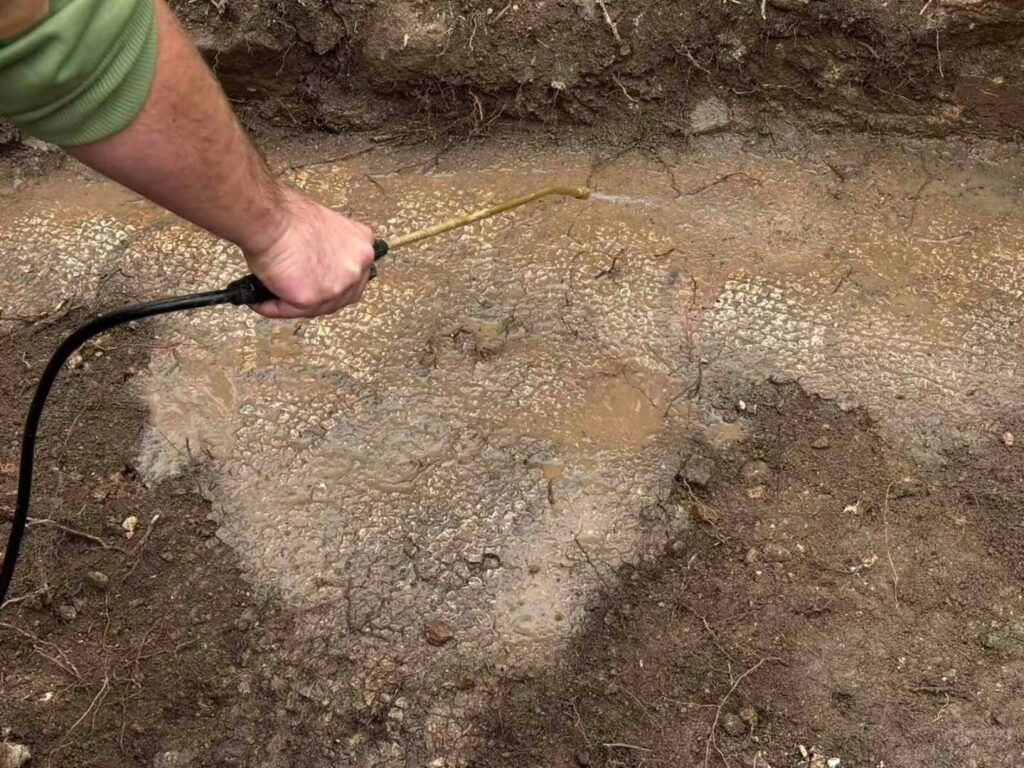
The Archaeological History of Pelenica Since the 1930s
Pelenica is a settlement area previously explored by archaeologists. According to the academic study Eight Millennia: Life, Culture, Creativity, published by the Faculty of Philosophy in Skopje in 2019, the first excavations in the region were carried out in 1936 and 1937. Architectural remains were documented during these researches, which were overseen by R. Grujić, then Director of the Skopje Museum.
Historical records indicate the presence of various structures within a fortified area measuring approximately 130 × 100 meters. These include a church structure from the Early Christian period and a circular building with a mosaic floor.
This circular structure, with a diameter of approximately 10.80–11 meters, is one of the most significant elements of Pelenica’s architectural history. Archaeologist Ivan Mikulčić associated the remains with a rural residential complex belonging to a wealthy landowner, used between the 3rd and 5th centuries AD. However, this interpretation does not mean the function of all structures has been definitively determined.
Older documents also mention that the mosaic area could be approximately 200 square meters. The academic publication approaches the reliability of this measurement with caution; therefore, it cannot be stated with certainty that the newly discovered mosaic is of the same size.
New Research May Clarify the Function of the Structure
The 2026 excavations support historical records regarding the presence of mosaics in Pelenica with new archaeological evidence. However, more comprehensive research is required to confirm the relationship between the uncovered floor and the circular structure shown in the old plans.
The National Archaeological Museum plans to conduct geophysical surveys in the courtyard of the monastery complex. These studies are expected to determine the location of as-yet unexcavated structural remains. The Skopje Conservation Center aims to begin efforts to preserve the mosaic and other architectural remains in 2027.
The excavation project is funded by the Municipality of Kisela Voda. Experts from the National Archaeological Museum, the Skopje Conservation Center, and the Prilep Institute of Old Slavic Culture are participating in the research.
