
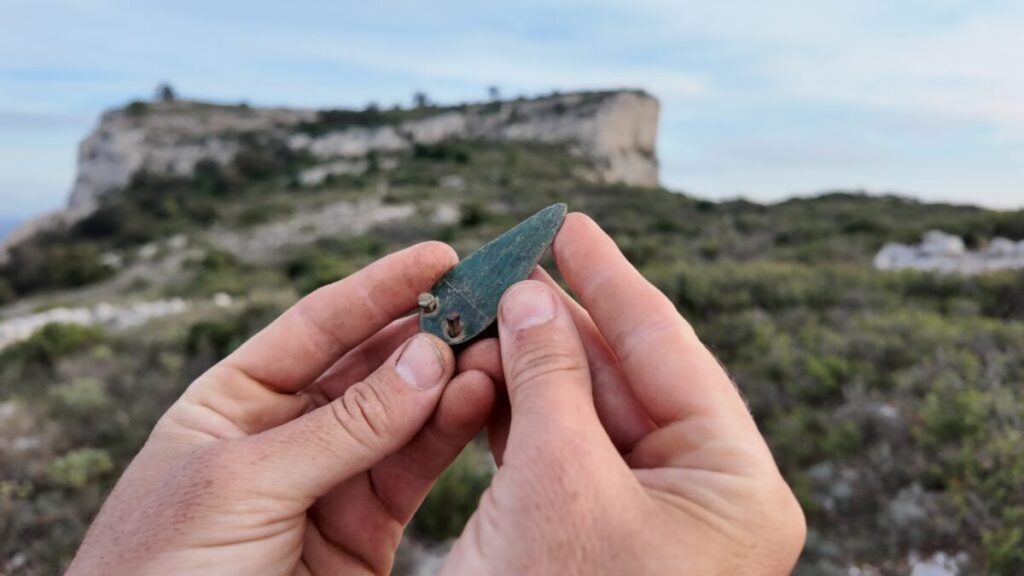
Researchers in the Catalonia region of northeastern Spain have discovered three new archaeological sites at altitudes of over 1,000 meters above sea level. Bearing traces of human activity from prehistoric, Roman, and Medieval periods, these sites provide new insights into how the mountainous parts of the region were used in the past. Findings recovered during the research include a bronze knife, glass fragments from the Late Roman period, and a fragment of a Roman lamp likely depicting Serapis-Helios.
According to a statement released on November 25 by the Institute of Classical Archaeology of Catalonia (ICAC), the work is part of a four-year research project led by Jordi López and Josep Maria Vergès. The project aims to understand the settlement patterns and lifestyles of past societies in the mountainous areas behind the coast of Southern Catalonia.
Three New Archaeological Sites in Mountainous Regions
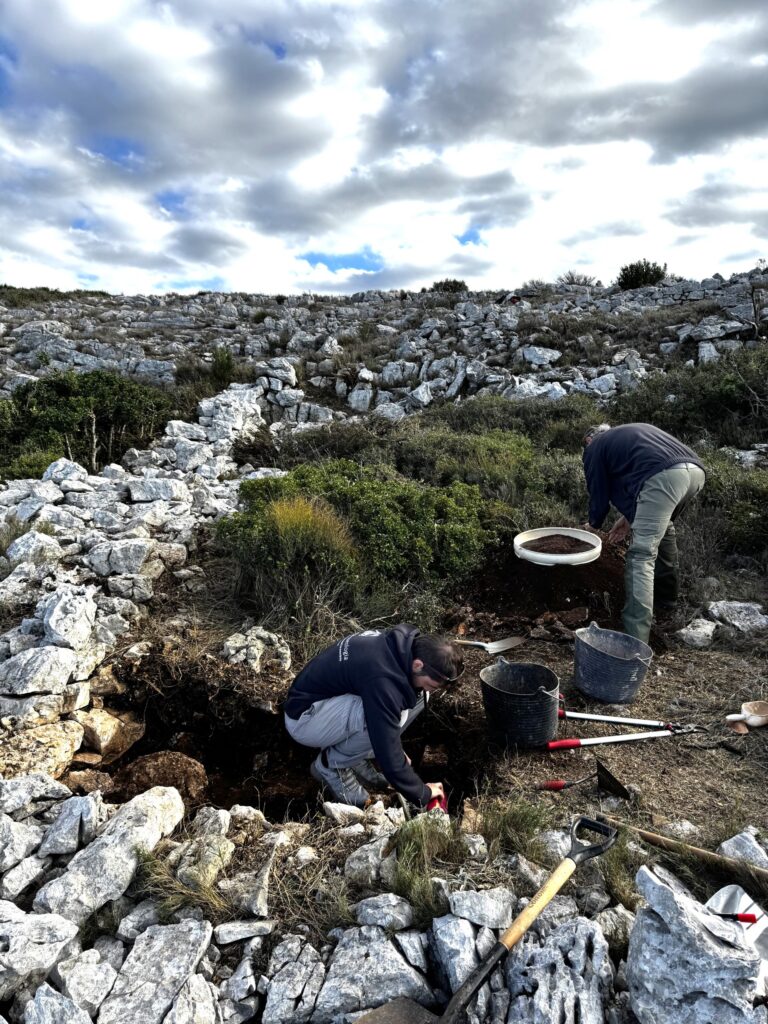
In November, researchers examined seven caves, four water sources, and five different areas with archaeological potential in the Ports de Tortosa mountainous region. The studies focused within the boundaries of the municipalities of Tortosa, Roquetes, Paüls, and Alfara de Carles.
One of the most significant results of the research was the discovery of a new cave site near Roquetes showing traces of prehistoric human activity. The team also identified two more archaeological sites around Tortosa and Alfara de Carles containing findings from the Roman and Medieval periods.
During research conducted in the region in March, the team examined 12 caves and rock shelters. Among these, they detected archaeological evidence from the prehistoric period in five, the Roman period in two, and the Medieval period in three.
With these discoveries, the geographical distribution of human activity across different eras in the high-altitude sections of the region is becoming clearer. However, it is not yet known whether these areas were used as permanent settlements, seasonal shelters, or for other purposes.
The Unknown Past of an Iberian Settlement
Another important focus of the research project was Mola de Genessies near Vandellòs. Located in a hard-to-reach position overlooking the surrounding land, this archaeological site had been defined as an Iberian settlement since limited research conducted in the mid-20th century.
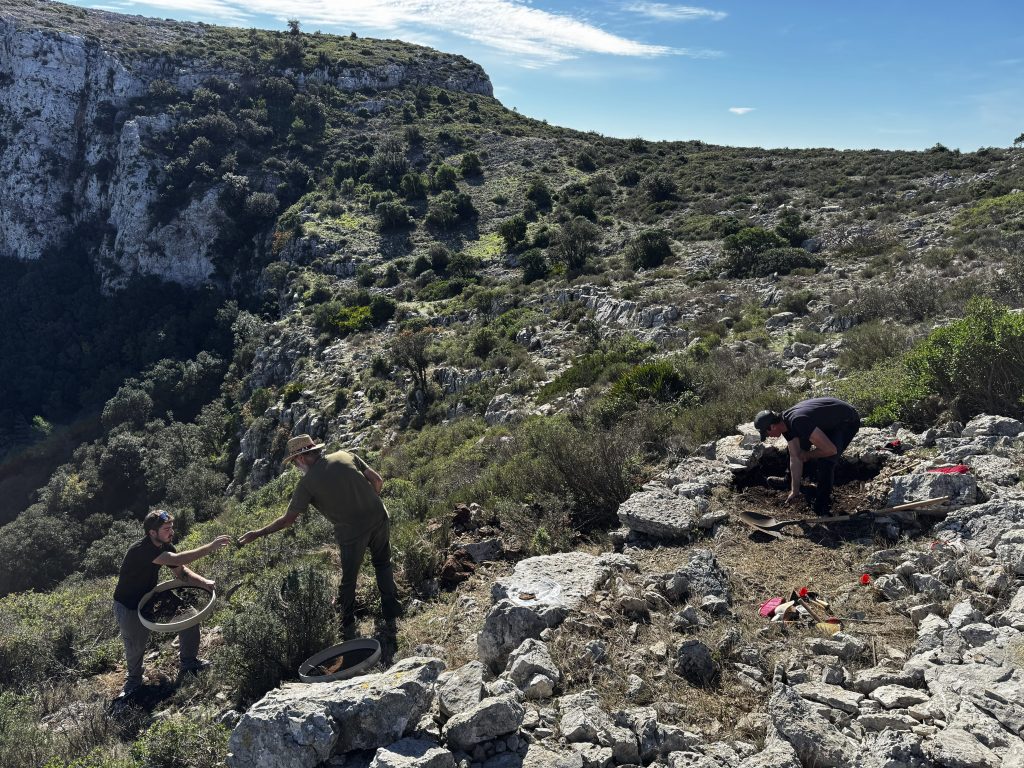
During new studies lasting two weeks, researchers cleared the vegetation to examine the architectural remains on the surface. They then prepared detailed plans of the structures using photogrammetry. The team also carried out two small test excavations to date the structures and understand the stratigraphy of the settlement.
Findings from the surface research point to two different settlement phases: prehistoric and Late Roman. A bronze knife and the rim of a glass vessel dating to the Late Roman period are among the findings published by the researchers.
A project announcement released by the Institute in October indicates that materials from the Visigothic period were also previously detected in the area. These findings suggest that the history of Mola de Genessies may be far more comprehensive than the traditional definition of an Iberian settlement.
An Egyptian God on a Roman Lamp
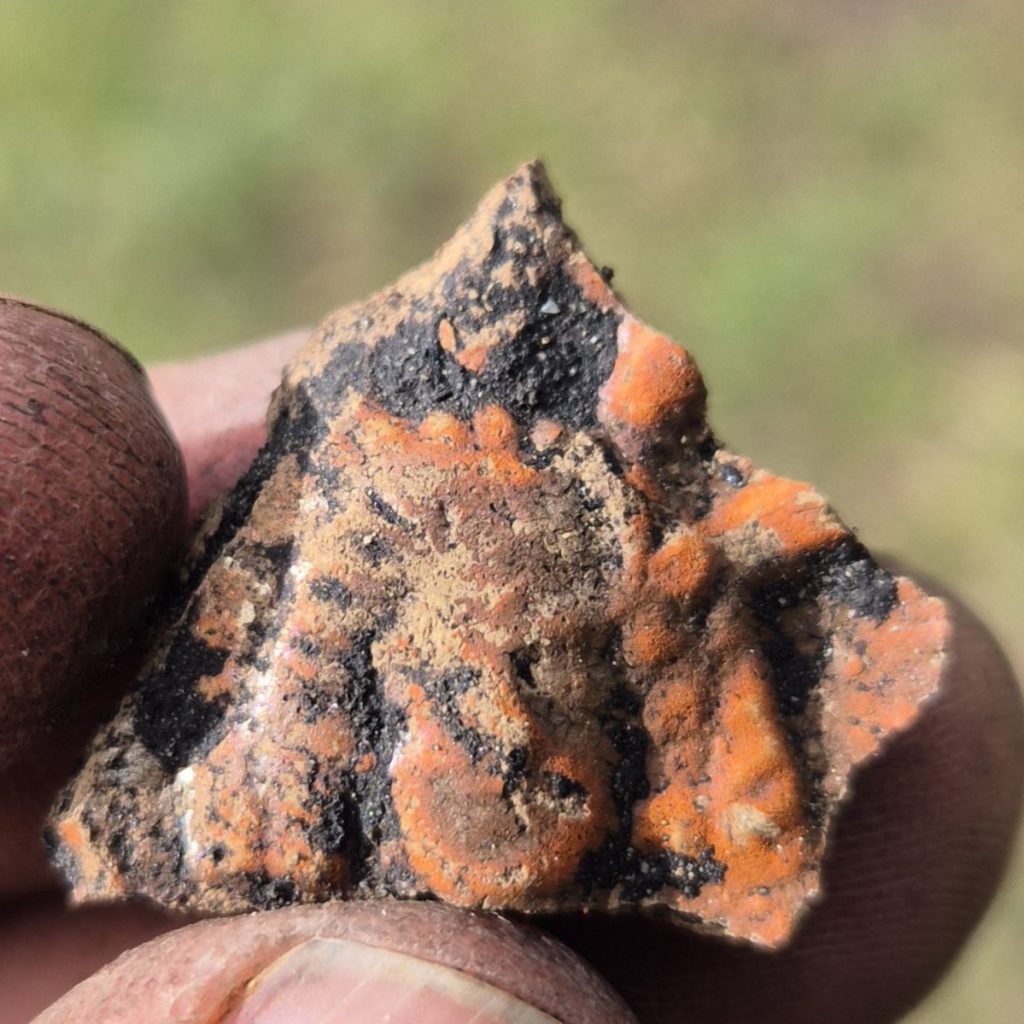
One of the striking findings from the Ports de Tortosa research is a decorated lamp fragment dating to the Early Roman Imperial Period. Researchers state that the depiction of the god on the lamp may belong to Serapis-Helios.
Originating in Hellenistic Egypt, the cult of Serapis blended Greek and Egyptian religious traditions. One of the major deities of Alexandria, the cult of Serapis spread to different regions of the Mediterranean during the Roman Empire. The association of the god with the Greek sun god Helios represents one of the examples of religious interaction in Antiquity.
Although the identity of the depiction on the lamp has not yet been finalized, the find is noteworthy for the presence of Roman religious iconography in the mountainous parts of the region. However, it is not possible to suggest the existence of an organized cult or a sanctuary dedicated to Serapis in the region based on a single lamp fragment.
The Mountains Surrounding Ancient Dertosa
The area where the discoveries were made is located in the lower basin of the Ebro River, which was one of the most important transportation and trade routes of the Iberian Peninsula in Antiquity.
Ancient Dertosa, which developed where the modern city of Tortosa is located, was an important port and trade center during the Roman period. The Via Augusta, which stretched along the Mediterranean coasts of the Iberian Peninsula, also crossed the Ebro River here. The oldest archaeological settlement remains found in the city date back to the 6th century BC.
Further northeast, Tarraco (modern-day Tarragona) was one of the major administrative centers of Roman Hispania. While there is a significant amount of archaeological information about the coastal cities and river valley settlements of the region, the patterns of use for the mountainous areas continue to be the subject of new research.
ICAC and the Institute of Human Paleoecology and Social Evolution (IPHES) are planning next year’s excavations based on the data obtained in 2026.
