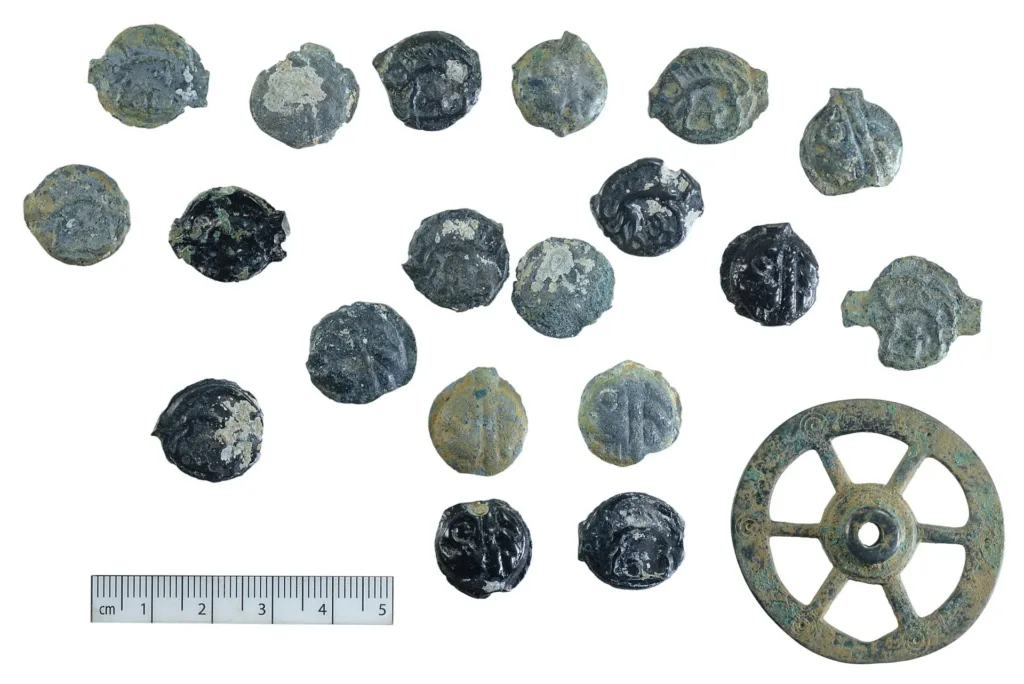
Archaeologists in Bure, northeastern France, have discovered 28 Gallic coins, a miniature metal wheel, and fragments of human skulls associated with the remains of a wooden structure dating back over 2,000 years. Dated to the late Iron Age, the finds may be traces of a previously unknown sacred site belonging to the Leuci people of pre-Roman Gaul.
According to a statement from the French National Institute for Preventive Archaeological Research (INRAP), the discovery occurred during archaeological work conducted as part of the Cigéo geological waste disposal project between the Meuse and Haute-Marne regions.
The fact that the coins were found within their original archaeological context during scientific excavations provides researchers with an opportunity to examine the religious and symbolic meanings of money in the Gallic world beyond its economic function.
From Alexander the Great’s Father to Gallic Coins
Archaeologists found 28 coins in a small pit dug along one of the structure’s long sides. All the coins are made of a material called potin, which was cast in molds in the Gallic world. Notably, casting flashes—residues from the production process—are still visible on some examples.
The depictions of human heads on the coins reflect an artistic tradition originating in Ancient Macedonia. Coin designs portraying Philip II, the father of Alexander the Great, evolved over time through the unique style of Gallic art, distancing themselves to the point where the earliest examples are almost unrecognizable.
Another motif seen on most of the coins is a military standard in the shape of a wild boar. Researchers state that the depiction of the wild boar, placed atop a small inverted T or lily-shaped motif, represents a military symbol similar to the eagle standards of the Roman army, rather than the animal itself.
Such coins were particularly common in the northeastern regions of Gaul.
A Miniature Wheel Found with the Coins
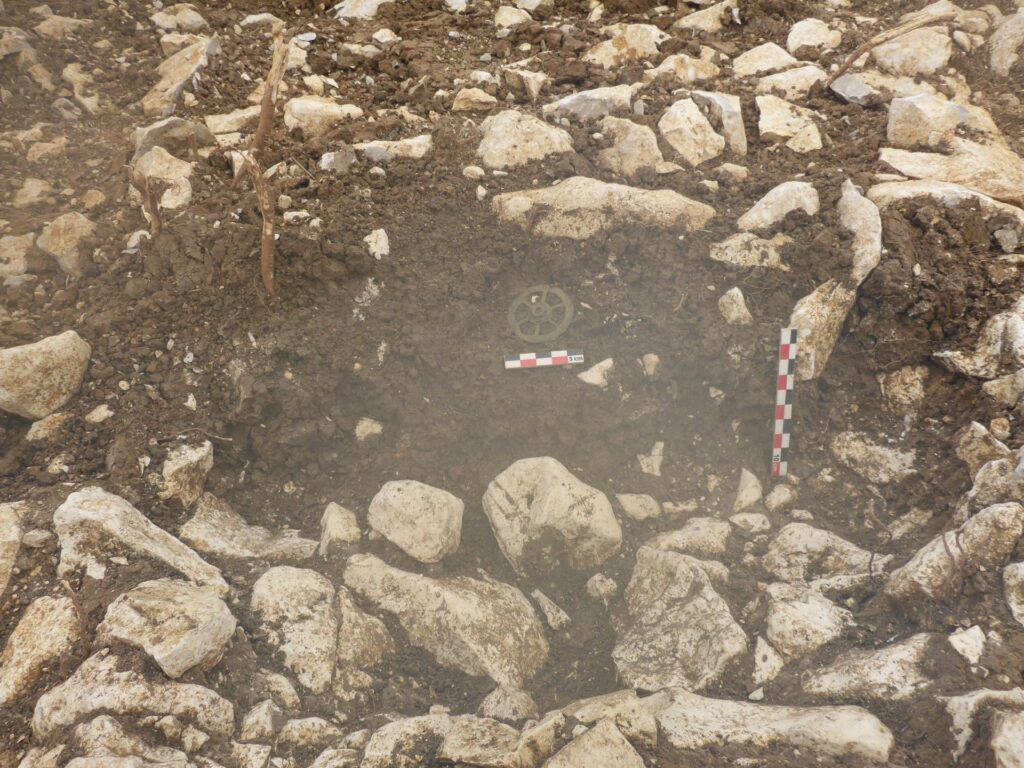
A small metal wheel, approximately five centimeters in diameter, was also recovered from the pit where the coins were found. These objects, referred to as rouelles in archaeological literature, still have a debated function. However, researchers frequently encounter them in archaeological contexts associated with religious ceremonies and votive offerings.
These small wheels may have been used as amulets or votive objects. The example found in the same pit as the coins in Bure suggests the possibility that these objects were intentionally grouped together.
Archaeologists believe the small pit may have been used to store the coin hoard and the metal wheel. The discovery of several additional coins in the post-holes near the structure makes the relationship between the currency and the function of the building an important area of research.
Human Skull Fragments and the Possibility of a Sacred Site
The pits dug for the supporting pillars of the documented wooden structure were approximately one meter in diameter and over 80 centimeters deep. Due to erosion in the area, researchers evaluate that the pillars may have been placed deeper initially.
The slight inward slope of the post-holes suggests that the structure had a rectangular plan and a prismatic or pyramidal shape that narrowed toward the top.
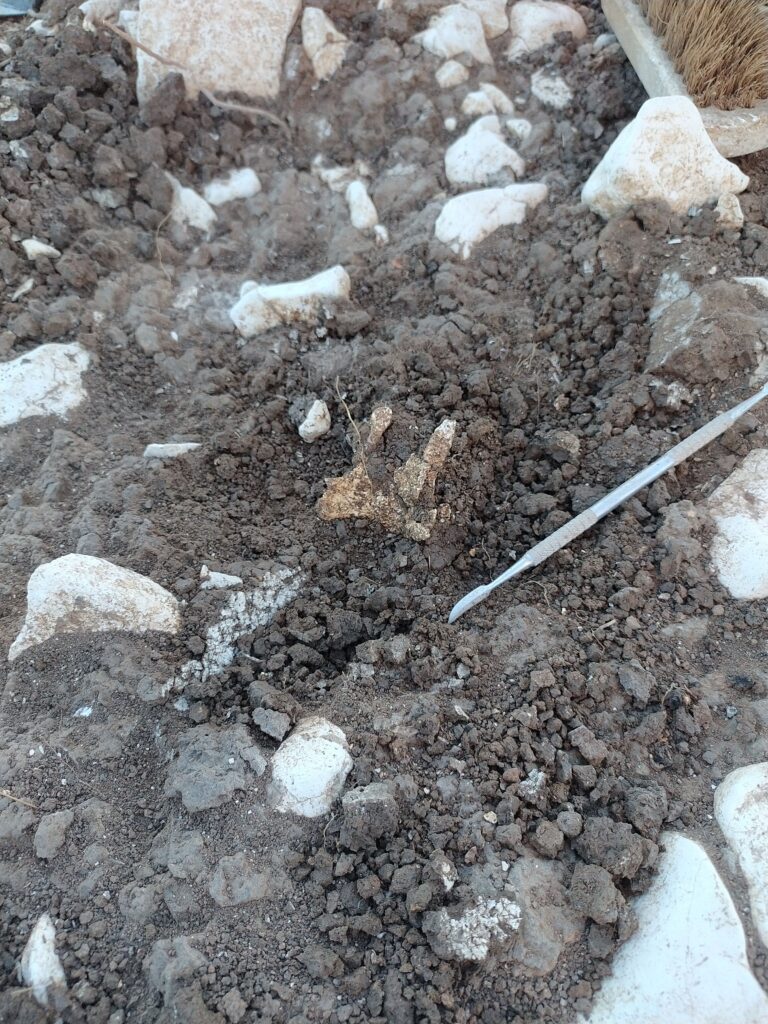
Archaeologists found human bones in one of the post-holes at the corners of the structure. Most of the fragmented bones belong to a skull, including pieces of the lower jawbone.
Human skull remains are known from Gallic sacred sites such as Gournay-sur-Aronde and Ribemont-sur-Ancre. However, archaeologists can also encounter similar remains in areas of daily life.
While most Gallic sacred sites feature ditches or fences that create distinct boundaries, no such arrangement was detected in the Bure excavations. Geophysical surveys conducted a month after the field studies also revealed no boundaries surrounding the structure.
A Potential First in the Lands of the Leuci
The Leuci were one of the Gallic peoples living in what is now northeastern France before Roman rule. The archaeological site in Bure is located approximately 20 kilometers south of the Boviolles oppidum, which is considered the primary center of this community.
The area is also about 15 kilometers from the borders of the lands of other Gallic peoples, the Remi and Lingones. This geographical position is one of the points researchers are focusing on to understand the regional function of the structure.
If the interpretation of a sacred site is confirmed, Bure will be the first sacred site documented within its archaeological context along with a significant coin hoard in the lands of the Leuci. Such an association of finds is also quite rare in the geography of ancient Gallia Belgica.
