
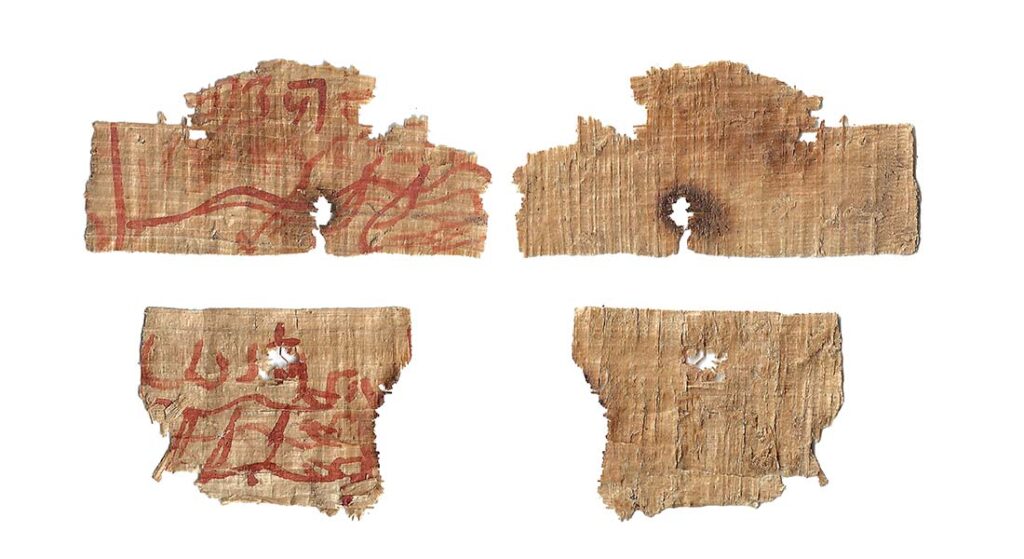
Burned papyrus fragments recovered from a 3,400-year-old rubbish dump in ancient Thebes have revealed evidence that Egyptians may have mass-produced materials for curse rituals. The fragments, some bearing unusual puncture marks, contain red-ink illustrations of Apophis, the giant serpent that embodied chaos and threatened the daily rebirth of the sun.
Researchers examining around 40 papyrus fragments from the mortuary temple of Pharaoh Thutmose III identified the earliest known direct evidence of a ritual known as the Overthrowing of Apophis. The discovery places its documented practice approximately a millennium before the best-preserved surviving ritual manual and offers new insights into the organisation of religious ceremonies and the role of magic in ancient Egyptian society.
Egyptologists Fredrik Hagen of the University of Copenhagen, Carina Kühne-Wespi of Heidelberg University and Myriam Seco Álvarez of the University of Seville published their findings in Zeitschrift für Ägyptische Sprache und Altertumskunde.
Ancient Curses Discovered in a Rubbish Dump
Located on the western bank of the Nile near modern-day Luxor, the mortuary temple of Thutmose III dates to Egypt’s New Kingdom. An international archaeological and restoration project has investigated the complex since 2008.
Between 2014 and 2025, archaeologists recovered groups of papyrus fragments from a rubbish dump outside the temple’s northern enclosure wall. The deposit extended approximately 75 metres in length, varied between 10 and 20 metres in width, and reached a depth of three metres in places.
Pottery recovered alongside the papyri tentatively dates the archaeological context from the middle to late 18th Dynasty through the early 19th Dynasty. Researchers believe priests probably collected the remains of ritual ceremonies inside the temple before carrying them outside for disposal.
The surviving fragments display charred edges, while several contain holes that may have resulted from deliberate stabbing during the ceremonies. Their unusual appearance and correspondence with surviving ritual instructions support this interpretation.
What Was the Apophis Ritual?
In ancient Egyptian mythology, Apophis, also known as Apep, personified chaos and represented the greatest threat to Ra, the sun god. Egyptians believed that Ra travelled through the underworld every night aboard his solar barque, confronting the enormous serpent before returning to the sky at dawn.
Every sunrise represented the triumph of cosmic order over chaos. Yet the struggle never ended, and Egyptian priests performed ceremonies to assist Ra in defeating his enemy.
The ritual involved much more than reciting magical incantations. Participants symbolically attacked representations of Apophis by spitting on them, trampling them with the left foot, piercing them with weapons, and ultimately consigning them to fire.
The Bremner-Rhind Papyrus, a manuscript dating to around 305 BCE and now held by the British Museum, preserves detailed instructions for these ceremonies. The newly studied fragments from Thebes demonstrate that Egyptians performed comparable rituals more than a thousand years earlier.
Evidence of Mass-Produced Curses
Researchers identified two principal categories among the surviving fragments. Twelve depict Apophis, while fourteen represent mythological beings known as the “Children of the Rebel,” associated with the serpent. The remaining pieces are too poorly preserved for confident identification.
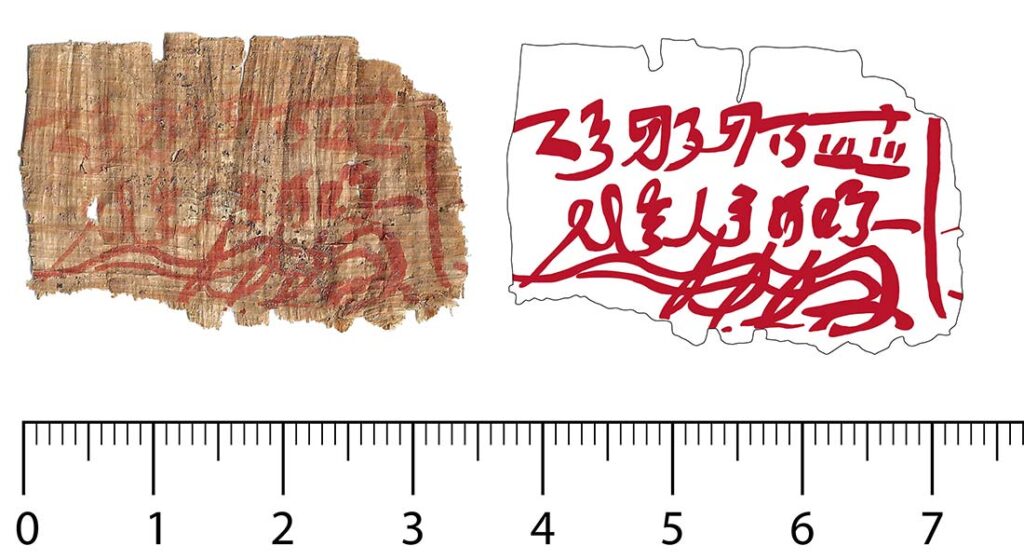
One particularly well-preserved fragment shows Apophis with three knives cutting into his body. A hieratic inscription identifies him by two traditional epithets: “the Roarer” and “the Terrifying-of-face.” Both names also appear in the much later Bremner-Rhind Papyrus.
Scribes prepared the illustrations using fresh papyrus and red ink. Dividing lines along several fragments suggest that they drew multiple images within rectangular compartments on larger sheets before cutting them into individual pieces measuring approximately three to four centimetres by two to three centimetres.
Differences in the handwriting and illustrations indicate that multiple scribes probably participated in their production. Assuming each ceremony required one example of both categories, researchers estimate that the fragments could represent at least 20 separate rituals, although their precise frequency remains uncertain.
A later papyrus in the Metropolitan Museum of Art’s collection illustrates how scribes arranged these images before separating them. Remarkably, its reverse carries mirrored inscriptions, representing the only known systematic example of ancient Egyptian mirror writing in hieratic script.
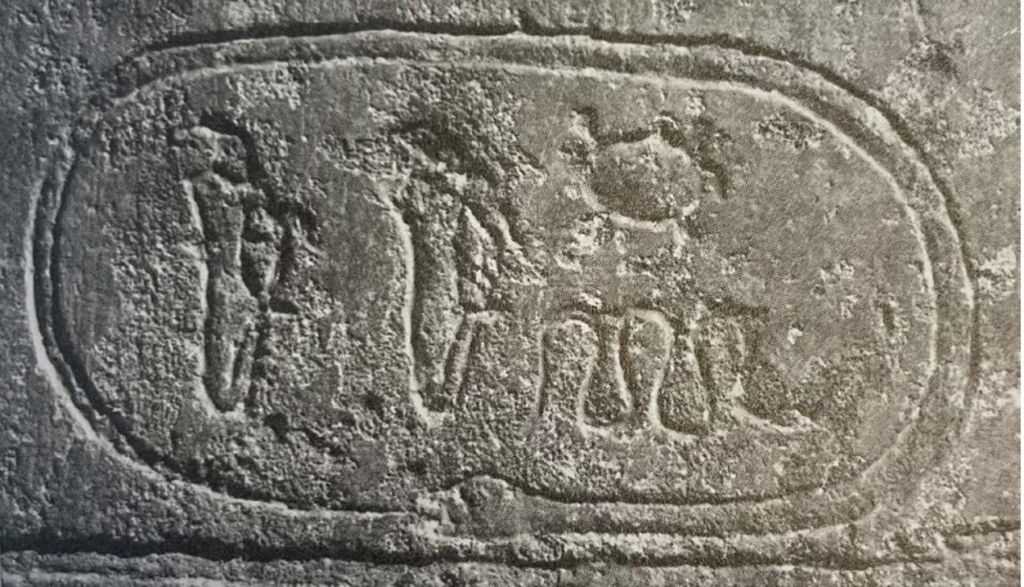
Researchers also suggest that priests may have produced wax figures using stamps or moulds. A depiction of such a stamp on a wall at Philae Temple, dating to approximately 110 BCE, provides evidence of this technique in later periods.
Magic Beyond the Temple Walls
The ritual’s significance extended beyond the mythological struggle between Ra and Apophis. Egyptian religious texts also associated the ceremony with protecting the pharaoh against enemies and helping individuals overcome personal threats.
Some instructions recommended performing the ritual during storms to prevent adverse weather. Other ancient inscriptions suggest that related spells may have served therapeutic purposes, particularly in treating venomous snakebites and scorpion stings.
In the University of Copenhagen’s announcement, Hagen explains that knowledge of magic extended beyond the priesthood. Literate individuals could also provide magical and healing services, while people seeking protection or wishing to curse their enemies could turn to scribes.
The destructive nature of these ceremonies makes their archaeological remains particularly uncommon. Unlike stone monuments or clay figurines, papyrus and wax rarely survived ritual burning. The fragments from Thutmose III’s temple may therefore represent only a small fraction of a once widespread religious practice.
What ancient priests discarded as rubbish more than three millennia ago now provides direct evidence of how Egyptians produced ritual materials, organised religious ceremonies and attempted to protect their world from forces they believed threatened its existence.
Hagen, F., Kühne-Wespi, C., & Seco Álvarez, M. (2026). Cursing Apophis: Text and material culture of an Egyptian execration ritual. Zeitschrift für Ägyptische Sprache und Altertumskunde, 153(2), 214–239. https://doi.org/10.1515/zaes-2026-0004
