
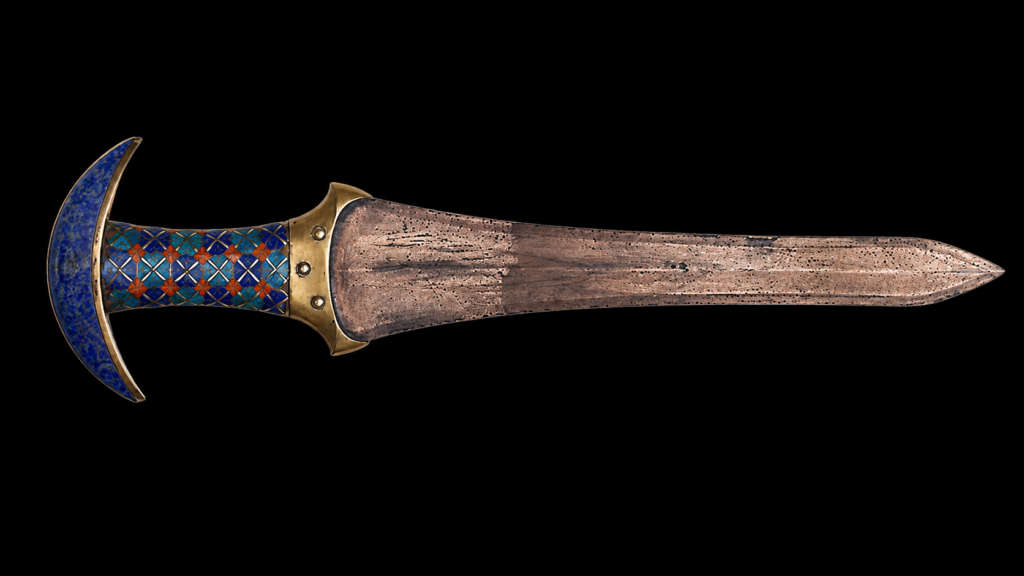
Nearly 4,000 years ago, several Egyptian princesses were buried with bows, arrows, maces, and daggers near the royal pyramids of Dahshur. A new examination of their bones suggests that some of these weapons may have been more than ceremonial symbols: the women may have trained with them during life.
Researchers identified unusually developed muscle attachment areas in the shoulders, arms, forearms and hands of several royal women from Egypt’s late Middle Kingdom. The patterns are consistent with repeated movements involved in drawing a bow, maintaining a strong grip or handling weapons such as daggers and maces.
The findings do not prove that the princesses fought in battles. Skeletal changes cannot be tied to one specific activity with certainty, and similar patterns may result from hunting, physical training, ritual practice or other repeated movements. Nevertheless, the close match between the women’s bones and the objects placed in their tombs strengthens the possibility that at least some of the weapons were used during their lifetimes.
The study, conducted by Zeinab Hashesh, Ahmed Gabr and Roxie Walker, was published in Frontiers in Environmental Archaeology. It combines osteological examination, X-ray imaging and chemical analysis to reconstruct the health, physical activities and funerary treatment of six members of the Dahshur royal family.
Royal remains forgotten for more than a century
The remains were discovered by French archaeologist Jacques de Morgan during excavations at Dahshur in 1894 and 1895. The burials were located near the pyramid complexes of Amenemhat II and Amenemhat III, approximately 30 kilometres south of Cairo.
Among the individuals examined were King Hor and Princesses Ita, Khenmet, Itaweret and Noub-Hotep. A sixth, unidentified woman may have been Princess Sathathormeryt, although that identification remains provisional.
Following their discovery, the bones were divided between different collections. Most of the skulls were transferred to the anatomical museum of the Cairo School of Medicine and were later lost. The surviving postcranial remains spent decades in wooden boxes in the basement of the Egyptian Museum in Cairo.
They were rediscovered and systematically reexamined in 2020 as part of the Bioarchaeological Remains Curation Project. Some bones still carried handwritten names added by the original excavators, while others remained wrapped in pieces of nineteenth-century newspaper.
Preservation varied considerably. Only 21.7 to 57.8 percent of each skeleton survived, limiting what researchers could determine. Even so, the remaining arms, hands, shoulders, legs and vertebrae retained evidence of repeated physical strain, healed injuries and disease.
Princess Ita may have regularly gripped a weapon
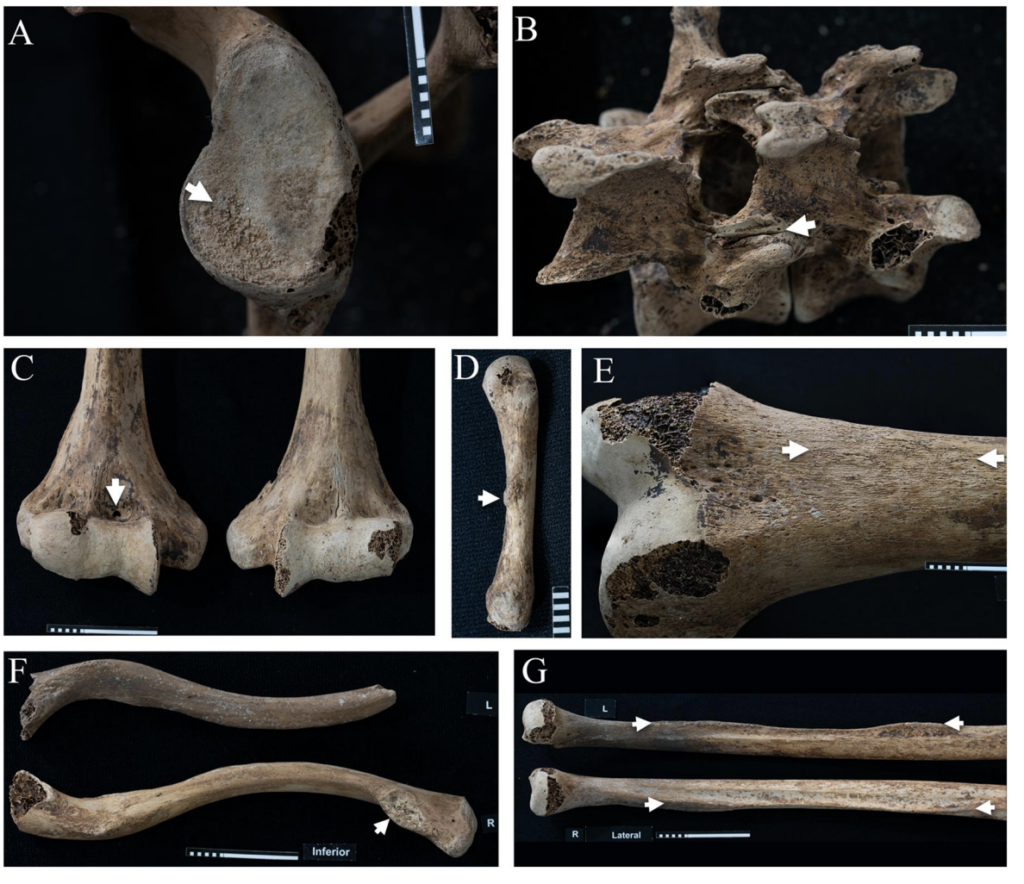
Princess Ita died between the ages of 28 and 34. Her right arm and forearm showed particularly pronounced muscle attachments, including areas associated with rotating the forearm, extending the thumb and controlling the fingers.
The muscles responsible for flexing the fingers and maintaining a firm grip were also strongly developed. Researchers interpret this combination as evidence of repeated gripping and controlled arm movement, potentially associated with a dagger or mace.
A richly decorated dagger had been placed in Ita’s tomb. Although the weapon carried clear symbolic value, the skeletal evidence raises the possibility that it reflected a skill she practised rather than simply her royal status.
Evidence consistent with archery
Khenmet, who died between approximately 35 and 45, displayed pronounced attachment areas on the forearm bones. These may have developed through repeated movements involved in drawing and stabilizing a bow.
Comparable changes appeared in Itaweret, who died between 20 and 34. Her clavicles and upper limbs retained strong attachment areas for the chest, shoulder and arm muscles. According to the researchers, the distribution of these changes is consistent with repeated archery-related movement.
Itaweret had also suffered fractures to several ribs and bones in her left foot. All had healed before her death. The injuries could have resulted from a fall, a heavy impact or prolonged physical stress, but they cannot be directly connected to hunting or weapons training.
The most compelling case may be Noub-Hotep. Her forearms and right hand showed extensive muscular development, including strong attachment areas associated with grip strength and rotation of the hand. Her right second metacarpal was also slightly bowed despite showing no signs of disease.
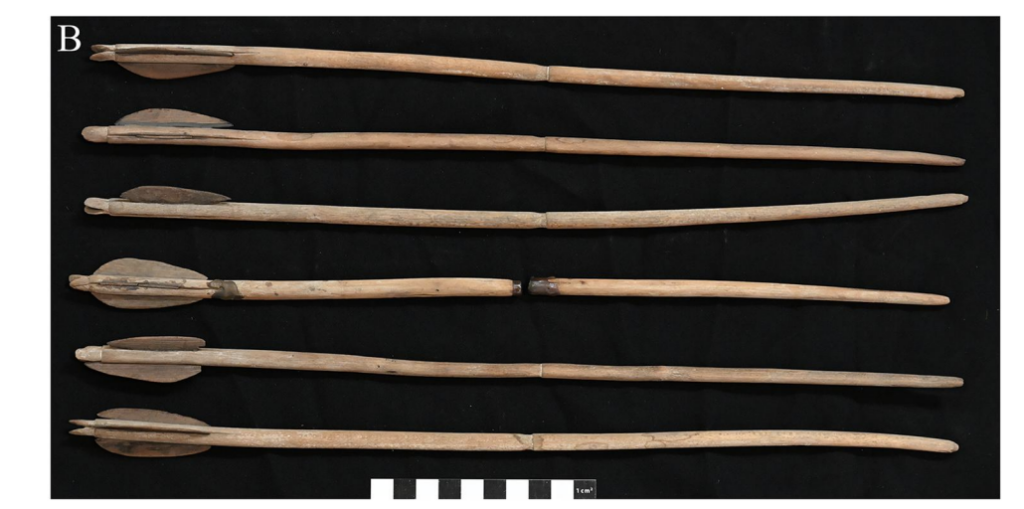
Researchers interpret this remodelling as a possible response to repeated, forceful gripping of a bow. Arrows were found among Noub-Hotep’s burial goods, creating a direct association between the physical changes and archery equipment.
The unidentified woman, tentatively linked to Princess Sathathormeryt, also had strongly developed finger-flexing muscles. Historical excavation records describe Sathathormeryt’s burial as containing a bow, arrows, a flail and sceptres.
Active women, but not necessarily warriors
Weapons placed in elite female burials have often been treated as emblems of rank, protection or royal ritual. At Dahshur, they were also connected to Egyptian beliefs surrounding the rebirth of the deceased king.
The princesses held the title “King’s Children” and participated symbolically in the regeneration of their royal father. Bows, maces and court regalia could therefore have served a funerary purpose regardless of whether they had been used in life.
The new analysis suggests these interpretations need not be mutually exclusive. A bow could function as a ritual object while also belonging to a woman who had practised archery. Royal status may have given the princesses access to activities—including hunting, weapons instruction or ceremonial training—that were not normally associated with women in conventional reconstructions of Middle Kingdom society.
The evidence remains circumstantial. Muscle attachment areas are influenced by age, genetics, body structure, nutrition and disease as well as physical activity. They cannot identify an individual as a warrior or experienced archer on their own.
Bones also reveal injury, illness, and family ties
The skeletons complicate assumptions that royal life protected people from illness or physical strain. Khenmet showed reduced bone density that may indicate osteopenia, although additional testing is required. Several individuals had spinal degeneration, inflammation, and healed injuries.
The successful healing of fractures suggests that members of the royal household survived significant injuries and may have received effective care. The bones cannot reveal the exact treatment used, but the results are compatible with the fracture management and wound care described in ancient Egyptian medical texts.
Researchers also recorded recurring congenital spinal features, including spina bifida occulta, cleft vertebral arches and sacral abnormalities. Their appearance in several individuals may reflect close biological relationships and marriage within the royal family. Ancient DNA analysis will be needed to test that hypothesis.
Chemical analysis added another layer to the royal biographies. Black material preserved on most of the bones contained a mixture of frankincense and juniper resin, while Ita’s remains carried only juniper. The substances were probably applied as protective embalming agents and indicate access to valuable aromatic materials obtained through long-distance trade networks.
Taken together, the results portray the Dahshur princesses not as passive figures defined solely by jewellery, titles and burial wealth, but as women whose bodies recorded physical training, injury and repeated specialised movement. Their weapons still carried powerful funerary meanings—but some may also have belonged to skills practised in life.
Hashesh Z, Gabr A and Walker R (2026) Bioarchaeological reassessment of Dahshur royal skeletal remains from the Late Middle Kingdom (c. 1850–1700 BCE). Front. Environ. Archaeol. 5:1844402. doi: 10.3389/fearc.2026.1844402
