
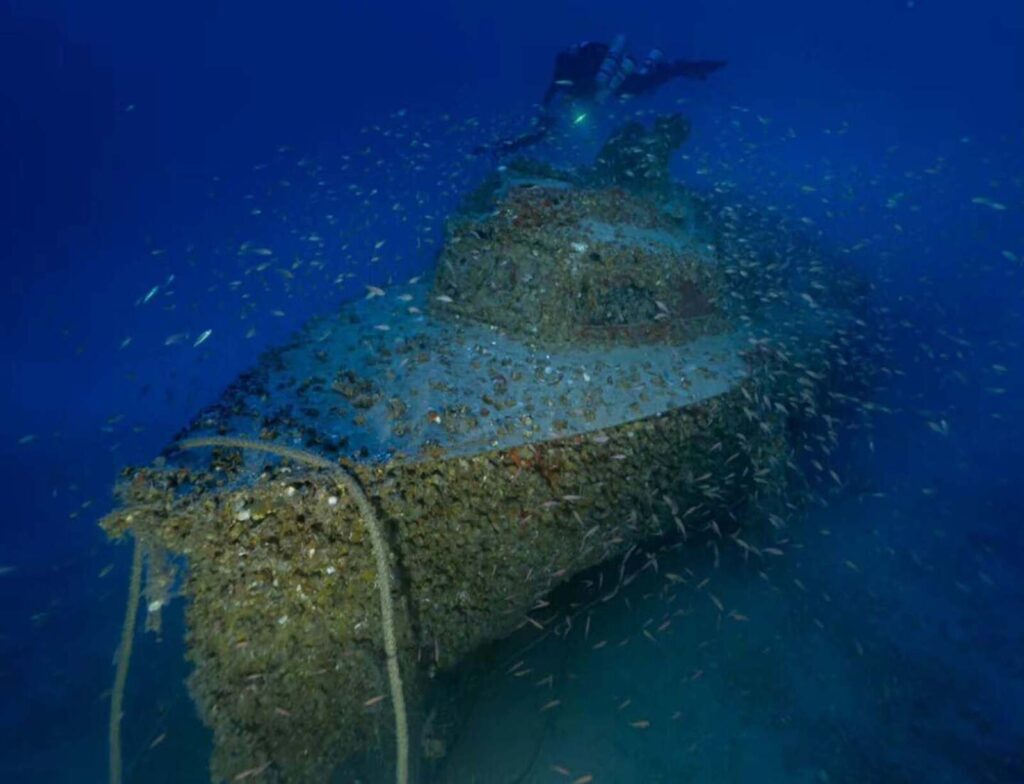
A rare German WWII torpedo boat has been identified in remarkably complete condition on the seabed off Preveza in western Greece, ending a search that began with a single archival clue 13 years ago.
The wreck is LS 6, a 12.5-metre Leichte Schnellboot, or “light fast boat,” built for Nazi Germany’s Kriegsmarine. It rests upright at a depth of 96 metres in the Ionian Sea, with its bow pointing northwest. Researchers believe it is the only known surviving vessel of its type.
According to a joint account published by NavalHistory.gr, the discovery followed years of work by historian Giorgos Karelas and the AegeanTec technical diving team. Divers Marinos Giourgas and Vasilis Spyropoulos reached the wreck using closed-circuit rebreathers, documented its machinery and construction details, and gathered the evidence needed for its identification.
A Search That Began With One Message
“Some pursuits of hidden wrecks are measured in meters. Others are measured in years,” Giourgas wrote in announcing the find.
The search began in 2013, when German naval historian Peter Schenk sent information to diver and filmmaker Vasilis Mentogiannis about a small Kriegsmarine craft lost between Lefkada and Preveza while under tow. It was not a precise location, but it gave the team a starting point.
Karelas worked through German wartime records, charts and scattered references, while information gathered by Dimitrios Giannoulatos helped narrow the search to several possible targets. Years of planning and exploratory dives eventually led the team to the vessel north of Lefkada.
At 96 metres, even locating the target presented a technical challenge. Bottom time is limited, and the descent line must be placed close to the wreck. When the boat’s outline appeared in the darkness, the team was looking at a remarkably complete machine rather than scattered debris.
Details on the Seabed Confirmed LS 6
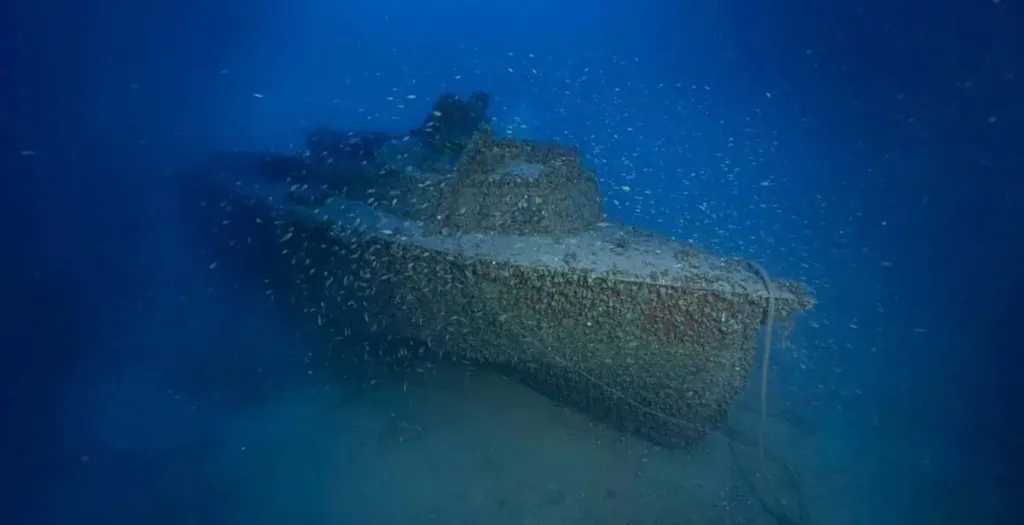
Several surviving features matched the historical record. The towing cable remains attached at the bow, preserving a physical trace of the boat’s final journey. Open hatches allow views into parts of the interior and engine room, where the distinctive forms of its Junkers Jumo 205 diesel engines can still be seen.
At the stern, divers recorded the special door used to release depth charges. This detail matters because LS 5 and LS 6 differed from many other boats in the class. Although Leichte Schnellboote were designed as miniature torpedo craft, these two were adapted for anti-submarine duties and carried depth charges instead of stern torpedo tubes.
The aluminium hull also supported the identification. Most comparable British, Italian and American fast attack boats were built largely from wood. The LS boats were constructed by Dornier from a lightweight aluminium alloy, drawing on aircraft-production techniques.
Beyond the depth-charge door and aluminium hull, LS 6 also carried a 20mm MG151 cannon in a rotating turret at the bow — modest firepower packed into a hull small enough to be craned aboard a mother ship, and heavier than what its size would suggest.
Why the Wreck Survived
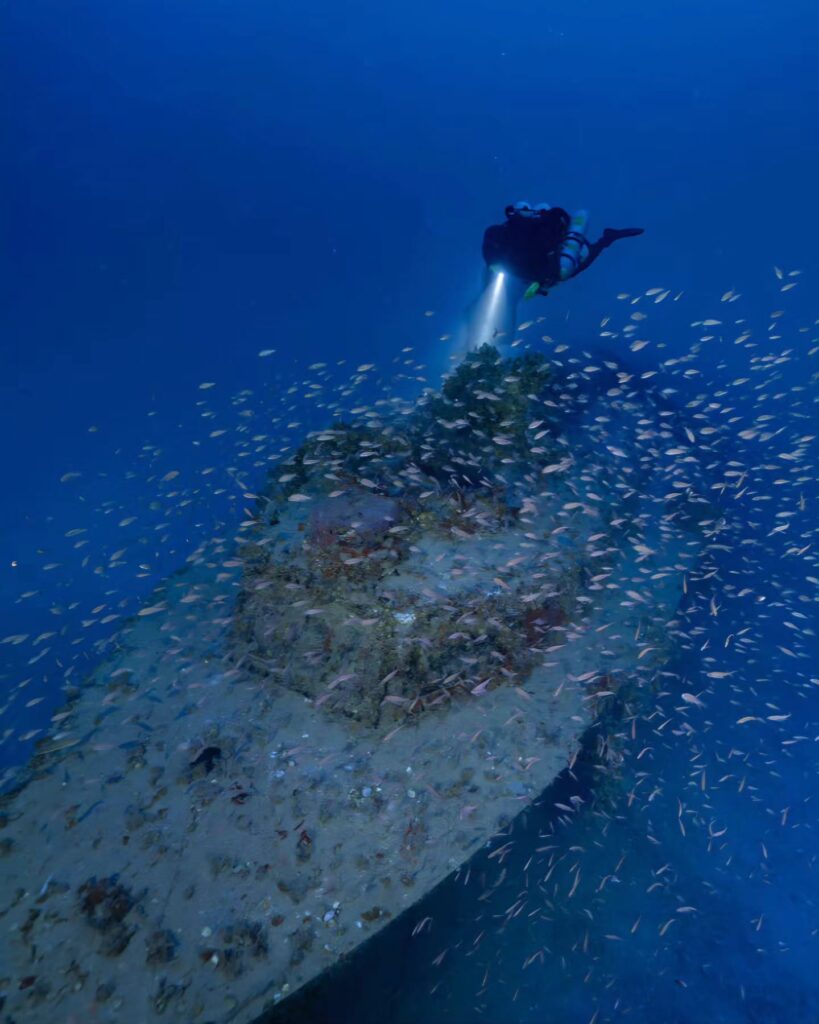
That unusual hull is one reason LS 6 remains so well preserved. Marine growth covers much of the boat, and a small fishing net lies across part of the rear deck, but its overall profile remains recognizable after more than eight decades underwater.
Damage can be seen around the engine-room area, where irregular openings in the hull may reflect both the wartime attack and the strain of towing.
According to the reconstruction presented by Karelas and Giourgas, LS 6 was attacked on September 24, 1943, while moving from Igoumenitsa toward Corfu. The most likely account attributes the attack to six Italian Reggiane Re.2002 fighter-bombers. Near explosions disabled the boat and left its hull badly damaged.
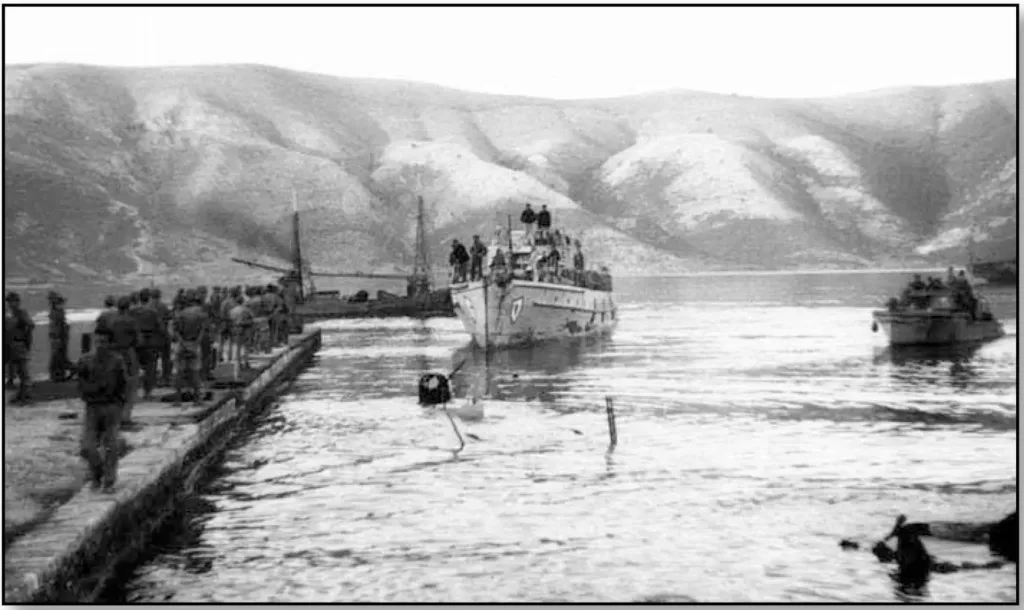
The Kriegsmarine then attempted to tow LS 6 from Corfu to Piraeus for repairs. The minesweeper R-194 handled the tow, accompanied by landing craft F-331. Cracks in the aluminium hull widened under the pressure, water entered rapidly, and the boat sank in deep water near Mytikas, off Preveza.
Near explosions disabled the boat and left its hull badly damaged. The tow to Piraeus began only after the Battle of Corfu concluded on September 29, 1943, tying the boat’s final voyage to the wider Axis takeover of the island that week.
A Rare Survivor of an Experimental Class
One of the class’s more unusual features was how it fired its torpedoes. Because the hull measured only 12.5 metres, a torpedo released from the bow would have thrown off the boat’s trim and driven its nose underwater. Engineers solved this by mounting the tubes at the stern instead, releasing the torpedoes tail-first while the boat accelerated away — letting it strike and retreat in the same motion.
Leichte Schnellboote were designed as small attack vessels that could be transported aboard larger ships and deployed into the sea when required. Their lightweight construction and strong engines enabled speeds of approximately 37 to 40 knots.
Because the Strait of Gibraltar was controlled by the Allies, the boats never reached Greece by sea. Instead, each roughly 12-tonne hull was transported overland from Germany to Mediterranean ports by rail or on special road platforms — an unusual logistical solution dictated entirely by the vessel’s small size and light weight.
LS 5 and LS 6 arrived in Greece in 1943 and became part of the 21st Schnellboot Flotilla for operations in the Aegean. Their planned anti-submarine system was never fully operational because the larger vessel meant to provide sonar guidance was reassigned to the Black Sea.
The discovery provides researchers with a rare and unusually complete example of an experimental wartime design that otherwise exists mainly through plans and photographs. For the divers who spent years searching for it, the discovery also holds personal significance: the wreck serves as a physical record of the vessel’s final voyage, still carrying its tow line 83 years later.
