
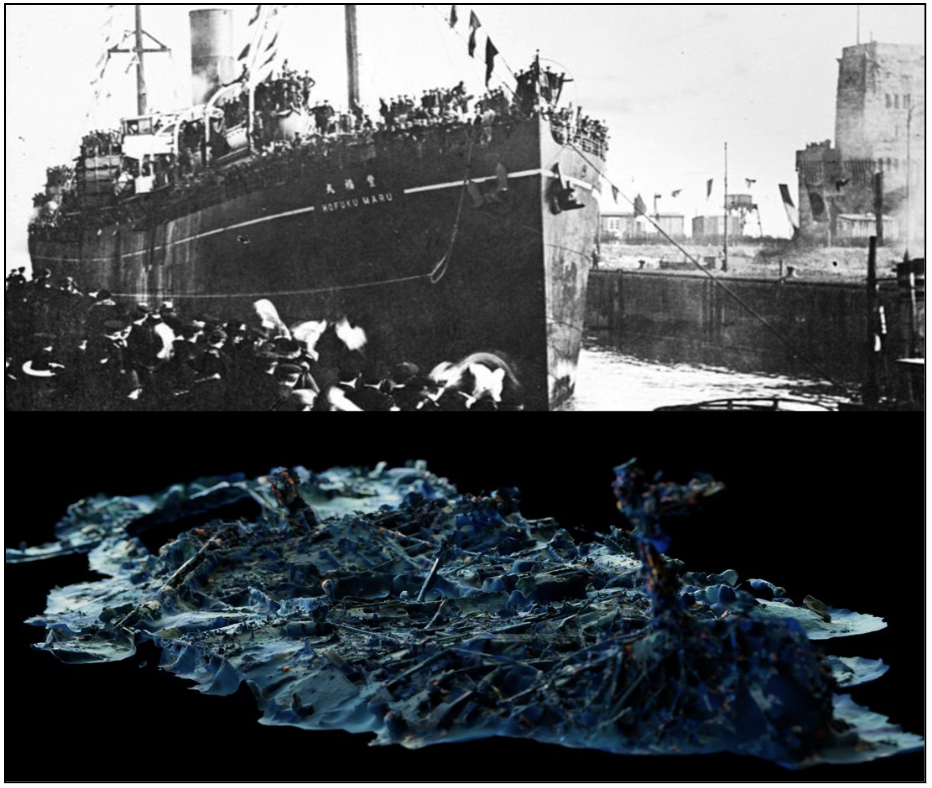
More than eight decades after it vanished in the chaos of World War II, the wreck of the Japanese prison transport Hōfuku Maru has been identified off the coast of Luzon in the Philippines, revealing one of the largest previously undiscovered resting places of Allied prisoners of war.
The discovery was made by explorer Josh Gates and researchers from the Hellships Memorial Foundation, working with underwater imaging specialists and maritime archaeologists. The wreck lies in more than 160 feet of water off Zambales province, a coastal region on the western side of Luzon.
For the families of the men who died aboard the ship, the find is more than a maritime discovery. It gives a physical location to a tragedy that had remained blurred by wartime confusion, incomplete records and decades of uncertainty.
A lost POW ship in Philippine waters
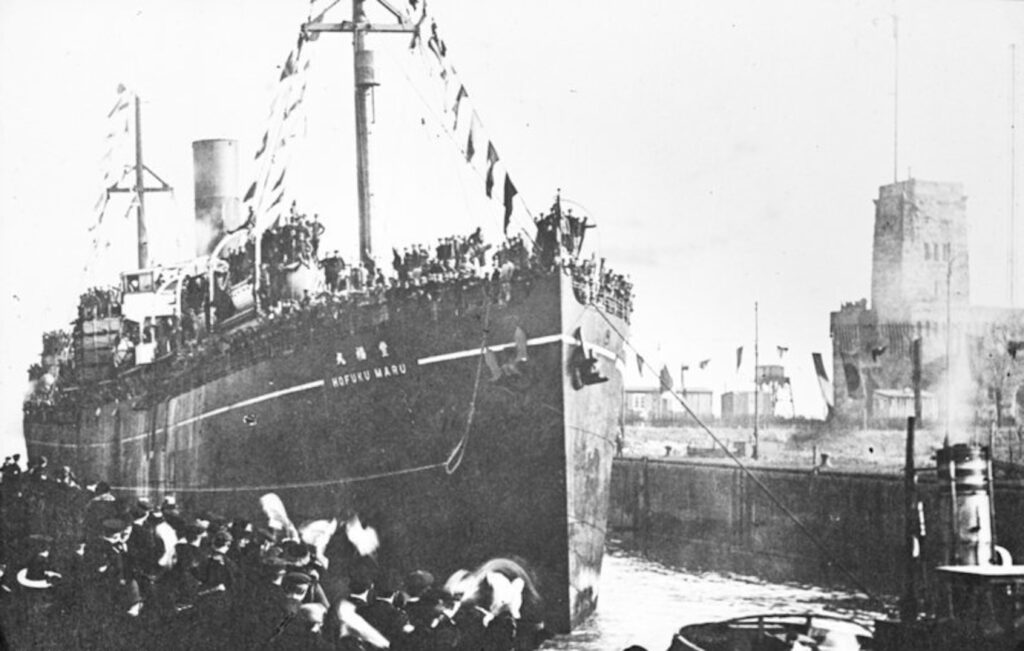
The Hōfuku Maru, sometimes written without the macron as Hofuku Maru, was one of the Japanese vessels later remembered by Allied prisoners as “hellships.” These were cargo ships and passenger vessels used by Imperial Japan to move prisoners of war between camps, ports and forced labor sites across occupied Asia.
Conditions aboard the ships were brutal. Prisoners were often confined in dark, overcrowded holds with little food, water, air or sanitation. Disease, heat, thirst and exhaustion turned the voyages into ordeals even before the ships faced the dangers of war at sea.
The Hōfuku Maru carried British and Dutch prisoners when it was sunk on September 21, 1944. More than 1,000 Allied servicemen are believed to have died, many of them trapped below deck as the vessel went down within minutes.
What remained unclear for decades was the ship’s exact resting place. The location had been misunderstood or misreported after the attack, leaving the wreck effectively lost.
Forgotten documents changed the search
The breakthrough came after years of archival work by the Hellships Memorial Foundation, founded by retired U.S. naval officer Randy Anderson and later joined by researchers Tim Beckensall and John Duresky.
The team located long-overlooked records in American and Japanese military archives. Those documents pointed to a sinking site more than 30 miles away from where the Hōfuku Maru had long been assumed to have gone down.
That shift changed everything. Instead of searching in the traditional area, researchers were able to build a new search zone from wartime convoy data, attack reports and Japanese source material.
The result was a more focused investigation, one based not on legend or guesswork but on a reconstructed wartime map.
Sonar, dives, and photogrammetry identify the wreck
Josh Gates and the research team used sonar to locate an uncharted wreck in the revised search area. Divers then examined the site in deep water, documenting the remains and comparing the evidence with what was known about the Hōfuku Maru.
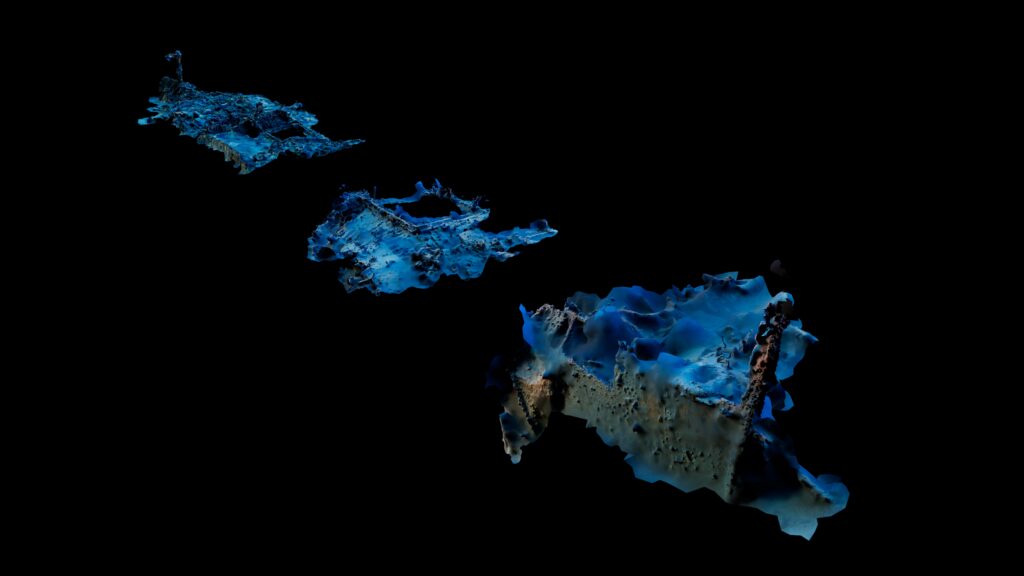
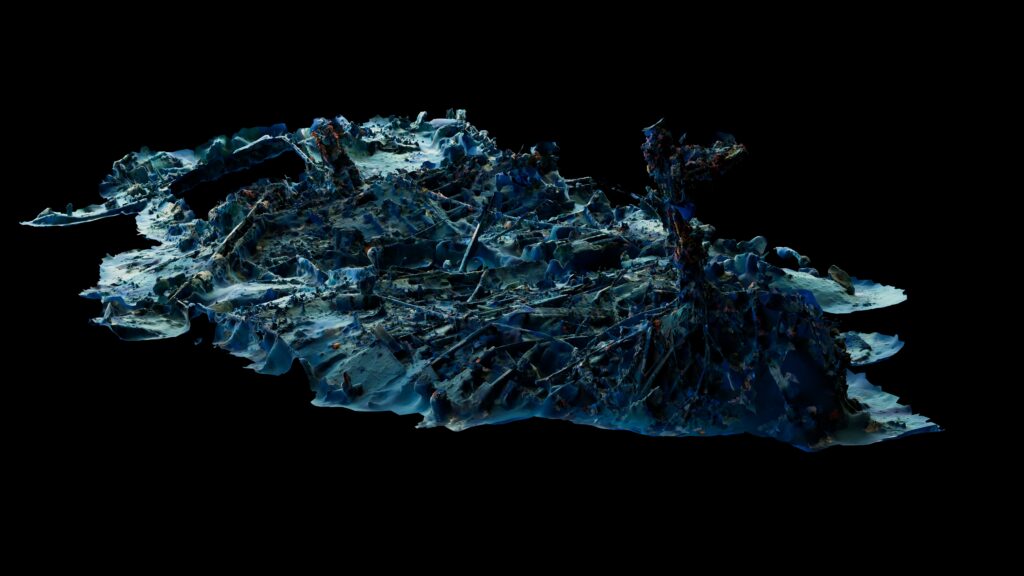
The identification did not rest on a single clue. Researchers compared the size of the wreck, the position of the masts, the cargo holds and the overall structure with original plans of the ship. High-resolution photogrammetry allowed the team to record the wreck in detail and map its surviving features.
The wreck was also found violently broken into two main sections, matching historical accounts that the ship split apart during the attack and sank rapidly. Human remains were also observed among the debris, confirming the site’s status as a war grave.
For Beckensall and the wider research team, the evidence formed a coherent picture: the vessel was in the right place, from the right period and matched the known structure and fate of the Hōfuku Maru.
The darker history of Japan’s hellships
The Hōfuku Maru was part of a much wider system of prisoner transport across the Japanese wartime empire. More than 130 requisitioned cargo ships and passenger vessels were used to move Allied POWs through East and Southeast Asia.
More than 125,000 Allied prisoners are estimated to have been transported on these ships. Around 20,000 died during the voyages.
One of the most tragic aspects of the hellships was that they were not clearly marked as prisoner transports. They were often included in military convoys and could carry troops or cargo alongside captives. Allied submarines and aircraft attacking Japanese shipping frequently had no way of knowing that prisoners were locked below deck.
For the men aboard, captivity at sea became a second battlefield. They had survived prison camps, forced labor and disease, only to be placed inside unmarked ships moving through active war zones.
The Hōfuku Maru’s sinking captures that terrible contradiction. It was a Japanese prison transport, but it was lost during an Allied attack on Japanese shipping. The prisoners below deck had no control over either side of the violence that killed them.
A war grave, not only a wreck
The identification of the Hōfuku Maru gives new weight to a story that has remained outside the better-known narratives of World War II. Unlike battlefield cemeteries or named memorials, many hellship victims were lost at sea, with no grave their families could visit and no precise location attached to their deaths.
The newly identified wreck changes that. It marks the final resting place of more than 1,000 men and gives researchers a documented site for future study, protection and remembrance.
Josh Gates described the history of the hellships as a chapter of World War II that needs to be brought more fully into public memory. The discovery, he said, may help offer long-delayed closure to families whose relatives disappeared during the final year of the Pacific War.
That sense of closure is central to the importance of the find. The Hōfuku Maru is not simply another shipwreck found by modern technology. It is a mass grave, a POW site and a place where archival research, maritime archaeology and family memory now meet.
Expedition Unknown to reveal the discovery
The discovery will be presented in the two-part season premiere of Expedition Unknown, titled Hunt for the Hellships, beginning Wednesday, June 24, 2026, at 9 p.m. ET/PT on the Discovery Channel.
The program will also feature work connected to another Japanese hellship, the Ōryoku Maru, which sank in Subic Bay in the Philippines. The Defence POW/MIA Accounting Agency has been involved in efforts to recover and identify POW remains from that wreck.
Together, the investigations show how modern underwater imaging, archival research and forensic recovery are reshaping the search for missing prisoners of war in the Pacific.
The Hōfuku Maru had been lost for more than 80 years. Now, its location is known, its identity has been reconstructed, and one of the most painful maritime tragedies of the Pacific War has a place on the map again.
Cover Image Credit: Discovery Channel
