
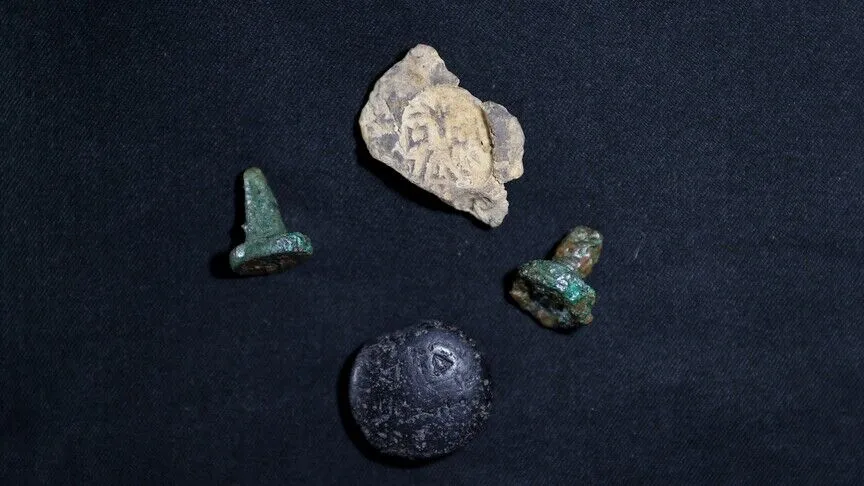
Archaeologists excavating Türkmen Karahöyük in central Türkiye have uncovered two rare objects separated by nearly two millennia: a 3,500-year-old stone seal inscribed in Hieroglyphic Luwian and a Late Roman Christian amulet containing an exceptionally thin sheet of gold believed to carry a passage from the Bible.
The discoveries offer striking evidence of the settlement’s long history. While the Luwian seal points to an organized administrative center operating during the Late Bronze Age, the amulet provides a far more personal glimpse into the Christian beliefs and protective practices of a child who lived there during the fourth or fifth century AD.
A Biblical Passage Written on Gold
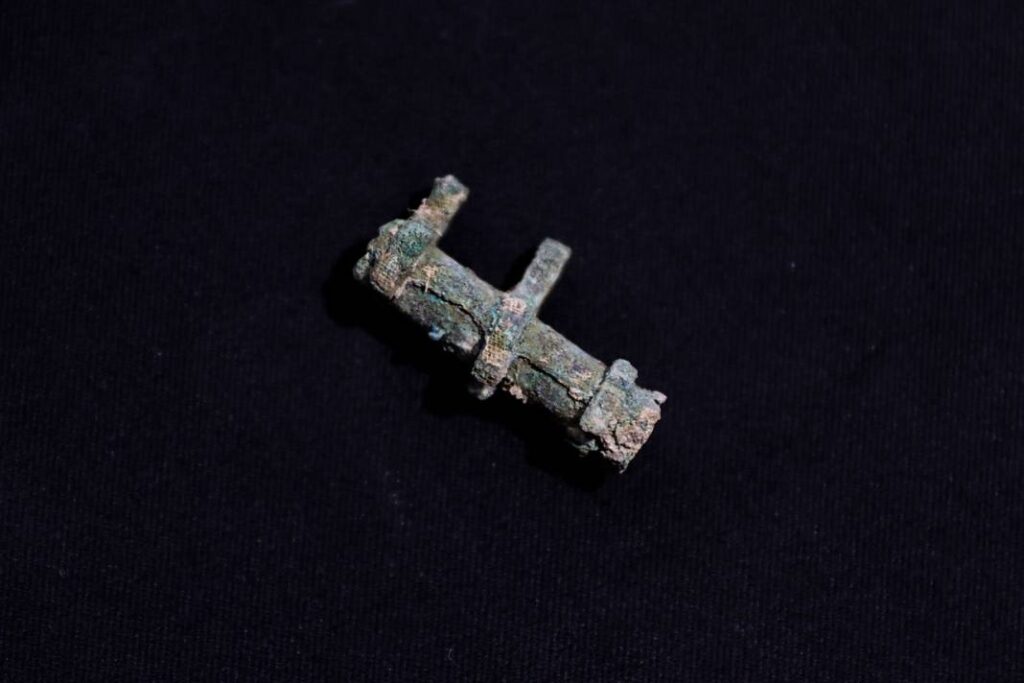
The Christian amulet was discovered inside a small copper container. Within it, archaeologists found a gold sheet measuring only around 0.1 millimeters in thickness.
Although the inscription has not yet been fully published, the excavation team believes that the text was probably taken from the Bible. The object appears to have belonged to a young child and was likely worn or carried as protection against illness, misfortune or supernatural harm.
Speaking to Anadolu Agency (AA), excavation co-director Michele Rüzgar Massa compared its protective role to that of an evil-eye charm and emphasized that amulets of this type are uncommon. One comparable example, she noted, has previously been discovered in Germany.
Christian amulets containing sacred words, prayers or biblical passages were used across the Late Roman world. Their owners believed that the physical presence of holy text could provide divine protection. Gold was especially suitable for such objects because it was both valuable and resistant to corrosion, allowing even an extremely thin inscribed sheet to survive for centuries.
The precise biblical passage written on the Türkmen Karahöyük sheet has not yet been announced. Its identification and interpretation could reveal whether the text invoked healing, protection or a specific passage associated with children.
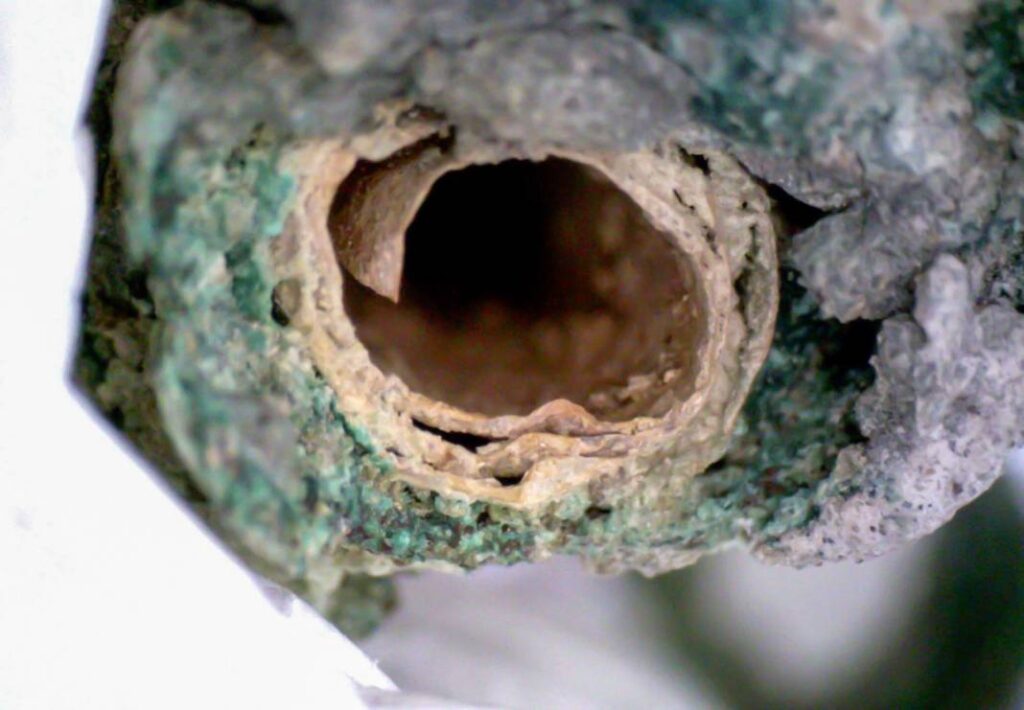
Archaeologists found a gold sheet measuring only around 0.1 millimeters in thickness. Credit: Serhat Çetinkaya / AA
Luwian Seal Reveals a Bronze Age Bureaucracy
The second major discovery belongs to a much earlier chapter in the settlement’s history.
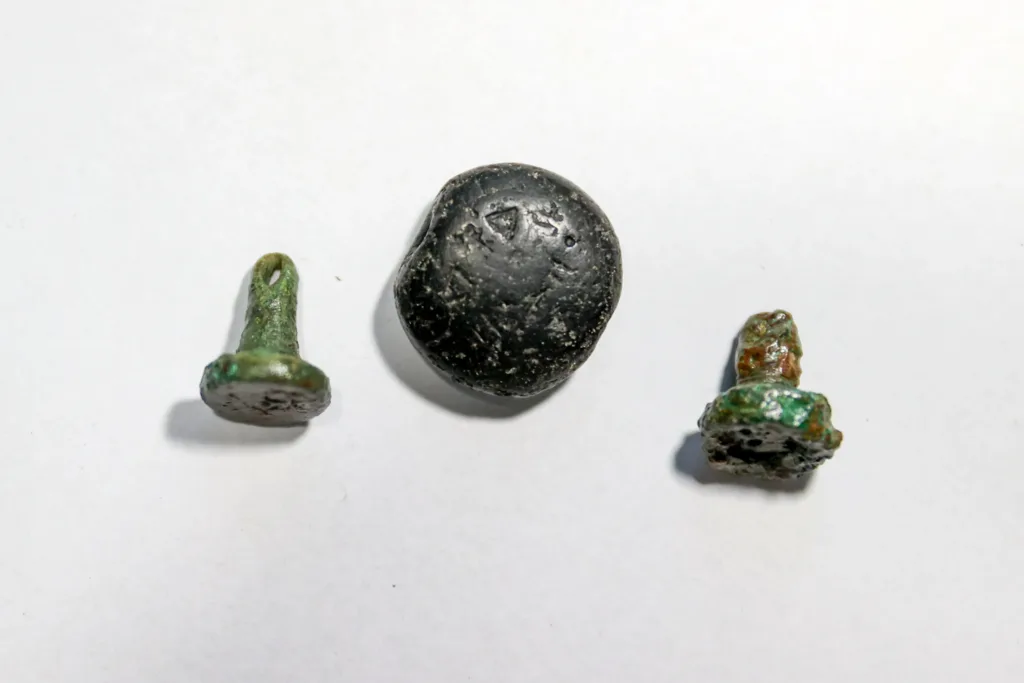
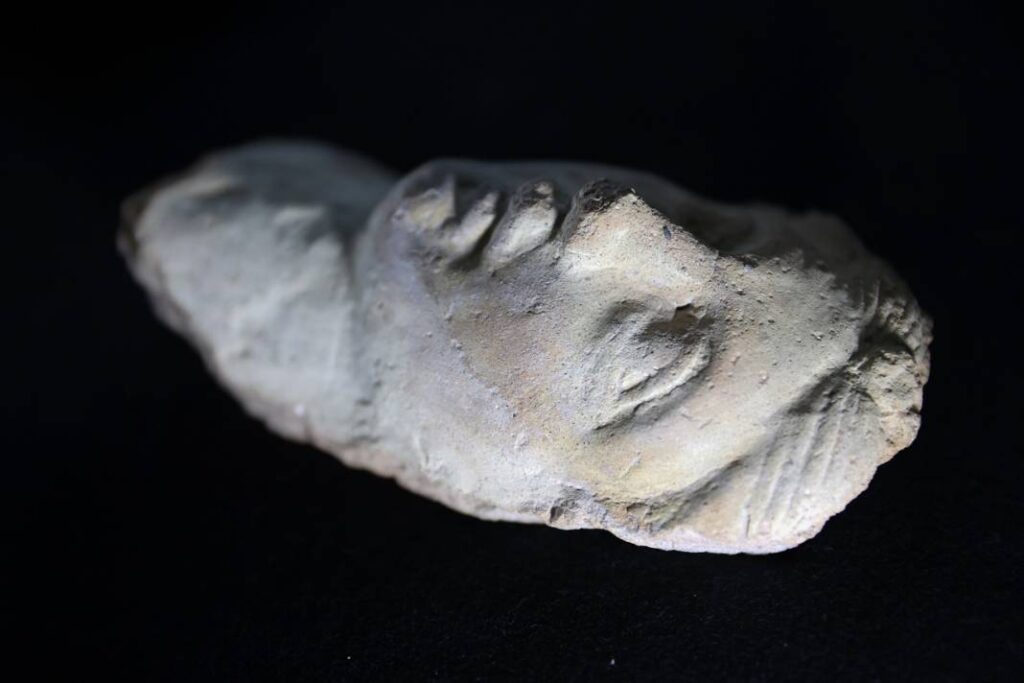
Archaeologists uncovered a stone seal bearing Hieroglyphic Luwian signs, along with two copper seals and a clay sealing. The stone example contains both a personal name and an official title.
The name has been read as Kurunti-ziti, a name connected with Kurunta, an important deity known from the religious traditions of the Hittite and Luwian worlds.
The official named on the seal does not appear to have occupied the highest level of government. Nevertheless, the presence of a title demonstrates that Türkmen Karahöyük had a structured administrative hierarchy.
The seals were probably used by officials to authenticate documents, containers or goods. Clay sealings preserved the impression left when a seal was pressed into wet clay, providing direct archaeological evidence of recordkeeping and administrative control.
Together, the objects suggest that Türkmen Karahöyük functioned as a major administrative center around 1500–1400 BC.
What Was Luwian?
Luwian was an Indo-European language spoken in ancient Anatolia and closely related to Hittite. It was recorded both in cuneiform and in a distinctive hieroglyphic writing system.
Hieroglyphic Luwian combined syllabic signs representing sounds with logograms representing complete words or ideas. Its earliest appearances include seals from the second millennium BC, while longer monumental inscriptions became especially widespread in southern Anatolia and northern Syria after the collapse of the Hittite Empire.
Because seals often carried names, professions and official titles, they can preserve evidence of individuals who would otherwise remain absent from the historical record. The Türkmen Karahöyük seal therefore identifies not only a name but also one position within the bureaucratic system that governed the settlement approximately 3,500 years ago.
Türkmen Karahöyük had already drawn international attention following the discovery of a monumental Hieroglyphic Luwian inscription during earlier research at the site. The large mound occupies a strategically important position on the Konya Plain, a region that connected different political and cultural zones of ancient Anatolia.
A Settlement with Many Lives
The excavation followed six years of archaeological survey and is now in its third season. The project is co-directed by Michele Rüzgar Massa of Bilkent University and James Osborne of the University of Chicago, with Hüseyin Erpehlivan of Bilecik Şeyh Edebali University serving as deputy director.
Around 150 people are participating in the excavation, including approximately 60 researchers from 13 countries. The project also involves Bilkent, Chicago, New York and Pavia universities, the British Institute at Ankara and Konya Metropolitan Municipality.
Researchers are investigating five excavation areas across the mound. Rather than representing a settlement belonging to only one civilization, Türkmen Karahöyük contains archaeological layers extending through the Bronze Age, Iron Age, Hellenistic period and Late Antiquity.
The Luwian seal and Christian amulet capture that long history at two very different scales. One belonged to an official operating within a Bronze Age bureaucracy. The other was apparently entrusted to a child as a source of spiritual protection nearly two thousand years later.
Found at the same mound, they reveal how Türkmen Karahöyük repeatedly changed its language, religion and political identity while remaining an important place in the heart of Anatolia.
AA
