
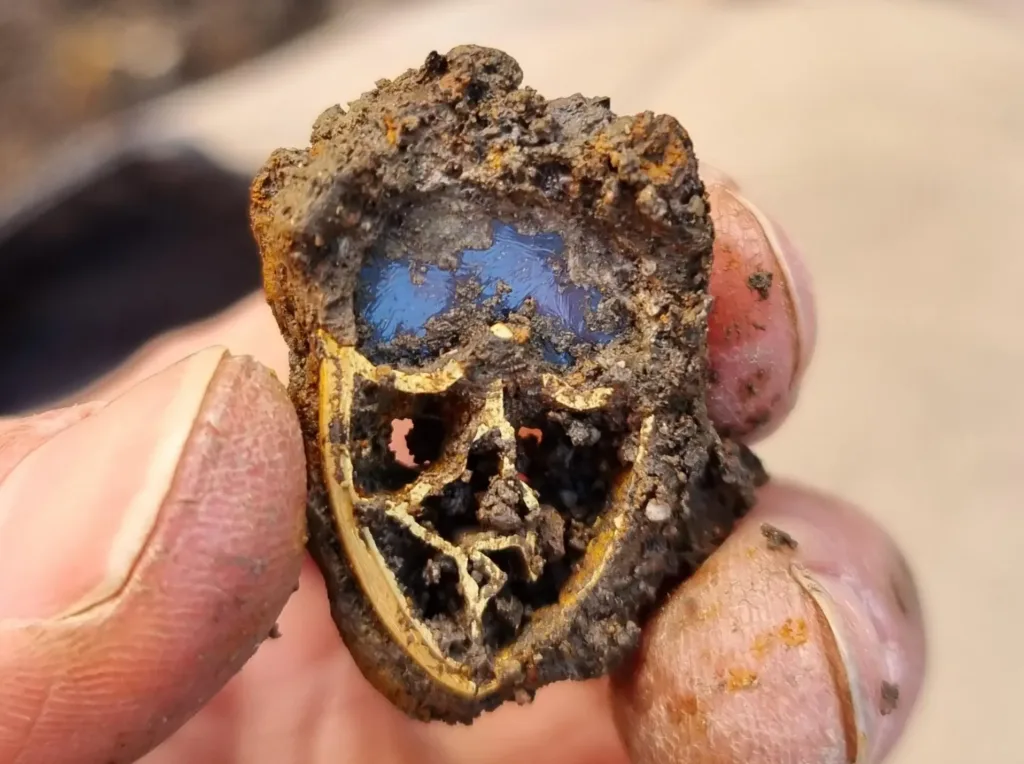
An archaeological excavation in eastern France has uncovered graves of people buried with their horses, alongside gold and silver jewelry and weapons adorned with precious stones, dating back approximately 1,500 years. However, these opulent burials contain more than just the treasures of the era’s elite. Potential fatal weapon wounds identified on some skeletons provide striking evidence of the violence that plagued the region during the decline of the Roman Empire.
The National Institute for Preventive Archaeological Research (INRAP), conducting excavations in Horbourg-Wihr near Colmar in the Alsace region, identified 14 human graves and two horse burials dating to the second half of the 5th century AD. The research, carried out prior to a housing project, also revealed the remains of an older Roman settlement in the same area. Consequently, archaeologists have found traces of two different eras that may help in understanding the region’s transition from Roman rule to the Early Middle Ages.
Graves Adorned with Gold, Weapons, and Horses
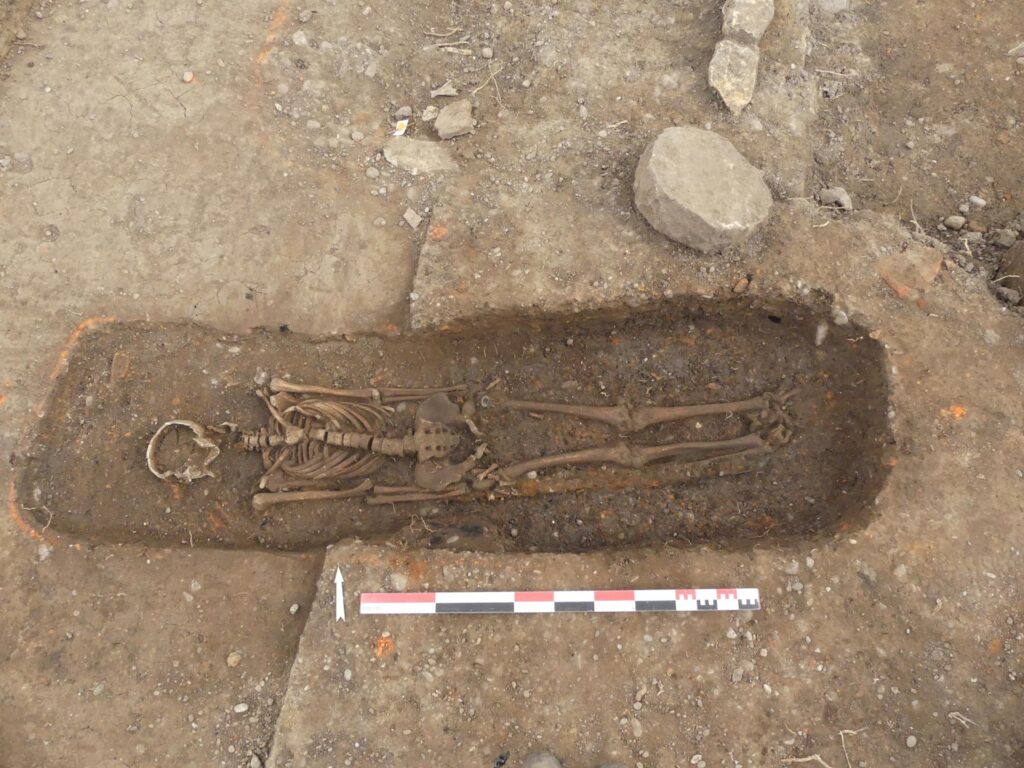
The cemetery contains burials of 11 adults or older adolescents and three young children. Most of the graves were prepared in rectangular or trapezoidal shapes and arranged according to the body measurements of the deceased. However, the richness of the items found in some graves clearly reveals status differences within the community.
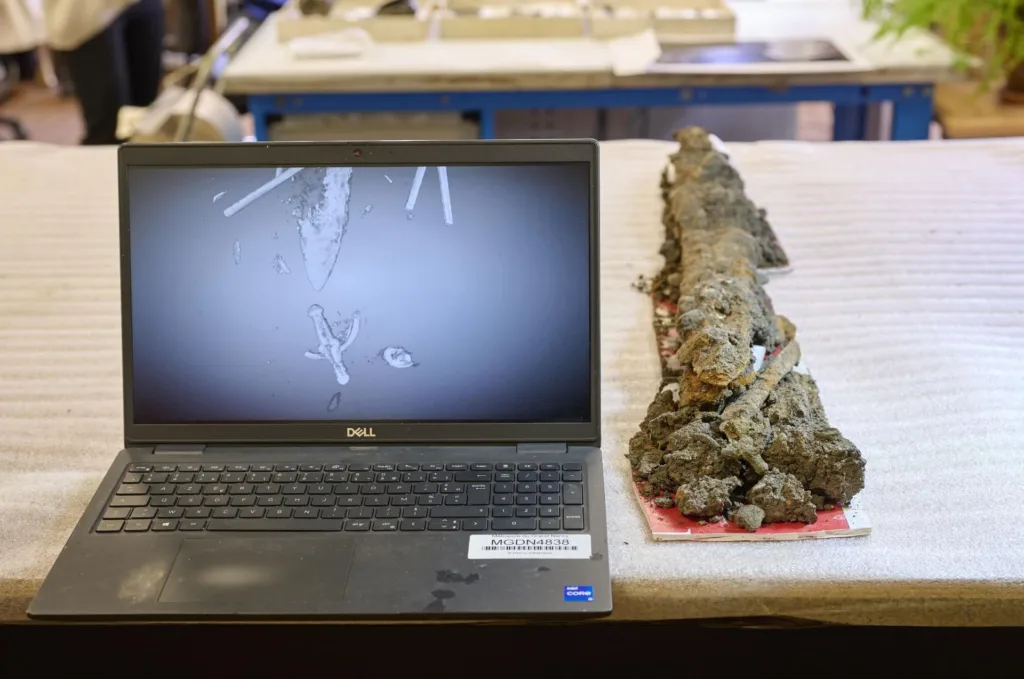
Two male graves, in particular, draw attention due to the variety and craftsmanship of the weapons. Archaeologists identified swords partially preserved with wooden scabbards, single-edged long knives known as scramasaxes, shields, and angon-type weapons in these graves. Decorations of gold, silver, and garnet inlays on the clothing and weapon gear suggest that the deceased held privileged positions.
INRAP states that such weapon equipment is similar to the graves of Germanic leaders or Germanic allies who served in the Roman army during the 5th century. However, the grave goods alone are not sufficient to determine the exact ethnic identities of those buried here or which military unit they belonged to.
Two other graves stand out for their rich collections of objects typically associated with female burials. Gold-plated silver fibulae, silver bird-shaped brooches, glass bead necklaces, belt buckles, and bone combs indicate that these individuals may have also held significant positions within the community. The precious metalwork specifically demonstrates the role of clothing and personal adornment in expressing social status among the elites of the period.
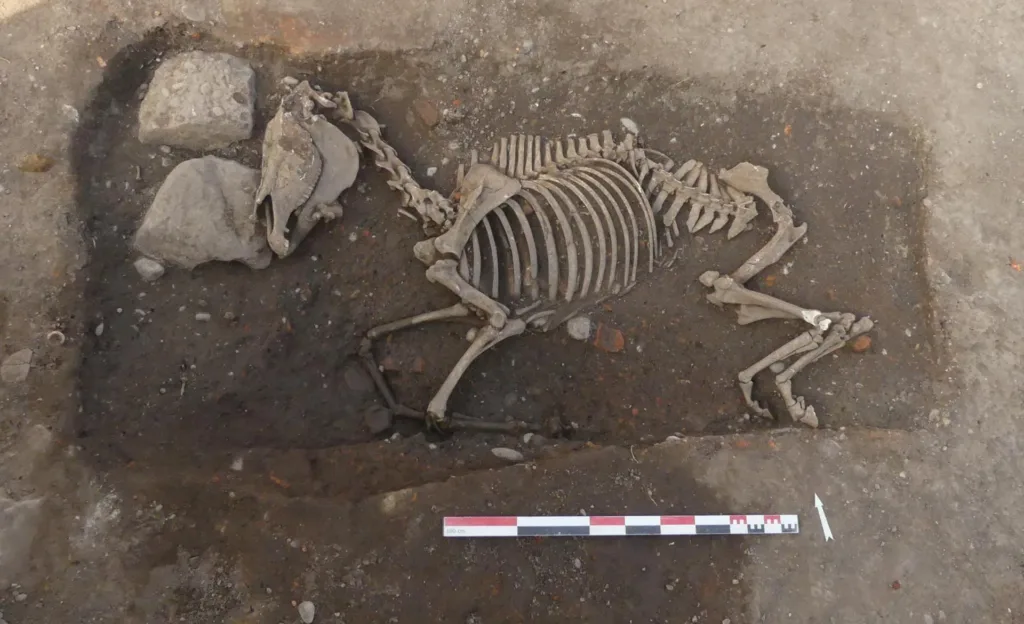
Another unusual feature of the cemetery is the presence of two horses among the human burials. Archaeologists found the animals buried along with their harnesses. This practice provides important data for researching the meaning of status and military identity associated with horses and riding equipment in certain communities.
Traces of Violent Death in the Bones
Beyond the richness of the graves, the condition of the human skeletons also caught the researchers’ attention. Initial anthropological observations show that some members of this community experienced serious health problems and physical injuries.
Bone fractures that may not have healed properly were identified in at least two individuals. One of these caused immobility in the knee joint, which may have prevented the person from using their leg normally.
The more striking finding is the marks on the bones of two individuals, which are thought to be related to blows from cutting weapons. Researchers observed no signs of remodeling indicating bone healing around the wounds. This suggests that the individuals in question may have died shortly after the violent events.
According to INRAP, it is quite unusual to see potential weapon wounds in two individuals within such a small burial community. The institute suggests that these preliminary findings indicate the weapons buried with the deceased may have been more than mere symbols of status.
However, the exact nature of the wounds and their relationship to death have not yet been clarified. Further anthropological examinations may reveal more detailed information about how these marks occurred and the living conditions of those buried.
A Changing World on the Roman Border
The historical location of Horbourg-Wihr elevates the discovery beyond a routine cemetery research project. The settlement was located in a region close to the Rhine frontier of the Roman Empire. The river line played a significant role for centuries in the military, political, and economic relations between Roman administration and neighboring Germanic communities.
Starting from the 3rd century AD, political balances around the Rhine began to shift. While Germanic communities such as the Alamanni became increasingly visible in the region, the Roman administration organized its border defense in different ways. These relations did not consist solely of conflict; Germanic warriors could serve in the Roman army, and local communities maintained their connections with the Roman world through trade and other links.
By the 5th century AD, the military and political order of the Western Roman Empire had largely changed. However, it is not accurate to view this transformation as a collapse occurring everywhere simultaneously or as the complete disappearance of the indigenous population. Other archaeological research in the Upper Rhine region provides evidence for the continuity of the local population in the post-Roman period.
This is where the importance of the Horbourg-Wihr cemetery emerges. The precious items, graves equipped with weapons, and horse burials provide concrete evidence for researching how new social and military elites emerged in the former border regions of the Roman world. Nevertheless, it has not yet been finalized whether these people were Alamanni, another Germanic community, or a group connected to the Roman army.
From a Roman Neighborhood to a 5th-Century Cemetery
Another important aspect of the excavation is that the cemetery is located in the same area as an older Roman settlement. Archaeologists documented settlement activities developing from the middle of the 1st century AD within archaeological layers exceeding 1.5 meters.
The settlement intensified during the 2nd and 3rd centuries AD. Structures built on stone foundations, roads, kilns, wells, and pits that may have been used for different purposes indicate that a vibrant Roman neighborhood existed here.
A distinct change in the use of the area occurred in the 4th century AD. Dark alluvium layers covered parts of the settlement, and human activities became sparse. Approximately a century later, in the second half of the 5th century, a portion of the same land was converted into a cemetery.
INRAP emphasizes that the most significant contribution of the discovery is linked to the scarcity of 5th-century archaeological sites documenting the settlement of Germanic communities in Alsace. A detailed examination of the graves will provide new data for discussions regarding the origins of the people living in the region, their social relations, and population movements in the post-Roman period.
