
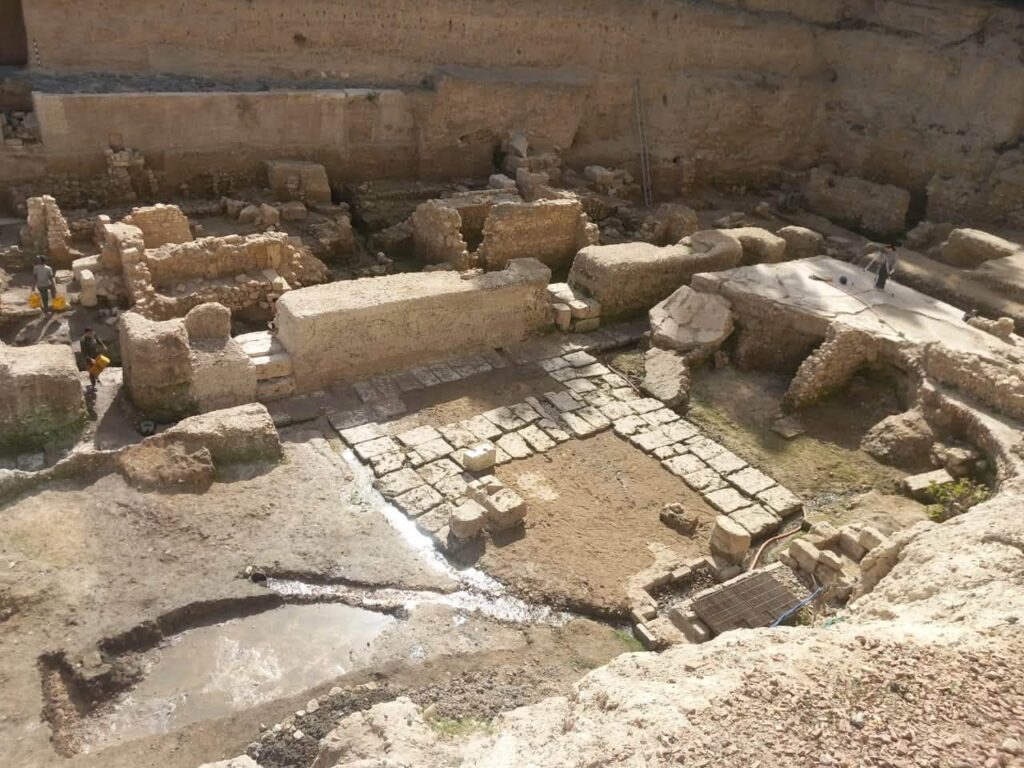
Monumental stone foundations discovered in Egypt’s Alexandria may belong to one of the ancient world’s most important lost royal burial complexes. After examining massive limestone foundations, surrounding walls, and an underground tunnel in the ancient city’s royal quarter, Egyptian experts have identified a potential connection with the royal tomb complex that Ptolemy IV Philopator established more than 2,200 years ago.
Egypt’s Ministry of Tourism and Antiquities announced the findings on November 24, 2026, following an assessment by a specially appointed scientific committee. According to ancient historical sources, the burial complex housed the remains of Ptolemaic rulers alongside those of Alexander the Great.
Although researchers have yet to establish the building’s identity, its location, monumental proportions, and architectural characteristics have led specialists to consider a possible funerary function.
Monumental Foundations and an Underground Tunnel
A Greek archaeological mission led by Dr. Calliope Limneos-Papakosta has spent approximately two decades investigating Alexandria’s Shallalat Gardens, an area within the ancient city’s royal quarter.
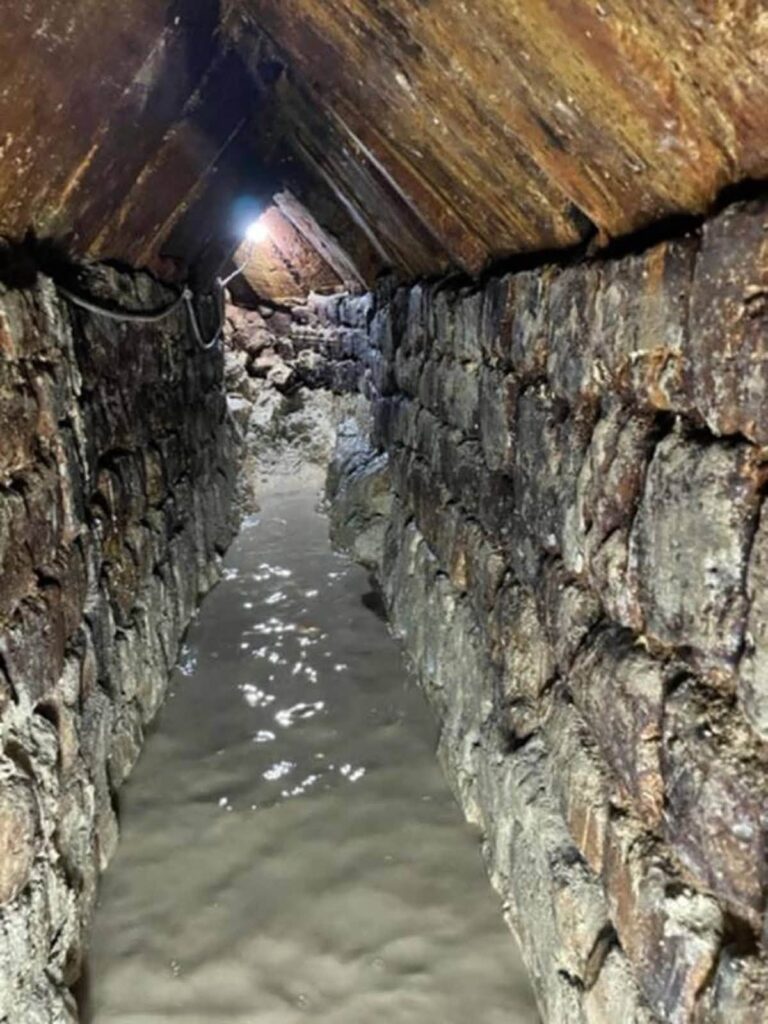
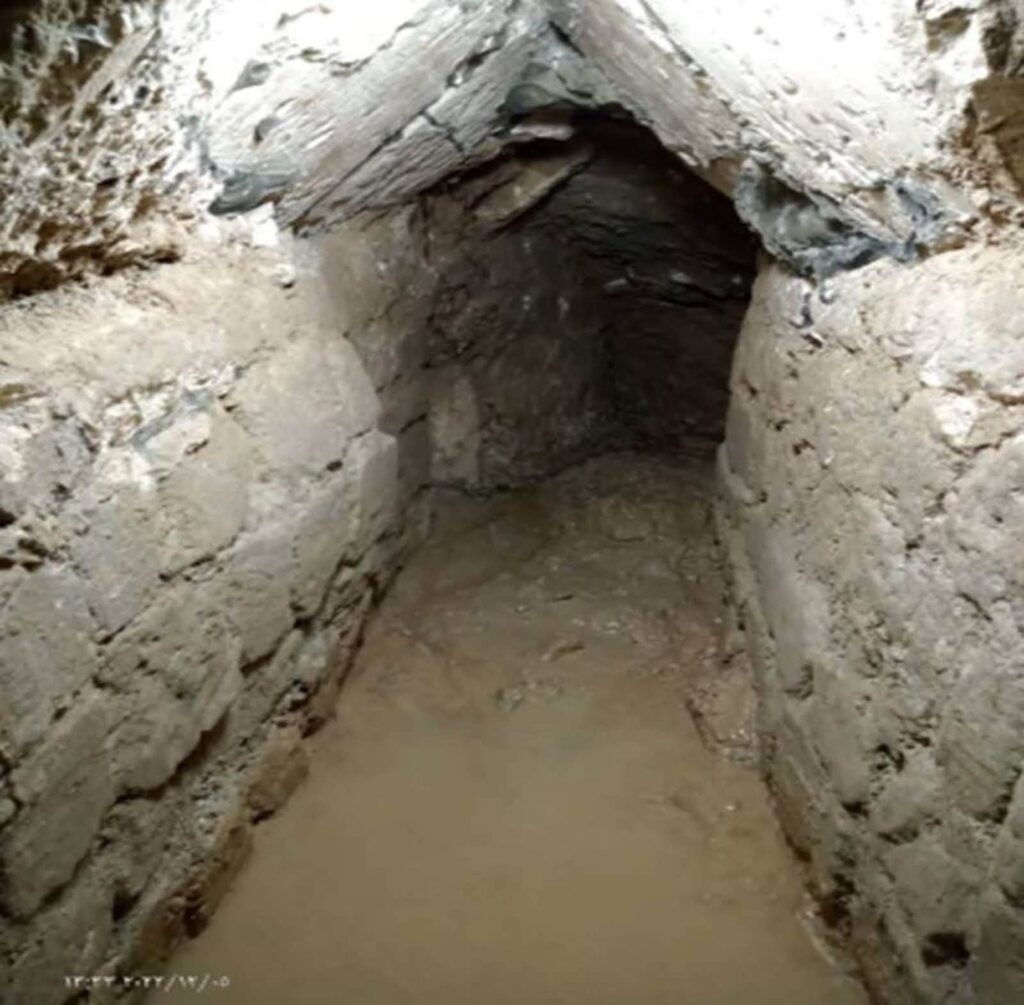
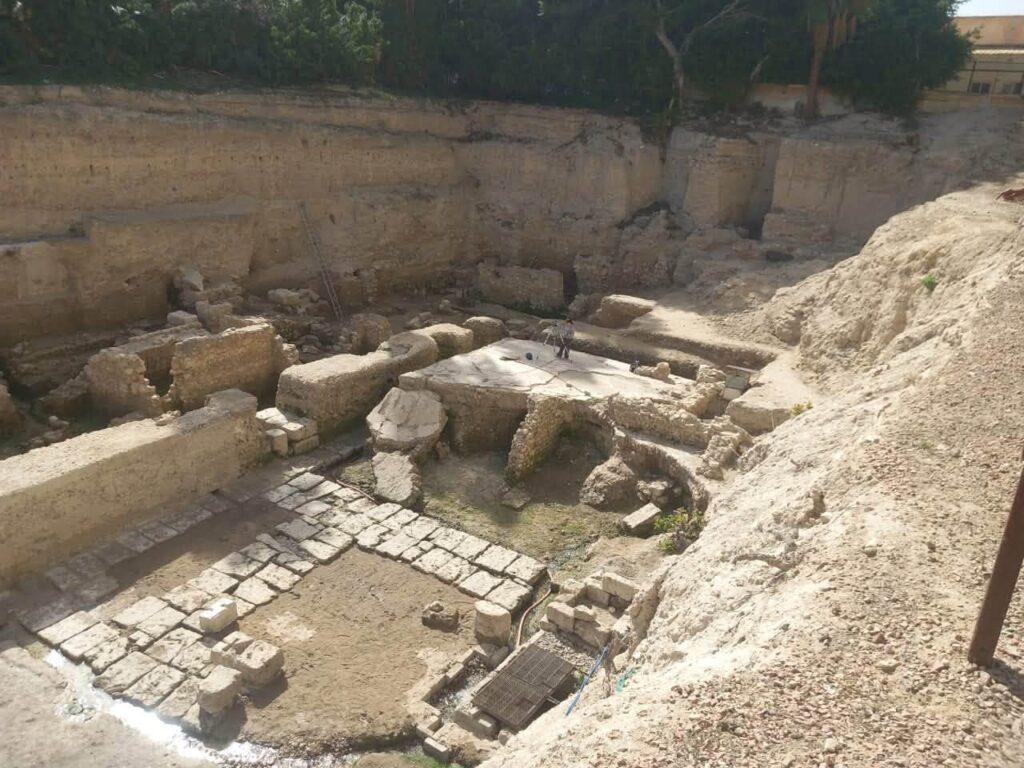
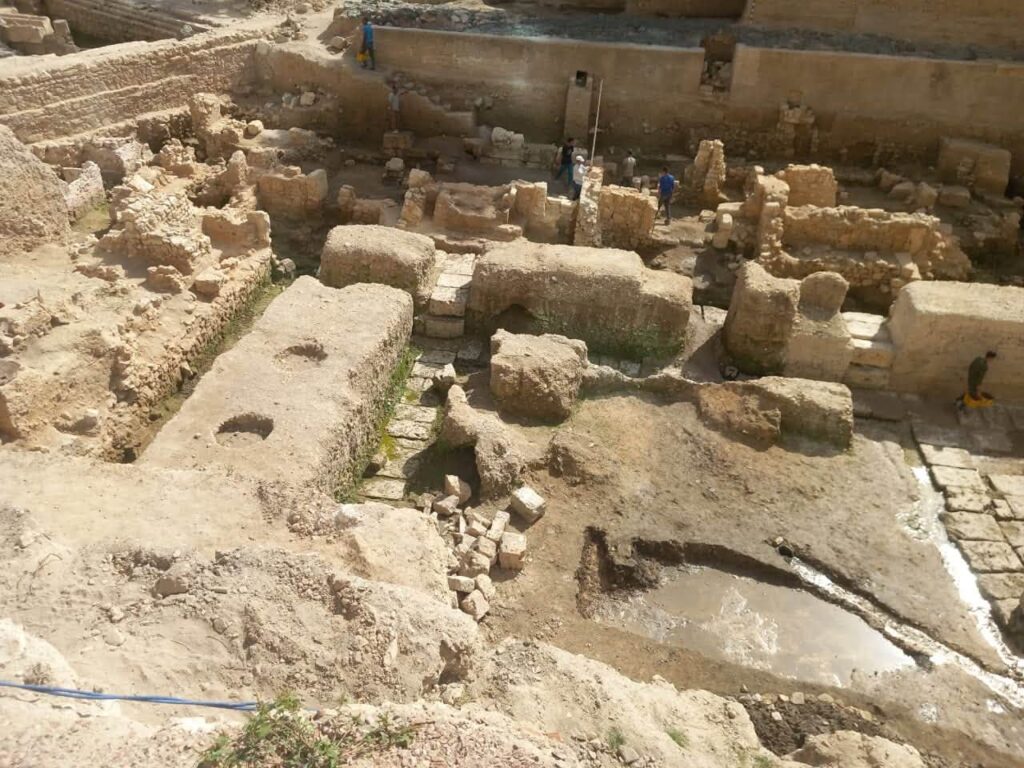
Operating under the Hellenic Research Institute of Alexandrian Civilization (HRIAC), with financial support from the Moheb Kassabgui Foundation and Reliance Egypt, the team has documented the foundations of a massive limestone structure, surrounding walls, and a tunnel extending northward beneath the building.
After receiving the excavation team’s report, Egypt’s Minister of Tourism and Antiquities, Sherif Fathy, appointed a specialized scientific committee to investigate the findings and assess their archaeological significance.
Dr. Ayman Ashmawy headed the committee, which included specialists in Greek and Roman history and archaeology from the universities of Alexandria and Tanta. Following an on-site inspection, the experts concluded that the square layout and substantial dimensions of the foundations suggest they once supported a large, towering structure.
The committee’s most significant conclusion concerns the building’s possible funerary function. Its architectural characteristics and location raise the possibility that the remains belong to the royal burial complex associated with Ptolemy IV Philopator.
A Dynasty Born from Alexander the Great’s Empire
Alexander the Great founded Alexandria in 331 BCE, establishing a city that would become one of the most influential political, commercial, and intellectual centers of the ancient Mediterranean.
Following Alexander’s death in Babylon in 323 BCE, his generals struggled for control of his vast empire. One of them, Ptolemy, secured control of Egypt and assumed the title of king in 305 BCE, establishing a dynasty that would rule the country for nearly three centuries. Ptolemaic rule ended in 30 BCE with the death of Cleopatra VII and Egypt’s incorporation into the Roman Empire.
Under the Ptolemies, Alexandria developed into a cosmopolitan capital where Greek and Egyptian cultural traditions intersected. Its famous library, monumental lighthouse, royal palaces, and religious sanctuaries helped establish the city’s international prominence.
The royal quarter served not only as the administrative and residential center of the dynasty but also as a setting for religious ceremonies and the royal cult. Within this landscape, the burial monuments of the Ptolemaic rulers held particular political and religious significance.
The Lost Royal Tomb Described by Ancient Writers
Ptolemy IV Philopator, who ruled Egypt from 221 to 204 BCE, occupies an important place in historical accounts concerning Alexandria’s royal burial complex.
According to Zenobius, a Greek writer of the second century CE, Ptolemy IV constructed a funerary monument in the center of Alexandria, bringing together the remains of his ancestors, his mother, and Alexander the Great.
The ancient Greek geographer and historian Strabo also described the burial complex in his Geography. Known as the Sema or Soma, the enclosure formed part of Alexandria’s royal palaces and contained the tombs of the Ptolemaic rulers alongside that of Alexander.
Bringing the Macedonian conqueror and the Ptolemaic dynasty together within a single funerary complex reinforced the connection between Egypt’s ruling family and Alexander’s political legacy. The monument represented more than a burial place: it embodied the dynasty’s claim to legitimacy and its place within the Hellenistic world.
Despite the surviving historical descriptions, archaeologists have never conclusively established the complex’s location. The Egyptian scientific committee’s assessment of the monumental foundations at Shallalat Gardens therefore gives the site renewed archaeological significance.
Archaeologists Continue to Investigate the Building’s Identity
One of the greatest challenges facing archaeologists in Alexandria is that much of the ancient city lies beneath the modern urban landscape. Centuries of construction and redevelopment have complicated efforts to reconstruct the layout of its royal quarter and locate its most important monuments.
Dr. Hisham El-Leithy, Secretary-General of Egypt’s Supreme Council of Antiquities, emphasized that the discovery opens new avenues for investigating royal architecture in Ptolemaic Alexandria. Meanwhile, Ashmawy stressed that the committee’s proposed identification remains a preliminary hypothesis requiring further archaeological and architectural research.
The ministry’s announcement does not mention inscriptions, sarcophagi, or human remains that could conclusively establish the building’s identity. Further investigations may clarify the structure’s original function, the purpose of the underground tunnel, and its relationship with neighboring buildings.
If subsequent research confirms the connection with the Ptolemaic royal burial complex, the discovery could represent a major breakthrough in understanding the monumental landscape of ancient Alexandria. However, identifying the complex would not necessarily mean that archaeologists had located Alexander the Great’s individual tomb or recovered his remains.
The massive limestone foundations beneath Shallalat Gardens offer a compelling new avenue of investigation into the whereabouts of a royal burial complex that ancient historians described but whose precise location continues to elude archaeologists.
