
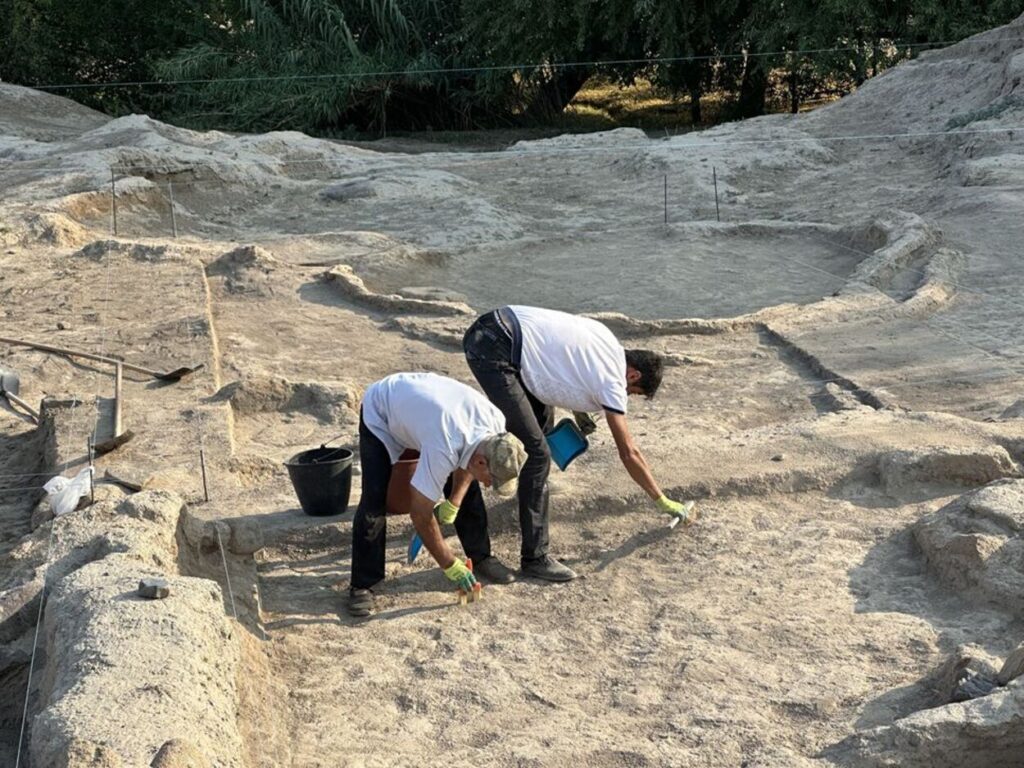
At the Göytepe Neolithic settlement in western Azerbaijan, researchers have determined that ten storage units used by the region’s first farming communities approximately 8,000 years ago formed a single complex. These small, closely situated structures provide crucial insights into how the early farmers of the South Caucasus preserved their agricultural produce and organized their daily lives.
According to an excavation report published by the Azerbaijan Institute of Archaeology and Anthropology on November 19, researchers re-examined the architectural remains of the settlement during the 2026 season and documented the spatial relationships between the storage structures.
How did they store food eight thousand years ago?
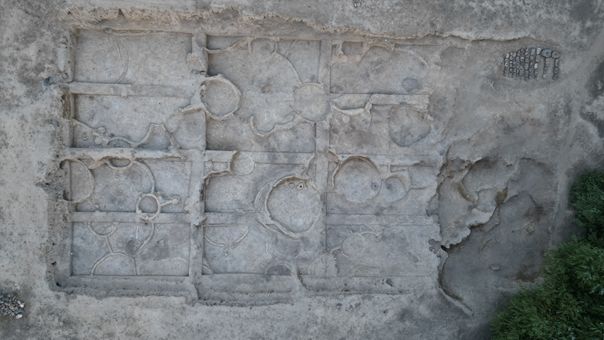
The storage units belonging to the fourth settlement phase of Göytepe vary in diameter from 40 to 70 centimeters. Neolithic farmers constructed the walls of these small structures using clay mixed with straw.
The close proximity of the ten storage units allowed researchers to evaluate them as a single architectural complex. This spatial arrangement suggests that the preservation of agricultural products was a significant element of the settlement’s architectural planning.
With the spread of agriculture, communities had to focus not only on growing crops but also on preserving their harvests for long periods. Effective storage methods helped them prevent seasonal food shortages and set aside seeds for the next planting season.
Previous research had revealed wheat and barley remains
Some of the most important scientific evidence regarding the function of the storage structures at Göytepe comes from a geoarchaeological and paleobotanical study published in the Journal of Archaeological Science in 2015.
By analyzing sediments and plant remains in previously excavated storage structures, researchers found evidence of wheat and barley, as well as grain chaff. These findings contributed significantly to the understanding of the grain processing and preservation methods used by Neolithic communities in the South Caucasus.
The original contents of the ten newly documented storage units are not yet known for certain. Future botanical and micromorphological analyses may clarify which products the farmers stored in these structures and for what purposes the different storage units were used.
The first farming communities of the South Caucasus
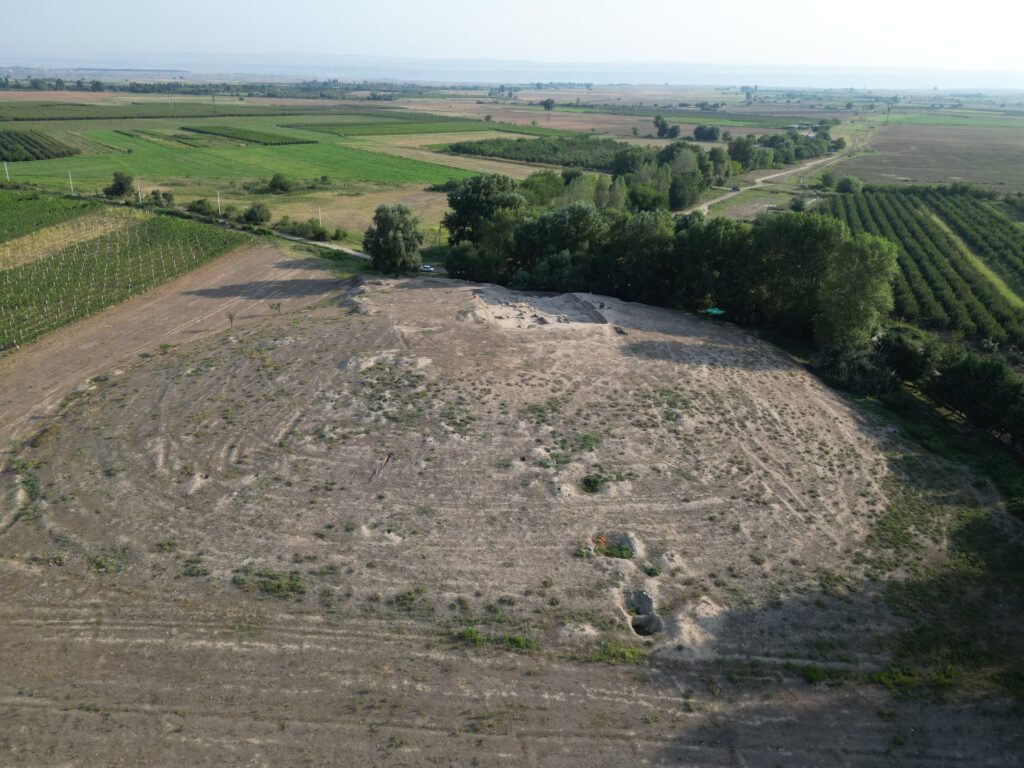
Located in the Tovuz region of Azerbaijan, Göytepe is one of the major settlements of the Shomutepe-Shulaveri culture, which developed in the South Caucasus during the 6th millennium BCE. The communities of this culture, which spread across parts of present-day Azerbaijan, Georgia, and Armenia, are known for their sedentary lifestyles based on agriculture and animal husbandry.
The circular mud-brick structures, courtyards, storage areas, and everyday tools found at Göytepe document how the region’s first farmers adapted to their environment.
The 14 distinct settlement phases identified by researchers and the cultural layer approximately 11 meters thick provide a rich archaeological record for studying the evolution of Neolithic architecture and economic activities over time.
The newly documented storage complex is an important part of this long history of settlement. Researchers do not yet know whether the storehouses served a single household or multiple families. The answer to this question may help clarify how the first farmers of the South Caucasus organized their agricultural production, food resources, and daily lives.
Institute of Archaeology and Anthropology of the Azerbaijan National Academy of Sciences (ANAS)
