
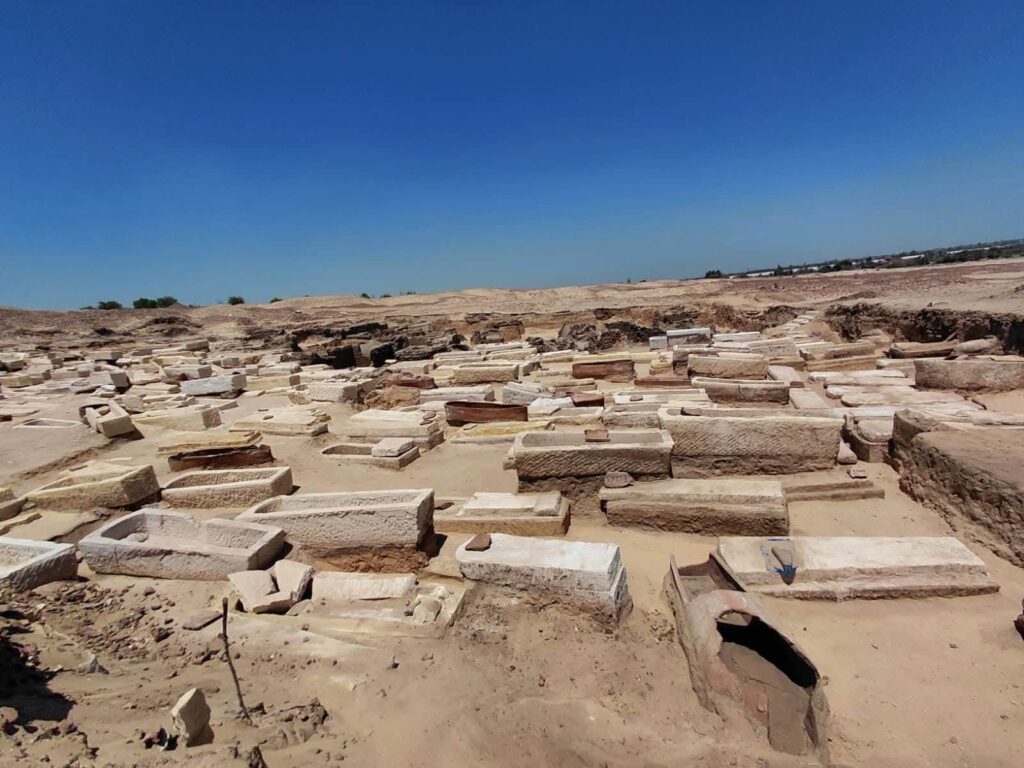
Archaeologists have uncovered hundreds of stone sarcophagi, gold jewelry, and goddess figurines at an ancient necropolis in northern Egypt. The discovery at Tell Kom Abu Billo offers new evidence of burial practices during the Ptolemaic period, more than 2,200 years ago.
Among the finds are figurines of Isis-Aphrodite, inscribed ushabtis, and gold tongue-shaped objects. Researchers believe the cemetery was primarily used by members of the middle class.
The discovery, announced by the Ministry of Tourism and Antiquities on November 18, was carried out by Egyptian archaeologists affiliated with the Supreme Council of Antiquities. The excavations are notable not only for the number of graves but also for the presence of different burial styles within the same area.
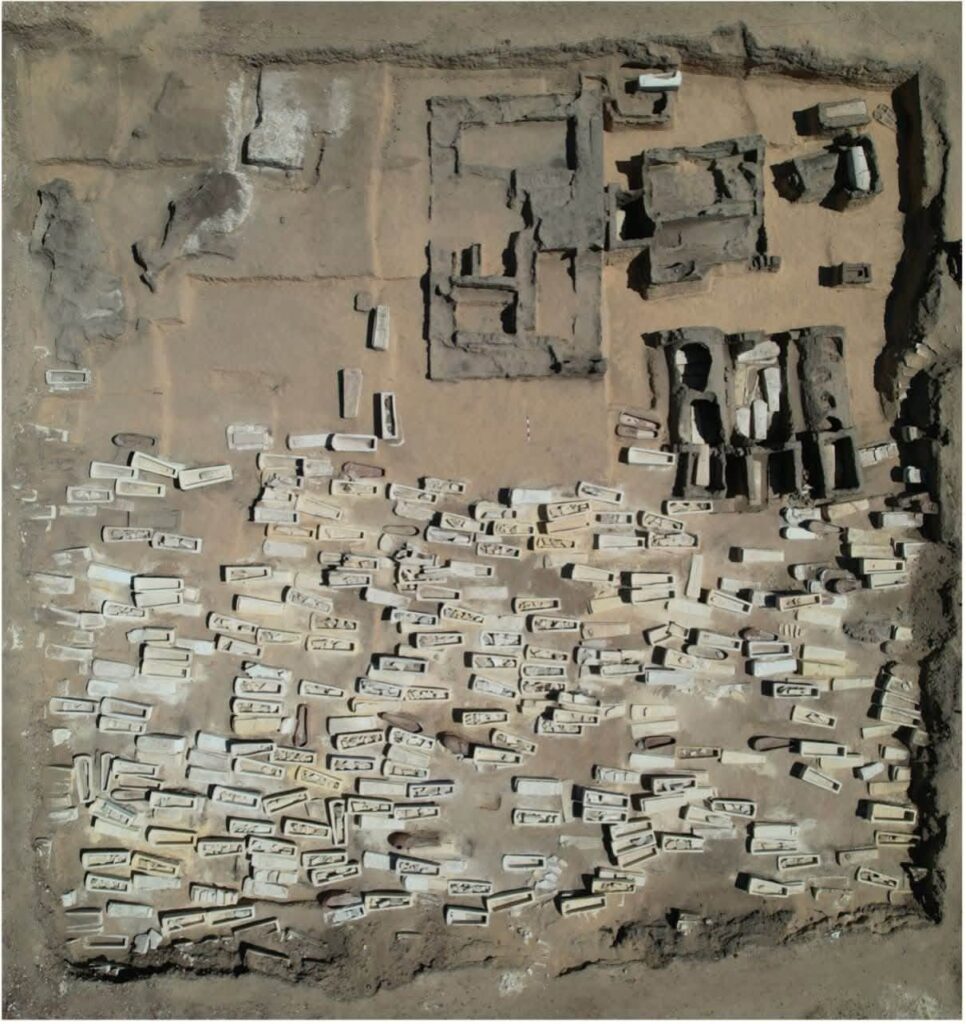
An Ancient Cemetery with Hundreds of Sarcophagi
Hundreds of stone sarcophagi were identified in the upper layer of the excavation site. Some of these are missing lids, while others are heavily damaged due to past looting and quarrying activities. Archaeologists also uncovered terracotta sarcophagi, remnants of wooden coffins, and vaulted tombs made of mudbrick.
Some of the terracotta sarcophagi are anthropoid (human-shaped). Others feature human depictions with exaggerated facial features. This diversity suggests that different funerary traditions may have been practiced within the same cemetery.
Although the human remains inside the sarcophagi are poorly preserved, archaeologists identified mummification materials and traces of resin. Additionally, fragments of cartonnage and plaster decorated in yellow, red, blue, and gold were found. Cartonnage was a material used in ancient Egypt to decorate mummies, prepared by combining materials such as linen or papyrus with plaster-like layers.
According to Hisham el-Leithy, Secretary-General of the Supreme Council of Antiquities, the presence of so many sarcophagi and burials together in an open cemetery courtyard is an unprecedented situation for the site. Some of the tomb structures remain beneath layers of sand and debris.
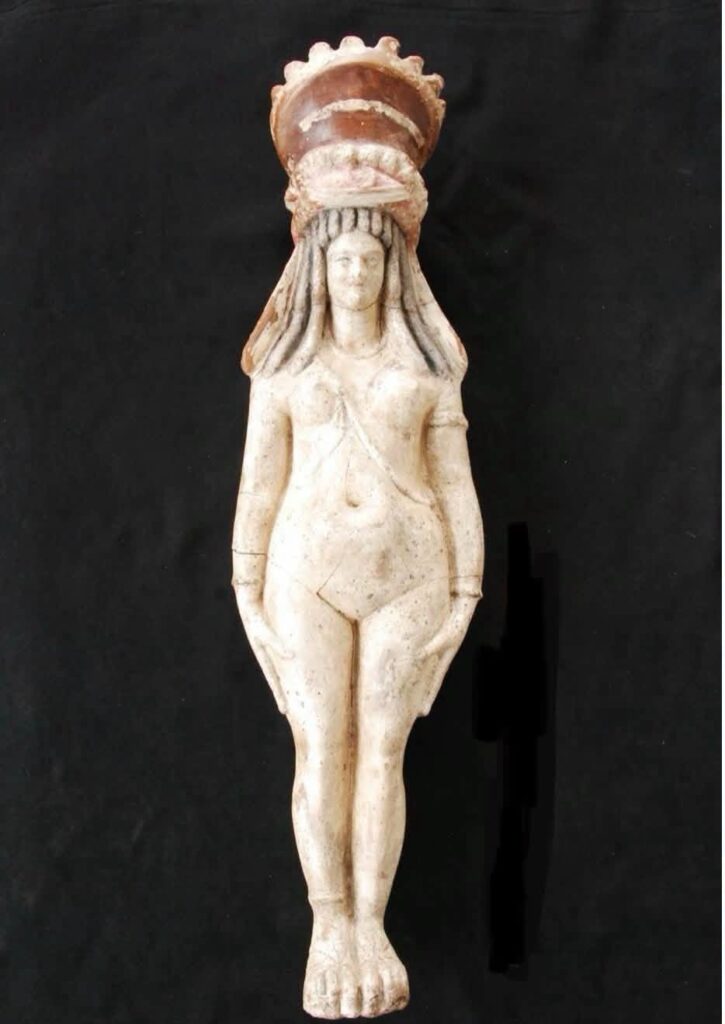
Isis-Aphrodite: A Goddess Uniting Two Cultures
Among the most remarkable artifacts of the discovery are three terracotta figurines of Isis-Aphrodite. These figures are religious depictions that combine the attributes of Isis, the traditional Egyptian goddess, with Aphrodite, the Greek goddess of love and beauty.
Archaeologists also found a terracotta lid fragment depicting Isis-Aphrodite sitting on a lotus flower and nursing her child, Harpocrates. Harpocrates was the Greek counterpart to the child form of the Egyptian god Horus. Consequently, these mother-and-child depictions are significant for understanding how different religious traditions intertwined in Ptolemaic Egypt.
During the Hellenistic period, which began after Alexander the Great conquered Egypt in 332 BCE, the interaction between Greek and Egyptian cultures strengthened. Depictions of Isis associated with Aphrodite reflected the religious and artistic traditions that evolved in this environment.
However, it has not yet been determined which rituals the figurines in the cemetery were used for. While the artifacts provide important clues about the religious world of the period, further research is required to understand the specific purpose for which each was left in the tombs.
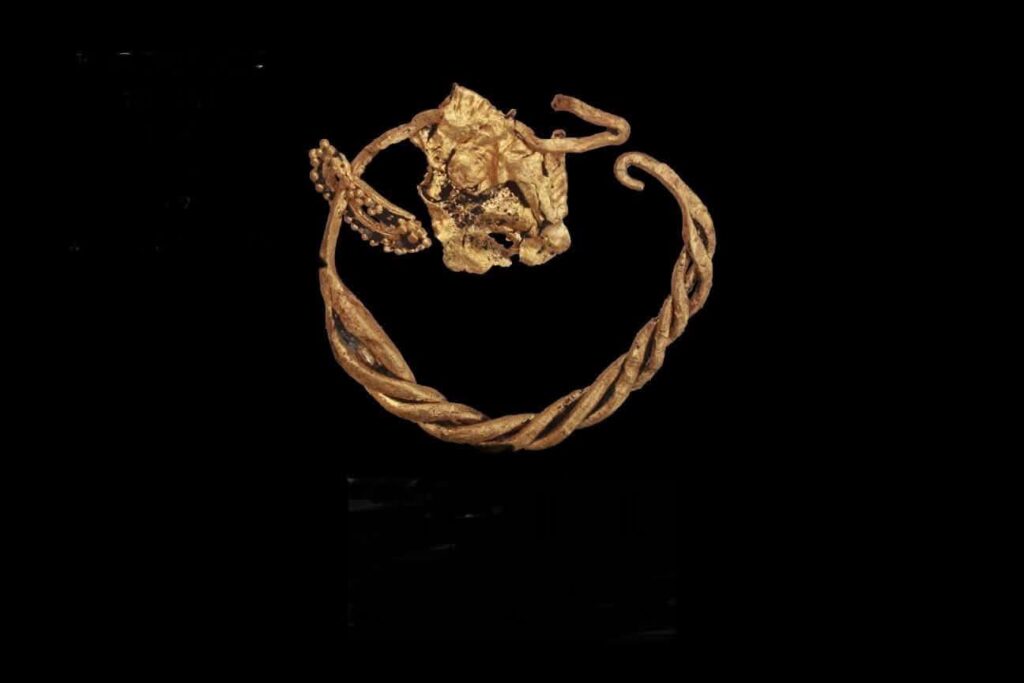
Gold Jewelry and Objects for the Afterlife
An earring, a gold necklace pendant, gold sheets, and gold pieces shaped like tongues were also found in the tombs. In ancient Egypt, placing gold tongues in the mouths of some mummies was linked to beliefs that the deceased could speak in the afterlife.
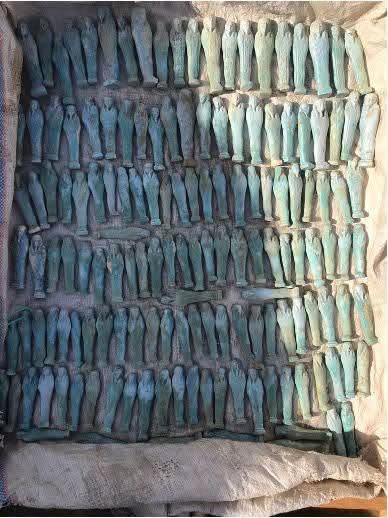
Another important group of finds consists of ushabti figurines made of faience, a glazed material. Some bearing hieroglyphic inscriptions, these small figures were viewed in Egyptian funerary beliefs as servants who would perform the tasks expected of the deceased in the afterlife.
The cemetery also yielded scarab amulets made of schist and lapis lazuli, protective Wedjat eyes, offering tables, small sphinxes, and fragments of statues representing the falcon god Horus. The burial of two falcons is another striking feature of the site.
The Ancient City Near the Mummification Salt
Tell Kom Abu Billo is located in the region of the ancient city of Terenouthis, in the western Nile Delta. The city was important due to its proximity to Wadi El Natrun, where natron salt—used in ancient Egyptian mummification processes—was extracted.
Previous research in the area had shown the existence of a temple dedicated to Hathor, also known as the turquoise goddess. Ongoing work by the French Institute for Oriental Archaeology further documents the long settlement history and extensive cemetery area of Terenouthis.
The new graves provide additional data for researching how ancient traditions persisted during the Ptolemaic and early Roman periods. Initial assessments of the grave goods suggest that those buried here were not exclusively members of the elite.
Archaeologists are continuing to examine the dating of the graves, the burial patterns, and the relationships between the artifacts. These studies may provide a better understanding of how the people living in Terenouthis bid farewell to their dead and what they considered necessary for the afterlife.
