
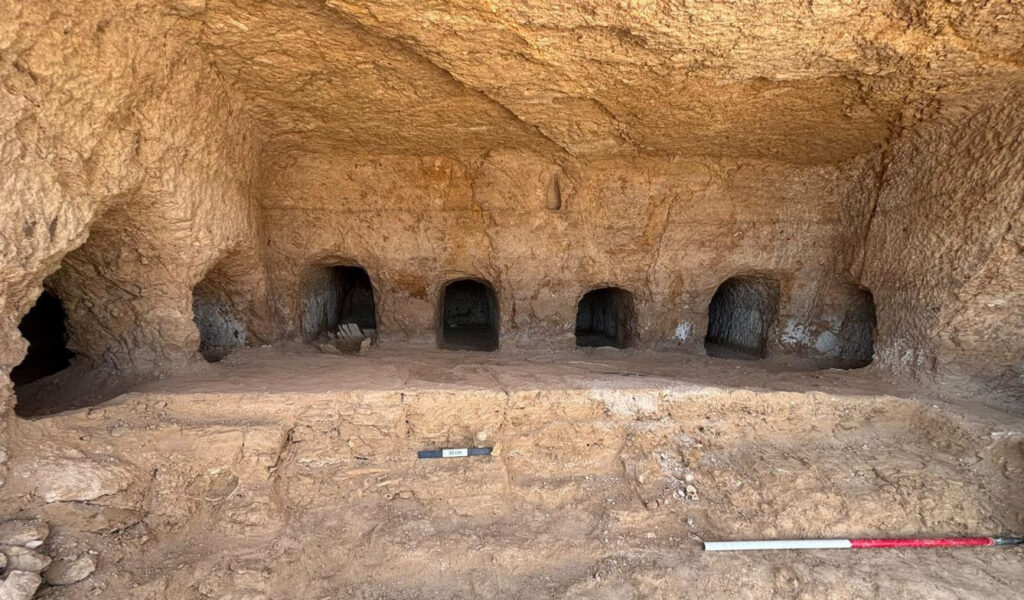
Archaeologists working near the ancient city of Jericho in Palestine have discovered three monumental tombs dating to the Herodian period, approximately 2,000 years ago. The burial chambers contain wooden coffins, decorated limestone burial containers, fragments of textiles, and other objects that may offer new insights into the wealthy families who lived in the region during the final decades of the first century BC and the first century AD.
The discovery was announced by the Palestinian Ministry of Antiquities and Tourism and the archaeological mission of Sapienza University of Rome, which has conducted research at ancient Jericho since 1997. According to the excavation team, the scale of the tombs, the number of people buried inside, and the surviving artifacts suggest that they may have belonged to members of Jerusalem’s aristocracy.
Monumental Tombs Cut into the Limestone
The three tombs were discovered at Khirbet Thaniyah, a few hundred meters northwest of Tell es-Sultan, the archaeological mound associated with ancient Jericho. They occupy a limestone cliff at the foot of the Mount of Temptation, overlooking a landscape that played an important role in the political and economic life of ancient Judea.
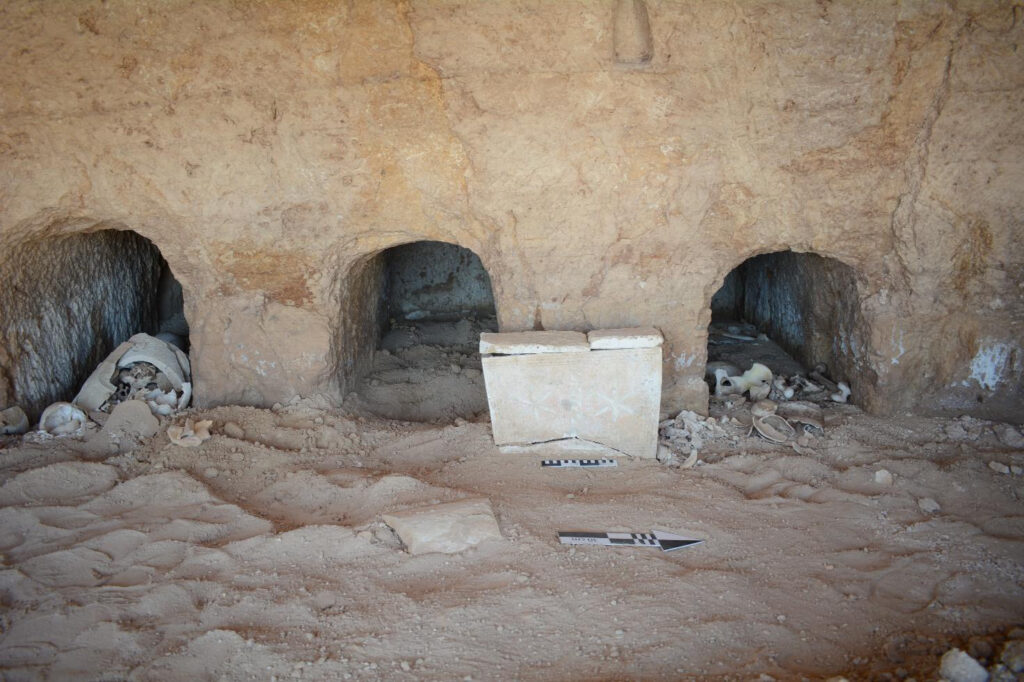
Each tomb was organized around a central chamber, with burial niches extending outward from its walls. Some originally featured monumental facades, although the excavation team has so far reported recovering only fragments of one such frontage.
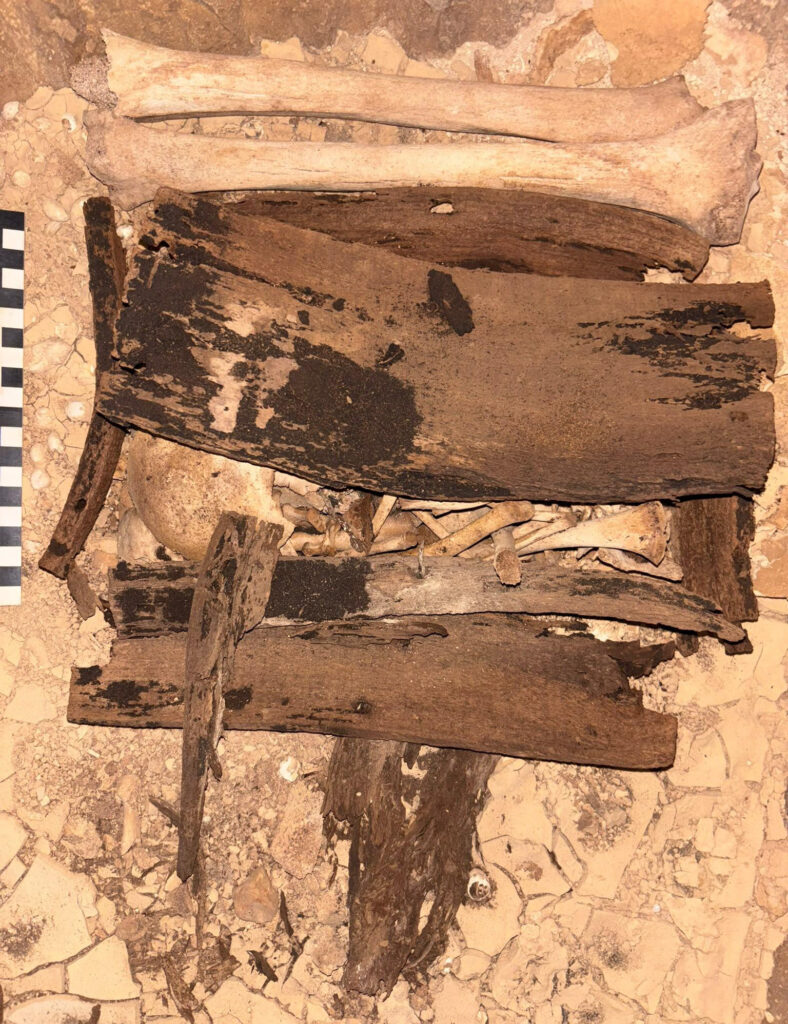
The burial arrangements also reflect changes in funerary customs. According to the archaeologists, the deceased were initially placed in wooden coffins, a practice that continued until approximately AD 6. Later burials used finely decorated limestone containers.
Among the discoveries are surviving wooden coffins, furnishings, and fragments of fabric. Such organic materials are particularly important because they can preserve evidence of burial practices that stone architecture alone cannot provide.
Excavations remain underway, and many of the finds have yet to receive detailed examination. The human remains and associated objects will undergo further study, potentially providing information about the individuals buried in the chambers and the communities to which they belonged.
Jericho’s Wealthy Families and Royal Connections
During the first century BC and the first century AD, Jericho was one of Judea’s most important cities, second only to Jerusalem. Its warm winter climate attracted the region’s rulers, including the Hasmonean dynasty and Herod the Great, who established winter palaces there.
The surrounding estates produced dates and balsam, valuable commodities associated with the city’s prosperity. Wealthy families from Jerusalem maintained properties in the area, and some chose Jericho as their burial place.
Herod died in Jericho in 4 BC. A decade later, in AD 6, Judea came under direct Roman provincial administration. Roman forces under Vespasian occupied Jericho in AD 68, two years before the destruction of Jerusalem.
The newly discovered tombs belong to this historically significant period, although the identities of those buried within them remain unknown.
“These tombs bring us face to face with the families described by Flavius Josephus: their burials, the wood of their coffins, and their textiles,” said Lorenzo Nigro, director of Sapienza’s archaeological mission. He emphasized that studying the artifacts and human remains could reveal much more about these families.
For now, the suggestion that the tombs belonged to Jerusalem’s aristocracy remains an archaeological interpretation rather than an established identification. Further excavation and scientific analysis will be needed to determine who occupied the burial chambers and how they were used.
The discovery adds another chapter to the archaeological investigation of Jericho, where Sapienza University and Palestinian heritage authorities have worked together for nearly three decades. Nearby Tell es-Sultan was inscribed on UNESCO’s World Heritage List in 2023.
