
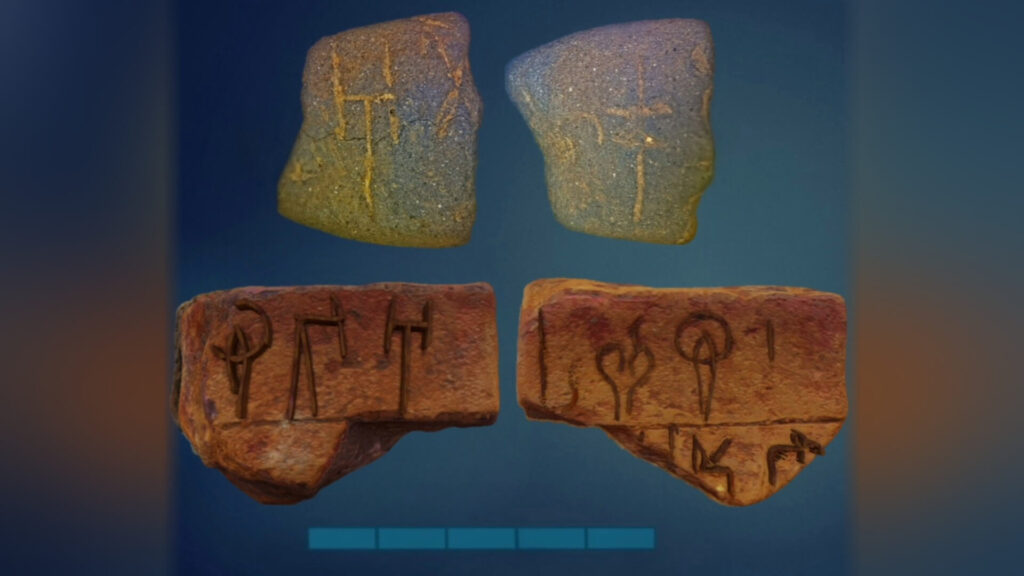
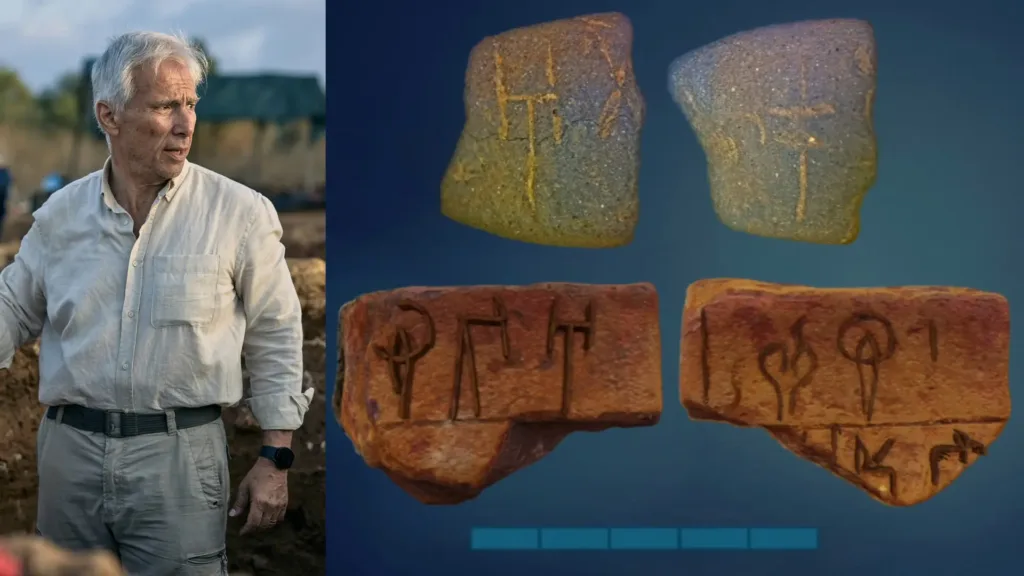
A small clay tablet over 3,300 years old, discovered in the ancient city of Iklaina in southern Greece, has reignited a significant debate regarding the political history of the Mycenaean world. The discovery of this fragment, inscribed with Linear B script in a city that may have had its own administrative system before the rise of the powerful Kingdom of Pylos, has drawn the attention of researchers. This new find supports the view that Mycenaean Greece was not governed by a single palace from the beginning, but rather that independent political centers merged over time to form larger kingdoms.
A team led by archaeologist Michael Cosmopoulos from the University of Missouri–St. Louis discovered the tablet during the 2025 excavations. Cosmopoulos presented the results of the research at a conference held at the National Archaeological Museum in Athens on November 12, 2026. This find marks the second written document discovered in the same settlement, following the first Linear B tablet found in Iklaina in 2010.
The Great Political Story Behind a Small Tablet
The tablet fragment, approximately 1.3 centimeters in height, bears inscriptions on both sides. However, because only a small portion of the clay has been preserved, researchers were only able to identify a single syllable sign on each side and probable numerical signs surrounding them.
This limitation prevents us from knowing exactly what the tablet recorded. Nevertheless, the importance of the find stems not from its content, but from where and in what period it was used.
Linear B is the oldest known writing system of the Greek language. Scribes serving in Mycenaean palaces used this script to record people, lands, goods, production, and various economic obligations. In other words, these tablets were administrative documents organizing the functioning of a state rather than literary works.
The discovery of a second tablet in Iklaina suggests that record-keeping here was not a one-time activity. This further strengthens the theory that the city may have possessed an administrative structure independent of the Palace of Pylos.
According to a statement published by the University of Missouri–St. Louis, the new find adds to evidence that the Kingdom of Pylos formed through the merger of smaller political entities rather than being governed by a single powerful center from the start.
A Powerful City in the Shadow of Pylos
Iklaina is located in the Messenia region of southwestern Greece, approximately 14 kilometers northeast of the famous Palace of Nestor. During the Late Bronze Age, this region hosted one of the most important political centers of the Mycenaean civilization.
For many years, researchers believed that the Kingdom of Pylos developed under a unified administration centered around the Palace of Nestor from its early periods. However, excavations at Iklaina have gradually made this traditional picture more complex.
Archaeologists have identified monumental structures built with massive stone blocks, frescoes, advanced water channels, workshops, and extensive residential areas in the city. These architectural features indicate that Iklaina was not merely a small surrounding agricultural settlement, but an advanced center capable of managing significant economic resources and manpower.
In particular, the monumental structure complex known as the Cyclopean Terrace reveals the architectural level the settlement reached. The presence of frescoes depicting ships, rowers, and dolphins among the city’s finds also points to strong connections with the artistic traditions of the Mycenaean world.
The new tablet serves as the second piece of evidence showing that written records were used in a city featuring such massive structures and advanced infrastructure. Consequently, the political importance of Iklaina is based not only on its architectural scale but also on findings related to administrative activities.
A Settlement Changed After Destruction
Another striking development in the history of Iklaina is the major transformation in the city’s architecture.
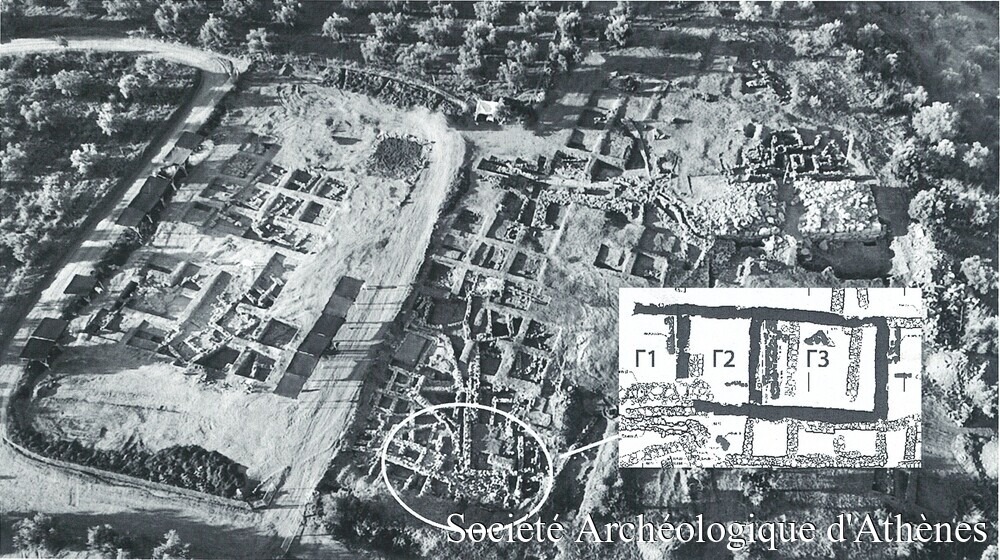
According to the archaeological report of the 2025 excavation season, researchers identified two distinct settlement phases south of Megaron Gamma. In the earlier period, structures were relatively far apart, whereas in the later period, the buildings formed a denser settlement pattern.
A destruction layer approximately 40 centimeters thick extends between these two phases. The burnt earth, ceramics, building materials, and animal bones within this layer indicate that the city suffered significant damage.
Researchers believe this destruction may have occurred around the same time as the damage seen in Iklaina’s other monumental structures.
According to the historical model previously developed by Cosmopoulos, Iklaina may have initially developed as an independent political center but came under the rule of the expanding Kingdom of Pylos toward the middle of the 13th century BCE.
This scenario points to a political transformation in the Mycenaean world where small kingdoms and local power centers were consolidated by larger states. However, archaeological evidence does not yet prove that the destruction at Iklaina was the direct result of a military intervention by Pylos.
The Origins of Written Governance in the Mycenaean World
Another feature that makes the Iklaina tablets significant is their dating. Researchers state that the early written records here are approximately 150 years older than the great Linear B archive that has survived at the Palace of Nestor.
This difference suggests that written administrative practices did not emerge solely in powerful Mycenaean palaces. Smaller political centers may have also developed or utilized their own recording systems.
The history of Iklaina also holds an unexpected connection to Greek literature. Cosmopoulos believes the city’s name may be related to one of the settlements mentioned in Homer’s Iliad.
For centuries, Pylos dominated the political landscape of southwestern Mycenaean Greece, but discoveries at Iklaina suggest that its rise to power may have followed a more complicated path. The city’s monumental buildings, evidence of destruction, and early written records point to a community that once exercised considerable authority of its own.
The newly discovered tablet adds another piece to that history. Although much of its writing has disappeared, its presence alongside an earlier Linear B tablet strengthens the possibility that Iklaina maintained an administrative system before becoming part of the larger Pylos kingdom.
