
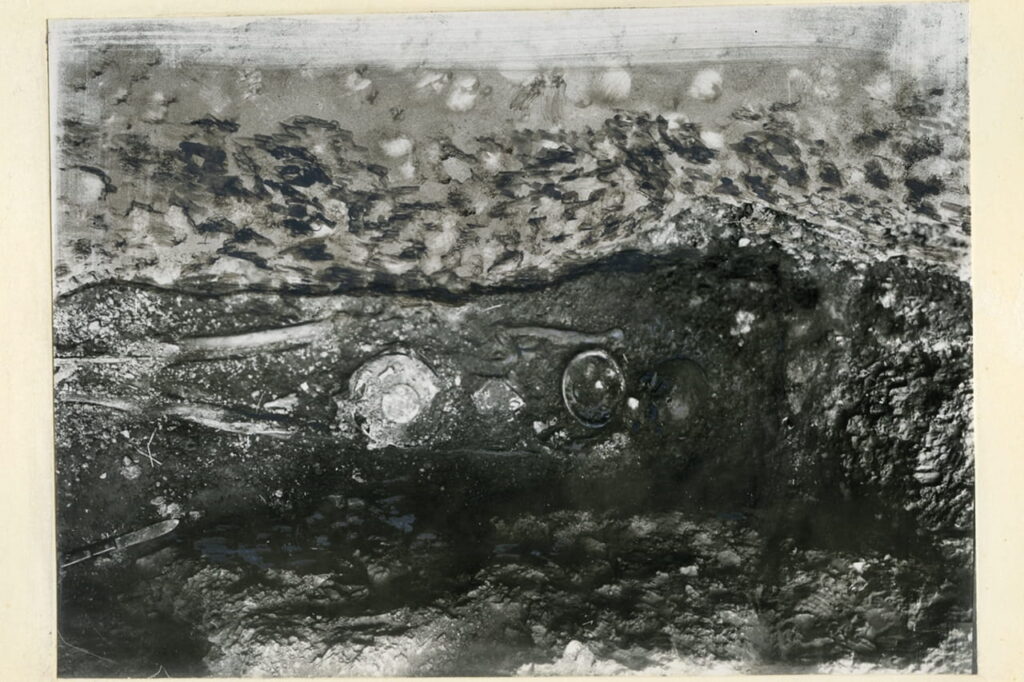
Around 3,400 years ago, mourners at Dendra in southern Greece lowered carefully prepared bodies into burial pits beneath a monumental tholos tomb. Gold, silver, bronze, glass and semi-precious stones accompanied the dead, but a new study suggests these objects did more than display wealth or status. Together with the human body, they created carefully composed images in which colour, material and placement shaped how the deceased would be seen.
Writing in the Cambridge Archaeological Journal, archaeologist Rachel Emma Phillips proposes what she calls an “artistic approach” to Early Mycenaean burial. Rather than treating grave goods as separate objects, Phillips examines the entire burial as a visual composition: the body, the placement of objects, their colours and reflective surfaces, and the viewpoint of the people who stood above the grave. Her case study focuses on three intact burials from the Dendra tholos, dating to around 1400 BCE.
The approach offers a different way of reading some of the richest graves of Bronze Age Greece. Instead of asking only what gold, weapons and imported materials reveal about status, it asks what people actually created when they arranged those objects around the dead.
From a body to a carefully composed image
The Dendra tholos, in the southern Peloponnese, contained three undisturbed burials beneath its floor dating to around 1400 BCE. Archaeologist Axel Persson uncovered them in 1926 after finding that the main chamber had already been robbed.
One burial contained a body wearing gold rosettes around the neck and gold spiral pendants around the torso. Another pit held two extended skeletons accompanied by hundreds of objects made from precious metals, glass and semi-precious stones. Before reaching the tomb, the dead appear to have been washed, dressed and adorned, after which mourners carefully arranged the bodies and accompanying objects inside the pits and closed them beneath stone slabs.
That sequence matters because the objects often had direct physical relationships with the body. They covered it, followed its contours or occupied specific positions around it. Once the tomb closed, flesh would gradually decay while gold, bronze, glass and stone retained much of their form.
The burial therefore created something that could outlast the body itself. Phillips describes this act of deposition as a creative process in which the corpse and durable materials together formed what she calls a “hybrid artwork.”
Colour and shine mattered
The choice of materials at Dendra reveals a repeated interest in contrast, colour and surface.
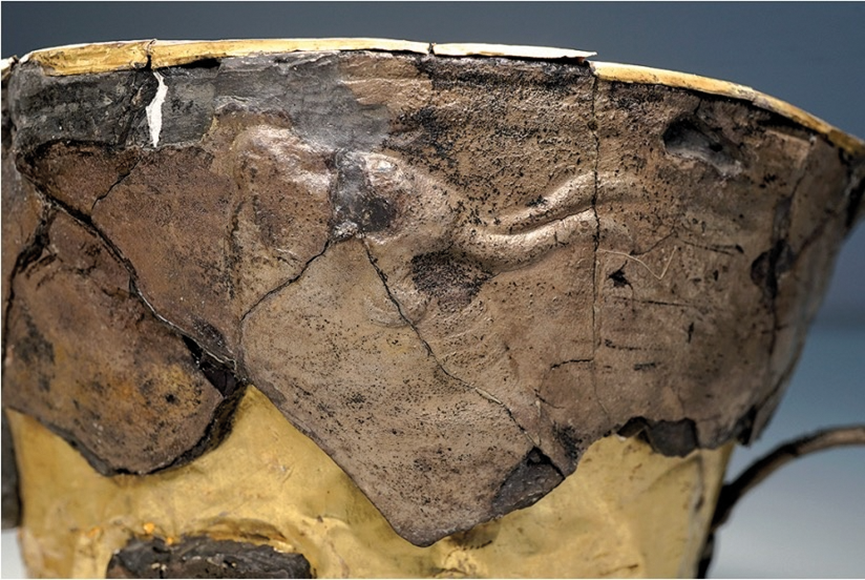
A wooden box received bronze fittings that covered parts of its less visually striking material. Swords combined bronze blades with ivory or agate pommels, gold decoration and glass inlays. Two cups paired silver exteriors with gold interiors, while several rings layered iron, copper, lead and silver even though only the silver remained visible on the finished object.
These combinations suggest that value alone did not determine what entered the grave. Appearance mattered as well, particularly the transformation of one material through another. Bronze could cover wood, gold could embellish bronze, and colourful manufactured materials could replace natural ones.
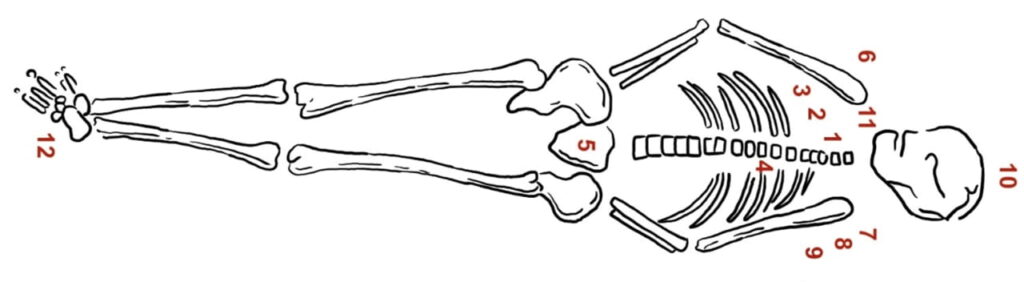
One of the clearest examples comes from glass ornaments found around the head of the presumed male burial. They appear to imitate a boar’s-tusk helmet, an object strongly associated with Early Mycenaean warrior identity, but there were not enough glass pieces to reproduce an entire helmet.
Instead, the ornaments may have covered only the section visible from above, perhaps attached to leather or textile. In that case, the burial did not require a complete functional helmet. What mattered was producing the recognizable appearance of one for the person looking down into the grave.
The substitution also changed the warrior image itself. White animal tusks gave way to colourful manufactured ornaments, suggesting that identity could emerge not only through weapons and familiar symbols but through the particular visual qualities of the materials chosen to represent them.
The dead body as a canvas
The narrow burial pits at Dendra determined how mourners could see the completed arrangement. Once people had placed the bodies and grave goods inside, anyone standing around the pit would mainly view them from above.
From that perspective, jewellery, weapons and coloured materials no longer appeared simply as individual possessions. They followed the form of the body and became part of its visual presentation. The corpse provided what the study describes as a kind of canvas, while the tomb acted as a frame that transformed the complete arrangement into an image.
The presumed male burial shows this relationship particularly clearly. Four swords lay with their hilts directly on the shoulders, while their blades extended alongside the arms. The placement created a visual correspondence between shoulder and hilt, arm and bronze blade.
As the body decomposed, those durable objects retained their shape. The swords could therefore continue to echo parts of a human form that no longer survived in the same state, effectively giving the dead a new material presence.
The study does not claim that Mycenaeans understood these graves as “art” in the modern sense. Instead, it uses art as an analytical tool for examining composition, aesthetics, material choices, and viewing position. That approach shifts attention away from grave goods simply as evidence of wealth and toward the deliberate image created through their relationship with the body.
An image created for the mourners
The design of the pits also raises an important question: who was meant to see these compositions?
Their restricted size suggests that the full view belonged mainly to the people who actually entered the tomb and arranged the burial. They may have included close relatives or other members of a small elite group, although the evidence cannot identify them with certainty. People who witnessed a funeral procession outside the tomb would have encountered a different image of the dead.
Once mourners placed the stone slabs over the pits, the carefully arranged bodies disappeared from sight. Yet this did not necessarily make their visual presentation less important. The study suggests that the image could continue through the memories of those who had seen and created it, even after they could no longer physically return to it.
The three Dendra burials do not prove that every Early Mycenaean grave functioned this way. They show instead what becomes visible when archaeologists stop treating a burial simply as a collection of objects and consider the relationship between the body, materials and the people who arranged them.
Seen from that perspective, the gold, glass and weapons at Dendra tell a story that extends beyond elite wealth. Mourners used durable, colourful and recognizable materials to reshape the appearance of the dead, creating an image that survived in material form even as the human body itself changed beneath the earth.
There is also something deeply human in this interpretation. Perhaps the care invested in colour, arrangement and appearance at Dendra was not entirely unlike a familiar impulse today: when saying goodbye to someone we love, we often want to remember them in the best and most recognizable way possible.
Phillips, R. E. (2026). Towards an Artistic Approach to Burial: Curation and Aesthetics in the Early Mycenaean Mortuary Sphere. Cambridge Archaeological Journal, 1–16. doi:10.1017/S0959774326100766
