
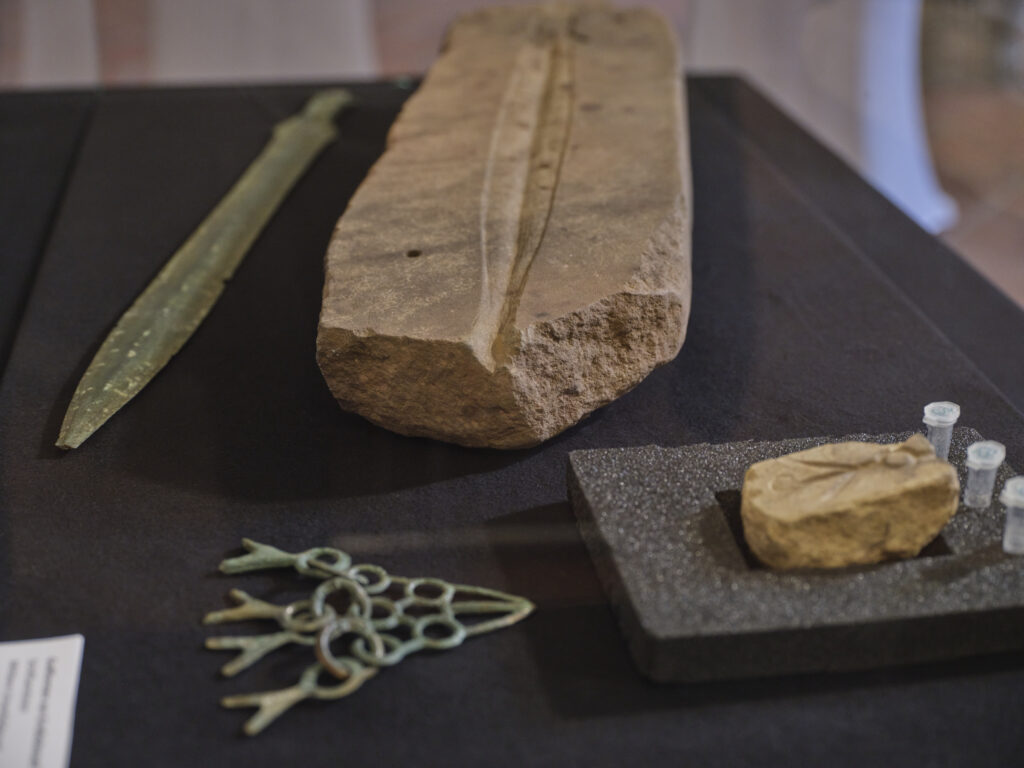
Archaeologists in Bavaria, Germany, have discovered a sandstone casting mold used to produce bronze swords about 3,000 years ago. This mold, the first of its kind found in Bavaria, provides direct evidence regarding the weapon production techniques of Bronze Age artisans. A second mold found at the same settlement indicates that these masters produced not only swords but also decorative ornaments.
The Bavarian State Office for Monument Protection (BLfD) and the Bavarian State Archaeological Collections (ASM) presented the finds to the public at a meeting held in Munich on November 11, 2026. The institutions also announced a significant hoard consisting of dozens of bronze jewelry pieces and various metal objects discovered in another region of the state.
Sword Casting Mold in a Bronze Age Settlement
Archaeologists uncovered the stone mold during excavations near Großeibstadt in Lower Franconia in the summer of 2025. The research team was working at a plain settlement dating back to the Urnfield culture period, spanning 1300–800 BC. The find constitutes crucial evidence of metal production in the region.
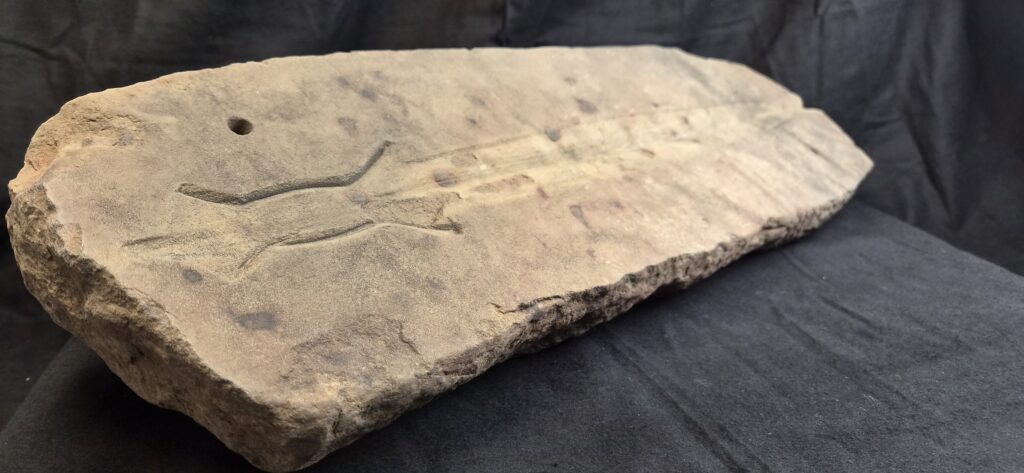
The artifact, crafted from sandstone, consists of one completely preserved half of a mold used to cast a bronze sword with a tang. The metal bodies of such swords featured a narrow tang onto which a hilt could later be attached. The shape of the mold provides insight into the methods artisans employed to produce these weapons.
Researchers also identified a second stone mold used in the production of a decorative necklace and other traces related to metalwork at the same settlement. According to the statement from the Bavarian State Office for Monument Protection, the findings indicate that a bronze smith worked here approximately 3,000 years ago.
Casting molds hold a different significance than finished metal objects when it comes to identifying production centers. While a sword may travel far from its place of origin, the presence of production tools within a settlement directly documents the craft activities on-site. The two molds in Großeibstadt provide concrete evidence of the scope of local metalworking.
Major Bronze Hoard in Southern Bavaria
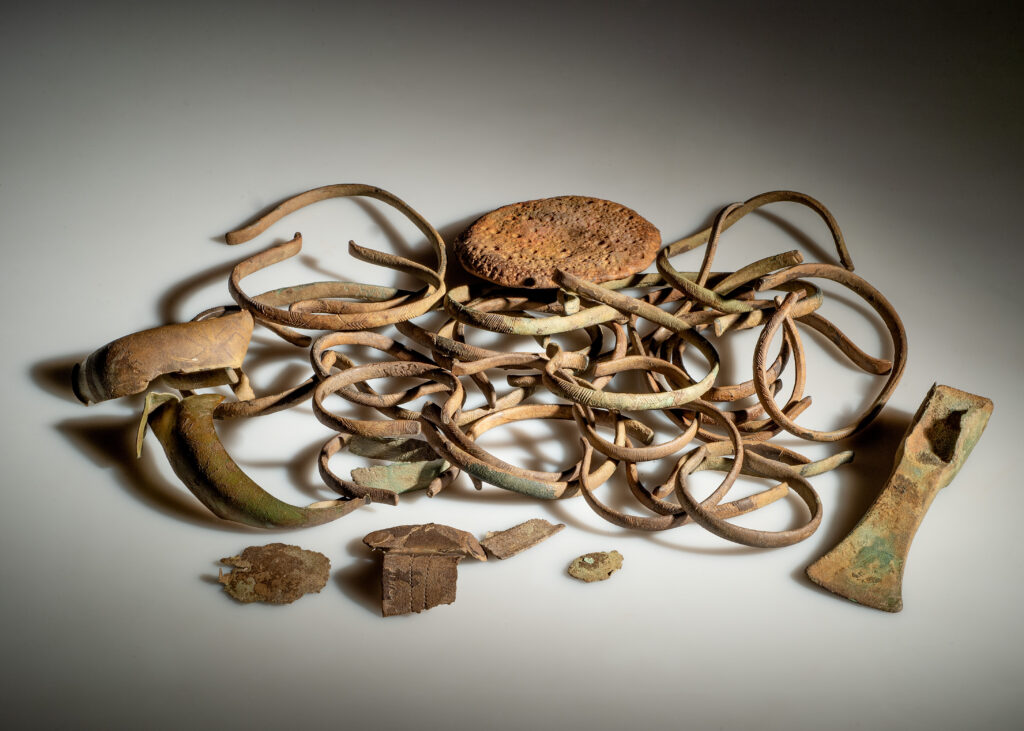
The second discovery presented by the institutions emerged near Grabenstätt in the Chiemgau region of Southern Bavaria. In October 2024, an individual searching with a metal detector encountered numerous bronze objects in a field. By documenting the locations of the finds and reporting them to the BLfD, the individual enabled archaeologists to examine the hoard systematically.
Researchers dated the objects to the Late Urnfield period, approximately 880–800 BC. They believe that previous soil cultivation shifted the hoard unnoticed, scattering the pieces over a wide area. Therefore, continued research following the initial discovery was of great importance.
The discoverer continued fieldwork in coordination with the BLfD throughout 2025 and 2026. As a result of these efforts, the team documented 52 heavy bronze arm and leg rings, two bronze axes, fragments of a bracelet made from thin sheet metal, and the remains of at least one bronze vessel. Among the finds was a lump of bronze casting metal roughly the size of a plate.
The BLfD considers this assemblage to be one of the most comprehensive hoards known in Southern Bavaria from the same period and with similar characteristics. However, it remains unclear why the objects were gathered and under what conditions they were originally left in the ground.
New Practice in the Preservation of Archaeological Artifacts
Authorities in Bavaria presented the two finds together to demonstrate the results of the state’s new regulations for the protection of archaeological heritage. A legislative change that entered into force in July 2023 transferred the ownership of relevant archaeological finds to the state. This regulation aims to keep the findings open for scientific research and ensure they are exhibited in museums under appropriate conditions.
The new system also allows for payments to be made to landowners and finders for artifacts discovered legally whose value exceeds 1,000 euros. Authorities valued the two molds in Großeibstadt at several thousand euros and decided to compensate the landowner. The person who found the Grabenstätt hoard and the landowners will also receive payment following the evaluation.
The casting molds from Großeibstadt document the skills of Bronze Age masters in the production of weapons and ornaments, while the Grabenstätt hoard demonstrates how essential bronze was as a material for creating jewelry, tools, and various other objects during the same expansive era.
