
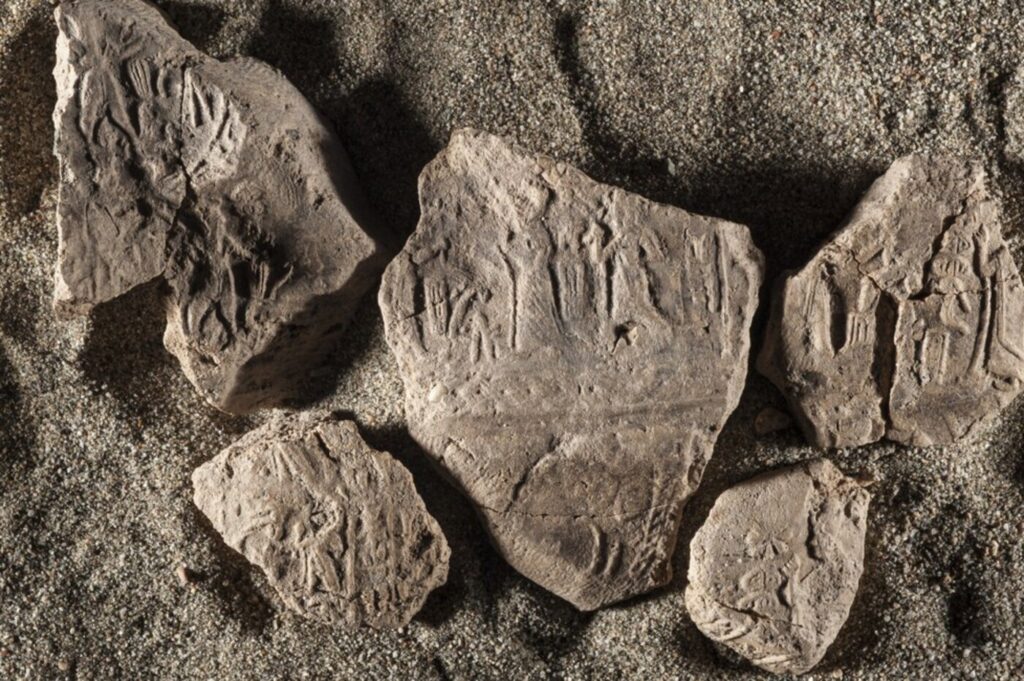
More than 2,700 years ago, a ruler of the ancient kingdom of Karkemish commissioned a monumental inscription that stood apart from the writing traditions of other Late Hittite kings. Instead of the Anatolian hieroglyphs commonly associated with these rulers, the monument carried cuneiform signs, a script closely connected with the great civilizations of Mesopotamia. A new scholarly reassessment now identifies the probable king behind the inscription and raises questions about the influence of Assyria on one of the ancient Near East’s most important cities.
Italian Assyriologist Gianni Marchesi, a researcher at the University of Bologna, argues that the inscription most likely belonged to Astiru II, one of the last Neo-Hittite rulers of Karkemish. His analysis also overturns an identification that had shaped scholarly interpretations for decades. Although most of the original monument has disappeared, the surviving evidence preserves references to the king, his city, and its powerful patron goddess, Kubaba.
The findings appear in Karkemish of the Hittites on the Euphrates: New Discoveries and New Acquisitions, a 2026 publication edited by archaeologist Nicolò Marchetti and produced by the University of Bologna and Ante Quem.
A Royal Inscription Unlike Other Late Hittite Monuments
Karkemish occupied a strategically important position on the Euphrates, near the modern border between Türkiye and Syria. The city served as a major center of Hittite power during the Late Bronze Age and continued as the capital of an influential kingdom after the collapse of the Hittite Empire around 1200 BCE.
Its rulers maintained political traditions that connected them with the earlier Hittite world. Among the most visible expressions of royal authority were monumental inscriptions written in Anatolian hieroglyphs, a script used extensively in the Neo-Hittite kingdoms of southeastern Anatolia and northern Syria.
The newly reassessed inscription presents a striking exception to that tradition. Marchesi identifies it as the only currently known monumental cuneiform inscription commissioned by a Neo-Hittite ruler. Its existence suggests that Karkemish’s royal court adopted a form of written communication associated with a different cultural and political environment.
This distinction becomes particularly important when considering the date of the monument. Marchesi places it in the middle of the eighth century BCE, when Karkemish experienced increasing pressure from the expanding Neo-Assyrian Empire.
Assyria had established itself as the dominant military and political power across much of the region. Karkemish appears to have operated within the empire’s sphere of influence, probably as a tributary kingdom. Against this background, a royal monument written in cuneiform raises the possibility that Assyrian cultural practices had begun to influence how local rulers presented their authority.
Marchesi interprets the unusual script as a likely reflection of that influence. Nevertheless, the surviving inscription does not explicitly explain why the ruler chose cuneiform, and the decision cannot be attributed to a specific political event.
An Inscription Misidentified for More Than a Century
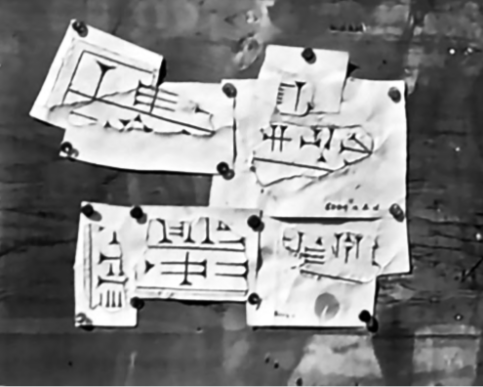
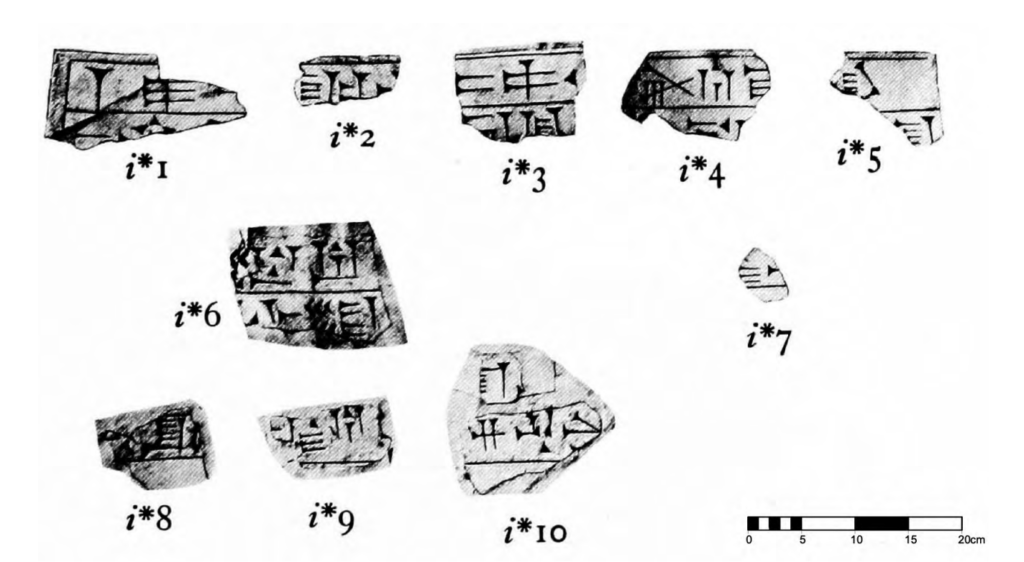
The story of the monument begins with British Museum excavations at Karkemish in 1911 and 1912. Archaeologists working near the city’s Water Gate recovered ten fragments of basalt bearing cuneiform signs. The fragments subsequently disappeared, leaving scholars dependent on photographs of paper impressions taken before their loss.
Those impressions presented serious difficulties. According to the original excavation publication, people unfamiliar with cuneiform writing had prepared them, making several signs difficult to interpret reliably.
Early researchers attributed the inscription to a ruler whose name appeared in the scholarly literature as Asatuwatemais and, more recently, Astuwalamanza. They also believed the fragments originally formed part of a monument associated with a lion sculpture bearing a Luwian hieroglyphic inscription.
Marchesi’s reassessment challenges both assumptions. He concludes that the cuneiform inscription and the hieroglyphic text belonged to different monuments. The supposed bilingual inscription, therefore, never existed as previously reconstructed.
The revised reading also points to a different king. Marchesi proposes restoring the partially preserved royal name as Astiru II, the penultimate Neo-Hittite king of Karkemish, who ruled before 738 BCE.
This identification changes the historical setting of the monument. Rather than belonging to the ruler traditionally associated with it, the inscription most likely dates to the final decades of Karkemish’s independence, when Assyrian power increasingly shaped regional politics.
The reassessment does not provide a complete translation of the inscription. Too little of the original text survives to reconstruct a continuous royal statement, and several readings remain dependent on incomplete impressions.
A Surviving Fragment Names the Goddess Kubaba
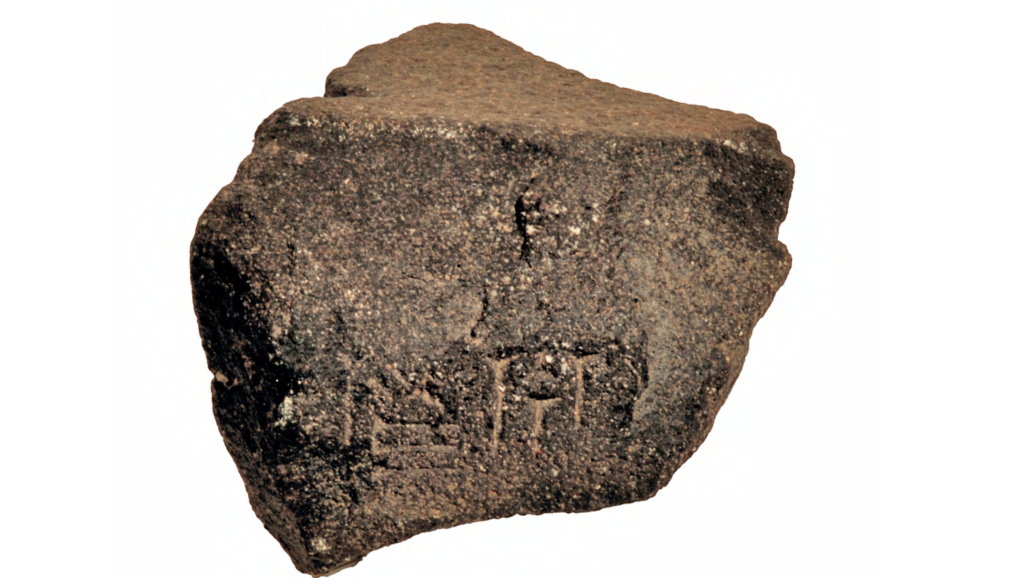
For decades, scholars knew the inscription primarily through its archival documentation. That changed in 2012, when the Turco-Italian Archaeological Expedition to Karkemish identified one of the original basalt fragments in the storerooms of Ankara’s Museum of Anatolian Civilizations.
The fragment, measuring approximately 15.5 by 12 centimeters, remains the only surviving piece of the ten documented sections. Its importance lies not in its size but in the two cuneiform signs preserved on its surface.
Marchesi reads these signs as the beginning of a title meaning “Queen of Karkemish,” an established epithet of Kubaba, the city’s patron goddess.
Kubaba occupied a central position in the religious identity of Karkemish. Her presence in the royal inscription connects the monument with the city’s longstanding religious traditions, even though its script differed from the writing system ordinarily associated with Neo-Hittite kingship.
The inscription also preserves part of Astiru II’s royal title, “King of Karkemish,” on another fragment known only through the archival impressions.
Taken together, these references establish a connection between royal authority, the city itself, and its principal goddess. They do not reveal the monument’s complete message, but they show that its unusual writing system accompanied recognizably local political and religious language.
An especially revealing detail emerges from the writing of Kubaba’s title. Marchesi observes that the form of the sign representing “queen” follows a Hittite scribal tradition, while the spelling of Karkemish reflects Assyrian usage.
This combination is significant because it suggests that the inscription did not simply reproduce a foreign writing tradition without modification. Instead, its surviving signs preserve features associated with both Hittite and Assyrian scribal practices.
The evidence offers a small but unusually direct indication of how different writing traditions could intersect within the royal environment of eighth-century BCE Karkemish.
Assyrian Influence at the End of a Kingdom
The monument’s possible association with Astiru II places it within a period of major political transformation. The Neo-Hittite kingdoms had survived for centuries after the fall of the Hittite Empire, but by the eighth century BCE many faced growing Assyrian intervention.
Karkemish maintained its own ruling dynasty while operating in an increasingly Assyrian-dominated political landscape. The kingdom eventually lost its independence when Sargon II incorporated it into the Assyrian Empire in 717 BCE.
Marchesi’s interpretation suggests that elements of Assyrian influence may already have entered Karkemish’s royal system of monumental communication before that final conquest.
Yet the inscription also preserves evidence of continuity. Its reference to Kubaba and its use of a distinctively Hittite sign indicate that the monument retained important connections to the city’s established traditions.
The result is not evidence that Karkemish abandoned its own cultural identity or that Astiru II deliberately rejected Anatolian hieroglyphs. Rather, the unusual inscription provides evidence of overlapping scribal traditions during a period of changing political relationships.
Only one original fragment survives, and the monument’s full contents remain beyond recovery with the currently available evidence. Even so, Marchesi’s reassessment has changed how scholars can understand the inscription: a text once assigned to the wrong ruler and associated with a nonexistent bilingual monument now offers a possible connection between one of Karkemish’s last kings and the expanding influence of Assyria.
Cover Image Credit: University of Bologna
Marchesi, G. (2026). A unique Late Hittite monumental cuneiform inscription from Karkemish. In N. Marchetti (Ed.), Karkemish of the Hittites on the Euphrates: New discoveries and new acquisitions (pp. 44–45). Ante Quem. https://doi.org/10.12878/orientlab3
