
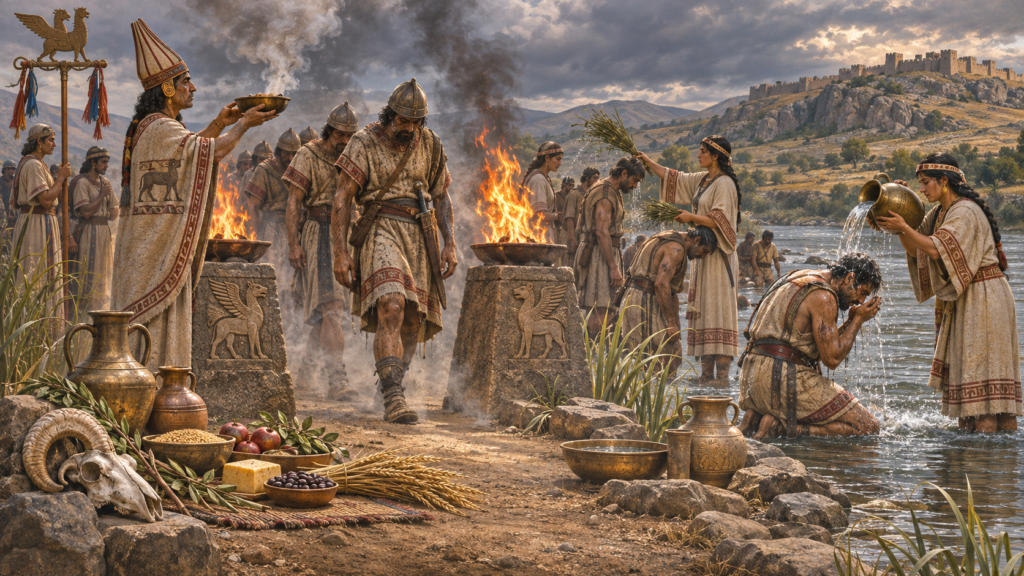
For an army, defeat on the battlefield meant more than just losing territory or soldiers. Beyond the dead, the wounded, and the fallen comrades left behind, the surviving soldiers had to face the heavy consequences of defeat. However, in the world of the Hittites, there was an invisible side to the devastation caused by war: a belief in an ominous misfortune and ritual impurity that descended upon the army.
To rid themselves of this misfortune, they resorted to ceremonies that appear quite macabre by today’s standards. A human and various animals were split in two; the defeated soldiers were then passed through these body parts and through a passage surrounded by fires, after which they were purified with water.
In a 2026 study published in the journal Colloquium Anatolicum, Assoc. Prof. Dr. Meltem Doğan-Alparslan from Istanbul University examines ten cuneiform tablet fragments originating from Boğazköy/Hattusa. By addressing various ritual traditions—ranging from the purification of defeated armies and offerings made to the gods of enemy lands to the ceremonies performed by the returning king on the seashore—the study contributes to our understanding of the relationship the Hittites established between war and faith.
Why Did a Defeated Army Need Purification?
In the second millennium BCE, the Hittites established a significant military and political power across much of Anatolia. However, they did not explain the outcome of a war solely through the size of armies or the skills of commanders. The support or wrath of the gods, and the relationship the gods maintained with humans, played a crucial role in how they interpreted the results of a conflict.
In this understanding, military defeat was viewed as an event that left an omen of misfortune or ritual impurity upon the army. To recover from such a state, simply reorganizing the troops was not enough; the religious order had to be restored. Purification rituals aimed to dispel the negative effects believed to accompany defeat.
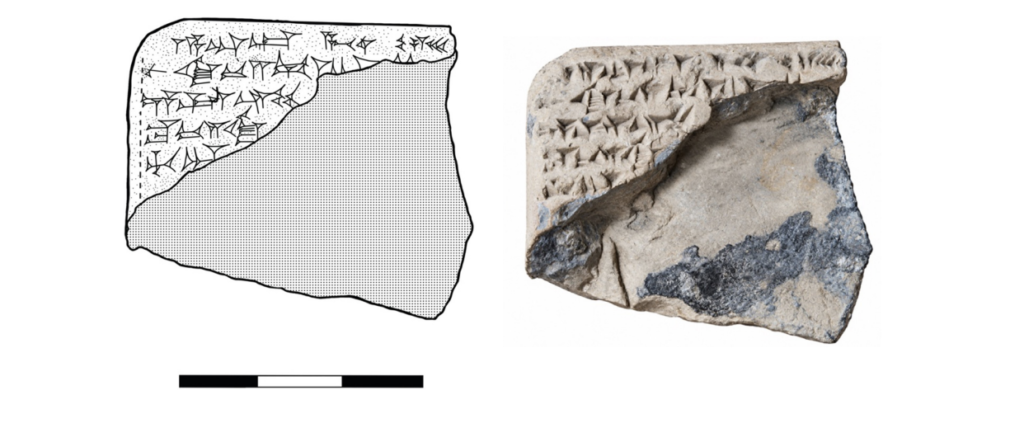
Tablet fragment Bo 7425, examined by Doğan-Alparslan, is associated with the CTH 426 text group, which contains rituals for armies defeated in war. Although this small fragment, bearing Middle Hittite writing characteristics, does not preserve all the details of the ceremony, the previously known tablet KUB 17.28 from the same ritual tradition explains how defeated soldiers were expected to be purified.
Lines 45–56 in the fourth column of this text describe a striking ceremony. First, a human, a he-goat, a puppy, and a piglet are split in two. The body parts of the sacrifices are placed opposite each other, and an area is prepared for the soldiers to pass through.
Next, a passage is created using thorny tree branches, and fires are lit on both sides of this passage. After the soldiers progress through this arrangement, they reach a riverbank where water is sprinkled upon them. The ceremony concludes with another sacrificial ritual performed in an open field.
In this context, fire, water, and the parts of the sacrifices are not used as ordinary objects. The different stages of the ritual are linked to the idea of removing misfortune from the soldiers. The act of soldiers moving from one side to the other is interpreted as a symbolic expression of transitioning from a negative state to a purified one.
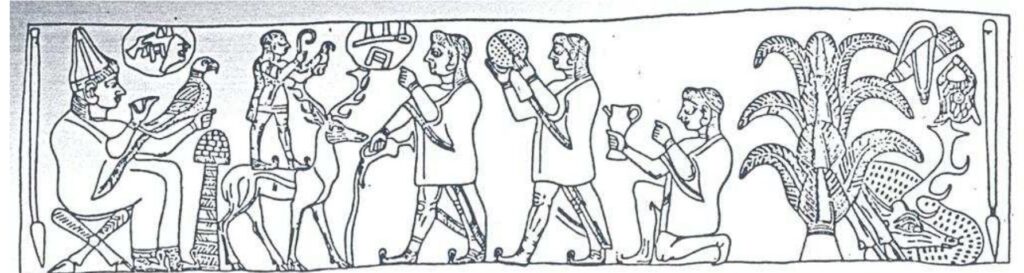
Was the Human Sacrifice a Prisoner of War?
The most striking and controversial element of the ritual is the human sacrifice. The text explicitly describes a human being being split in two along with the animals. However, it provides no definitive information regarding the identity, social status, or the conditions under which the victim was selected.
Petra Goedegebuure, a Hittitologist from the University of Chicago, suggests that the person in question was likely a prisoner of war. This interpretation is based on other Hittite documents regarding military rituals where prisoners are mentioned alongside sacrifices. Nevertheless, KUB 17.28 does not explicitly state that the sacrificed person was a prisoner of war.
This distinction is important when evaluating the historical meaning of the ritual. The text demonstrates that human sacrifice could be part of the Hittite military purification tradition; however, it does not explain how frequently this practice occurred or after which specific historical battles it was performed. Therefore, one must not confuse a ritual description with a verified historical event that took place after a specific war.
The Hittites Also Addressed the Gods of Their Enemies
Hittite war-related rituals were not applied only after a defeat. When an army marched into enemy territory, the gods of that land were also powers that had to be considered. Alongside military struggle, the Hittites attempted to establish a relationship with these gods through rituals.
Tablet fragment Bo 7381, examined by Doğan-Alparslan, provides a remarkable example of this mindset. The document, associated with the CTH 422 text group, concerns rituals performed at the borders of enemy lands. In these ceremonies, offerings were made, and appeals were addressed specifically to the gods of the Kaska land, with whom the Hittites struggled for a long period. Thus, the military conflict with the enemy was handled within a framework of relationships that included the gods.
This practice reveals an important detail in the Hittite religious world: the gods of enemy lands were not entirely ignored; instead, a relationship could be established with them through rituals. The belief that war was not merely a struggle against humans found a concrete expression in such ceremonies.
Moreover, Hittite religious traditions were not fed by a single cultural source. Ritual practices transmitted through Hurrian and especially Kizzuwatna influences shaped the religious life of the kingdom. Doğan-Alparslan’s study demonstrates how these different traditions are represented in the cuneiform documents found at Hattusa.
A Kingdom Far from the Sea and Its Coastal Purification Rituals
Another tablet fragment in the research is linked to a ritual performed by the Hittite king on the seashore upon returning from a military campaign. Fragment Bo 7485 belongs to the text group classified as CTH 436, known as the “Sea Ritual.”
The striking aspect of this practice is that Hattusa, the capital of the Hittite Kingdom, was located in the interior of Anatolia, far from the sea. Despite this, the sea held an important place in Hittite religious thought. As the kingdom’s sphere of influence expanded toward the coastal regions of Anatolia over time, the relationship with the sea became part of its political and cultural life.
The ritual texts describe the king performing a purification ceremony on the seashore upon returning from a campaign in an enemy land. This ceremony aimed to eliminate any ritual impurity the king and his army might have encountered during the expedition. At the same time, it served as a way to religiously reaffirm the security of the national borders.
Research conducted by Sevgül Çilingir Cesur and Michele Cammarosano in 2022 also reveals the various roles of the sea in Hittite rituals. According to the researchers, the sea was not merely a geographical area or a transport route in the Hittite world; it held significance in religion, mythology, and ritual practices.
Therefore, while the king’s purification by the seashore may seem contradictory to Hattusa’s inland location at first glance, it can be understood within the broader religious geography of the Hittites.
Restoring Order with the Gods After War
Perhaps for the Hittites, war was not just a struggle won or lost, but an experience that polluted a person both physically and spiritually. They may have believed that after the violence, death, and destruction of the battlefield, soldiers needed to be purified. Could passing through fire, being cleansed with water, or making offerings to the gods be part of a quest for the survivors to find peace again, beyond just removing invisible misfortunes?
The cuneiform tablets do not provide a direct answer to this question. However, while trying to understand why the Hittites needed such complex rituals after a war, it is worth considering the visible and invisible marks that war leaves on a human being.
These three rituals do not describe sequential stages of the same military campaign. They come from different tablet groups and were designed to be applied under different conditions. However, when evaluated together, they show that the Hittites did not view the results of war solely from a military and political perspective.
The making of offerings to gods at the enemy border, the purification of a defeated army from misfortune, and the king’s ritual by the seashore upon returning from a campaign were different expressions of a common religious understanding. At the center of these practices lay the idea of maintaining the relationship between humans and gods, or restoring it once it had been broken.
The tablet fragments examined by Doğan-Alparslan are among the documents returned from Berlin to Turkey in 1987, which are currently preserved in the Museum of Anatolian Civilizations in Ankara.
Doğan-Alparslan, M. (2026). Fragments of Hittite magic rituals from Boğazköy. Colloquium Anatolicum. Advance online publication. https://doi.org/10.58488/collan.2053802
