

Archaeologists excavating a monumental 3,400-year-old Hittite building at Šapinuwa in central Türkiye have uncovered animal remains that may offer new evidence of ancient ritual practices.
Archaeologists excavating the ancient Hittite city of Šapinuwa in central Türkiye have uncovered unusual animal remains inside a monumental building dating to around the 1380s BC, raising the possibility that ritual sacrifices accompanied changes or renovations to the structure.
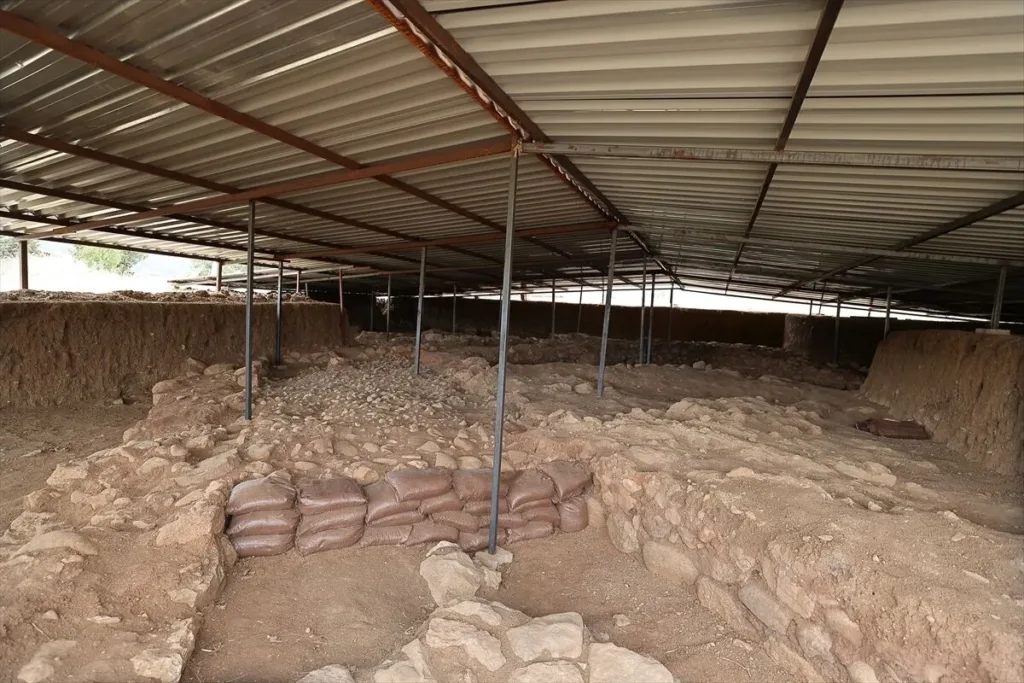
The discoveries come from two symmetrical, L-shaped rooms within the building. In 2025, archaeologists found the skeleton of a headless young animal, probably a lamb or goat, resting on a stone-paved surface. During the 2026 excavation season, the team uncovered a cattle skull placed on another stone pavement in the corresponding room.
Neither deposit looks like ordinary food waste, according to excavation director Önder İpek of Hitit University. Instead, their deliberate placement and the building’s multiple construction phases may connect them with ritual practices already known from Hittite written sources.
Archaeologists have not yet determined whether the monumental structure functioned as a temple, administrative building or another form of public architecture.
A Monumental Building First Detected Underground
The structure first appeared during geophysical surveys at Šapinuwa in 2024. Archaeologists initially opened a 5-by-5-meter trench and exposed roughly 20 percent of the building during the first season.
Excavations in 2025 and 2026 followed its exterior walls and revealed most of its overall plan. Researchers have now moved into the interior spaces, where artifacts and architectural details may finally establish what happened inside the building.
Archaeological observations and dating work place its construction in the 1380s BC, a period when Šapinuwa occupied an important position within the Hittite world.
İpek said the team has identified several phases of use or modification in the building. That detail may prove especially significant for understanding the animal deposits. Hittite texts describe sacrificial practices connected not only with temples and festivals but also with buildings undergoing construction, renewal or ritual purification.
Why Sacrifice Mattered to the Hittites
Animal sacrifice formed part of a much broader ritual system in Hittite society. Written sources record sheep, cattle, goats and other animals among the offerings used in religious ceremonies, alongside libations and other gifts to the gods. Sacrifice could accompany major festivals, purification rites and ceremonies intended to establish or restore the proper relationship between people, buildings and the divine world.
Building rituals are particularly relevant to the new finds at Šapinuwa. Hittite evidence indicates that animals and ritual objects could be placed beneath foundations, while sacrifices and offerings could accompany the construction or subsequent treatment of buildings. One known foundation ritual combines the sacrifice of sheep with libations and ritual formulas intended to protect a house from harmful forces.
This does not prove that the lamb or goat and cattle skull from the L-shaped rooms served exactly the same purpose. Their archaeological context still requires detailed zooarchaeological study. But their careful placement on stone surfaces, combined with evidence for several architectural phases, gives the excavation team a specific ritual hypothesis to test.
Šapinuva itself provides an unusually important comparison. Earlier excavations in another part of the city uncovered sacrificial pits containing animal bones, including burnt and unburnt remains. Researchers studying those deposits have argued that Šapinuva offers rare archaeological evidence that can be compared directly with ritual practices described on Hittite tablets.
Šapinuva Was More Than a Provincial Hittite City
The significance of the discovery also comes from where it was made.
Šapinuva lies near modern Ortaköy in Çorum Province, about 53 kilometers southeast of Çorum in central Türkiye. Archaeological excavations began there in 1990, after earlier investigations identified the settlement as an important Hittite center.
The site eventually produced one of the most important archives of the Hittite world. Archaeologists have recovered more than 4,000 cuneiform tablets and tablet fragments, making the Ortaköy archive the second-largest Hittite cuneiform archive discovered in Anatolia after Boğazköy-Hattusa.
Texts appear in Hittite, Hurrian, Hattic, and Akkadian and cover administrative affairs, religion, divination, and other aspects of state activity. Their contents also showed that the ancient settlement carried the name Šapinuva. The character of the archive points to a royal administrative center rather than an ordinary provincial town.
Excavators also associate Šapinuva with King Tudhaliya II, the royal court, and the city appears to have served for a period as one of the Hittite kingdom’s major political and royal centers. Hitit University describes it as another capital of the Hittite state, although Hattusa remained the empire’s principal and best-known capital.
That royal context helps explain the monumental architecture uncovered across the site and makes the newly excavated building particularly important.
The L-Shaped Rooms Could Hold the Answer
For now, the central question remains unresolved: what was this 3,400-year-old building actually used for? The answer may come from its rooms rather than its massive walls.
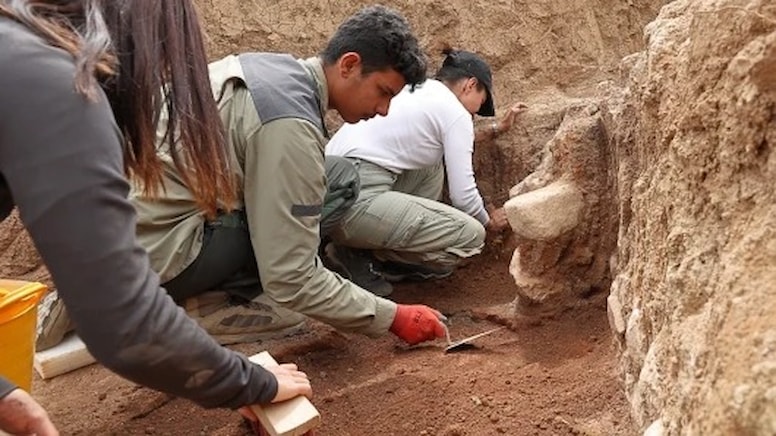
Archaeologists, Hittite-language specialists, conservators, geologists, archaeobotanists and zooarchaeologists are examining the structure and its finds together. Zooarchaeological analysis may help identify the headless animal found in 2025 and determine how it was treated. The cattle skull found this year could also show whether the two deposits were part of the same ritual practice.
If the animal remains do represent sacrifices associated with different building phases, the L-shaped rooms could provide something particularly valuable: physical evidence of a practice otherwise known largely through Hittite ritual texts.
At Šapinuva, where thousands of tablets already preserve the words of the Hittite world, the archaeology may now be revealing how some of those rituals actually played out inside a monumental building more than 3,400 years ago.
AA
