
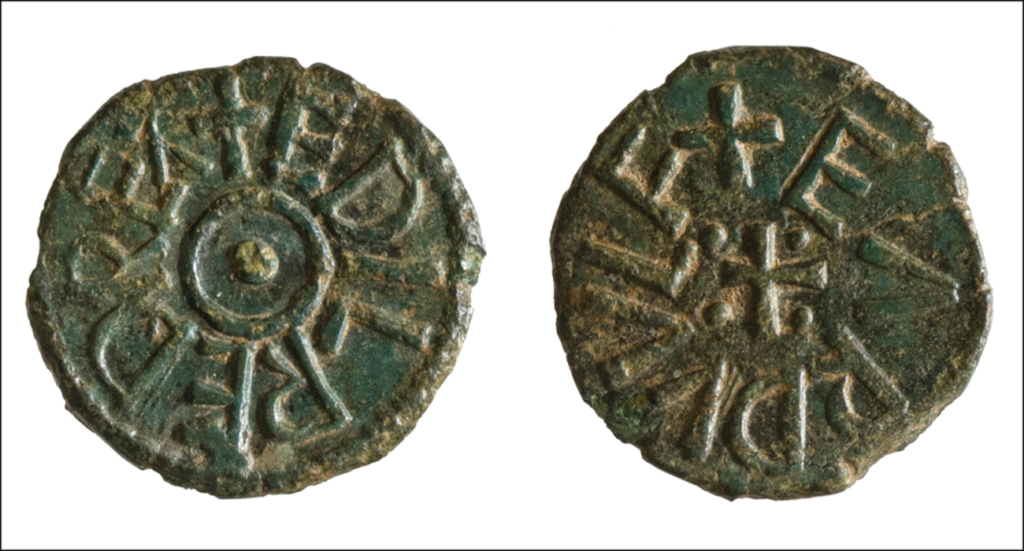
About 1,200 years ago, a powerful Anglo-Saxon kingdom in northern England began replacing its silver coins with copper-alloy currency. Historians have long viewed this shift as evidence of economic decline and a shortage of precious metals. But new archaeological research challenges that interpretation, suggesting that the kingdom still had access to gold and silver even as it abandoned silver coinage.
The kingdom in question was Northumbria, one of the major political powers of early medieval England. In a study published in the journal Antiquity, archaeologist John Luke Carson from Durham University proposes that the change in Northumbria’s monetary system may have been a conscious choice rather than a result of economic collapse. Moreover, the system developed by the kingdom was an extraordinary practice for Western Europe at the time.
An Unusual Transition from Silver to Copper
At the beginning of the ninth century, coins minted in Northumbria still contained significant amounts of silver. Over time, however, this proportion declined markedly. Toward the end of King Eanred’s reign, between approximately 830 and 841 AD, the silver content in coins dropped to below 10 percent.
During the second reign of King Æthelred II, roughly between 844 and 849 AD, the production of silver coins almost vanished entirely. Northumbria began using small copper-alloy coins, known today as stycas, as its primary currency. This transformation represented more than just a change in the metal used for production; it signaled a fundamental shift in the kingdom’s monetary system.
From the late seventh century onwards, the monetary economy of Western and Northern Europe relied heavily on silver. While other kingdoms occasionally reduced the precious metal content of their coins, abandoning silver altogether was highly unusual. Northumbria diverged from its contemporaries by placing copper-alloy coins at the center of its circulation.
A Nearly Unique Monetary System in Medieval Europe
What made Northumbria’s coins remarkable was that their value relied less on the intrinsic worth of the metal and more on the society’s trust in them. These coins, despite their low precious metal content, were accepted as a means of payment through the backing of royal authority. Thus, the utility value of the money became decoupled from the actual value of the metal it contained.
In the Byzantine Empire and the Islamic world, copper coins circulated alongside precious metal currencies. In contrast, it was uncommon in early medieval Western Europe for coins devoid of precious metals to form the basis of an independent monetary system. In this regard, Northumbria’s monetary order differed significantly from most contemporary Western European kingdoms.
Carson’s research indicates that this northern English kingdom moved away from the traditional reliance on precious metals to create a distinct monetary arrangement. The widespread acceptance of copper-alloy coins required not only royal authority but also a collective social trust in a common medium of exchange.
Gold and Silver Finds Challenge the Old View
The most critical evidence of the research comes not from the coins themselves, but from other precious metal artifacts found within Northumbria. By systematically analyzing archaeological publications and records from the Portable Antiquities Scheme in England, Carson compared gold and silver finds dating to the ninth century.
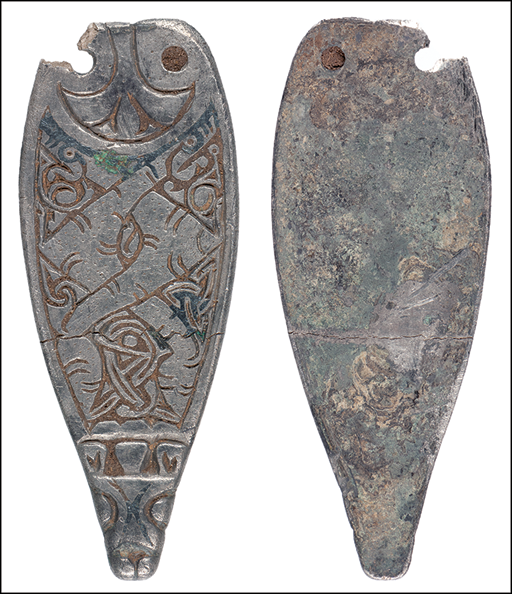
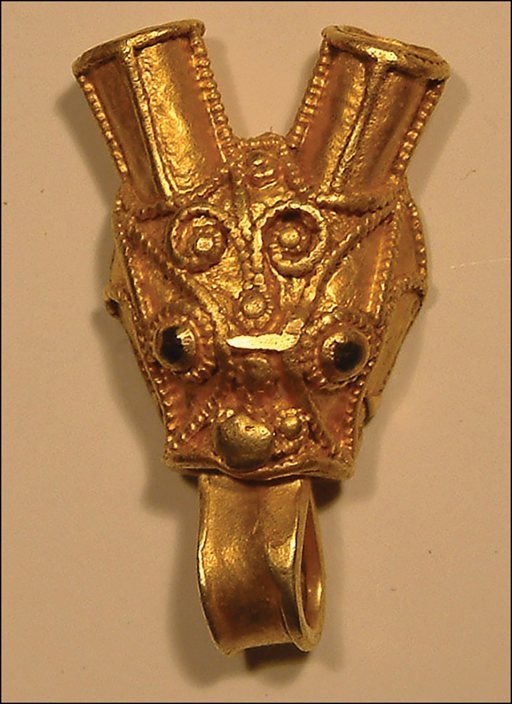
The researcher identified 27 silver and 11 gold artifacts that could be definitively dated to this period, along with an additional 7 probable silver and 1 probable gold find. He also evaluated sword fragments, belt accessories, jewelry, and various objects adorned with precious metals.
The Poppleton hoard, found near York, is particularly noteworthy. The hoard includes eight silver strap-ends and a disc-shaped brooch dating to the ninth century. These artifacts demonstrate that precious metals continued to be used in Northumbria, not just for coinage, but for objects related to daily life and as symbols of status.
Gold rings, silver-inlaid sword fragments, and meticulously crafted ornaments further support this conclusion. Carson’s comparison of finds from the eighth and ninth centuries suggests that access to gold and silver may not have decreased during the ninth century. Consequently, it is becoming increasingly difficult to explain the transition to copper coinage solely through the lens of precious metal scarcity.
Cheaper Coins, a Broader Economy
One possible reason for Northumbria’s move away from silver was that copper-alloy coins facilitated daily economic activities. While silver coins of earlier periods circulated primarily in the southeastern parts of the kingdom, copper-alloy coins spread across a wider geography. Archaeological finds show that these coins were used in northern and western regions as well.
Lower-value coins may have provided a more convenient means of payment for small transactions. This could have expanded economic activity to a larger portion of the population, preventing the use of currency from being concentrated solely in specific regions or among the wealthy.
Carson suggests that rulers may have initially aimed to generate more revenue from minting. However, the way the copper system eventually streamlined daily commerce may have provided an additional incentive to maintain the practice. The possibility that a common currency strengthened economic ties between different regions of the kingdom is also discussed in the research.
Viking Raids and the Debate over Economic Collapse
The view that Northumbria suffered an economic decline was closely tied to the kingdom’s political history. The famous Viking raid on the monastery of Lindisfarne in 793 AD was a turning point in the region’s history. Viking forces later seized York in 867 AD, profoundly altering Northumbria’s political structure.
Some historians argued that Viking raids weakened trade, internal conflicts shook the economy, and a silver shortage forced the kingdom toward copper production. However, the new research gathers evidence showing that political instability does not always equate to economic collapse. Northumbria was able to maintain regular coin production while continuing its access to precious metal objects.
The production of copper-alloy coins also required technical expertise and a supply of raw materials. The presence of tin and zinc in the alloys used indicates that the kingdom maintained important foreign trade links. Carson notes that the procurement of these resources and the organization of minting provide insight into the economic capacity of the rulers.
A New Perspective on European Monetary History
The findings of the study open a broader discussion on how archaeologists and historians should interpret the decline of precious metal content in coinage. A reduction in a coin’s silver content does not necessarily mean the issuing state became impoverished. Such a change could instead be linked to efforts by rulers to increase revenue, expand the money supply, or integrate more people into a monetary economy.
Carson’s work does not definitively determine which goal the kingdom prioritized when changing its monetary system. Furthermore, archaeological finds are insufficient to calculate the total amount of gold and silver the kingdom possessed. Nevertheless, the research offers a strong alternative to the traditional explanation that the copper coin system resulted solely from economic desperation.
These small copper coins, minted approximately 1,200 years ago, thus reopen the debate not only on the monetary history of an Anglo-Saxon kingdom but also on how economic power was perceived in early medieval Europe.
Carson, J. L. (2026). Debasement and the production of copper-alloy coins in ninth-century Northumbria. Antiquity, 1–16. doi:10.15184/aqy.2026.10454
