
Twenty Anglo-Saxon coins found near the Vatican are bringing a largely forgotten corner of medieval Rome back into view. Historians had known from written sources that an English community once lived close to St Peter’s, but until now archaeology had offered almost nothing that showed how that community functioned in everyday life.
The coins come from the area of the Schola Saxonum, a settlement that served people arriving from Anglo-Saxon England. Archaeologists also uncovered evidence of leatherworking, boneworking and metalworking, suggesting that this was not simply a place where pilgrims rested before visiting Rome’s churches.
Together, the finds point to a community that worked, traded and remained in the city for long periods. They also raise a more unusual possibility: English visitors may have received permission to use their own money in Rome at a time when other foreigners normally had to exchange theirs.
A forgotten English quarter beside St Peter’s
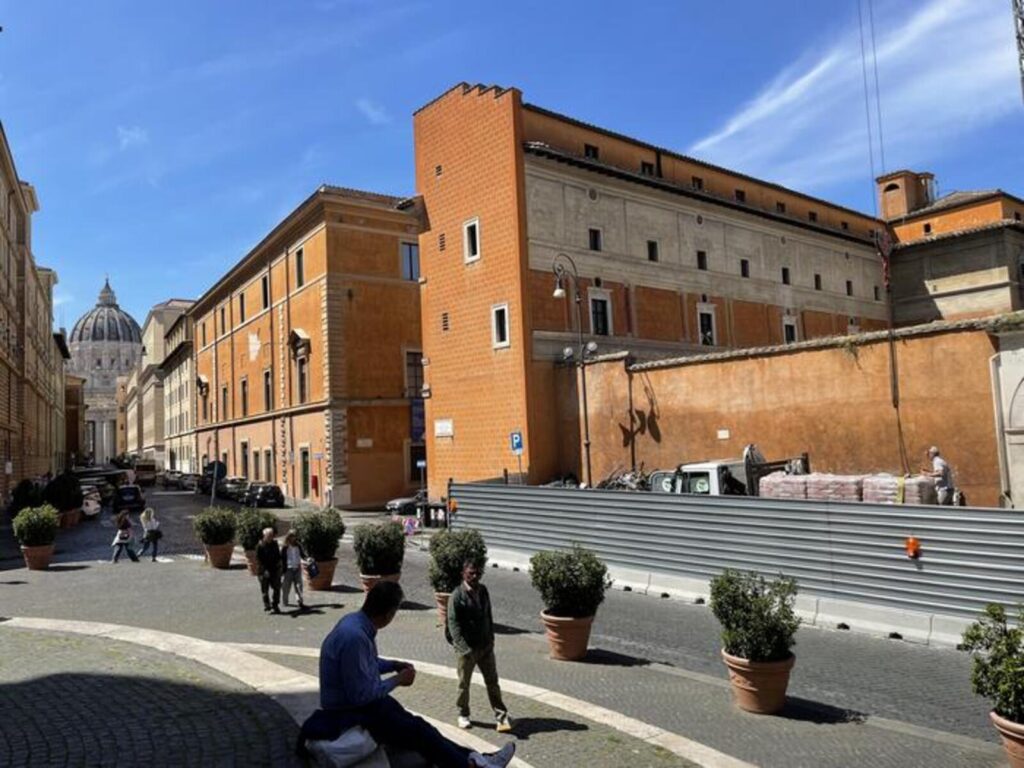
Archaeologists began excavating beneath the walled garden of the Palazzo della Rovere in 2020, only a short distance from the Vatican. The site attracted international attention in 2023 when the team announced the remains of a structure identified as Emperor Nero’s theatre, but the medieval layers above and around it have now produced a very different discovery.
Written sources place the Schola Saxonum in this part of Rome from at least the second half of the 8th century. The community occupied land between the Vatican and the River Tiber, close enough to St Peter’s for pilgrims to reach the basilica easily and near bridges that connected the district with the rest of the city.
Despite its name, the Schola Saxonum was not a school in the modern sense. Institutions of this kind supported foreign communities by offering accommodation, religious services, charity and practical help to people who had travelled long distances to Rome.
The English were not alone in maintaining such a presence near St Peter’s. Franks, Lombards and Frisians had their own institutions in the area, but the Anglo-Saxon community appears to have developed a particularly strong and lasting identity.
Rome still preserves traces of that presence in its geography. Lungotevere in Sassia, the road that follows the Tiber near the Vatican, takes its name from the Saxons, while the nearby Santo Spirito in Sassia hospital continues a charitable tradition associated with the same district.
Until the recent excavation, however, these names and medieval texts carried most of the story. Archaeologists had never found material evidence strong enough to show what everyday life inside the English quarter actually looked like.
Twenty coins reveal everyday life
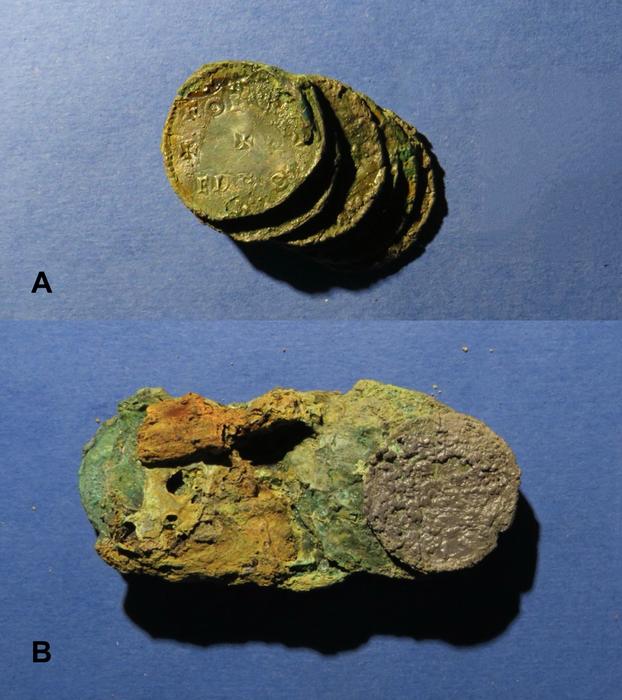
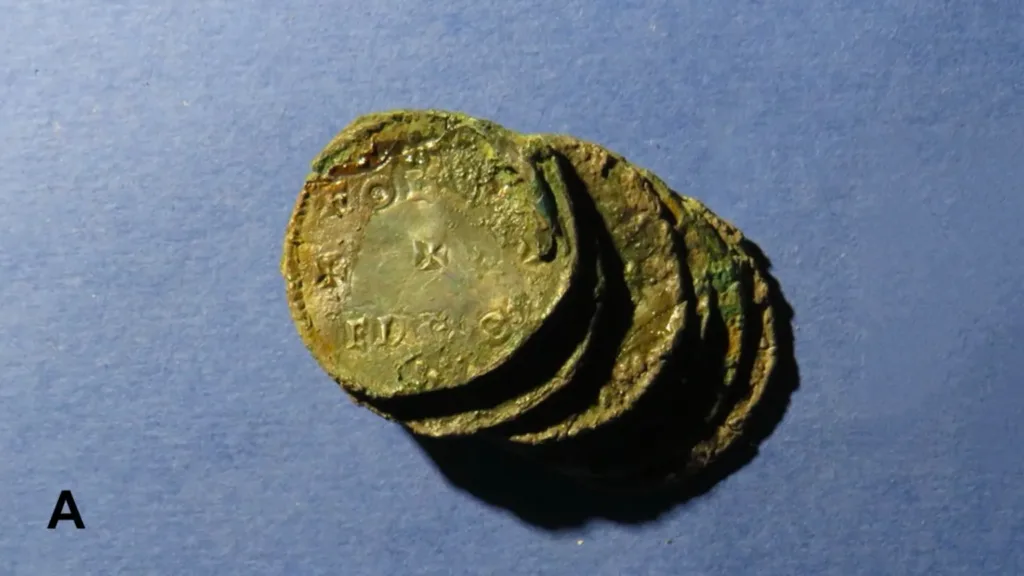
The newly studied group consists of 19 silver pennies and one halfpenny. English mints produced them over roughly four decades during the reigns of Edward the Elder, Æthelstan and Eadred, and researchers traced their origins to places including East Anglia, Kent, London and the West Midlands.
Fourteen of the coins came from rubbish pits, where they lay in two clusters of between six and eight pieces. After spending around a thousand years underground, several had fused together, while the remaining coins appeared scattered nearby.
Their condition may not impress a collector, but their archaeological context matters far more than their appearance. Rory Naismith, Professor of Early Medieval English History at the University of Cambridge, notes that archaeologists have now identified more Anglo-Saxon coins from this period in Rome than papal coins.
That unusual balance suggests that significant amounts of English money reached the city. It also shows that these coins were not rare curiosities carried by a single wealthy traveler.
One halfpenny adds another important clue because small denominations usually appear where people need money for ordinary transactions. Researchers therefore see it as evidence that shoppers and craftsmen may have used English currency for routine purchases inside the neighborhood.
The excavation also produced Roman-period coins and 10th-century Italian currency, including a papal coin. That combination suggests that people in the district may have handled more than one currency at the same time rather than relying exclusively on papal money.
More than a stopping place for pilgrims
Medieval travelers from England usually came to Rome for religious reasons. They visited major churches, prayed at the tombs of saints and sought contact with the papacy, often after completing a journey that could take many weeks and expose them to illness, violence and difficult terrain.
The new archaeology adds another dimension to that familiar picture. Across an area covering at least 3,000 square metres, the excavation revealed traces of leatherworking, bone working and metalworking alongside the English coins.
Those finds suggest workshops, tools, customers and regular exchange. Instead of functioning only as a hostel for pilgrims, the Schola Saxonum may have supported a much more settled population.
Naismith has suggested that hundreds of people could have lived in the community on a permanent or semi-permanent basis. Craftsmen from towns such as Winchester, London or York may have arrived in Rome, opened workshops and continued familiar trades on the banks of the Tiber.
That possibility changes the character of the district completely. The Schola Saxonum begins to look less like a religious guesthouse and more like a small transplanted English neighborhood operating inside medieval Rome.
People still came to pray and visit St Peter’s, but they also needed food, clothing, tools, and everyday services. The coins and craft remains show how the community may have met those needs without depending entirely on the surrounding Roman economy.
Why could the English use their own money?
The presence of English currency in everyday contexts creates one of the most interesting questions raised by the excavation. Medieval documents from Rome usually refer to papal coinage, while other sources show that foreign travelers often expected to exchange their money before or during a visit.
A 9th-century Frankish abbot, for example, wrote about the problem of arranging currency exchange before travelling to Rome. The English evidence looks noticeably different because archaeologists found their coins scattered through working and domestic areas rather than concentrated in a treasury or melting site.
The team found no sign that craftsmen had brought the coins to the quarter simply to melt them down for their silver. Instead, the distribution suggests that people lost them during normal transactions, while the presence of a papal coin among the same material raises the possibility that both currencies circulated side by side.
Naismith and historian Francesca Tinti therefore argue that the English may have enjoyed privileges unavailable to other foreign communities. They stop short of claiming that the evidence proves a formal exemption, but medieval records show that the English already had an unusually close relationship with the papacy.
One document may be particularly relevant. According to Asser, the biographer of Alfred the Great, Pope Marinus I freed the Schola Saxonum from “every tribute and toll” in 883 after Alfred requested special treatment for the English community.
That statement does not prove that Alfred also secured permission for English coins to circulate in Rome. Even so, the later appearance of coins issued by Alfred’s son and grandsons makes the connection difficult to dismiss.
If English travelers could spend familiar currency after arriving in Rome, the privilege would have removed a practical problem from an already difficult journey. It would also have marked the Schola Saxonum as a community with an unusually favorable relationship with the papal authorities.
A relationship that reached far beyond pilgrimage
The Anglo-Saxon connection with Rome stretched back centuries before these coins entered circulation. Pope Gregory I strengthened that relationship in the late 6th century when he organized the mission that helped convert the Anglo-Saxons to Christianity.
Later English rulers continued to cultivate ties with the papacy. Offa of Mercia reportedly established an annual payment of 365 gold pieces to Rome in the late 8th century, while Alfred the Great regularly sent alms and maintained diplomatic contact with the city.
By the 10th century, the practice that later became known as Peter’s Pence linked English households more directly with Rome through regular contributions. King Canute continued the tradition in the 11th century when he visited the city and negotiated financial benefits for English pilgrims.
For rulers, these connections carried both religious and political value. A king who could help his subjects reach Rome, support an English community near St Peter’s and maintain good relations with the papacy strengthened his prestige at home as well as abroad.
The new coins bring that high-level relationship down to the scale of everyday life. Instead of seeing only kings, popes and diplomatic gifts, archaeology now shows ordinary people carrying money, buying goods and working inside a neighborhood beside the Tiber.
That is what gives the discovery its real significance. The Schola Saxonum no longer survives only in medieval texts and Roman place names; the coins and workshops now reveal a community that lived, traded, and built a recognizable English presence in the heart of medieval Rome.
