
Excavations in Epidaurus, Greece, have uncovered traces of a lost sacred site described by a traveler who lived approximately 1,800 years ago. Furthermore, a statue that may belong to Epione, the wife of Asclepius, and early ritual structures are raising new questions regarding ancient healing traditions.
Decades of archaeological research in Epidaurus, one of ancient Greece’s most significant healing centers, are illuminating the identity of a sacred area dedicated to Asclepius, the god of medicine, whose location had long remained unknown. A monumental fountain, a sacred well, votive offerings, and marble statues have allowed researchers to establish striking connections between the archaeological remains and the site described by the ancient author Pausanias about 1,800 years ago.
On November 9, 2026, Professor Vassilis Lambrinoudakis from the University of Athens evaluated the results of research spanning over half a century. A collective analysis of findings from previous excavation periods contributes to an understanding of not only the lost sacred site but also how healing practices and religious rituals evolved in Epidaurus.
The Lost Sacred Site Described by Pausanias
Pausanias, who traveled through Greece in the 2nd century AD, mentioned an open-air sacred area in the city of Epidaurus containing statues of Asclepius and his wife, Epione. However, the location of this site, situated in the city center and separate from the famous Asclepieion, remained uncertain for a long time.
Excavations near the city’s small theater identified a monumental fountain complex dating back to the 4th century BC and an adjacent sacred area. The fountain, adorned with Ionic columns, its water collection basin, and the surrounding structures provided significant evidence regarding the religious use of the area.
Researchers also detected a well in the center of the sacred site, connected to the fountain’s reservoir via an underground channel. According to the official excavation records of the University of Athens, votive offerings and a ceramic fragment bearing a portion of Asclepius’ name are among the primary findings supporting the identity of the complex.
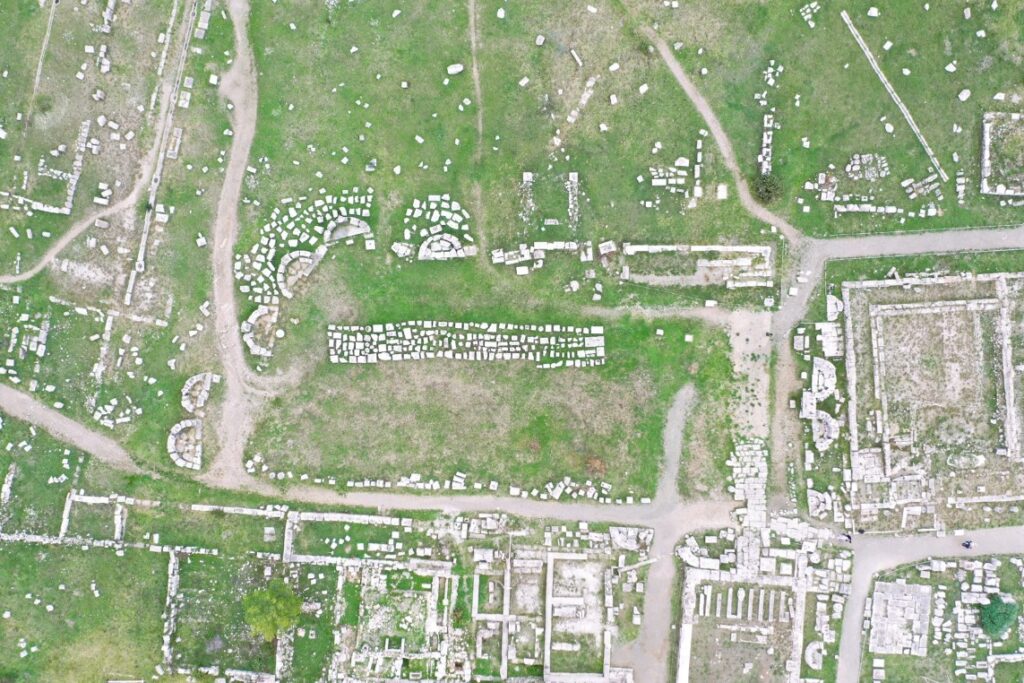
Aerial view of archaeological remains at ancient Epidaurus, Greece, where excavations have helped researchers reconstruct the city’s religious landscape and identify a sanctuary associated with Asclepius. Credit: National and Kapodistrian University of Athens – Epidaurus Excavation Project.
Does the Marble Statue Depict the Wife of Asclepius?
One of the most remarkable details of the research is a statue of a woman in long garments found within the enclosed section of the sacred site. The marble work, slightly larger than life-size, raises the possibility that it may be the statue of Epione mentioned by Pausanias.
According to Lambrinoudakis’ evaluation shared in November 2026, the location of the statue and the ancient author’s description make this connection plausible. However, there is no inscription that definitively proves the work represents Epione.
In Greek mythology, Epione was the wife of Asclepius and a figure associated with the alleviation of pain. Small votive plaques depicting female divine figures and terracotta figurines discovered in the sacred area also suggest that an older cult of nature and renewal may have existed here.
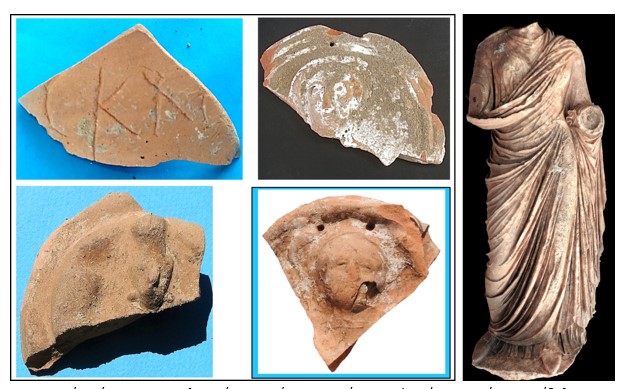
Left: The name of Asclepius inscribed on a pottery vessel and votive offerings from the sanctuary precinct at ancient Epidaurus, Greece. Right: A marble statue of a woman from the same sanctuary, possibly representing Epione, the wife of Asclepius. Credit: National and Kapodistrian University of Athens.
Origins of the Healing Cult Date Further Back
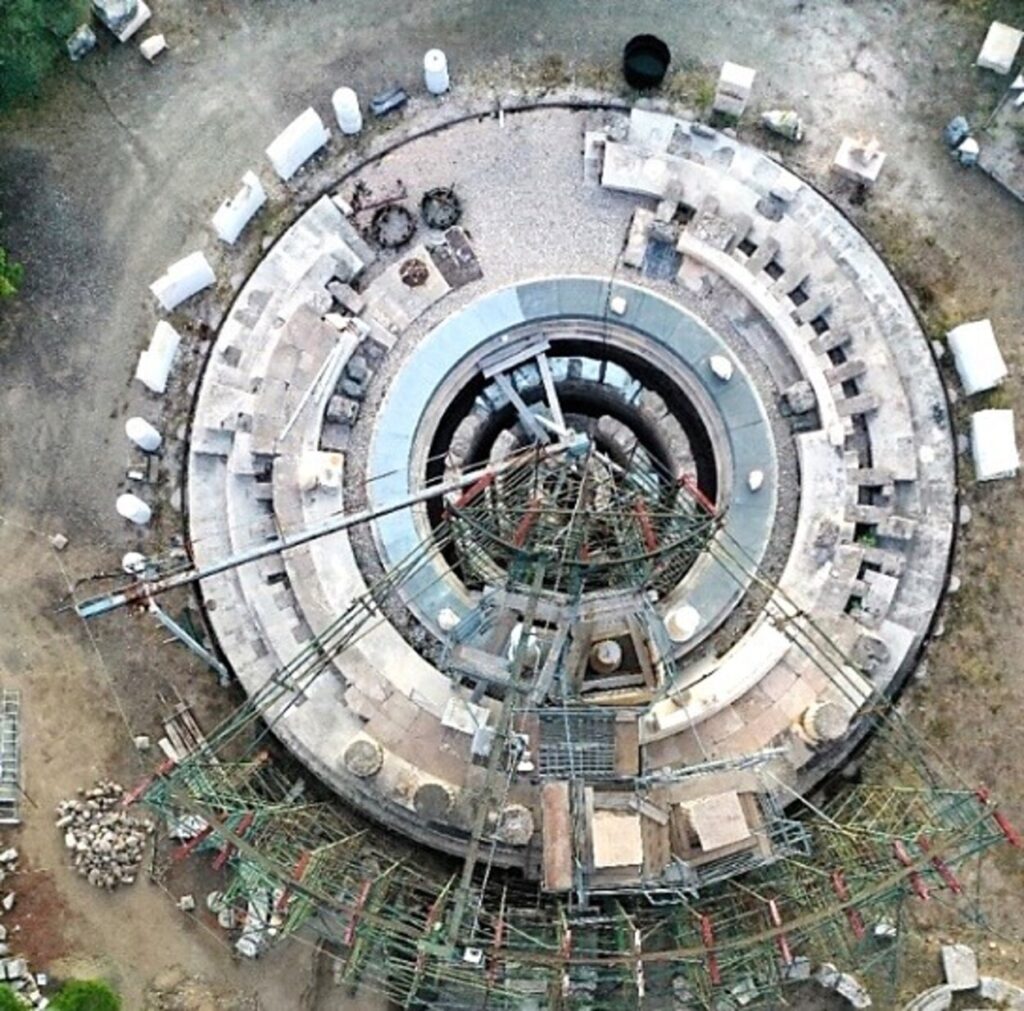
Research in Epidaurus is not limited to the sacred site in the city center. Near the circular Tholos structure built in the 4th century BC at the famous Asclepieion, the remains of an older building were identified.
The structure, dating to the late 7th century BC, featured a rock-cut basement, walls with dark red plaster, and a floor made of small pebbles. It is thought that the basin in the corner may have been associated with liquids used in rituals.
This building, unearthed during previous excavation periods, indicated that the beginning of the cult of Asclepius in the sacred area may be approximately 60 years older than previously thought. Researchers believe that the preservation of the old structure during the construction of the subsequent Tholos was a conscious effort to maintain the same religious tradition.
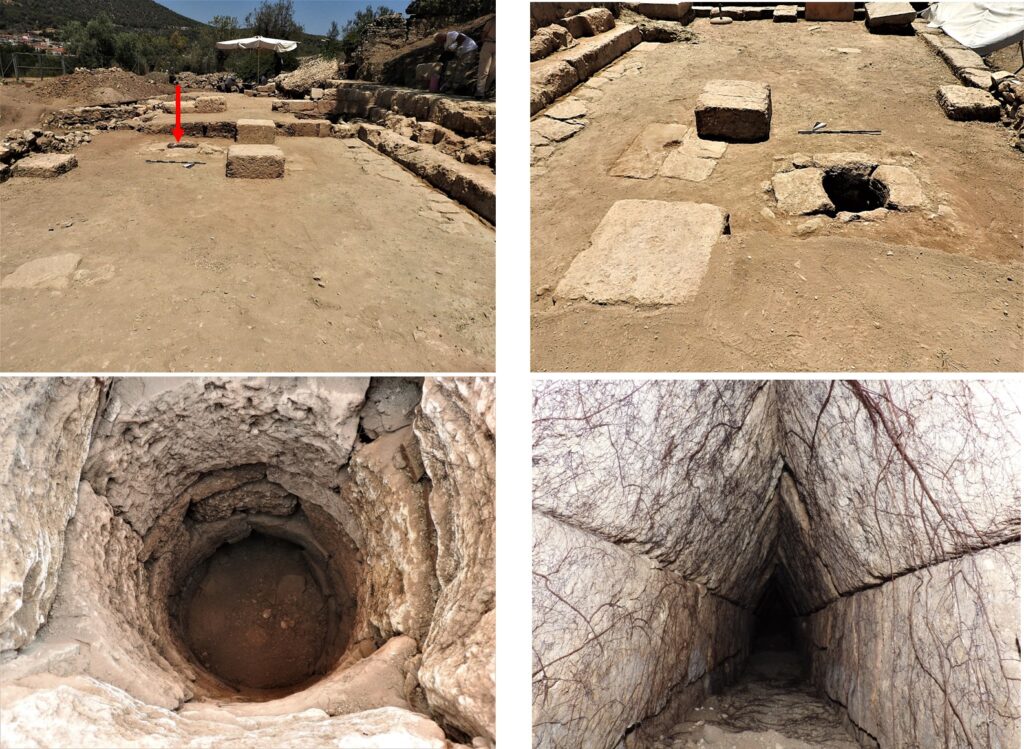
Top: Views of the sanctuary precinct of Asclepius at ancient Epidaurus, Greece, from the south and north. Bottom: The sacred well and the underground passage connecting it to the monumental fountain’s reservoir. Credit: Hellenic Ministry of Culture.
Mysterious Underground Space and Roman Period Rituals
Building B at the Asclepieion also presents another archaeological puzzle that has yet to be fully explained. In the northwest of the complex, which was expanded during the Roman period, an underground space with unusual architecture was detected.
This section contains niches created from reused architectural fragments, openings that allow sunlight to enter at midday, and the lower parts of four large amphorae embedded in the floor. Researchers assess that the structure may be linked to a mystery cult, though they have not yet determined which rituals were performed there.
The studies in Epidaurus demonstrate that worship of Asclepius was not based solely on the desire to recover from illness; water, offerings, underground spaces, and the concept of renewal also played an important role in the understanding of healing. The connection between the sacred site relayed by Pausanias and the archaeological remains allows for a more detailed reconstruction of the city’s religious history.
National and Kapodistrian University of Athens – Epidaurus Excavation Project
