
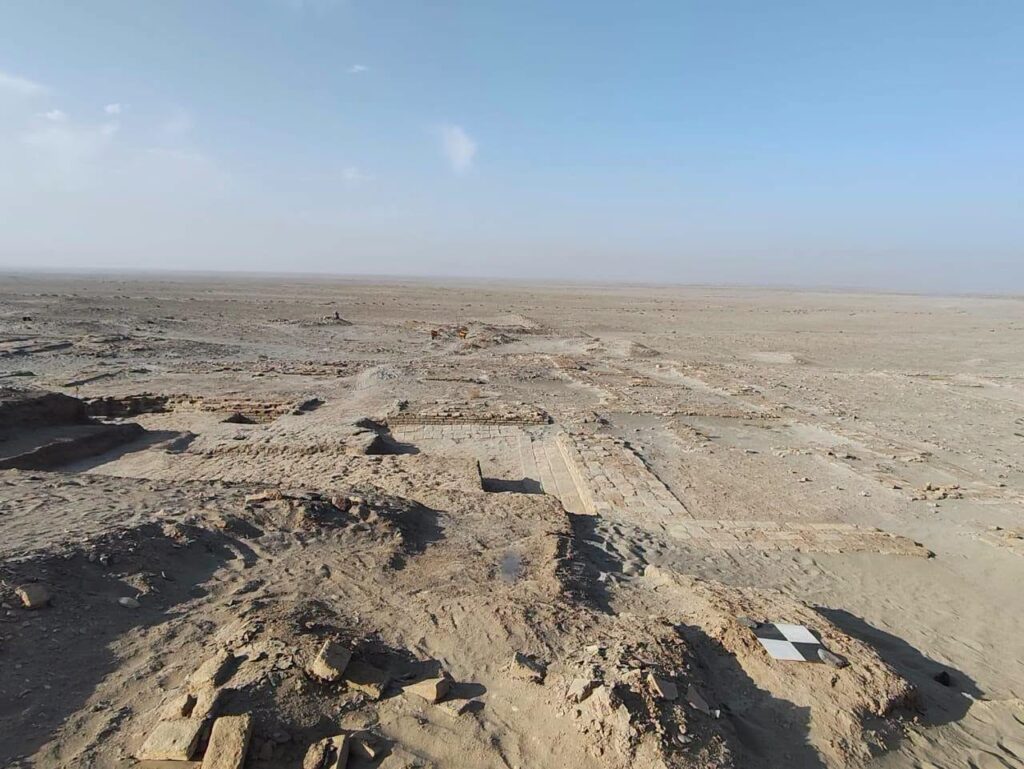
French and Iraqi archaeologists working at the ancient city of Larsa in southern Iraq are uncovering the remains of a bridge built over a major water canal approximately 3,800 years ago. The structure, located in a city that served as a key political and economic hub during the Old Babylonian period, is notable for its fired-brick piers and an inscribed brick bearing the name of King Sin-iddinam. As excavations are still ongoing, researchers expect to uncover further details regarding ancient Mesopotamia’s transportation and water management systems.
On November 10, 2026, the Iraqi State Board of Antiquities and Heritage shared the results of the work conducted at Larsa, also known as Tell es-Senkereh, in the Dhi Qar province. A French archaeological mission, led by Régis Vallet in collaboration with Iraqi experts, is investigating the bridge located on the Great Canal in the eastern part of the ancient city. Officials stated that the ongoing excavations are helping to provide a better understanding of the city’s historical infrastructure.
The Bridge of King Sin-iddinam
Sin-iddinam ruled Larsa between 1849 and 1843 BCE. The son of King Nur-Adad, he prioritized the construction of temples, walls, and water canals alongside his military campaigns during his brief reign. One surviving royal inscription describes the repair of a canal connected to the Tigris, revealing that Sin-iddinam viewed water management as one of his reign’s primary achievements. The association of the Larsa bridge with bricks bearing his name makes the structure particularly significant in the context of the king’s known infrastructure projects.
The Great Canal, which ran through the center of Larsa, was approximately 22 meters wide. The bridge served as a vital transportation link between the two banks of the canal. Researchers have designated this structure, located near the city’s ziggurat, as “B69.”
French archaeologists first identified the bridge during surveys in 2019 and began excavations to examine its piers in 2021. According to a statement from the French Ministry of Culture regarding the Larsa research, the team is systematically investigating the city’s ancient water canals and their associated architectural structures.
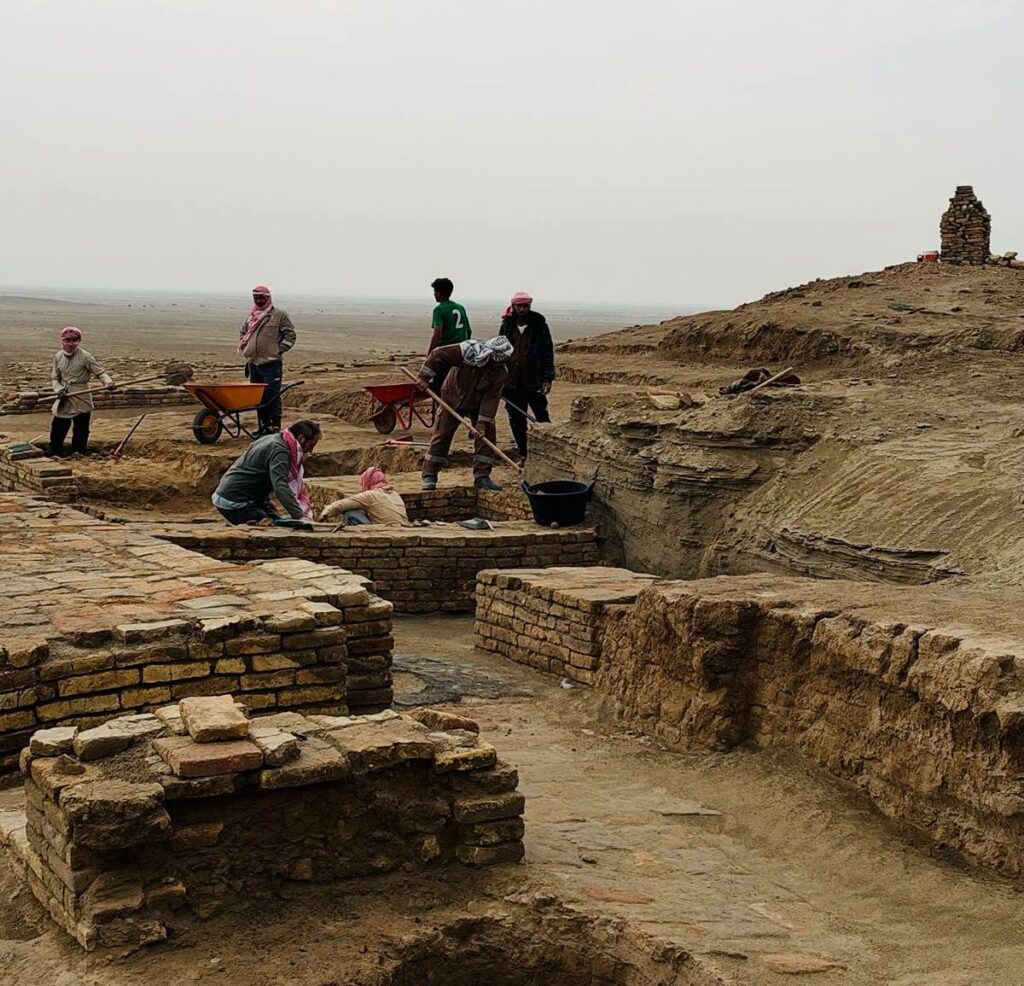
One of the most significant finds is an inscribed brick bearing the name of King Sin-iddinam. Since the king reigned from 1849 to 1843 BCE, this artifact helps date at least one phase of the bridge’s construction or renovation. Excavation data published by the French Académie des Inscriptions et Belles-Lettres confirms that the inscribed brick was found in the upper section of the bridge’s eastern pier.
Researchers have also determined that the bridge was not built in a single phase. Previous excavation reports indicate successive stages of construction and renovation within the fired-brick piers. This suggests that the bridge and the surrounding canal infrastructure may have been reorganized over time to meet changing needs.
Water Canals and Urban Life in Mesopotamia
At the beginning of the second millennium BCE, Larsa was one of the most important cities in Southern Mesopotamia. With a settlement area of approximately 200 hectares, the city was a major political center that maintained connections with surrounding agricultural lands and other settlements through an advanced network of canals.
During field studies resumed in 2019, French researchers identified Larsa’s wall line, which spans approximately 5.4 kilometers. Additionally, they mapped hundreds of canals within and around the city. The research also revealed various water basins and a port area at the southern edge of the city.
Project information published by the CNRS research unit emphasizes that the canal system is central to understanding Larsa’s urban layout. The waterways not only supported agricultural production but were also an essential part of the city’s transportation network and economic activities.
The bridge over the Great Canal is a striking example of this system. Its location and brick architecture help researchers understand the engineering solutions developed to ensure that wide waterways did not obstruct movement within the city.
Monumental Structures in Larsa Excavations
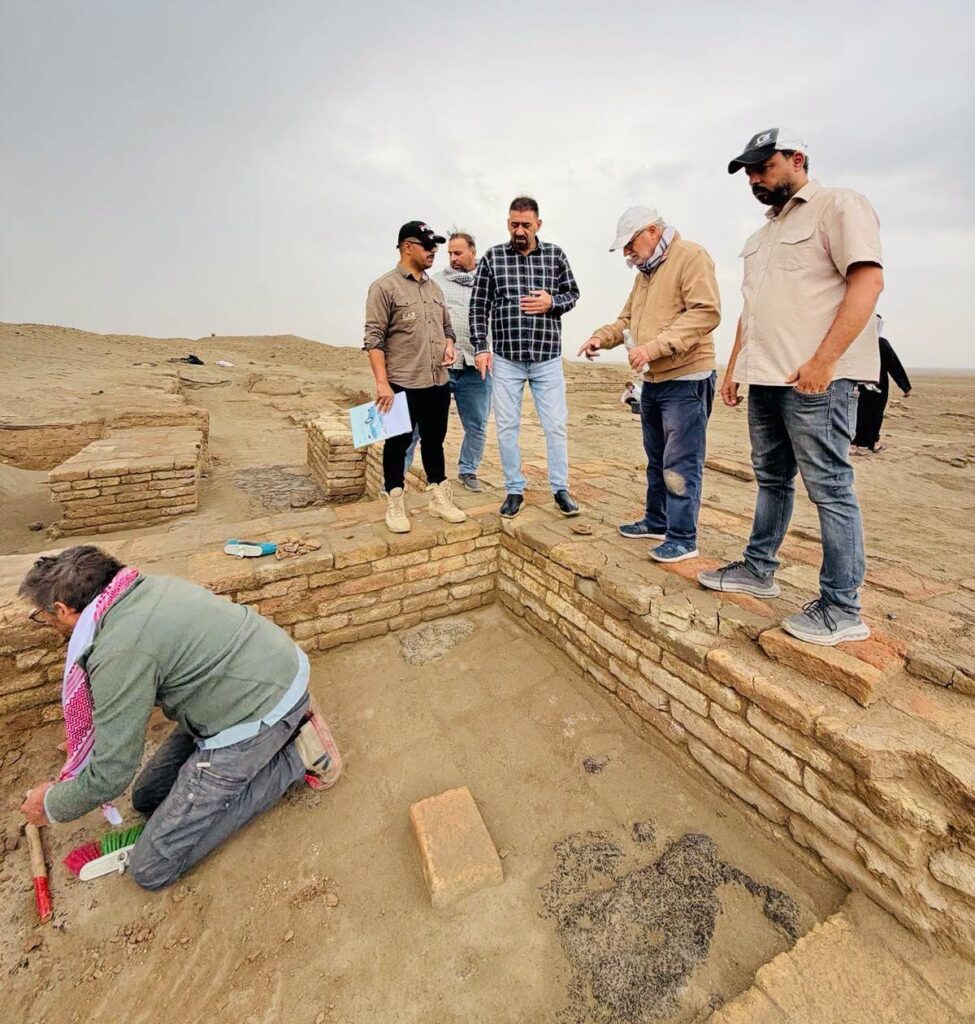
The bridge is only one part of the joint French-Iraqi research. In previous seasons, the team examined the city’s wall system, monumental buildings, and elite residences. The latest announcement from the Iraqi State Board of Antiquities and Heritage highlighted a city gate and a structure believed to have belonged to a politically and religiously significant figure.
One of the larger structures under investigation by the French team is located near the Ebabbar Temple, dedicated to the sun god Shamash. This complex, covering approximately 7,250 square meters, is thought to be the Gipar—a temple-residence used by the priestesses of Shamash—though this identification has not yet been finalized.
In another part of the city, researchers identified the remains of a large residence containing archive tablets associated with Etellum, a high-ranking official. These findings provide critical data for analyzing the relationships between political administration, religious institutions, and urban life in Larsa.
Work continues on the bridge over the Great Canal. According to Iraqi officials, archaeologists have uncovered approximately half of the structure. Further investigation of the remaining section may contribute to a more detailed understanding of the bridge’s architectural plan and its various construction phases.
