
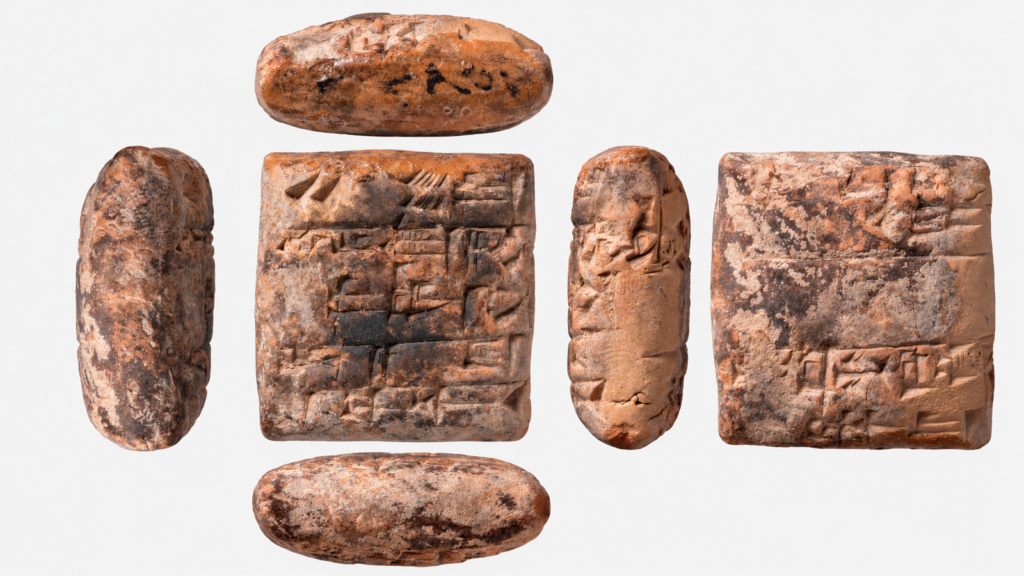
Fifteen cuneiform tablets kept in the Iraq Museum are opening an unusually detailed window onto the economy of southern Mesopotamia around 4,000 years ago. The records point to a royal princess’s estate operating outside normal provincial administration, preserve previously unknown or poorly attested place names, document workers from different regions and even raise the possibility that one rural settlement was populated by prisoners of war.
The tablets date to the Ur III period, roughly 2112–2004 BCE, when the rulers of the Third Dynasty of Ur controlled a highly organized state across much of southern Mesopotamia. Most of the newly published documents come from the Umma region and deal with the practical machinery of that economy: fields, grain, irrigation, wages, livestock and the movement of agricultural products.
Yet the study, published in Iraq, suggests that these records belonged to a world more complicated than the great state archives alone would imply.
A princess’s estate outside the usual provincial system
Researchers Abather Rahi Saadoon, Noemi Borrelli and Maurizio Viano argue that several of the tablets came from a non-institutional setting, most likely a royal rural estate rather than the administration controlled directly by the governor of Umma.
They identify the estate of Princess Šat-Eštar as the most likely source for at least two tablets, while two others may also belong to the same archive. Šat-Eštar was a king’s daughter and the wife of Šarakam, and previous evidence had already placed her estate somewhere in the Umma region.
The new texts help narrow that location toward the border zone between Umma and Ĝirsu/Lagaš. Personal names, administrative terminology and links to workers from both provinces suggest that the estate operated across a landscape where provincial boundaries mattered but royal authority could reach beyond them.
The estate itself was far more than a residence surrounded by farmland. Earlier personnel records combined with the new tablets show an economic unit involved in cereal production, orchard cultivation, animal husbandry, food processing and garment production. Its workforce included specialized craftspeople, guards, kitchen staff, laborers and entertainers, allowing it to function largely on its own while still drawing on outside labor when necessary.
Most of what we know about the Ur III economy comes from large institutional archives, but these tablets reveal another layer of that system. Royal estates such as Šat-Eštar’s could rely on their own administrators, workers, and scribes while operating beyond the usual framework of provincial administration.
The scribes did not always follow the official rules
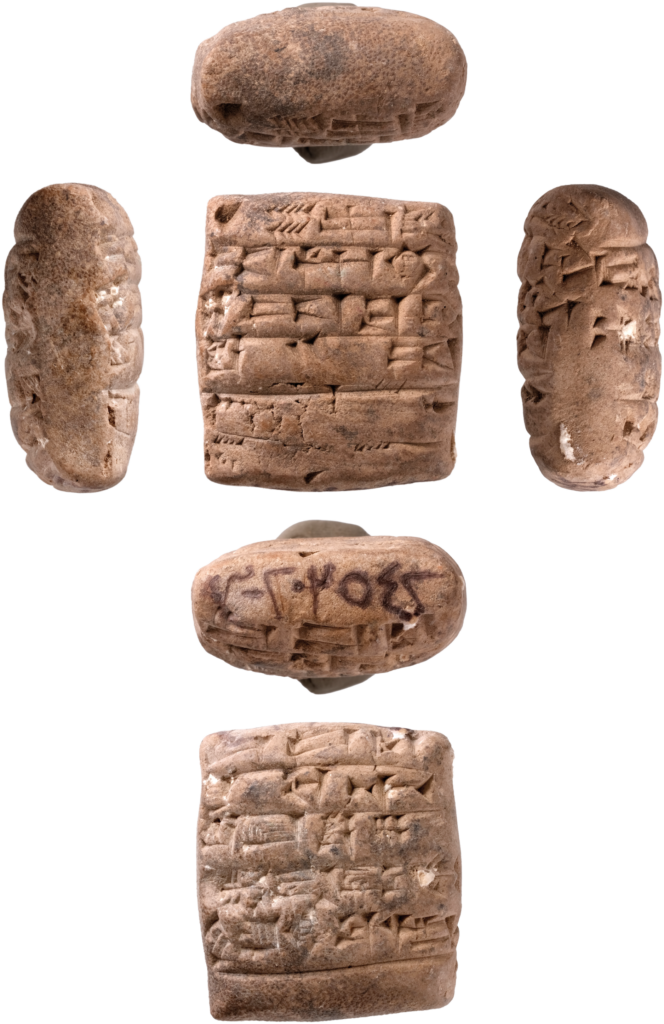
The tablets themselves preserve signs of this administrative independence. Several contain unusual spellings, mixed documentary formulas, uncommon jargon, and occasional Akkadian usage that differ from the highly standardized writing found in major institutional archives.
The researchers argue that some of these scribes may have trained outside formal state institutions. Rather than simply making mistakes, they appear to have adopted parts of different administrative traditions and gradually developed their own local scribal practices.
This may sound like a technical detail, but it has larger implications. The written record of Ur III Mesopotamia comes overwhelmingly from state and temple institutions, so documents from royal estates can reveal economic actors that rarely appear clearly in those archives.
Barley records preserve the people behind the estate
One tablet linked to the Šat-Eštar archive records the monthly distribution of 810 litres of barley to workers. The document identifies groups of Elamites, ox drivers and junior herdsmen, while related personnel records allow researchers to connect some individuals with jobs such as groom or cupbearer.
The names turn an administrative list into something more tangible. These were people receiving measured quantities of grain for specific work, and their presence shows that the estate drew labor from culturally and geographically diverse populations.
Another tablet gives an even broader picture of estate management. It records expenses over seven months connected with 45.36 hectares of cultivated land, including seed, fodder, payments to hired workers, rations for builders, supplies for cattle, reeds and canal maintenance.
The account totals 18,796 litres of barley. Workers digging part of the Sisa canal received grain wages, while other hired laborers received about 3,300 litres of barley for transporting royal grain to Pašime. The same record names Zariq, probably an administrator associated with Šat-Eštar’s estate, whose responsibilities included cereal storage, labor payments, and agricultural management.
The picture is remarkably practical: fields had to be planted, canals cleared, animals fed, workers paid, and grain moved between settlements. Royal power depended not only on palaces and armies but on people capable of organizing those daily tasks.
The tablets also preserve new pieces of Mesopotamia’s map
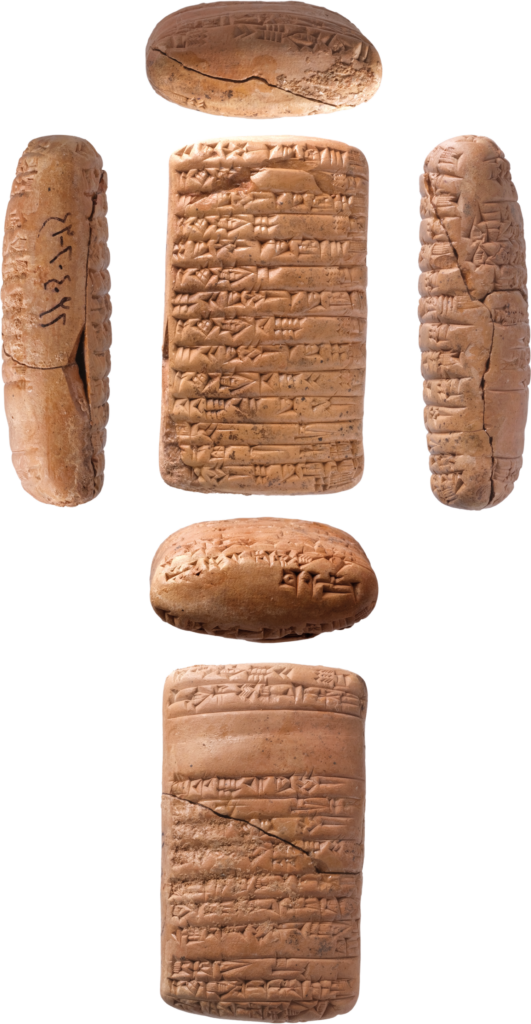
Several documents mention place names that were previously unknown or only rarely recorded. One text refers to the mê-Lamassim canal, a waterway not previously documented in the Ur III corpus, alongside other difficult or possibly new toponyms.
Another tablet concerns maintenance of the Nanna-gugal irrigation system near the border between Ur and Ĝirsu/Lagaš. The document calculates thousands of cubic metres of earthwork, while the wider evidence suggests that the canal crossed provincial territory and may even have functioned as a boundary.
Its maintenance required coordination between neighbouring administrations under broader royal planning. The records therefore preserve not just economic data but fragments of a landscape of canals, fields and rural districts that researchers are still reconstructing.
Du-murula may have housed prisoners of war
The most provocative possibility comes from a tablet concerning agricultural work at a place called Du-murula.
The record divides work among four groups, including farmers, menials and 11 Elamites, and calculates a total of 4,072.5 cubic metres of earth to be removed for irrigation maintenance. Other documents show that Du-murula supplied large quantities of reeds, vegetation and timber and had close links with officials serving the Crown.
Over six months, records indicate that approximately 240 tons of fresh reeds moved from Du-murula through the state chancellor. Much of this material appears to have served as fodder for fattening sheep, linking the settlement to the wider royal livestock economy.
The researchers suggest that Du-murula may have stood under direct Crown control. They go further, though cautiously, proposing that it could have been one of several settlements established by royal order in southern Mesopotamia and inhabited by prisoners of war.
The presence of Elamites, along with a group that may have come from Simanum, supports that possibility. The evidence does not prove that every worker at Du-murula was a captive, and the authors explicitly frame the interpretation as a hypothesis rather than a certainty.
Still, the combination of foreign workers, royal oversight and comparable evidence for state-controlled populations makes the suggestion significant.
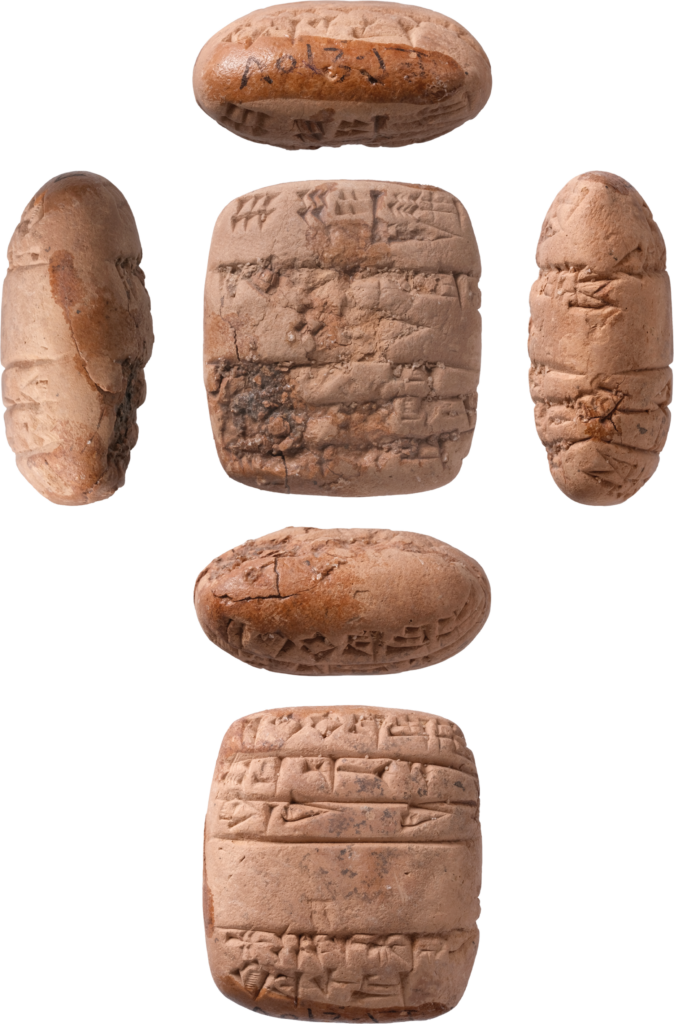
Text 4 (IM 204157), an Ur III tablet from the Umma region, records large quantities of barley associated with several fields, including Ḫibaritum. Damage to the tablet has left some place names unreadable, but the surviving evidence suggests that the document most likely dates to the reign of Šulgi. Credit: Saadoon, Borrelli and Viano (2026), Iraq
Fifteen tablets, but a much larger story
The tablets entered the Iraq Museum between 2005 and 2008 through different channels, including confiscations and material returned by Jordanian authorities. Some texts associated with the Šat-Eštar archive originally came from illegal excavations, which has fragmented the archive and made it difficult to reconstruct the estate in full.
Despite that loss of context, the surviving documents reveal much more than agricultural bookkeeping. They show a princess’s estate with its own personnel and scribal habits, royal authority moving labor across provincial boundaries, workers receiving grain wages, irrigation networks linking regions and rural settlements whose populations may have included people displaced by war.
The study therefore adds another layer to the picture of the Ur III state. Its economy was highly organized, but it was not uniform: alongside governors, temples and central institutions stood royal estates that could operate through their own networks, mobilize workers across borders and leave behind records unlike those of the standard provincial bureaucracy.
Fifteen small tablets cannot reconstruct that entire system, but they make one point clear. The administrative world of ancient Mesopotamia was more varied, more mobile and more human than its surviving state archives alone once suggested.
Saadoon, A. R., Borrelli, N., & Viano, M. (2026). FROM THE COLLECTIONS OF THE IRAQ MUSEUM: NEW UR III TABLETS PRIMARILY FROM THE UMMA REGION. Iraq, 1–43. doi:10.1017/irq.2026.10058
