
Approximately 5,000 years ago, some children living in Central Europe were buried with precious copper jewelry, seashell beads, and special grave goods. A new study examining hundreds of prehistoric graves in the Czech Republic indicates that these burials reveal not only funeral traditions but also the beginning of a process where families may have started passing their social status and privileges down to subsequent generations.
The study, conducted by archaeologist Mikkel Nørtoft from the University of Copenhagen and Adam B. Rohrlach from the Max Planck Institute for Evolutionary Anthropology, was published on November 10, 2026, in the Journal of Neolithic Archaeology. The researchers examined graves belonging to the Corded Ware Culture, which spread across a vast part of Central Europe in the third millennium BCE, to investigate how wealth, social competition, and family relationships evolved over time.
A 5,000-Year-Old Child’s Grave
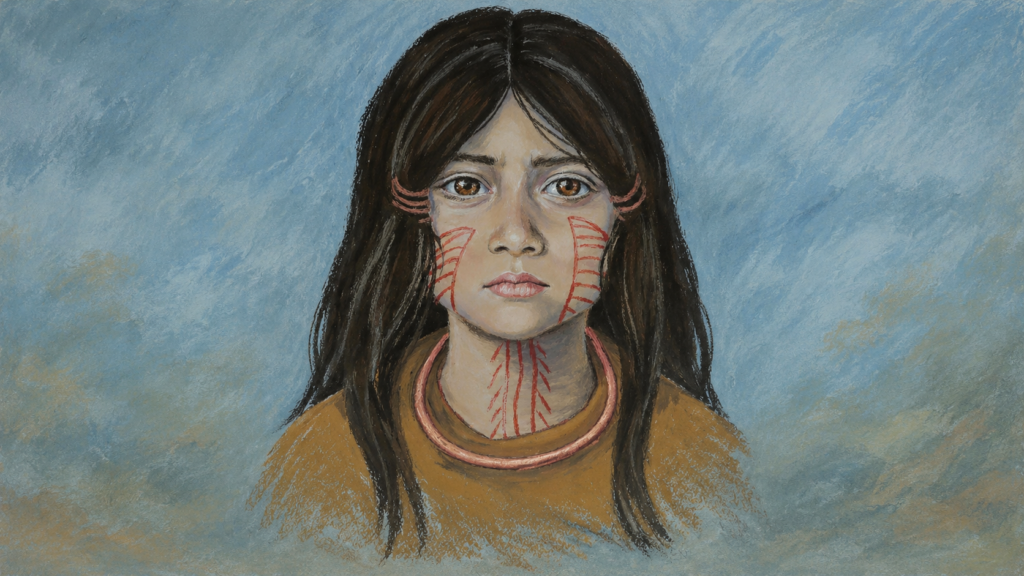
One of the most striking examples of the research is Grave 41, found in the Čachovice cemetery in northwestern Czechia. The individual, estimated to be between six months and five years old and likely a girl, was buried with an exceptionally unusual copper neck ring for the period. Such jewelry is rarely seen in the graves of that era.
The age of the child makes the social significance of the find particularly important. The fact that an individual who had not yet reached adulthood was buried with such a valuable ornament suggests that the status displayed in the grave was not based solely on personal achievement. Researchers believe that the family’s resources and social connections may have played a decisive role in the funeral ceremony.
A similar example is known from another girl’s grave belonging to the late Corded Ware culture in Austria. The association of copper neck rings specifically with women and girls suggests that these objects may have expressed certain social identities or privileges.
Another child’s grave addressed in the study comes from the Vliněves settlement. In the grave of a girl who died between the ages of three and five, twenty-six seashell or mother-of-pearl beads were found along with nine or ten dog or wolf teeth. Researchers state that these objects could point to high status, a special social role, or beliefs carrying protective meanings.
Traces of Social Inequality Across 378 Graves
The researchers compiled archaeological data from a total of 378 graves in the Bohemia and Moravia regions. While they included 317 graves containing skeletal remains in their main evaluation, they performed detailed statistical analyses on 283 single graves that were suitable for comparing age and other characteristics.
Rather than accepting the number of items in a grave as a direct measure of wealth, they used the “QuantWealth” method, which combines different indicators. This evaluation took into account the diversity and exclusivity of the grave goods, the labor and skill required to produce the objects, the distance from which raw materials were sourced, the depth of the grave pit, and the amount of meat that may have been offered during the funeral.
The results show that prehistoric communities in present-day Czechia did not all share the same social structure. Particularly in Bohemia, there was a distinct shift from the relatively simple graves of the early period to more ostentatious burials in subsequent centuries.
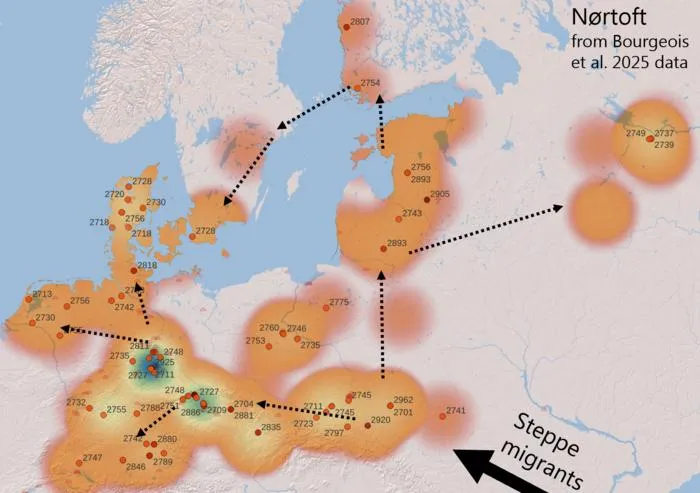
According to the researchers’ interpretation, communities of different origins arriving in the region around 2900 BCE initially needed more cooperation. Accessing new pastures, sharing resources, and establishing relationships between communities may have played a more significant role than displays of individual wealth.
However, after 2700 BCE, more valuable objects, deeper grave pits, and more extensive funeral offerings began to appear in some cemeteries. Researchers view this change as a possible indicator of strengthening social competition between families and paternal lineages.
Wealth Was Not Exclusive to Men
Graves in Moravia contained richer funeral gifts than those in Bohemia, especially during certain periods. In Letonice, a man approximately 20 years old was buried with the only gold object in the study’s dataset, as well as a stone axe-hammer, a wrist stone, wild boar teeth, copper tools, jewelry, and various vessels.
Conversely, the grave of an adult woman in Marefy contained hundreds of dog teeth, thousands of seashell beads, various vessels, and extremely rich copper jewelry. These two graves demonstrate that social privilege was not represented solely by men and that some women were honored with extraordinary funeral ceremonies.
The research also revealed that adults’ graves generally displayed more wealth than those of children, indicating that the position individuals attained during their lifetimes remained important. However, the marked enrichment of some child graves in later periods suggests that practices aimed at transferring family status across generations may have strengthened.
Genetic Data Points to Power Struggles
Researchers compared the grave data with previously published ancient DNA results. While different Y-chromosome lineages were seen in early paternal lines in Bohemia, the lineage known as R1a-M417 became markedly dominant in the later period.
This shift coincides with the period when the display of wealth in graves increased. Researchers suspect that some paternal lineages may have gained superiority over others in social competition. However, current individual data is not yet sufficient to prove that a specific genetic lineage was directly associated with wealthier graves.
One of the key findings of the study is the lack of a consistent relationship between burial wealth and the individuals’ genetic origins, close kinship ties, or diseases and injuries seen in their skeletons. This suggests that social status did not transform into a fully hereditary system and that status based on individual achievement may have maintained its importance.
Researchers further propose that funeral ceremonies were organized not only to commemorate the deceased but also to strengthen the relationships of the surviving family and display their social standing. Large funeral feasts, valuable gifts, and grave monuments may have been part of the alliances and competitions between families.
Nevertheless, the wealth displayed in a grave does not directly reflect the wealth or political power a person possessed while alive. While researchers note that some child graves may carry early signs of inherited privilege, they emphasize that these relationships need to be tested with more DNA data and comparative cemetery research.
Nørtoft, M., & Rohrlach, A. B. (2026). Cooperation and competition: Changes in wealth, power, and patrilines in the Czech Corded Ware culture. Journal of Neolithic Archaeology, 28, 215–263. https://doi.org/10.12766/jna.2026.7
