
12 December 2025 The Future is the Product of the Past

Czech Discovery Reveals One of the Largest Celtic Settlements in Central Europe

Over 13,000 artifacts, including gold coins and Baltic amber, discovered in one of Central Europe’s largest Celtic settlements.

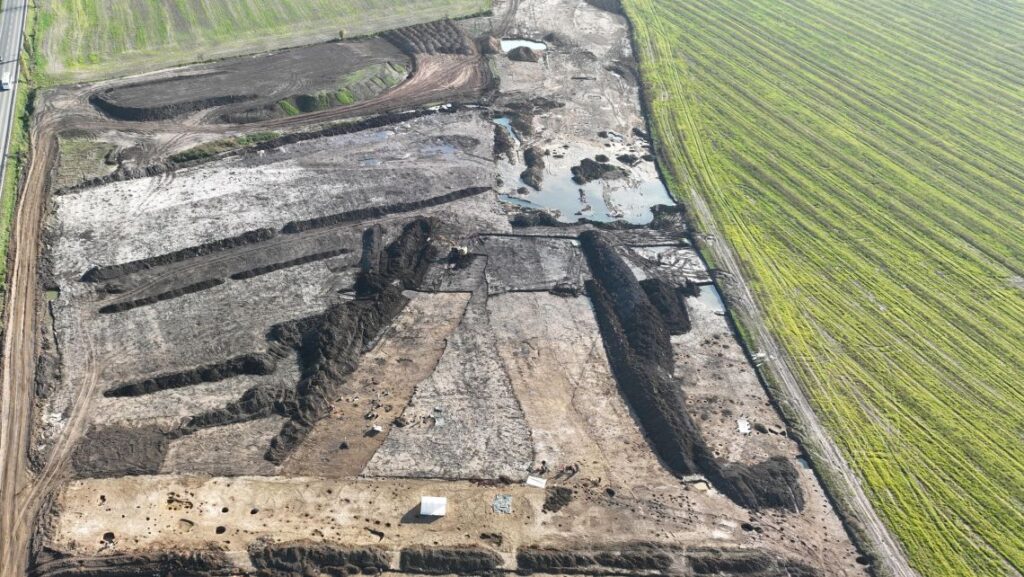
A groundbreaking archaeological discovery in eastern Bohemia has unveiled an ancient Celtic settlement of remarkable scale and significance, dating back more than 2,200 years to the La Tène period. Unearthed near Hradec Králové during pre-construction excavations for the D35 motorway, the site has been described by experts as one of the most important finds in Czech history.

Although the settlement was first identified in 2024 during preliminary motorway surveys near Hradec Králové, full-scale archaeological research only began recently.

An Ancient Celtic Center with Regional Influence

Covering approximately 25 hectares (250,000 square meters), the settlement is attributed to the Boii tribe, the Celtic people after whom Bohemia is named. According to archaeologists from the University of Hradec Králové, the Museum of Eastern Bohemia, and Archaia Praha, this “open agglomeration” functioned as a central hub for commerce, manufacturing, and administration in the 2nd century BCE, before mysteriously vanishing in the 1st century BCE.

“This is undoubtedly a very important location with economic and social functions,” said archaeologist Matouš Holas, who helped lead the multi-institutional excavation. Notably, there are no signs of violent destruction, suggesting the settlement’s decline may have been gradual or influenced by economic or environmental changes.


📣 Our WhatsApp channel is now LIVE! Stay up-to-date with the latest news and updates, just click here to follow us on WhatsApp and never miss a thing!!


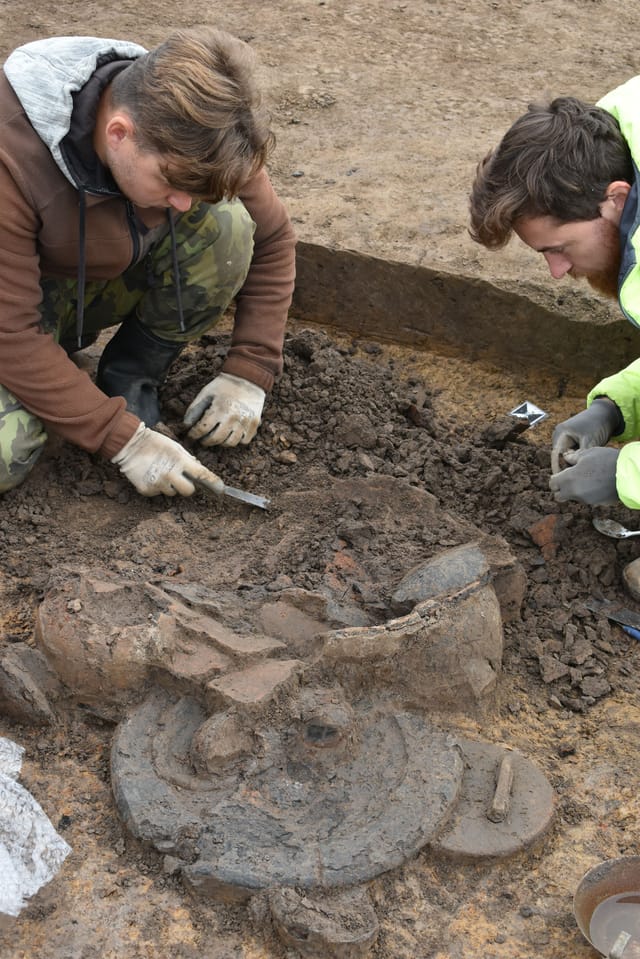
Over 13,000 artifacts, including gold coins and Baltic amber, discovered in one of Central Europe's largest Celtic settlements. Credit: Matouš Holas, Museum of Eastern Bohemia in Hradec Králové / University of Hradec Králové
Over 13,000 artifacts, including gold coins and Baltic amber, discovered in one of Central Europe’s largest Celtic settlements. Credit: Matouš Holas, Museum of Eastern Bohemia in Hradec Králové / University of Hradec Králové

Treasure Trove of Artifacts: Gold, Silver, Ceramics, and Amber

A remarkable total of over 13,000 bags of artifacts have been uncovered from the site—an extraordinary amount for a Celtic settlement in Central Europe.

Among the most notable finds are numerous gold and silver coins, some of which were likely minted directly at the site, pointing to a sophisticated local economy.

Archaeologists also discovered coin molds, further supporting evidence of on-site coin production. In addition to currency, the settlement yielded luxury ceramics, metal vessels, and fragments of mirrors—items that reflect both everyday life and the wealth and cultural complexity of the community.

Baltic amber, evidence of long-distance trade

One especially rare object is a ceramic shard engraved with the image of a horse—an artifact rarely seen across the continent.

“The presence of amber, luxury pottery, and local coin production indicates that this was not a typical rural village,” said Tomáš Mangel, archaeologist at the University of Hradec Králové. “It was clearly integrated into the Amber Road, a key trade route connecting the Baltic to the Mediterranean.”
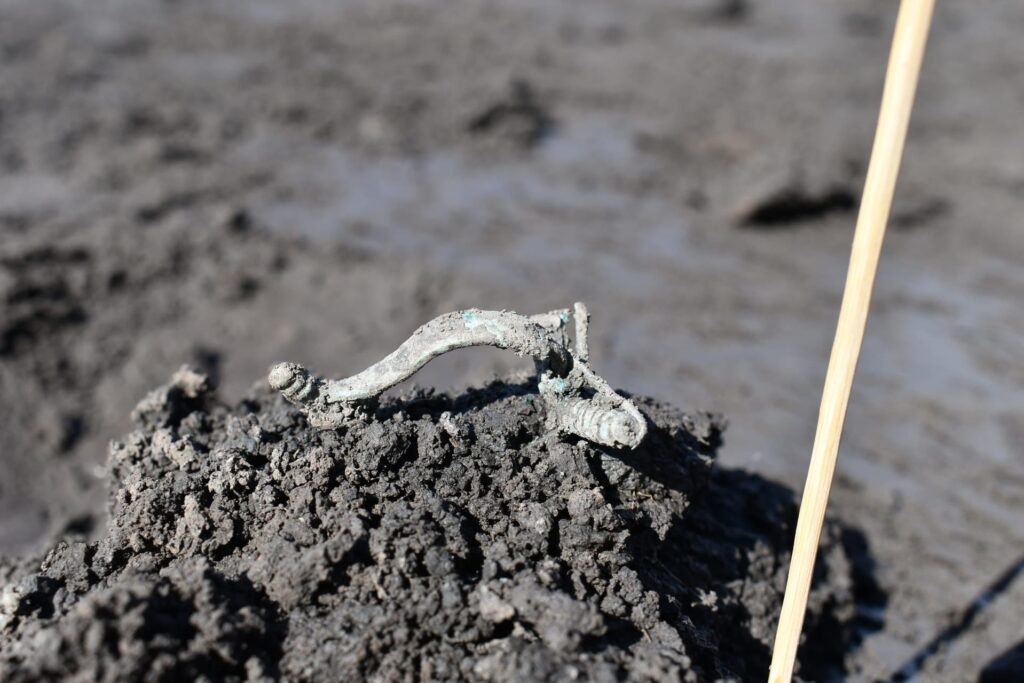
A Celtic fibula unearthed at the Hradec Králové settlement site, showcasing intricate metalwork typical of the La Tène period. Credit: Museum of Eastern Bohemia in Hradec Králové / University of Hradec Králové

A Snapshot of Celtic Urbanization

Researchers have identified pottery kilns, glass processing facilities, and possibly religious sanctuaries, suggesting a complex and stratified society. The site offers an unparalleled view into La Tène culture, a hallmark of the Iron Age known for advanced metalwork, elite warrior classes, and long-distance cultural exchange.

According to Miroslav Novák from the Museum of Eastern Bohemia, the site’s importance is “comparable to major Celtic centers in the central Danube region or southern Germany.”

The La Tène Period

The La Tène period (circa 450 BCE to the Roman conquest) marks a significant phase of the European Iron Age, characterized by the flourishing of Celtic culture across much of Central and Western Europe.

Named after the archaeological site of La Tène in Switzerland, this era is noted for its advanced metalwork, distinctive art styles, and the development of complex social structures including tribal elites and warrior classes.

The period also saw increased trade and cultural exchanges, with settlements like the one discovered near Hradec Králové playing vital roles in regional economies and long-distance trade networks such as the famous Amber Road.
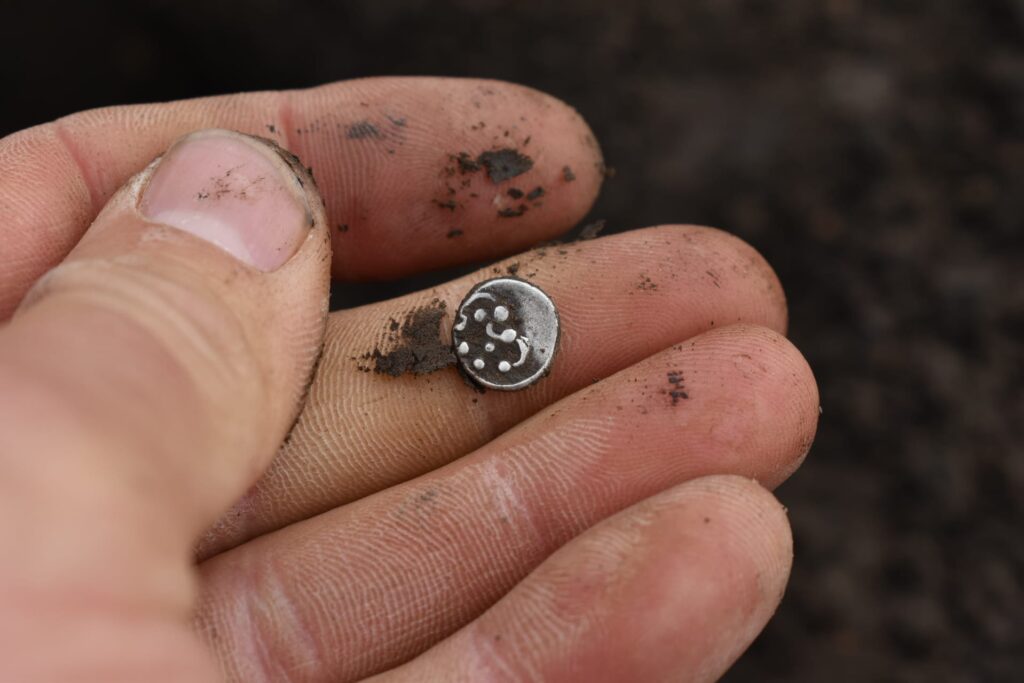
Notable finds include gold and silver coins, some likely minted directly at the site, indicating a sophisticated local economy. Credit: Museum of Eastern Bohemia in Hradec Králové / University of Hradec Králové

Preserved by Time, Revealed by Teamwork

Remarkably well-preserved due to minimal modern agricultural activity and protection from illegal metal detecting, the site also benefited from an innovative collaboration with amateur detectorists. Selected from over 300 applicants, a small team worked under expert supervision for three years to ensure thorough coverage.

Next Steps in Research

Although the excavation phase concluded in early 2025, analysis is just beginning. Artifacts are now being catalogued and studied at the Museum of Eastern Bohemia, with a small exhibition planned in the near future. A more comprehensive showcase will follow once full evaluation is complete.
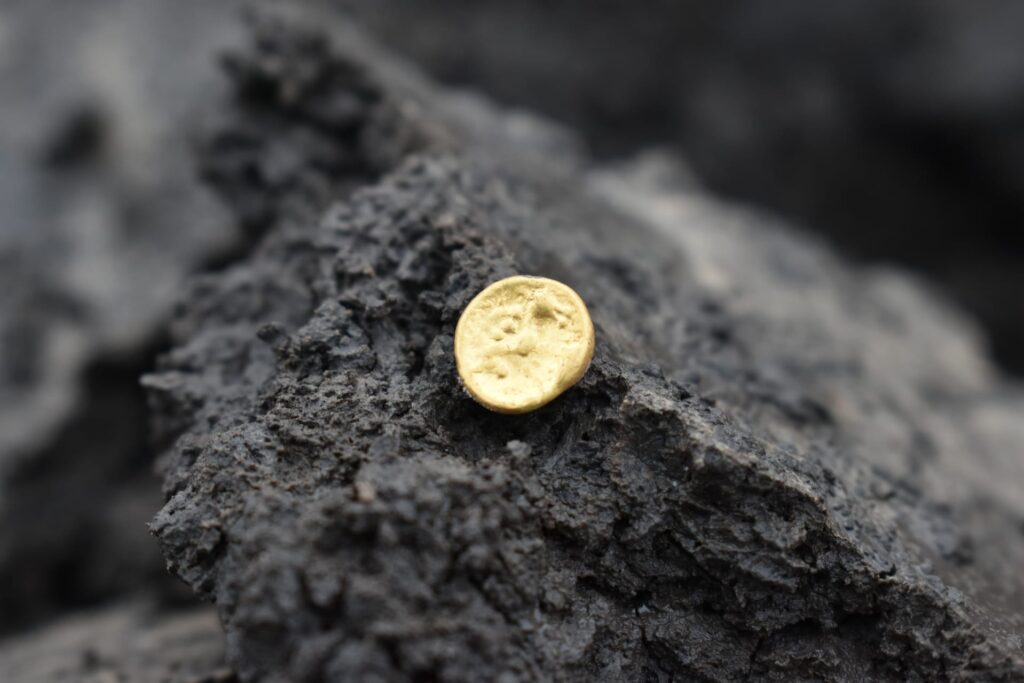
Notable finds include gold and silver coins, some likely minted directly at the site, indicating a sophisticated local economy. Credit: Museum of Eastern Bohemia in Hradec Králové / University of Hradec Králové

“This discovery allows us to study ancient Celtic life with exceptional clarity,” said Holas. “It may fundamentally reshape our understanding of early European trade networks and settlement structures in what is now the Czech Republic.”

Cover Image Credit: Archaeologists made the discovery while conducting survey work on the route of a planned motorway in the north of the country. Credit: x.com/AstronomiconEu

Related Articles

Archaeologists discovered how wine was cooled in Roman legions on the Danube

15 September 2023

15 September 2023

Lead archaeologist Piotr Dyczek, a professor at the Center for Research on Antiquities of Southeastern Europe at the University of...

Knife and Lost Armor: First-Ever Verified Artifacts from Emperor Nintoku’s 5th-Century Kofun Tomb Revealed

13 August 2025

13 August 2025

In a discovery that is already rewriting the history of Japan’s ancient Kofun period, researchers have confirmed the existence of...

Anatolia’s Trade Secrets: The Unveiling of a Rare Neolithic Obsidian Mirror Manufacturing Hub

25 February 2025

25 February 2025

A recent study has applied a techno-functional approach to investigate the production and use of obsidian mirrors found at Tepecik...

42,000-year-old Shell Jewellery Workshop Discovered – The Oldest in Western Europe

27 September 2025

27 September 2025

Archaeologists have made a groundbreaking discovery in Saint-Césaire, Charente-Maritime, uncovering what is now considered the oldest shell jewellery workshop in...

Archaeologists unearth hidden tunnels under the 3,000-year-old temple complex

6 June 2022

6 June 2022

Archaeologists have discovered a system of hidden tunnels beneath the 3,000-year-old Chavín de Huántar temple complex in the Ancash Region...

First Human Traces Buried in an Ancient Gold Mine in Eastern Sahara

2 May 2021

2 May 2021

Some of the earliest signs of human life dating back 1.8 million years have been discovered in an old gold...

Lost Medieval Swedish Heraldic Stone and Rare Dagger Unearthed in Vyborg’s Sewer System

20 November 2025

20 November 2025

Archaeologists in Vyborg, Russia have uncovered two remarkable artifacts that reshape the city’s connection to its medieval and post-medieval past....

A 2600-year-old Clay Pot was Repurposed As Trash Bin in An Iranian Museum

13 November 2023

13 November 2023

A clay pot dating back to the 2600-year-old Medes period is now serving as a trash bin in a museum...

Lidar Technology Reveals a 3,000-year-old Secret Mayan City with Full of Pyramids and Plazas

30 October 2024

30 October 2024

Tulane University researchers used laser-guided imaging to uncover vast unexplored Maya settlements in Campeche, Mexico, revealing more than 6,500 pre-Hispanic...

Twin temples linked to Hercules and Alexander the Great discovered in Sumerian city of Girsu

29 January 2024

29 January 2024

Archaeologists discovered two temples, with one buried over the other, during excavations at Girsu, a Sumerian city in southeastern Iraq...

Khirbet Midras pyramid and  Archaeological Site in Israel

28 November 2022

28 November 2022

Khirbet Midras (Arabic) or Horvat Midras (Hebrew) is one of several antiquities sites located within the Adullam Grove National Park,...

Exceptional Intact Etruscan Rock-Cut Tomb Discovered in Italy’s San Giuliano Necropolis

30 June 2025

30 June 2025

A remarkable discovery has emerged from the heart of Etruria: an intact Etruscan rock-cut tomb, sealed for over 2,700 years,...

The new type of Silla tombs discovered in Gyeongju, South Korea

27 June 2024

27 June 2024

Archaeologists have made a groundbreaking discovery in the ancient capital of the Silla Kingdom (57 BC-AD 935) in the ancient...

Isotopic Evidence reveals surprising dietary practices of pre-agricultural human groups in Morocco

30 April 2024

30 April 2024

It has long been accepted wisdom that hunter-gatherer societies lived primarily off of meat. But fresh data from an innovative...

A Batavian Cavalry Mask was found on the Battlefield of Roman Comrades

22 July 2022

22 July 2022

Archaeologists have discovered that a rusty corroded plate they found 4 years ago at an old battlefield in the city...