
Archaeologists excavating a field in eastern Austria have uncovered part of an enormous Roman pottery production centre, with geomagnetic surveys indicating that more than 100 additional kilns may still lie beneath the ground.
The site, located near the village of Burg in the municipality of Hannersdorf, Burgenland, dates from approximately the mid-1st to the mid-2nd century CE. Excavation director Basema Hamarneh of the University of Vienna described it as the largest archaeological pottery production site yet identified in Austria.
Only two kilns have so far been fully exposed, but the concentration of buried structures suggests that the workshops produced everyday ceramic vessels on an industrial scale rather than simply supplying a nearby community.
Roman Kilns Discovered Just Below the Surface
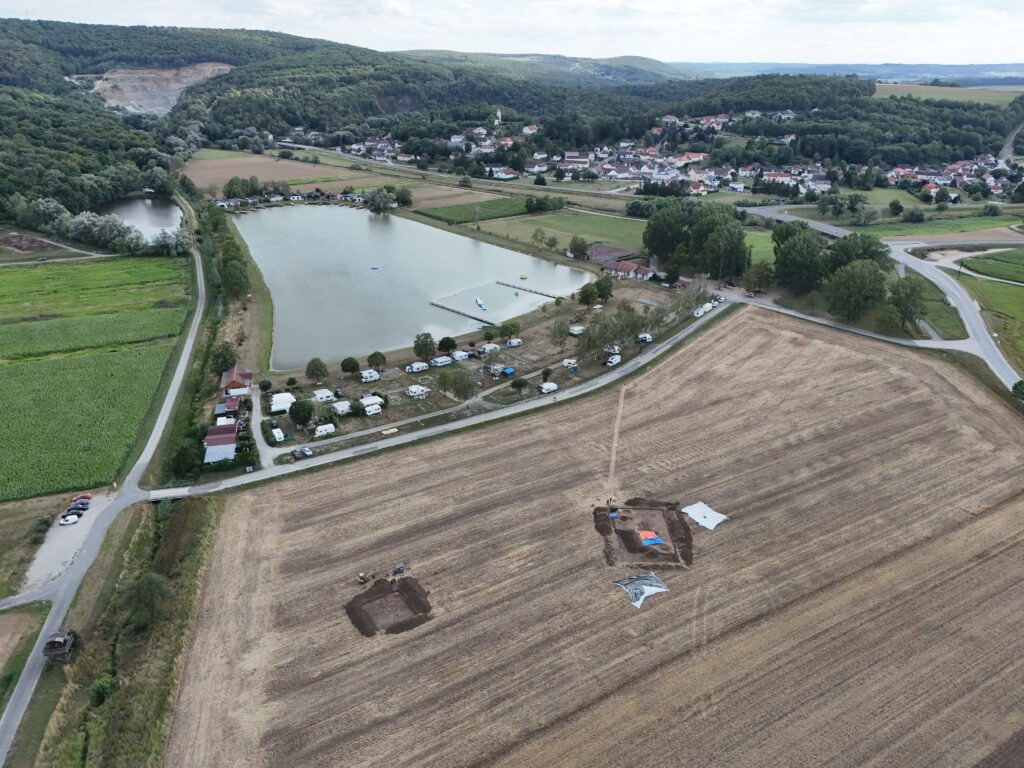
The archaeological area lies north of Burger Badesee and has long been known through Roman-period objects found on the surface. More substantial evidence emerged in 2021, when construction work on the B56 Geschriebenstein Straße revealed large quantities of Roman pottery fragments and the remains of ceramic kilns.
Subsequent geomagnetic surveys identified a dense complex of underground features, including kilns, building foundations, pits and levelled burial mounds.
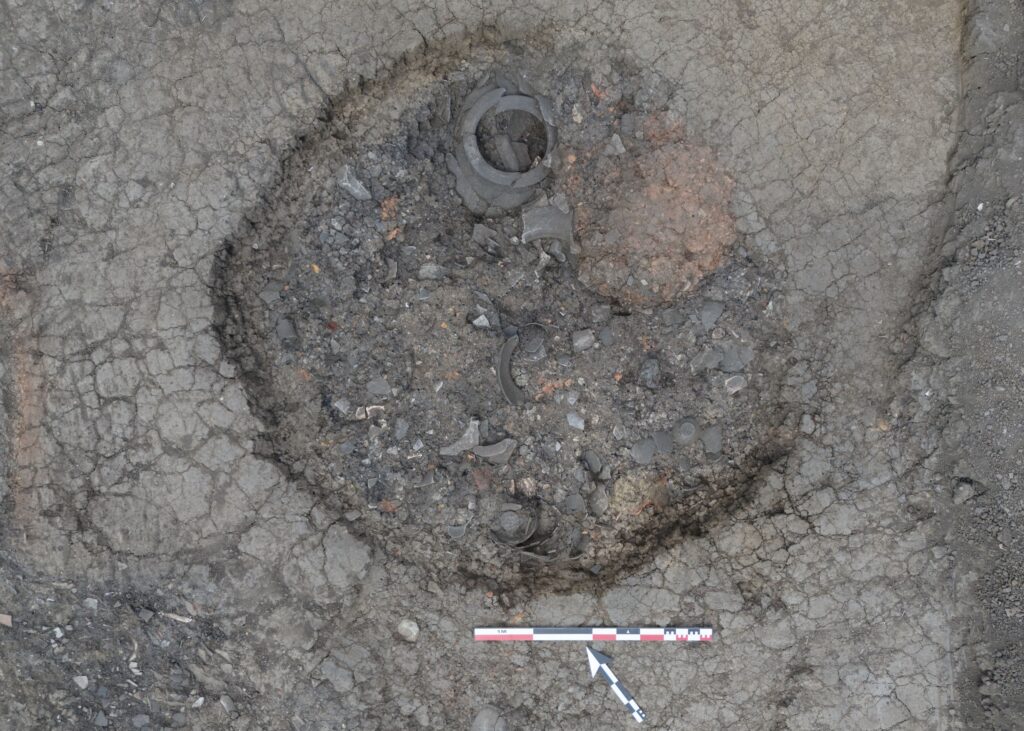
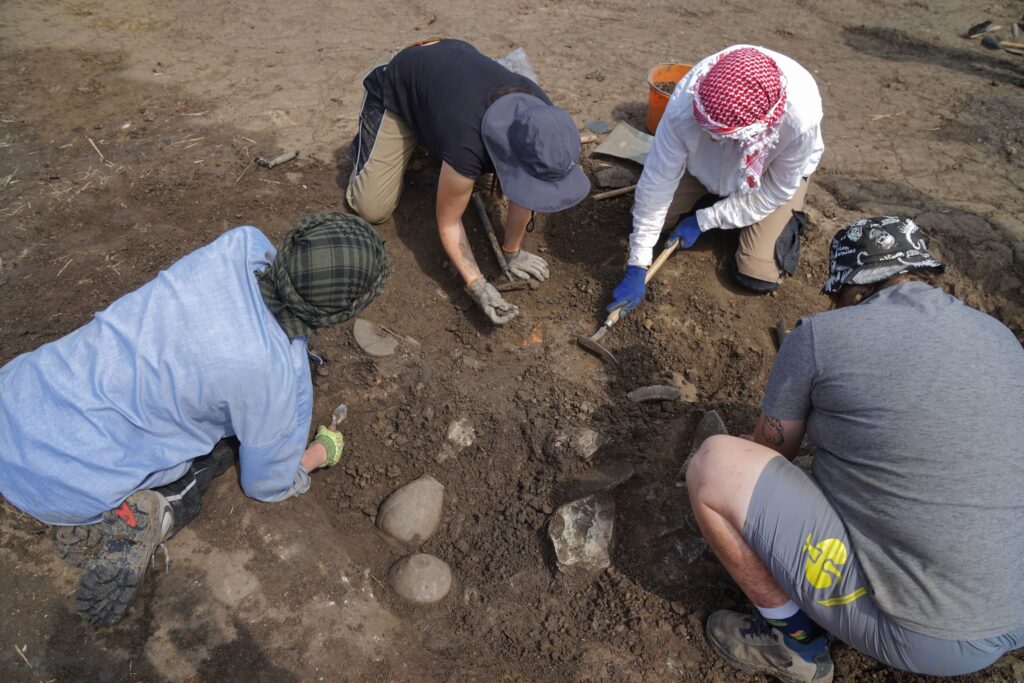
During the first two weeks of the University of Vienna’s training excavation, archaeologists uncovered two pottery kilns complete with working pits. The structures were found only around 40 centimetres below the modern ground surface.
Nearby pits are believed to have been used for extracting clay and disposing of production waste. Both the kilns and the surrounding pits contained large quantities of pottery, including bowls, dishes, drinking cups and storage vessels.
The scale of the buried complex makes the Hannersdorf site exceptional. Roman pottery workshops are commonly represented by only a small number of kilns, while the evidence from Burg points to a specialised production landscape extending across a much larger area.
Complete Vessels and Failed Products Survive Together
Among the most important discoveries are numerous vessels preserved almost entirely intact. Such finds are unusual at production sites, where ceramics are generally recovered as broken fragments.
Archaeologists also found large numbers of defective vessels that had warped, cracked or failed to fire correctly. These discarded pieces, often known as kiln wasters, offer direct evidence of how the workshops operated.
According to Hamarneh, the combination of complete vessels, production failures and extensive kiln remains indicates that pottery was manufactured here in quantities far exceeding local household demand.
The different kiln structures may also have been designed for particular products. Some appear suited to large storage vessels, while others may have been used for smaller tableware such as plates, bowls and cups.
No producer’s stamps have yet been identified, leaving open the question of how the workshops were organised. The site may have accommodated several smaller family-run operations rather than a single centrally controlled manufactory.
Small fibulae associated with children’s clothing, reported among the discoveries, may indicate that families lived or worked around the production area. Evidence for permanent stone buildings remains limited, suggesting that at least some pottery-making activities were conducted seasonally beneath simple shelters.
Pottery May Have Supplied the Roman City of Savaria
One of the major questions concerns where the ceramics were sold.
No large Roman settlement has been identified immediately beside the workshops. The nearest major urban centre was Savaria, the Roman predecessor of modern Szombathely in Hungary, located approximately 16 kilometres away.
Founded during the early Roman Imperial period, Savaria became an important administrative and commercial centre. Archaeologists have observed ceramics in the city’s museum collections that may have originated from the Hannersdorf workshops.
The pottery could have been transported to Savaria and then distributed along regional trade routes connected with the Roman frontier.
Imported terra sigillata tableware discovered at the workshop further demonstrates that the site participated in wider commercial networks. This glossy red pottery was a comparatively expensive product, often associated with formal dining and elite consumption.
Its presence among locally manufactured utilitarian ceramics may help researchers date the workshop phases and reconstruct the economic connections of the people who worked there.
A Landscape Used for Thousands of Years
The Roman pottery centre is not the earliest evidence of settlement in the area. Surface discoveries include Neolithic pottery and traces of timber longhouses dating to the sixth millennium BCE.
Geomagnetic surveys have also recorded burial mounds linked to the Hallstatt and Roman periods around 1.5 kilometres from the workshop.
Although these remains belong to separate periods, they show that the landscape around Hannersdorf repeatedly attracted settlement, production and burial activity over several thousand years.
Excavations are scheduled to continue until August 7. The analysis of the kilns, pottery and production waste is expected to clarify how the workshops were organised, how long they operated and how widely their ceramics were distributed.
Rather than representing a remote edge of the Roman world, the Hannersdorf complex reveals Burgenland as an active centre of manufacturing and regional trade during the early centuries of the Roman Empire.
