
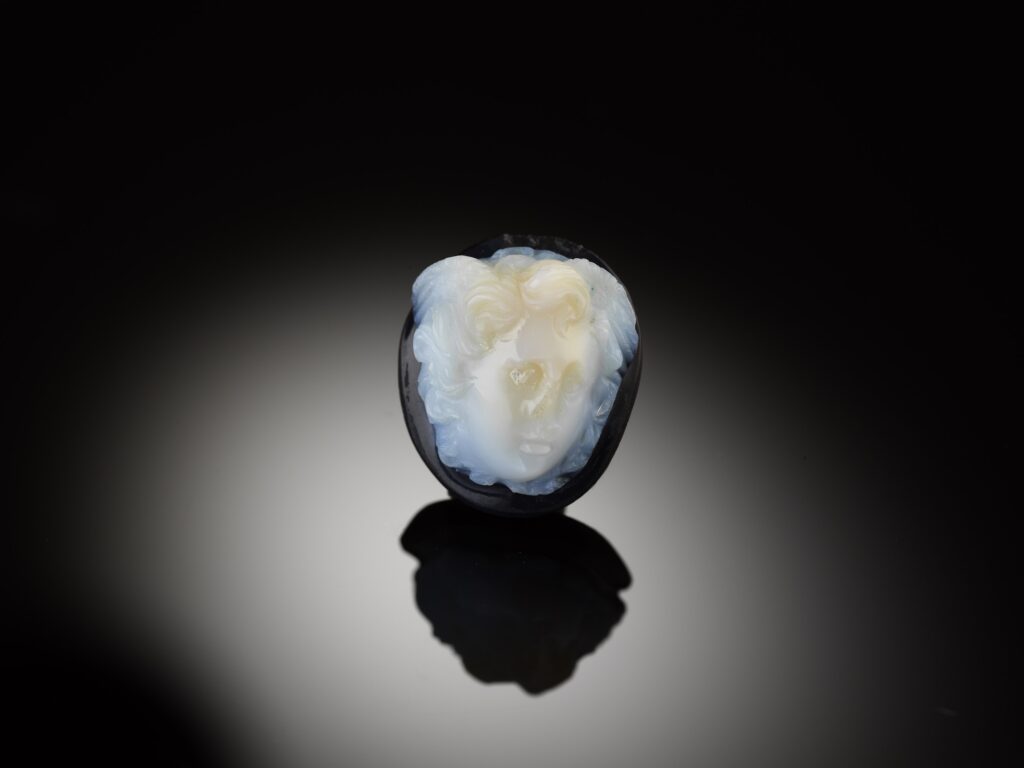
An exquisite Roman gemstone unearthed in Hallstatt is challenging long-held assumptions about Rome’s presence in the Alpine region and revealing a far more connected world than previously imagined. During excavations in June 2025, researchers uncovered a miniature masterpiece: a finely carved gemstone depicting the head of Medusa — a spectacular 1.5-centimeter cameo dating back to the 2nd century AD. Despite its size, experts say this tiny object is one of the most significant Roman finds ever made in Upper Austria.
According to Stefan Traxler, chief archaeologist of the State of Upper Austria, the delicate piece ranks among “the most important individual finds of the Roman era in the region.” Cut from black-and-white banded agate, also known as onyx, the cameo was likely crafted in Aquileia, a major Roman cultural and trade center on the northern Adriatic. Archaeologists believe it once adorned the necklace of a wealthy Roman woman who lived nearly 1,900 years ago.
Cameos — intricately carved gemstones prized across the Roman Empire — were luxury objects reserved for the elite. Made by cutting through layered stones such as agate or onyx, they produced high-contrast relief images that combined artistic virtuosity with symbolic meaning. Often depicting deities, mythological figures, or protective motifs, cameos served not only as jewelry but as personal amulets. The Hallstatt Medusa cameo, carved with extraordinary precision into banded agate, represents one of the finest examples of this ancient craft ever found in the region.
Unearthed by Modern Construction — Saved by Chance
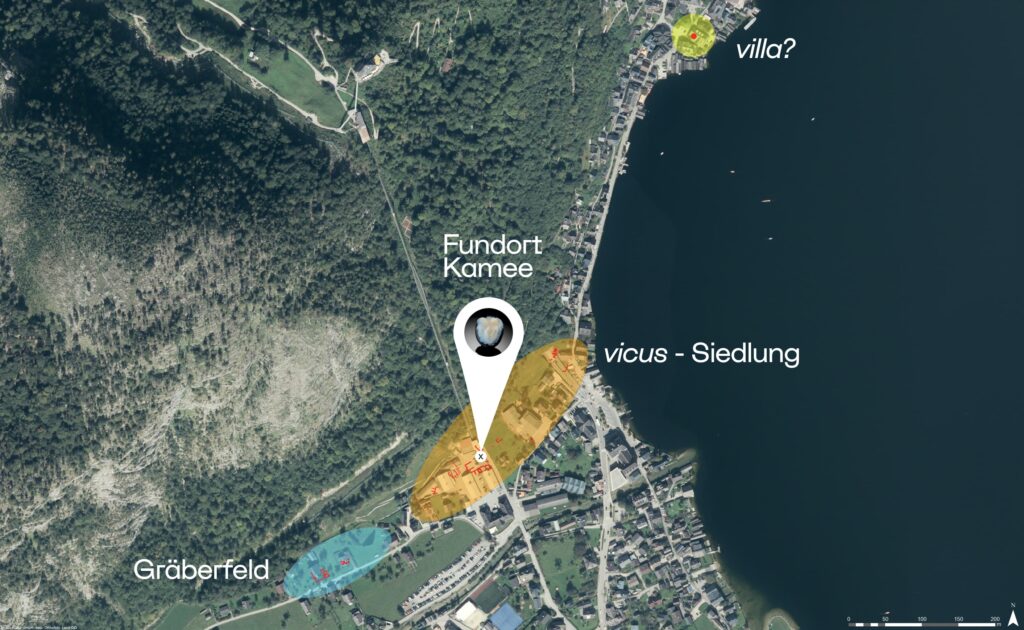
The gemstone surfaced during excavations associated with the construction of Hallstatt’s new state-of-the-art funicular railway. Commissioned by Salzwelten GmbH, the archaeological work targeted the site of the future valley station — positioned directly within the footprint of Hallstatt’s ancient Roman settlement.
While researchers anticipated structural remains, they did not expect a treasure of such rarity and craftsmanship. “Without the work for the new funicular, this extraordinary piece would likely have remained hidden,” noted Torsten Pedit, CEO of Salzwelten GmbH. The discovery now offers fresh insight into the early development of the area and further underscores Hallstatt’s longstanding role as a cultural and economic hub.
A Symbol of Protection — and a Stroke of Luck
The cameo features the Gorgoneion, the winged, snake-haired head of Medusa. In both Greek and Roman tradition, this motif was believed to ward off evil. It frequently appeared on jewelry, armor, buildings, and sacred objects.
Whether the Medusa of Hallstatt protected its original owner will never be known — but for archaeologists, it is undeniably a stroke of luck. “This small object carries immense meaning. It enriches our understanding of the past and highlights the cultural depth of our region,” emphasized Thomas Stelzer, Governor of Upper Austria.
A Roman Settlement at the Heart of a Salt Empire
Hallstatt is world-renowned for its prehistoric salt mines, which have been active for more than 7,500 years. Salt — the “white gold” of antiquity — made the region a key economic center long before the Roman Empire extended its influence into the Alps.
By the mid-1st century AD, Rome had seized the valuable Hallstatt salt deposits and established a vicus, or settlement, around the area of today’s funicular station. Although extensive excavations have been conducted over the past two centuries, much about this Roman town — including its ancient name — remains unknown. Still, finds ranging from burial monuments to building remains paint a picture of a community deeply integrated into Rome’s economic network.
The Medusa cameo now adds a personal, intimate dimension to this picture. It suggests not only wealth but also cultural continuity: luxury imports from Mediterranean workshops reached even remote Alpine valleys.
Hallstatt’s Long Tradition of Archaeological Discovery
Hallstatt’s archaeological importance is internationally recognized. As early as the 19th century, excavations revealed Roman graves and architectural remains. Over the decades, researchers have continued uncovering new insights into the settlement’s size, layout, and inhabitants.
The latest work, conducted by ARDIS Archäologie GmbH in collaboration with the Upper Austrian State Culture GmbH, is part of a broader initiative to better understand daily life in the northwestern corner of the Roman province of Noricum. These investigations also focus on how ancient communities interacted with their environment — from mining practices to trade activities.
From Excavation to Exhibition
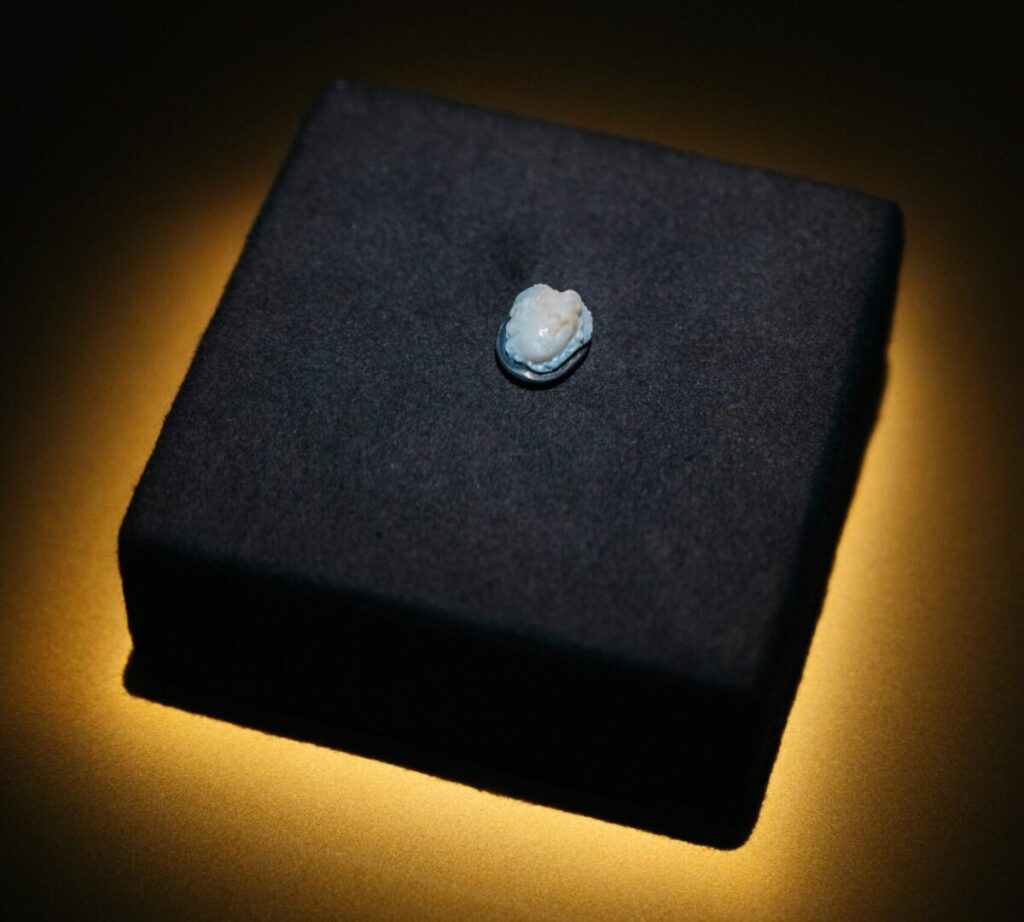
The Medusa of Hallstatt was presented to the public on December 8, 2025, at the Hallstatt Culture and Congress Center, drawing significant attention from locals, researchers, and visitors. Starting in 2026, it will be featured in the new permanent a exhibition at the Schlossmuseum Linz, offering a rare chance to examine a Roman luxury object with an extraordinary backstory.
A Tiny Artifact with a Powerful Story
Though barely the size of a fingernail, the Medusa cameo speaks volumes: of Roman craftsmanship, of long-distance trade, of local prosperity, and of the deep historical layers beneath Hallstatt’s postcard-perfect surface. Its discovery is not only a scientific triumph but a reminder that even the smallest artifacts can carry the weight of centuries.
Cover Image Credit: Meldung OÖ Landes-Kultur GmbH – M. Maritsch
